
By Germaine Barriga, Vision 360:
The Andean Condor lives in 14 protected areas, reports Sernap on the National Day of the Species
The executive director of Sernap, Cecilia Miranda, emphasized that its ecological role as a scavenger bird is fundamental for the sanitary balance of high-Andean ecosystems, and that its figure holds a deep spiritual and cultural meaning in the Andean worldview.
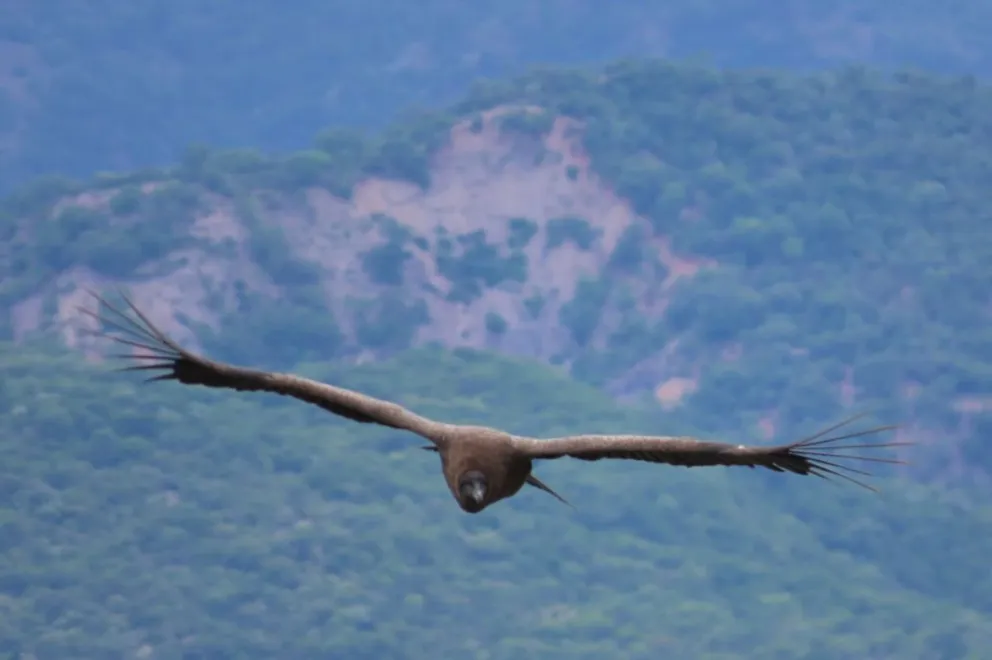
Tomorrow, February 4, the National Day of the Andean Condor is celebrated. Photo: Sernap.
The Andean Condor inhabits 14 protected areas of the national territory, recalls the National Service of Protected Areas (Sernap), on the National Day of the Andean Condor celebrated on February 4.
The executive director of Sernap, Cecilia Miranda, reported that this species has confirmed presence in important national protected areas, among them the Apolobamba Integrated Management Natural Area (ANIN Apolobamba), the Madidi National Park and Integrated Management Natural Area (PN-ANMI Madidi), and Cotapata National Park and Integrated Management Natural Area (PN-ANMI Cotapata).
It also inhabits Sajama National Park (PN Sajama), Tunari National Park (PN Tunari), Carrasco National Park (PN Carrasco), Amboró National Park and Integrated Management Natural Area (PN-ANMI Amboró), El Palmar Integrated Management Natural Area (ANMI El Palmar), and Toro Toro National Park (PN Toro Toro).
Its presence is also recorded in the Eduardo Avaroa Andean Fauna National Reserve, the Tariquía National Flora and Fauna Reserve, the Aguaragüe National Park and Integrated Management Natural Area (PN-ANMI Aguaragüe), and the Sama Cordillera Biological Reserve.
National Day of the Andean Condor
The declaration of the National Day of the Andean Condor is established in the Comprehensive Law for the Protection and Conservation of the species, a regulation that sets measures to guarantee its conservation in the national territory, according to a Sernap press release.
Law 1525, enacted in November 2023, establishes that the Andean condor “Kuntur Mallku (Vultur gryphus)” is declared a “symbol and Natural and Cultural Heritage,” and therefore sets protection measures, environmental education, scientific research, and inter-institutional coordination to guarantee its conservation throughout the national territory.
For her part, Miranda highlighted that “its ecological role as a scavenger bird is fundamental for the sanitary balance of high-Andean ecosystems, and its figure holds a deep spiritual and cultural meaning in the Andean worldview.”
Sernap reports that, in coordination with municipal governments, protected areas, and allied organizations, it will carry out various activities aimed at promoting environmental awareness, spreading the ecological and cultural value of the Andean condor, and strengthening the actions provided for in the new law.
“The Andean condor is one of the most emblematic species of the high-Andean region. It is categorized as vulnerable at the global level by the International Union for Conservation of Nature (IUCN) and as near threatened in Bolivia,” Miranda stated.
Law No. 1525 establishes the responsibility of the State to coordinate programs, plans, and actions for the protection of the Andean condor, including the absolute prohibition of its hunting, the protection of its natural habitat, and the incorporation of educational content on wildlife in the Educational System.
Likewise, the regulation enables mechanisms for scientific research and provides for criminal sanctions against wildlife trafficking and poisoning, with penalties that can reach up to eight years of deprivation of liberty.
Municipal bill for its conservation
The director of Carrasco National Park, Tomás Calahuma, reported that, within the framework of the commemorative activities for this day, the draft Municipal Law for the Conservation of the Andean Condor will be presented, which proposes, among other aspects, declaring its conservation of municipal interest, identifying—
In addition, the document proposes protecting critical sites such as roosts, feeding areas, and flight corridors, establishing restrictions to avoid disturbance and poisoning, and promoting environmental education, community awareness, and municipal monitoring.
The project, according to Sernap’s explanation, seeks to complement and “operationalize” Law No. 1525 at the local level, strengthening the protection of the species in a municipality that is key for its distribution.
On the other hand, the director of the El Palmar Integrated Management Natural Area, Lisbeth Callejas, reported that an educational fair will be held in the city of Sucre in Plaza 25 de Mayo, located in front of the Casa de la Libertad.
“The activities will include educational talks on the conservation of the Andean condor, a themed photographic exhibition with records from the Condor Bathing Site, the promotion of sustainable tourism in the protected area, the acquisition of the Passport of Protected Areas of Bolivia, and the sale of local products such as the traditional janchi coco cookies,” she explained.
The fair aims to raise awareness among the urban population and make visible the ecological, touristic, and cultural value of the Andean condor, especially in one of the sites where the species is most frequently observed, she said.
According to the Sernap press note, these actions are framed within the strategic lines of the Action Plan for the Conservation of the Andean Condor 2020–2030, approved by the Vice Ministry of Environment, an instrument that promotes a comprehensive approach based on scientific research, habitat management and protection, institutional strengthening, and mobilization of knowledge.
“The Plan guides public institutions, protected areas, municipal governments, social organizations, and territorial actors to coordinate efforts to mitigate threats such as poisoning, habitat loss, and food decline; promote non-lethal practices of coexistence with wildlife; protect roosts, nests, and flight corridors; and promote permanent community environmental education programs,” Miranda concluded.
Por Germaine Barriga Velarde, Vision 360:
El cóndor andino habita en 14 áreas protegidas, informa el Sernap en el Día Nacional de esta especie
La directora ejecutiva del Sernap, Cecilia Miranda, destacó que su rol ecológico como ave carroñera es fundamental para el equilibrio sanitario de los ecosistemas altoandinos, y que su figura posee un profundo significado espiritual y cultural en la cosmovisión andina.
Mañana 4 de febrero, se celebra el Día Nacional del Cóndor Andino. Foto Sernap
El Cóndor Andino habita en 14 áreas protegidas del territorio nacional, recuerda el Servicio Nacional de Áreas Protegidas (Sernap), en el Día Nacional del Cóndor Andino que se celebra este 4 de febrero.
La directora ejecutiva del Sernap, Cecilia Miranda, informó que esta especie se encuentra con presencia confirmada en importantes áreas protegidas nacionales, entre ellas, mencionó al Área Natural de Manejo Integrado Apolobamba (ANIN Apolobamba), el Parque Nacional Área Natural de Manejo Integrado (PN-ANMI Madidi), el Parque Nacional Cotapata (PN-ANMI Cotapata).
Además, habita en el Parque Nacional Sajama (PN Sajama), en el Parque Natural Tumari (PN Tunari), en el Parque Nacional Carrasco (PN Carrasco), en el Parque Natural Amboró (PN-ANMI Amboró), en el Área Natural de Manejo Integrado El Palmar (ANMI El Palmar), en el Parque Natural Toro Toro (PN Toro Toro).
También se registra su presencia en la Reserva Nacional de Fauna Andina Eduardo Avaroa, en la Reserva Nacional de Flora y Fauna Tariquía, en el Parque Nacional Área Natural de Manejo Integrado Aguaragüe (PN-ANMI Aguaragüe) y en la Reserva Biológica Cordillera de Sama.
Día Nacional del Cóndor Andino
La declaratoria del Día Nacional del Cóndor Andino se encuentra establecido en la Ley Integral de Protección y Conservación de esa especie, norma que establece medidas para garantizar su conservación en el territorio nacional, informa un boletín de prensa del Sernap.
La Ley 1525 promulgada en noviembre de 2023, establece que el cóndor andino “Kuntur Mallku (Vultur gryphus”, declara a la especie como un “símbolo y como Patrimonio Natural y Cultural”, por lo que establece medidas de protección, educación ambiental, investigación científica y coordinación interinstitucional, para garantizar su conservación en todo el territorio nacional.
Por su parte, Miranda destacó su “su rol ecológico como ave carroñera es fundamental para el equilibrio sanitario de los ecosistemas altoandinos, y su figura posee un profundo significado espiritual y cultural en la cosmovisión andina”.
El Sernap informa que, en coordinación con los gobiernos municipales, áreas protegidas y organizaciones aliadas, desarrollará diversas actividades orientadas a promover la conciencia ambiental, difundir el valor ecológico y cultural del cóndor andino y fortalecer las acciones previstas por la nueva ley.
“El cóndor andino es una de las especies más emblemáticas de la región altoandina. Está categorizado como vulnerable a nivel global por la Unión Internacional para la Conservación de la Naturaleza (UICN) y como casi amenazado en Bolivia”, consideró Miranda.
La Ley N° 1525 establece la responsabilidad del Estado de coordinar programas, planes y acciones para la protección del cóndor andino, incluyendo la prohibición absoluta de su caza, la protección de su hábitat natural y la incorporación de contenidos educativos sobre fauna silvestre en el Sistema Educativo.
Asimismo, la norma habilita mecanismos de investigación científica y contempla sanciones penales contra el tráfico y el envenenamiento de fauna silvestre, con penas que pueden alcanzar hasta ocho años de privación de libertad.
Proyecto de ley municipal para su conservación
El director del Parque Nacional Carrasco, Tomás Calahuma, informó que, en el marco de las actividades conmemorativas a este día, se presentará el proyecto de Ley Municipal para la Conservación del Cóndor Andino, que propone, entre otros aspectos, declarar de interés municipal su conservación, identificar
Además, ese documento, propone proteger sitios críticos como dormideros, áreas de alimentación y corredores de vuelo, establecer restricciones para evitar perturbaciones y envenenamientos, y promover educación ambiental, sensibilización comunitaria y vigilancia municipal”.
El proyecto, según la explicación del Sernap, busca complementar y “operacionalizar” la Ley N° 1525 a nivel local, fortaleciendo la protección de la especie en un municipio clave para su distribución.
Por otro lado, la directora del Área Natural de Manejo Integrado El Palmar, Lisbeth Callejas, informó que en la ciudad de Sucre se realizará una feria educativa en la plaza 25 de Mayo, ubicada frente a la Casa de la Libertad.
“Las actividades incluirán charlas educativas sobre la conservación del cóndor andino, una exposición fotográfica temática con registros del Bañadero de Cóndores, la promoción del turismo sostenible del área protegida, la adquisición del Pasaporte de Áreas Protegidas de Bolivia y la venta de productos locales como las tradicionales galletas janchi coco”, explicó.
La feria tiene como objetivo sensibilizar a la población urbana y visibilizar el valor ecológico, turístico y cultural del cóndor andino, especialmente en uno de los sitios donde la especie es observada con mayor frecuencia, sostuvo.
Según la nota de prensa del Sernap, estas acciones se enmarcan en las líneas estratégicas del Plan de Acción para la Conservación del Cóndor Andino 2020–2030, aprobado por el Viceministerio de Medio Ambiente, Instrumento que promueve un enfoque integral basado en investigación científica, manejo y protección del hábitat, fortalecimiento institucional y movilización del conocimiento.
“El Plan orienta a las instituciones públicas, áreas protegidas, gobiernos municipales, organizaciones sociales y actores territoriales a coordinar esfuerzos para mitigar amenazas como el envenenamiento, la pérdida de hábitat y la disminución de alimento; promover prácticas no letales de convivencia con la fauna; proteger dormideros, nidos y corredores de vuelo; e impulsar programas permanentes de educación ambiental comunitaria”, puntualizó Miranda.

 Bolivian Thoughts | Pensamientos Bolivianos (Bilingual/Bilingüe)