Editorial, El Dia:
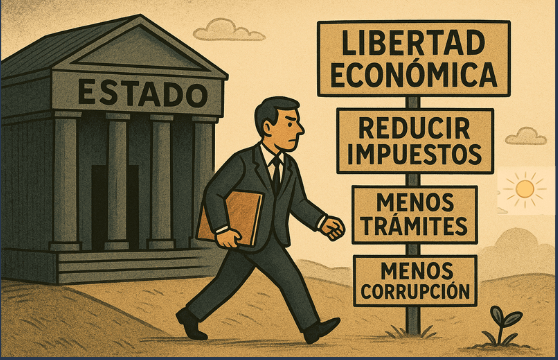
It remains pathetic to see Bolivian entrepreneurs —from El Alto, Santa Cruz, or any other region— making a pilgrimage to present their complaints, projects, demands, and pleas to the new government. They go with folders in hand, as if the Government were an almighty entity capable of solving all their problems, approving their ideas, or guaranteeing their success. The scene portrays Bolivia’s central tragedy: we are still a country that expects everything from the State and has not learned to trust freedom.
Real change begins when we understand that it is not the Government’s role to decide what to produce, how to produce it, or under what conditions. That is socialism, and we have lived under it for far too long. The message from the new president should be simple and forceful: “Work, produce; the State will not get in your way.” That should be the only promise—to guarantee an environment of economic freedom, eliminating the bureaucracy and obstacles that suffocate the productive sector.
Rodrigo Paz has said that entrepreneurs should not come with demands but with production. Correct. But he should go further: tell them not to come to the State at all. Not to ask for anything, because the State has nothing to give that it hasn’t already taken from someone else. The State must not be a source of handouts, soft loans, or artificial protections; it should limit itself to guaranteeing legal security, respect for property, and the enforcement of clear rules.
Bolivia’s main problem is the State. Every public official is a hurdle, a bureaucratic procedure, or an opportunity for corruption. Every new regulation is a denser web in which the productive citizen gets entangled. The Bolivian State does not drive the economy—it slows it down, makes it more expensive, and distorts it. The first challenge for the new government is not to address the problems of the private sector but to solve the problem of the State itself: its gigantism, inefficiency, and fiscal voracity.
Informality—that evil which technocrats seek to “formalize” with more plans—cannot be fought with offices, surveys, or forms. It is fought by removing the obstacles that prevent people from being formal. In Bolivia, obeying the law is an act of heroism: taxes are confiscatory, procedures endless, and labor regulations impossible to comply with. That is why people flee the system. Informality is not a cause; it is a consequence of excessive statism.
If we truly want to formalize the economy, we must do the opposite of what has been done so far: simplify, reduce, and liberate. Fewer taxes, fewer procedures, fewer inspectors. More freedom, more competition, more trust.
The State is not the engine of the country—it is the brake. Bolivia needs a small, efficient, and limited State that understands its role is not to “direct the economy” but to allow it to exist. Laws should be few and clear, not traps to extort citizens. Germany, after the war, rebuilt its economy with a two-article law: price controls prohibited, free market allowed. That was enough to generate prosperity.
If Rodrigo Paz wants to mark a true turning point, he must begin by freeing the country from its State. Let entrepreneurs stop making pilgrimages to the Palace and dedicate themselves to producing. Let the Government stop intervening in everything and limit itself to guaranteeing order and justice.
Editorial, El Dia:
No deja de ser patético ver a los empresarios bolivianos —del Alto, de Santa Cruz o de cualquier región— peregrinando para presentarle al nuevo gobierno, sus quejas, proyectos, demandas y ruegos. Van con carpetas en mano, como si el Gobierno fuera un ente todopoderoso capaz de resolver todos sus problemas, aprobar sus ideas o garantizarles éxito. La escena retrata el drama central de Bolivia: seguimos siendo un país que espera todo del Estado y que no ha aprendido a confiar en la libertad.
El verdadero cambio comienza cuando entendamos que no es función del Gobierno decidir qué producir, cómo hacerlo ni en qué condiciones. Eso es socialismo, y lo hemos vivido por demasiado tiempo. El mensaje del nuevo presidente debería ser uno solo y contundente: “Trabajen, produzcan; el Estado no los va a estorbar.” Esa debería ser la única promesa: garantizar un clima de libertad económica, eliminar la burocracia y las trabas que asfixian al sector productivo.
Rodrigo Paz ha dicho que los empresarios no deben llegar con demandas, sino con producción. Correcto. Pero debería ir más allá: decirles que no vengan al Estado. Que no pidan nada, porque el Estado no tiene nada que dar que no haya quitado antes a alguien más. El Estado no debe ser una fuente de dádivas, créditos blandos o protecciones artificiales; debe limitarse a garantizar seguridad jurídica, respeto a la propiedad y cumplimiento de reglas claras.
El principal problema de Bolivia es el Estado. Cada funcionario público es una traba, un trámite o una oportunidad para la corrupción. Cada nueva norma es una red más densa en la que se enreda el ciudadano productivo. El Estado boliviano no impulsa la economía: la frena, la encarece y la distorsiona. El primer desafío del nuevo gobierno no es atender los problemas del sector privado, sino resolver el problema del Estado: su gigantismo, su ineficiencia y su voracidad fiscal.
La informalidad —ese mal que los tecnócratas quieren “formalizar” con más planes— no se combate con oficinas, censos ni formularios. Se combate eliminando los obstáculos que impiden ser formal. En Bolivia, cumplir la ley es heroico: los impuestos son confiscatorios, los trámites interminables y las normas laborales, imposibles de cumplir. Por eso la gente escapa del sistema. La informalidad no es una causa: es una consecuencia del exceso de Estado.
Si de verdad se quiere formalizar la economía, hay que hacer lo contrario de lo que se ha hecho hasta ahora: simplificar, reducir y liberar. Menos impuestos, menos trámites, menos inspectores. Más libertad, más competencia, más confianza.
El Estado no es el motor del país, es el freno. Bolivia necesita un Estado pequeño, eficiente y limitado, que sepa que su papel no es “dirigir la economía”, sino permitir que exista. Las leyes deben ser pocas y claras, no trampas para extorsionar al ciudadano. Alemania, tras la guerra, reconstruyó su economía con una ley de dos artículos: prohibido el control de precios y libre mercado. Con eso bastó para generar prosperidad.
Si Rodrigo Paz quiere marcar un antes y un después, debe empezar por liberar al país de su Estado. Que los empresarios dejen de peregrinar a Palacio y se dediquen a producir. Que el Gobierno deje de intervenir en todo y se limite a garantizar orden y justicia.
https://eldia.com.bo/2025-11-11/editorial/dejar-atras-el-pais-patetico.html


Leave a Reply