
By Daniela Romero, EFE, Vision 360:
Liberal trend will shape the new Government of Bolivia, with a more “pragmatic” policy
Whoever becomes president will generate the most important change of the last two decades, “the abandonment of the anti-imperialist ideology with which MAS has conducted Bolivia’s foreign policy,” says international politics analyst Andrés Guzmán.
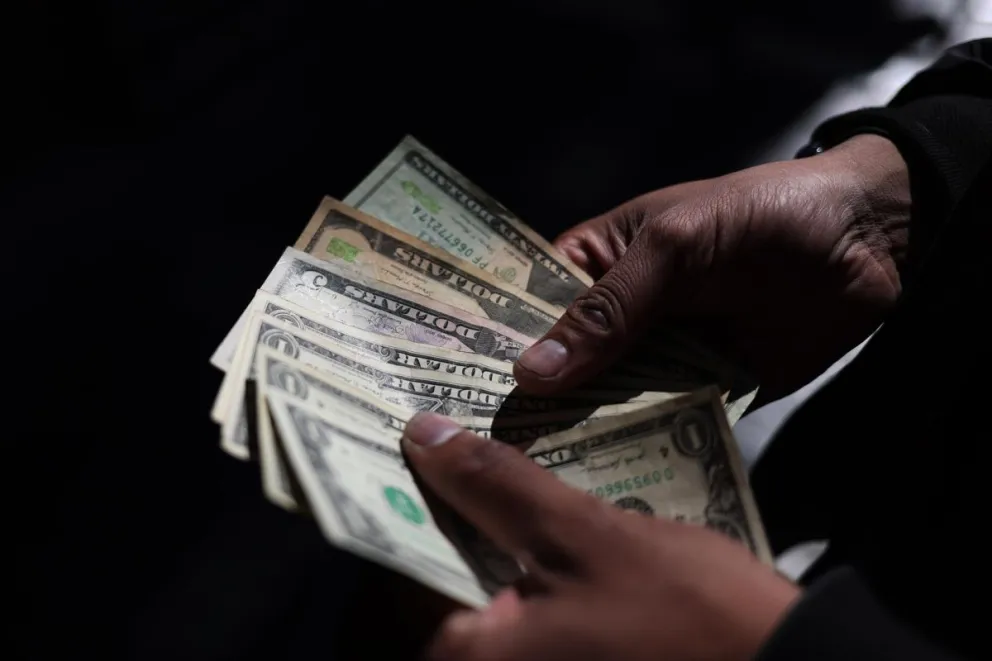
A person counts dollars. Photo: EFE
The unprecedented presidential runoff in Bolivia will put an end to almost two decades of governments by the left-wing Movement Toward Socialism (MAS), and analysts agree that a liberal trend will shape the new Executive, with a more pragmatic policy and a greater openness toward the United States and international markets.
Centrist senator Rodrigo Paz, from the Christian Democratic Party (PDC), and right-wing former president Jorge “Tuto” Quiroga (2001-2002), of the Libre alliance, will compete for the Presidency of the country in a historic second round on October 19.
Whoever becomes president will generate the most important change of the last two decades, “the abandonment of the anti-imperialist ideology with which MAS has conducted Bolivia’s foreign policy,” international politics analyst Andrés Guzmán told EFE.
“Both candidates announced they will have good relations with the United States — that means having a more pragmatic perspective, something that has been very much steered by 21st-century socialism, the line of the governments of Venezuela, Cuba, Nicaragua, with which MAS governments have very clearly aligned themselves,” he said.
Guzmán believes the change will be “drastic,” not only because of the political line of the future president, but also because of the urgent needs to obtain loans, financing, to open up to the world to bring in investments that come mainly from the United States and Europe, a continent “we have turned our back on in recent times.”
According to the analyst, both Paz and Quiroga must strengthen relations with Brazil, Argentina, Peru and Chile because “they are fundamental,” taking into account the commercial, gas, political, diplomatic and security ties that bind them with Bolivia.
“I understand that the policy of both candidates is to distance themselves from the governments of Venezuela, Nicaragua and Cuba. Quiroga announced he will not be a friend of Iran and will indeed have agreements with China; Paz, for his part, has not been as clear — he is probing with which countries to have relations and with which not,” Guzmán added.
Paz stated in August that he will reopen relations with Chile and the United States, but also “with anyone who is a good partner, so that Bolivia can reactivate, and people can have employment, work and a dignified life.”
Quiroga, for his part, announced that if he becomes president he will propose to the Argentine government of Javier Milei and to the next Chilean administration “to coordinate policies so that the three countries become a global lithium power.”
For political analyst Pedro Portugal, it is “fundamental” that the new Government react “immediately,” both in foreign and domestic policy, “if it wants to have room to govern afterward.”
“The situation is complex — the new Government will have to provide immediate responses to the economic crisis; its management capacity must be seen right away; if it manages to gain control of it, it will be able to govern the situation more skillfully,” he told EFE.
No candidate “has read” the popular sectors
Portugal stated that neither of the two candidates has had a pre-electoral vision to approach the popular and Indigenous sectors — groups that over the past 20 years have been allies of MAS governments.
“None of the political forces has an adequate historical reasoning regarding the Indigenous and the popular; they always see them as a mass they can manipulate to attack the enemy.
The Indigenous and popular sectors will have the same reflex they have always had — to see which one benefits them more and join them,” he said.
For the analyst, the Indigenous and popular sectors of Bolivia “have always participated actively in national politics,” even though political forces “have always used them.”
Portugal stated that MAS is now “dead,” and therefore the candidate who becomes president “must have the political will” to approach the popular sectors and reach agreements.
Bolivia will summon 7,567,207 citizens over 18 years of age — and another 369,308 in 22 countries — to the polls to elect the government for the next five-year term.
Por Daniela Romero, EFE, Vision 360:
Tendencia liberal marcará al nuevo Gobierno de Bolivia, con una política más “pragmática”
Cualquiera que llegue a ser presidente, generará el cambio más importante de las dos últimas décadas, “el abandono de la ideología antiimperialista con la que el MAS ha dirigido la política exterior de Bolivia”, señala el analista de política internacional, Andrés Guzmán.
Una persona cuenta dólares. Foto; EFE
La inédita segunda vuelta presidencial en Bolivia pondrá fin a casi dos décadas de Gobiernos del izquierdista Movimiento al Socialismo (MAS) y analistas coinciden en que una tendencia liberal marcará al nuevo Ejecutivo, con una política más pragmática y una mayor apertura hacia Estados Unidos y los mercados internacionales.
El senador centrista Rodrigo Paz, del Partido Demócrata Cristiano (PDC), y el expresidente derechista Jorge Tuto Quiroga (2001-2002), de la alianza Libre, se disputarán la Presidencia del país en una segunda vuelta sin precedentes en el país el próximo 19 de octubre.
Cualquiera que llegue a ser presidente, generará el cambio más importante de las dos últimas décadas, “el abandono de la ideología antiimperialista con la que el MAS ha dirigido la política exterior de Bolivia”, dijo a EFE el analista de política internacional, Andrés Guzmán.
“Ambos candidatos anunciaron que van a tener buenas relaciones con Estados Unidos, eso es tener una perspectiva más pragmática, algo que ha estado muy encarrilado en el socialismo del siglo XXI, la línea de los gobiernos de Venezuela, Cuba, Nicaragua con los que los gobiernos del MAS se han alineado muy claramente”, señaló.
Guzmán considera que el cambio será “rotundo”, no solo por la línea política del futuro mandatario, sino también por las necesidades imperiosas de obtener créditos, financiamientos, abrirnos al mundo para traer inversiones que vienen principalmente de Estados Unidos y Europa, continente que al que le hemos dado la espalda en el último tiempo”.
Según el analista, tanto Paz como Quiroga deben fortalecer las relaciones con Brasil, Argentina, Perú y Chile porque “son fundamentales”, tomando en cuenta los vínculos de comercio, gas y políticos, diplomáticos y de seguridad que los une con Bolivia.
“Entiendo que la política de ambos candidatos es alejarse de los gobiernos de Venezuela, Nicaragua y Cuba. Quiroga anunció que no será amigo de Irán y sí tendrá acuerdos con China; Paz, por su lado, no ha sido tan claro, va tanteando con qué países tener relaciones y con qué otros no”, añadió Guzmán.
Paz declaró en agosto que reabrirá relaciones con Chile y Estados Unidos, pero además “con todo aquel que sea buen socio, para que Bolivia se reactive y la gente tenga empleo, trabajo y una vida digna”.
Por su parte, Quiroga anunció que si es presidente propondrá al Gobierno argentino de Javier Milei y al próximo ejecutivo de Chile “coordinar políticas para que los tres países lleguen a ser una potencia mundial del litio”.
Para el analista político Pedro Portugal, es “fundamental” que el nuevo Gobierno reaccione “de inmediato”, tanto en su política externa como en la interna, “si quiere tener soltura para gobernar después”.
“La situación es compleja, el nuevo Gobierno tendrá que dar respuestas inmediatas a la crisis económica, se tiene que ver de inmediato la capacidad de gestión, si la logra controlar va a poder gobernar más hábilmente la situación”, mencionó a EFE.
Ningún candidato “ha leído” a los sectores populares
Portugal afirmó que ninguno de los dos candidatos ha tenido una visión preelectoral para acercarse a los sectores populares e indígenas, grupos que en los últimos 20 años han sido aliados de los gobiernos del MAS.
“Ninguna de las fuerzas políticas tiene un razonamiento histórico adecuado del indígena y de lo popular, los ven siempre como una masa que la pueden manipular para atacar al enemigo.
Los indígenas y los sectores populares van a tener el mismo reflejo que han tenido, ver cuál es la que le favorece más y unirse”, dijo.
Para el analista, los indígenas y los sectores populares de Bolivia “siempre han participado activamente en la política nacional”, aunque las fuerzas políticas “siempre los utilizaron”.
Portugal afirmó que ahora el MAS “está muerto”, por lo que el aspirante que llegue a la Presidencia “deberá tener la voluntad política” para acercarse a los sectores populares y lograr acuerdos.
Bolivia convocará a 7.567.207 ciudadanos mayores de 18 años y otros 369.308 en 22 países a las urnas para elegir al gobierno para el próximo quinquenio.

 Bolivian Thoughts | Pensamientos Bolivianos (Bilingual/Bilingüe)