
While in previous years a quintal in the domestic market sold for between 350 and 450 bolivianos, it now reaches values of 1,570 to 1,650 bolivianos.
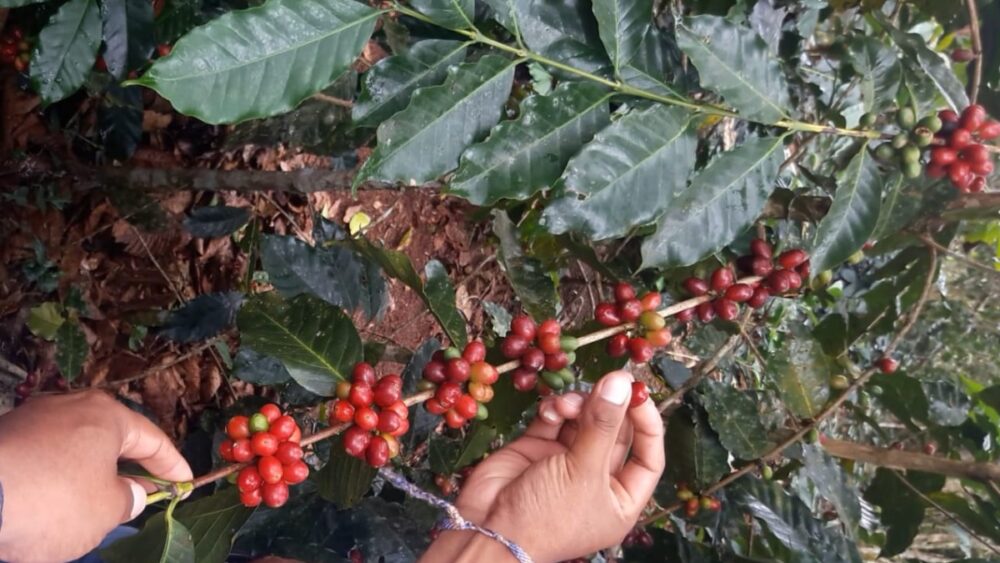
Bolivian coffee is experiencing a paradoxical moment. While prices are reaching historic highs, production remains far below the levels achieved in past decades. This was pointed out by Abednego Alipaz, president of the National Council of Bolivian Coffee.
According to Alipaz, the recent harvest showed some recovery thanks to abundant rainfall last year, which improved plant productivity. However, this improvement still falls short of historic levels: production currently stands between 45,000 and 50,000 bags, far from the 200,000 bags recorded in the year 2000.
The most striking contrast lies in prices. “Today the price of Bolivian coffee has risen by up to 400% compared to last year,” explained the leader to ANF, highlighting that producers managed to sell their product with satisfaction. While in previous years a quintal in the domestic market sold for between 350 and 450 bolivianos, it now reaches values of 1,570 to 1,650 bolivianos.
On the international market, prices are also favorable. A 50-kilogram bag is sold for 400 to 500 dollars, a value much higher than in previous years. This scenario allowed coffee growers to meet their economic expectations, although without solving production limitations.
Despite the price boom, the situation regarding exports presents new challenges. Alipaz clarified that with the United States there are no major difficulties regarding tariffs, but the European Union has established regulations that could complicate the sector’s future.
The EU requires that coffee be produced under forest shade systems, a requirement that is not yet mandatory but remains under debate. “The problem is that these decisions end up going through the government, and if there is no political will to create a true agricultural policy, producers are left stranded or forgotten,” warned Alipaz.
The leader insisted that productive recovery cannot depend solely on the climate or the international market. To achieve sustainable growth, Bolivia needs to revive a comprehensive coffee policy that will allow it to bridge the gap with its years of greatest production.
“We are in a good moment in terms of prices, but we are still very small in volume. Bolivian coffee has enormous potential, but it requires state support and long-term planning,” Alipaz concluded.
/FC/ANF/
Mientras que en años anteriores un quintal, en el mercado interno, se pagaba entre 350 y 450 bolivianos, ahora alcanza valores de 1.570 a 1.650 bolivianos.
El café boliviano vive un momento paradójico. Mientras los precios alcanzan cifras históricas, la producción se mantiene muy por debajo de los niveles logrados en décadas pasadas. Así lo advirtió Abednego Alipaz, presidente del Consejo Nacional del Café Boliviano.
Según Alipaz, la cosecha reciente mostró una recuperación gracias a la abundancia de lluvias el año pasado, lo que permitió mejorar la productividad de las plantas. Sin embargo, esta mejoría no alcanza los niveles históricos: actualmente la producción se ubica entre 45.000 y 50.000 bolsas, muy lejos de las 200.000 bolsas registradas el año 2000.
El contraste más llamativo está en los precios. “Hoy el precio del café boliviano subió hasta un 400% respecto al año pasado”, explicó el dirigente a la ANF, destacando que los productores lograron vender su producto con satisfacción. Mientras que en años anteriores un quintal, en el mercado interno, se pagaba entre 350 y 450 bolivianos, ahora alcanza valores de 1.570 a 1.650 bolivianos.
En el mercado internacional, los precios también resultan favorables. Una bolsa de 50 kilogramos se comercializa en 400 a 500 dólares, un valor muy superior al de gestiones anteriores. Este escenario permitió a los caficultores cubrir sus expectativas económicas, aunque sin resolver las limitaciones productivas.
A pesar de la bonanza de precios, la situación en materia de exportaciones plantea nuevos desafíos. Alipaz aclaró que con Estados Unidos no existen mayores dificultades en cuanto a aranceles, pero que la Unión Europea ha establecido normas que pueden complicar el futuro del sector.
La UE exige que el café sea producido bajo sistemas de sombras forestales, un requisito que aún no se aplica de manera obligatoria pero que está en debate. “El problema es que estas decisiones terminan pasando por el gobierno, y si no existe una voluntad política de generar una verdadera política agraria, los productores quedamos desalados u olvidados”, advirtió Alipaz.
El dirigente insistió en que la recuperación productiva no puede depender únicamente del clima o del mercado internacional. Para alcanzar un crecimiento sostenible, Bolivia necesita reactivar una política cafetalera integral que permita superar la brecha con los años de mayor producción.
“Estamos en un buen momento en términos de precios, pero seguimos siendo muy pequeños en volumen. El café boliviano tiene un enorme potencial, pero requiere respaldo estatal y planificación a largo plazo”, concluyó Alipaz.
/FC/ANF/

 Bolivian Thoughts | Pensamientos Bolivianos (Bilingual/Bilingüe)