
By Pablo Peralta, Vision 360:
The book Bolivia Awaits You has just been published, containing images of Bolivia’s internationally certified tourist destinations, in the context of the Bicentennial.
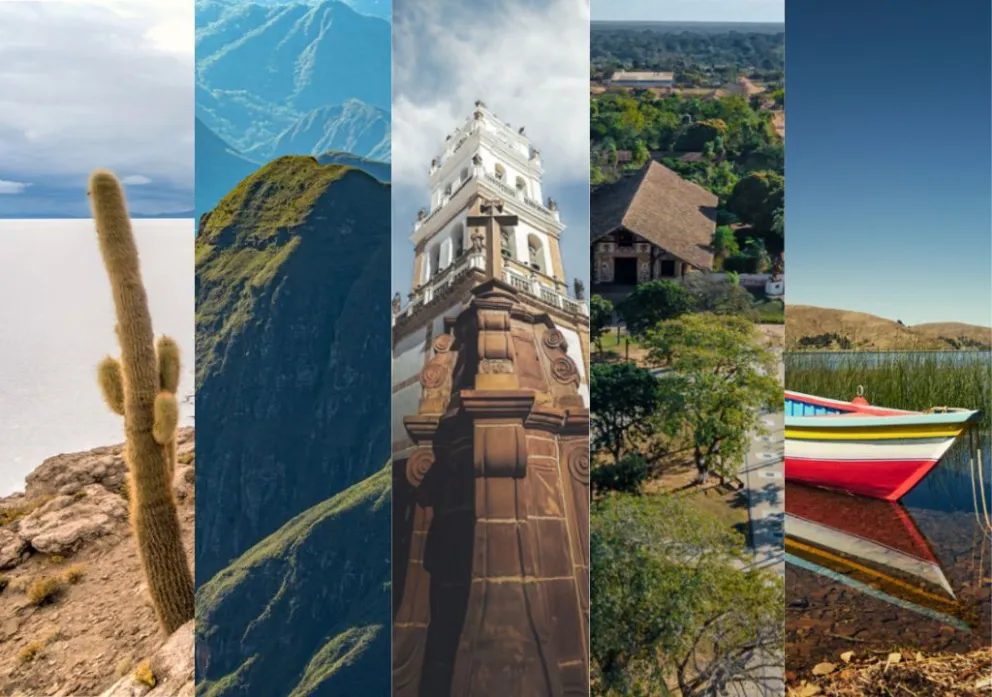
Images of five Bolivian tourist destinations: Salar de Uyuni, Samaipata, Sucre, Jesuit Missions, and Lake Titicaca. Photos: Bolivia Awaits You
The Government launched the book Bolivia Awaits You, which features images of 20 internationally certified tourist destinations, as part of the Bicentennial celebration. Visión 360 presents a selection of five emblematic destinations.
“This work captures the essence and contrasts of the country’s natural and cultural wealth, with landscapes ranging from majestic peaks to lush jungles teeming with biodiversity. The brief text of this publication dialogues with the images and is an invitation to discover our country,” said President Luis Arce at the book’s presentation.
The five selected destinations are Salar de Uyuni, Samaipata, Sucre, the Jesuit Missions, and Lake Titicaca.
Salar de Uyuni
The book describes the salt flat as an endless horizon, covering more than 10,582 km², containing nearly 11 billion tons of salt, making it the world’s largest lithium reserve.
“The Salar de Uyuni takes you to a limitless world (…). During the rainy season, sunsets become a perfect mirror of the sky thanks to a thin layer of water,” it notes.
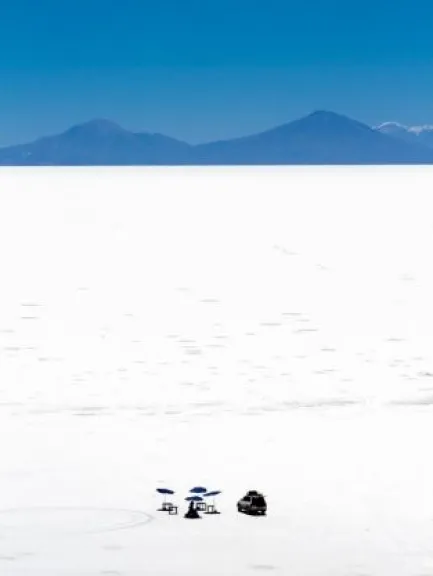
Visitors may also explore the train cemetery, considered “the largest in the world,” and see “millenary giant cacti” up to ten meters tall standing amid the vast white plain.
Samaipata
Nestled among hills and valleys lies the “Fortress of Samaipata.” Its name in Quechua, according to the book, reflects its essence: a rest in the heights for those who visit.
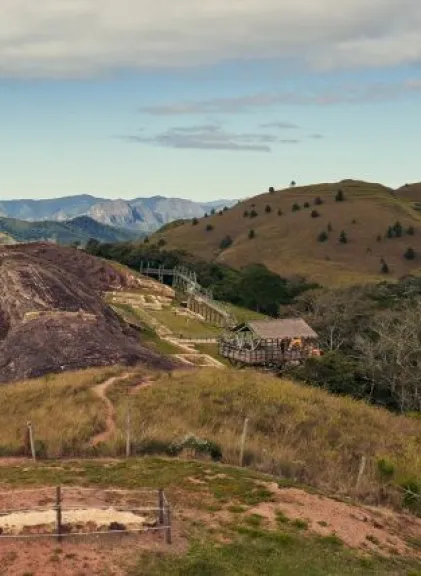
“Vine climbs at Bolivian heights and grows in Samaipata, offering visitors a captivating bouquet (…). The Elbow of the Andes, where clouds kiss the mountains, is a unique viewpoint to enjoy sunsets, sunrises, and commune with nature,” the book reads.
Sucre
Another highlighted destination in Bolivia Awaits You is Sucre, also known as the White City, which preserves Bolivia’s colonial architecture: “its reddish tiles and carved wooden balconies are witnesses of a nation’s birth.”
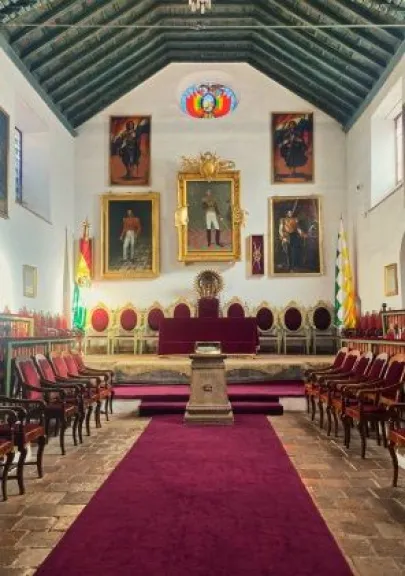
“La Glorieta Castle displays towers that blend Gothic, Baroque, and Mudejar styles. Its secret passageways and vast gardens evoke the luxury and eccentricity of 19th-century aristocracy,” the book notes.
Jesuit Missions
According to the book, the Jesuit Missions left behind buildings, murals, historical objects, artistic works, and a lasting cultural legacy. In short, the Jesuit path spurred the region’s growth.
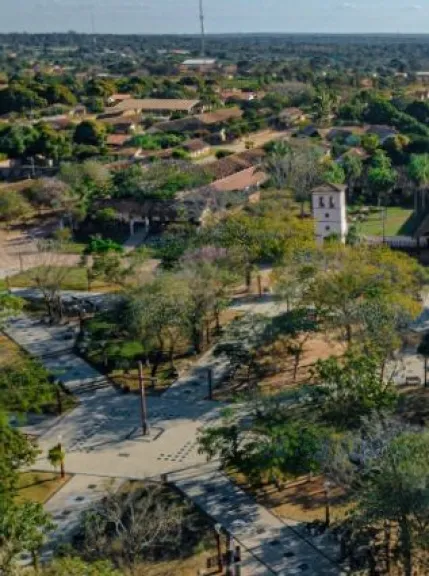
During the missionary era, young people who adopted the Catholic faith were welcomed by the “grandfathers,” who wore masks painted white to satirize the missionaries and question the imposition of faith, reflecting the double cultural and religious identity experienced by indigenous communities, the text explains.
Lake Titicaca
Lake Titicaca is the world’s highest navigable lake, located above 3,800 meters above sea level. It is a sacred space where Andean cultures continue to safeguard their treasures, memory, and identity.
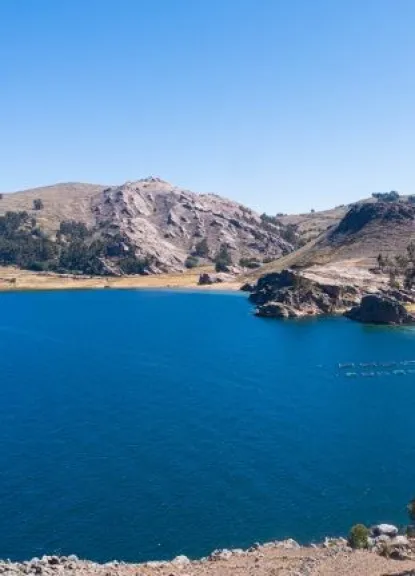
“Moments that endure in stone and sand, landscapes that invite travelers to trace the legacy of Titicaca’s lakeside shores (…). Copacabana, a natural amphitheater, preserves the reflection of the sacred bond between earth and sky, serving as guardian of the faith that moves thousands of pilgrims to the feet of the Virgin of Copacabana,” the book states.
Por Pablo Peralta Miranda, Vision 360:
Se acaba de publicar el libro “Bolivia te espera” que contiene imágenes de los destinos turísticos internacionales certificados de Bolivia, en el marco del Bicentenario.
Imágenes de cinco destinos turísticos de Bolivia: Salar de Uyuni, Samaipata, Sucre, Misiones Jesuíticas y el lago Titicaca. Fotos: Bolivia te espera
El Gobierno lanzó el libro “Bolivia te espera” que contiene imágenes de los 20 destinos turísticos internacionales certificados en el contexto de la celebración del Bicentenario. Visión 360 le presenta una selección de cinco destinos emblemáticos.
“Esta obra captura la esencia y los contrastes de la riqueza natural y cultural del país, con paisajes que van desde las cumbres majestuosas hasta selvas exuberantes que albergan una gran biodiversidad. El texto breve de esta publicación dialoga con las imágenes y es una invitación para conocer nuestro país”, indica el presidente Luis Arce, en la presentación del libro.
Los cinco destinos seleccionados son el Salar de Uyuni, Samaipata, Sucre, las Misiones Jesuíticas y el Lago Titicaca.
Salar de Uyuni
El documento señala que el salar es un horizonte sin fin, con más de 10.582 km², que contiene cerca de 11.000 millones de toneladas de sal, los cuales convierten a esa área como la reserva de litio más grande del mundo.
“El Salar de Uyuni te traslada a un mundo sin límites (…). Los atardeceres durante la temporada de lluvias, gracias a la delgada capa de agua se convierte en un espejo perfecto del cielo”, se anota.
El visitante, según el libro, también puede visitar el cementerio de trenes, considerado “el más grande del mundo” y ver en medio de la vasta llanura blanca “milenarios cactus gigantes” que alcanzan los diez metros de altura.
Samaipata
Se halla entre colinas y valles. Es el “Fuerte de Samaipata”. Su nombre en quechua, según el documento, refleja su esencia: un descanso en las alturas para quienes lo visitan.
“La vid trepa en las alturas bolivianas y crece en Samaipata, ofreciendo al visitante un bouquet cautivador (…). El Codo de los Andes donde las nubes besan las montañas, mirador único para disfrutar ocasos, albas y dialogar con la naturaleza”, se lee en el libro.
Sucre
Otro de los destinos destacados en “Bolivia te espera” es Sucre, denominada también Ciudad blanca, la cual conserva la arquitectura colonial de Bolivia: “las tejas rojizas y los balcones de madera esculpida son testigos de la creación de un país”.
“El Castillo de La Glorieta exhibe torres que combinan los estilos gótico, barroco y mudéjar. Sus pasadizos secretos y amplios jardines evocan el lujo y la excentricidad de la aristocracia del siglo XIX”, se indica en el documento.
Misiones Jesuíticas
Las Misiones Jesuíticas, señala el libro, dejaron construcciones, murales, objetos históricos, obras artísticas y un legado cultural perdurable. En suma, el camino de los Jesuitas impulsa el crecimiento de la región.
Durante la época misional, los jóvenes que adoptaban la fe católica eran recibidos por los “abuelos”, quienes usaban máscaras pintadas de blanco para satirizar a los misioneros y cuestionar la imposición de la fe, reflejando la doble identidad cultural y religiosa vivida por las comunidades indígenas, se indica en el texto.
Lago Titicaca
El Lago Titicaca es el lago navegable más alto del planeta, dado que está por encima de los 3.800 metros sobre el nivel del mar. Es un espacio sagrado en el que las culturas andinas aún resguardan sus tesoros, memoria e identidad.
“Momentos que perduran en piedra y arena, paisajes que invitan a recorrer el legado de las costas lacustres del Titicaca (…). Copacabana, anfiteatro natural, guarda el reflejo del vínculo sagrado entre tierra y cielo, siendo custodio de la fe que mueve miles de peregrinos a los pies de Virgen de Copacabana”, se lee en el libro.

 Bolivian Thoughts | Pensamientos Bolivianos (Bilingual/Bilingüe)