
By Eju.tv:
Legitimacy in doubt: Can the winner of the unprecedented runoff govern without social backing or a parliamentary majority?
The runoff exposes the fragility of political representation, with reactive campaigns and a volatile electorate; analysts warn that a victory in the second round does not guarantee legitimacy if the winner lacks support in the Assembly and in the streets.

Tuto Quiroga and Rodrigo Paz will face each other again on October 19. Photo: AFP
Just over a month before the runoff on October 19, Bolivia faces an unprecedented presidential second round since the system was introduced in 2009. No candidate reached the 50% plus one threshold of valid votes, nor the 10-point lead required by law, since, according to the official count of the Supreme Electoral Tribunal (TSE), Rodrigo Paz obtained around 32% and Jorge Tuto Quiroga about 27%.
In third place was the residual vote, composed largely of null, blank, and abstention, which marked the agenda of the August 17 vote and gave rise to its promoter, Evo Morales, celebrating that the 19% null vote placed him in third place and affirming that the little more than one million people who opted for that choice expressed a rejection of both the “old and the new right.”
Parliamentary fragmentation reinforces uncertainty: no political force achieved a majority in the Plurinational Legislative Assembly. This means that the next president will govern without a solid bloc, forced to negotiate and make pacts for each initiative. Although the Christian Democratic Party (PDC) won the largest share of seats, it is not enough to reach a relative majority, much less two-thirds. The Libre alliance is in an even more compromised position.
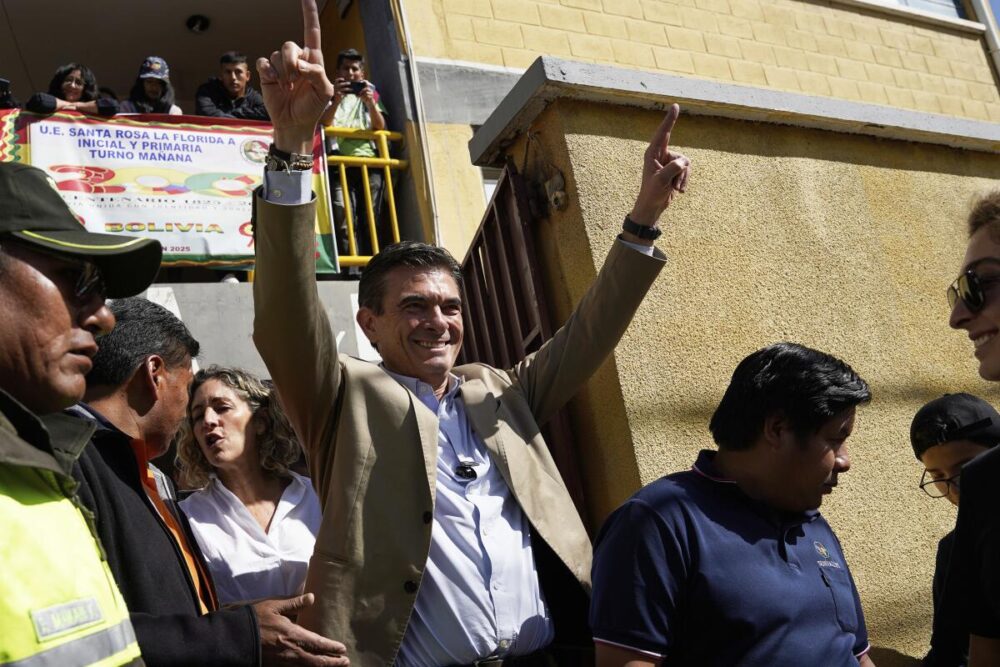
Rodrigo Paz after casting his vote on August 17. Photo: AP
From now on, the two potential contenders in the second round must weigh the possibilities that will allow them to govern with relative ease in the coming years, especially in the initial stage of government, since both pledged to tackle economic pressure with short-term measures to bring in fresh dollars, normalize fuel distribution, and ease inflationary pressure that has eroded the purchasing power of Bolivian households.
This means that agreements with the rest of the parties represented in parliament must be ready by November 8, the day of the inauguration of the new president, or earlier. Every vote counts. The PDC has 16 senators; 17 plurinominal deputies; 30 uninominal; two from special districts; and five supra-state representatives (70 in total if supra-state seats are counted). This consolidates it as the leading force.
The Libre Alliance has 12 senators; 17 plurinominal; 20 uninominal; two from special districts; and two supra-state (53 in total including supra-state). It is the second force. The Unity Alliance obtained seven senators; 15 plurinominal deputies and 11 uninominal; two supra-state (35 in total including supra-state). Third force. Popular Alliance (AP): five plurinominal; two uninominal; one from special district (eight deputies). PB Súmate: one senator; five plurinominal deputies. The Movement Toward Socialism (MAS): two plurinominal deputies; no senators.

The composition of the two chambers as of November 8. Graphic: OEP
The numbers show the fragmentation in which the Legislative Assembly finds itself. This means that even currently marginal parties like Popular Alliance and MAS itself can become the golden vote that allows the next administration to push forward projects considered urgent to try to reverse the crisis the country is going through. The negotiating space could become the hinge for the renewal of a national unity government, as there was before Evo Morales.
The other problem is discursive and programmatic. The runoff campaign, far from focusing on concrete proposals, has become reactive. Political analyst Carlos Saavedra warned that the electoral second round, the first in the country’s history, is not following the path it should and, instead of being a democratic celebration, has turned into a “mud pit” of accusations and a limitless war.
“This second round has become a war without trenches, of attacks, a battlefield in missericordi (without mercy), where there is crossfire and few proposals,” said Saavedra, who later warned that instead of generating certainty and alternatives for citizens, the runoff campaign is producing “more fear, more uncertainty, and more polarization” among the electorate.
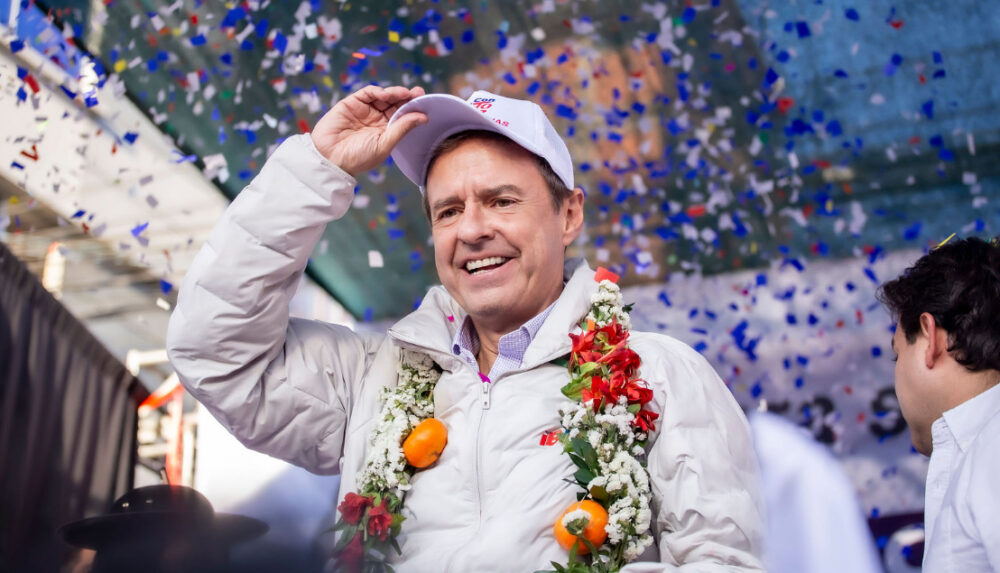
Tuto Quiroga at a proclamation rally. Photo: Social Media
A similar view is held by former presidential spokesman and political analyst Jorge Richter, who sees an absence of clear strategies in the campaigns of the two parties that will face off on October 19. According to the expert, the candidates act more out of reaction than planning, which could affect voter behavior. Once again the element of fear among the people arises due to the lack of real proposals from the tickets.
“There are no campaign strategies, what exists are reactions and attempts to take initiatives in the heat of the day-to-day or the immediate situation,” said Richter, in an interview on the radio program La Hora Pico on eju.tv. “It would be more important for us Bolivians to be told precisely how to bring dollars into the country and secure fuel supply. Both promise, but neither says anything substantive about the issue,” he explained.
In that scenario arises the fundamental question of how legitimate a president elected with barely a third of valid votes and a divided Congress will be. Democratic legitimacy, political scientists point out, is not reduced to winning a runoff; it implies effective representation in the Assembly and in the streets. Without visible majorities or active support, the next government will face difficulties in implementing reforms and maintaining political stability.

Another factor of governability will be the street. Photo: Reuters
Strategic or rejection voting becomes decisive. Some sectors that traditionally vote for MAS and its offshoots no longer endorse the null vote; for analyst Richter, the main beneficiary will be Rodrigo Paz. “The null vote will clearly lean toward Rodrigo. Jorge Quiroga has historically been an adversary, almost an enemy of the social and popular for many years. Those people will not vote for him,” he stated.
Beyond the ballot box, Bolivia’s second round will test the political system’s ability to build consensus. If the next president wants to avoid a governability crisis, he will have to go beyond a numerical victory: he must win the street, negotiate in the legislature, and reconnect with an electorate tired of empty promises. He must foster social mobilization, visible support from various sectors; not just numbers on ballots, but active citizen backing.
by Boris Bueno
Por Eju.tv:
Legitimidad en duda: ¿Podrá el vencedor del inédito balotaje gobernar sin respaldo social ni mayoría parlamentaria?
El balotaje expone la fragilidad de la representatividad política, con campañas reactivas y un electorado volátil; analistas advierten que un triunfo en segunda vuelta no garantiza legitimidad si el ganador carece de respaldo en la Asamblea y en la calle.
Tuto Quiroga y Rodrigo Paz nuevamente se verán las caras el 19 de octubre. Foto: AFP
A poco más de un mes para el balotaje del 19 de octubre, Bolivia encara una inédita segunda vuelta presidencial desde que el sistema fue introducido en 2009. Ningún candidato logró el umbral del 50 % más uno de los votos válidos ni la diferencia de 10 puntos exigida por la ley, ya que, según el cómputo oficial del Tribunal Supremo Electoral (TSE), Rodrigo Paz obtuvo cerca del 32 % y Jorge Tuto Quiroga alrededor del 27 %.
En tercer lugar, se ubicó el voto residual compuesto en gran parte por el nulo, el blanco y el ausentismo, que marcaron la agenda de la votación del 17 de agosto y dieron pie para que el propulsor de esta tendencia, Evo Morales, celebre que el 19 % del voto nulo lo haya ubicado en tercer lugar y afirme que el poco más de un millón de personas que se decantó por esa opción expresó un rechazo tanto a la ‘vieja como a la nueva derecha’.
La fragmentación parlamentaria refuerza la incertidumbre: ninguna fuerza política alcanzó la mayoría en la Asamblea Legislativa Plurinacional. Esto significa que el próximo presidente gobernará sin un bloque sólido, obligado a negociar y pactar cada iniciativa. Si bien el Partido Demócrata Cristiano (PDC) obtuvo la mayoría de los escaños no le alcanza para tener la mayoría relativa y menos los dos tercios. La alianza Libre tiene una situación aún más comprometida.
Rodrigo Paz después de emitir su voto el pasado 17 de agosto. Foto: AP
Entonces, a partir de la fecha, los dos eventuales contendientes de la segunda vuelta deben barajar las posibilidades que les permitan gobernar con relativa holgura los próximos años y, en especial, en la primera etapa del gobierno, debido a que ambos se comprometieron a atacar la presión económica con normas que en el tiempo breve permitan disponer de dólares frescos, normalizar la distribución de los combustibles y bajar la presión inflacionaria que ha provocado la merma de la capacidad adquisitiva de los hogares bolivianos.
Ello supone que los compromisos con el resto de los partidos con representación parlamentaria deben estar listos el ocho de noviembre, día de la asunción del nuevo mandatario, o antes. Todos los votos cuentan. El PDC tiene 16 senadores; 17 diputados plurinominales; 30 uninominales; dos de circunscripción especial; y cinco representantes supraestatales (70 en total si se contabilizan supraestatales). Con ello se consolida como primera fuerza.
La Alianza Libre cuenta con 12 senadores; 17 plurinominales; 20 uninominales; dos de circunscripción especial; y dos supraestatales (53 en total incluyendo supraestatales). Es la segunda fuerza. Alianza Unidad logró siete senadores; 15 diputados plurinominales y 11 uninominales; dos supraestatales (35 en total incluyendo supraestatales). Tercera fuerza. Alianza Popular (AP): cinco plurinominales; dos uninominales; uno de circunscripción especial (ocho diputados). PB Súmate: un senador; cinco diputados plurinominales. El Movimiento al Socialismo (MAS): dos diputados plurinominales; sin senadores.
La composición de las dos cámaras a partir del próximo 8 de noviembre. Gráfico: OEP
Los números muestran la fragmentación en la que se encuentra la Asamblea Legislativa. Esto supone que, incluso, partidos actualmente marginales como Alianza Popular y el propio MAS se pueden convertir en el voto de oro que permita a la próxima gestión impulsar los proyectos que consideran urgentes para tratar de revertir en algo la crisis que atraviesa el país. El espacio de tratativas puede llegar a ser la bisagra para la renovación de un gobierno de acuerdo nacional, como hubo antes de Evo Morales.
El otro problema es el discursivo y programático. La campaña del balotaje, lejos de enfocarse en propuestas concretas, se ha vuelto reactiva. El analista político Carlos Saavedra advirtió que la segunda vuelta electoral, la primera en la historia del país, no sigue el rumbo que debería y, en lugar de ser una fiesta democrática, terminó transformándose en un ‘lodazal’ de acusaciones y una guerra sin límites.
“Esta segunda vuelta se ha convertido en una guerra sin trincheras, de ataques, en un campo de batalla in missericordi (sin misericordia), donde hay fuego cruzado y pocas propuestas”, señaló Saavedra, quien lanzó posteriormente una advertencia en sentido que, en lugar de generar certezas y alternativas para la ciudadanía, la campaña de balotaje está produciendo “más miedo, más incertidumbre y más polarización” en el electorado.
Tuto Quiroga en un acto de proclamación. Foto: RRSS
Similar criterio tiene el exvocero presidencial y analista político Jorge Richter, para quien existe una ausencia de estrategias claras en las campañas de los dos partidos que se medirán el próximo 19 de octubre. Según el experto, los candidatos actúan más por reacción que por planificación, lo que podría incidir en el comportamiento del electorado. Nuevamente entra el componente de temor de la gente ante la falta de propuestas reales por parte de los binomios.
“No hay estrategias de campaña, lo que existe son reacciones e intentos de tomar iniciativas al calor del día a día o de la coyuntura inmediata”, señaló Richter, en entrevista en el programa radial La Hora Pico de eju.tv. Sería más importante que se nos dijese a los bolivianos cómo se resuelve puntualmente el tema de traer dólares al país y el abastecimiento de combustible. Ambos prometen, pero ninguno dice algo de fondo sobre el tema”, explicó.
En ese panorama surge la pregunta fundamental sobre qué tan legítimo será un presidente electo con apenas un tercio de los votos válidos y un Congreso dividido. La legitimidad democrática, señalan los politólogos, no se reduce a ganar un balotaje, implica representatividad efectiva en la Asamblea y en las calles. Sin mayorías visibles ni apoyo activo, el próximo gobierno enfrentará dificultades para implementar reformas y mantener estabilidad política.
Otro de los factores de gobernabilidad será la calle. Foto: Reuters
El voto estratégico o de rechazo se vuelve decisivo. Algunos sectores que tradicionalmente votan al MAS y sus vertientes no patrocinan ya el voto nulo, para el analista Richter el mayor beneficiario será Rodrigo Paz. “El voto nulo va a tener claramente una preferencia hacia Rodrigo. Jorge Quiroga es históricamente un adversario casi enemigo de lo social popular durante muchos años. Esa gente no va a votar por él”, afirmó
Más allá de las urnas, la segunda vuelta boliviana pondrá a prueba la capacidad del sistema político para construir consensos. Si el próximo presidente quiere evitar una crisis de gobernabilidad, deberá ir más allá de la victoria numérica: tendrá que ganar la calle, negociar en el Legislativo y reconectar con un electorado cansado de promesas vacías. Debe promover una movilización social, un apoyo visible de diversos sectores; pero, no sólo números en papeletas, sino respaldo activo ciudadano.
por Boris Bueno

 Bolivian Thoughts | Pensamientos Bolivianos (Bilingual/Bilingüe)