
By Marco Antonio Belmonte, Visión 360:
TGN Spending
Amid crisis and fiscal deficit, four elections in 15 months cost the country over one billion bolivianos
In December 2024, judicial elections were held; this year, national elections and a runoff; and in March 2026, subnational elections. Economist Julio Linares considers judicial elections a pointless expense, and argues that national elections could be decided by simple majority through a constitutional reform.
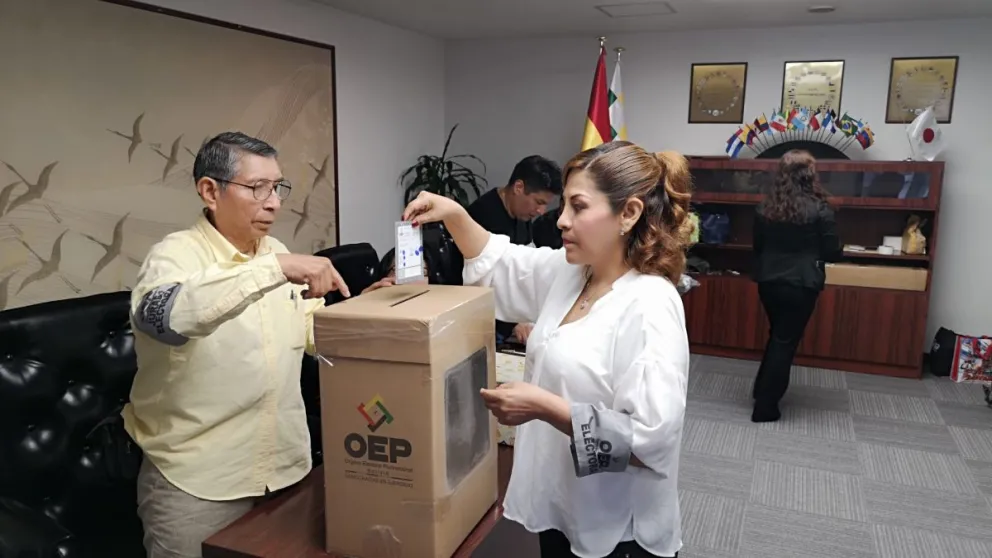
A citizen casts her vote in the recent general elections. Photo: ABI
Amid the economic crisis and high fiscal deficit, Bolivia, in just over a year and three months (December 2024 to March 2026), will hold four elections (judicial, national, runoff, and subnational), requiring nearly 1 billion bolivianos from the General Treasury of the Nation (TGN).
Economist Julio Linares, a specialist in decentralization, indicated that the judicial elections of December 2024 cost 206.7 million bolivianos, the general elections demanded 321 million, and the runoff between 190 and 200 million. “For the first months of 2026, subnational elections are coming up, which will cost between 320 and 330 million bolivianos. We are talking about more than one billion bolivianos, that is, about 150 million dollars in four elections, during a complicated period for the country’s public finances, because all the money comes from the Treasury and this widens the fiscal deficit,” Linares observed.
The Government, in the 2025 General State Budget (PGE), projected for this year a fiscal deficit of -9.2% of the Gross Domestic Product (GDP).
Linares believes that the new government should evaluate the need to eliminate judicial elections and approve another mechanism for selecting judges based on merit, because in light of the results, they represent a pointless expense. This, since justice has not changed at all.
He also said that it should be analyzed whether, in national elections, the winner could be chosen by simple majority, thereby saving the cost of a runoff. “This would require a constitutional reform, but midterm elections to renew deputies and senators should also be considered,” he pointed out.
According to Linares, 200 million bolivianos fund the Juan Azurduy cash transfer program for one year, and with this amount, four years of the Juancito Pinto grant could be guaranteed, extending the benefit to early childhood education.
Por Marco Antonio Belmonte, Visión 360:
Gasto del TGN
En medio de la crisis y déficit fiscal, cuatro elecciones en 15 meses le cuestan al país más de mil millones de bolivianos
En diciembre de 2024 se desarrollaron las elecciones judiciales, este año comicios nacionales y balotaje y en marzo de 2026 elecciones subnacionales. El economista Julio Linares considera que las judiciales son un gasto insulso y las nacionales podrían elegirse por simple mayoría con una reforma de la CPE.
Una ciudadana deposita su voto en las elecciones generales recientes. Foto: ABI
En medio de la crisis económica y el elevado déficit fiscal, Bolivia, en poco más de un año y tres meses (diciembre 2024 y marzo 2026), desarrolla cuatro elecciones (judiciales, nacionales, balotaje y subnacionales), que demandan un gasto de cerca de 1.000 millones de bolivianos al Tesoro General de la Nación (TGN).
El economista Julio Linares, especialista en temas de descentralización, indicó que los comicios judiciales de diciembre 2024, tuvieron un costo de 206,7 millones de bolivianos, las elecciones generales demandaron 321 millones de bolivianos y la segunda vuelta electoral 190 a 200 millones de bolivianos. “Para los primeros meses de 2026 se vienen las elecciones subnacionales que costarán entre 320 y 330 millones de bolivianos. Estamos hablando de más de mil millones de bolivianos, es decir, unos 150 millones de dólares en cuatro elecciones, en un período complicado para las finanzas públicas del país, porque toda la plata sale del Tesoro y esto agranda el déficit fiscal”, observó Linares.
El Gobierno, en el Presupuesto General del Estado (PGE) 2025, proyectó para este año un déficit fiscal del -9,2 del Producto Interno Bruto (PIB).
Linares considera que el nuevo Gobierno, debe evaluar la necesidad de eliminar las elecciones judiciales y aprobar otro mecanismo de selección de jueces en función a méritos, porque a la luz de los resultados, demanda un gasto insulso. Esto, porque la justicia no ha cambiado nada.
También, dijo que se debería analizar que en las elecciones nacionales se elija al ganador por mayoría simple y de esa manera se ahorraría también el costo que demanda una segunda vuelta electoral. “Esto se tendría que hacer con una reforma constitucional, pero también se debería pensar en elecciones de medio mandato, para renovar a diputados y senadores”, puntualizó.
De acuerdo con Linares, 200 millones de bolivianos financian el bono Juan Azurduy de un año y con este monto se podría garantizar cuatro años del bono Juancito Pinto, ampliando el beneficio a nivel inicial.

 Bolivian Thoughts | Pensamientos Bolivianos (Bilingual/Bilingüe)