
By Marco Antonio Belmonte, Vision 360:
Strengths and weaknesses of Quiroga and Paz’s economic proposals analyzed
The analysis was conducted by former Tierra Foundation director Gonzalo Colque, who points out that the Achilles’ heel of Paz and Lara is promising the impossible: spending more while collecting less, whereas Quiroga advocates for belt-tightening.
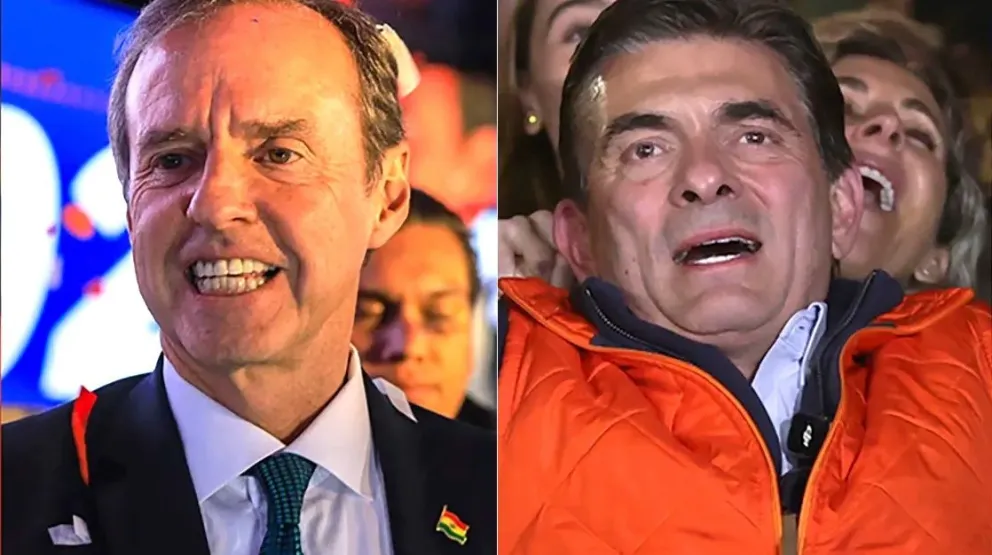
Jorge Quiroga and Rodrigo Paz will compete for the presidency in a second-round election. Photo Quiroga / Paz
An evaluation of the economic proposals of the Christian Democratic Party (PDC) and the Alianza Libre, the political forces heading to the runoff, highlights the strengths and weaknesses of the plans put forward by presidential candidates Rodrigo Paz and Jorge Quiroga. The assessment was made by former Tierra Foundation director Gonzalo Colque after reviewing the programs of both candidates for the next five years of government.
He noted that Rodrigo Paz and Edman Lara get one key point right: supporting what feeds the population, i.e., the popular or informal economy, which employs 70% of people. “Two out of three Bolivians are transporters, self-employed, or merchants. This is the gremial family most protesting the shortage of dollars and fuels,” he said.
On the other hand, Tuto Quiroga and his running mate Juan Pablo Velasco also merit recognition for addressing an uncomfortable but urgent issue: tackling the economic crisis affecting everyone. “The national currency has lost its purchasing power, now worth half of what it was a year and a half ago. Alianza Libre loudly warns what will happen if adjustment measures continue to be postponed,” Colque emphasized.
He added that the Achilles’ heel of Paz and Lara is that they promise the impossible: spend more while collecting less, lower taxes, reduce tariffs, and implement 50/50 decentralization.
All this comes with numbers in the red, the central government lacking funds to transfer to subnational entities, which in turn owe salaries and have stalled projects. “Their proposals, besides being contradictory and inconsistent, have shifted from moderate offers to increasingly inflated, demagogic, and populist promises,” he pointed out.
Alianza Libre, on the other hand, does not promise sweets but intensive care. Tuto Quiroga proposes belt-tightening, a tough economy, and radical break with statism. “The sacrifice would be shared by all, but the benefits would mostly go to the private sector. Trickle-down economics offers no guaranteed success for everyone. His plan, more than guided by economic rationality, shows partiality toward agro-exporters and some anti-MAS resentment,” Colque observed.
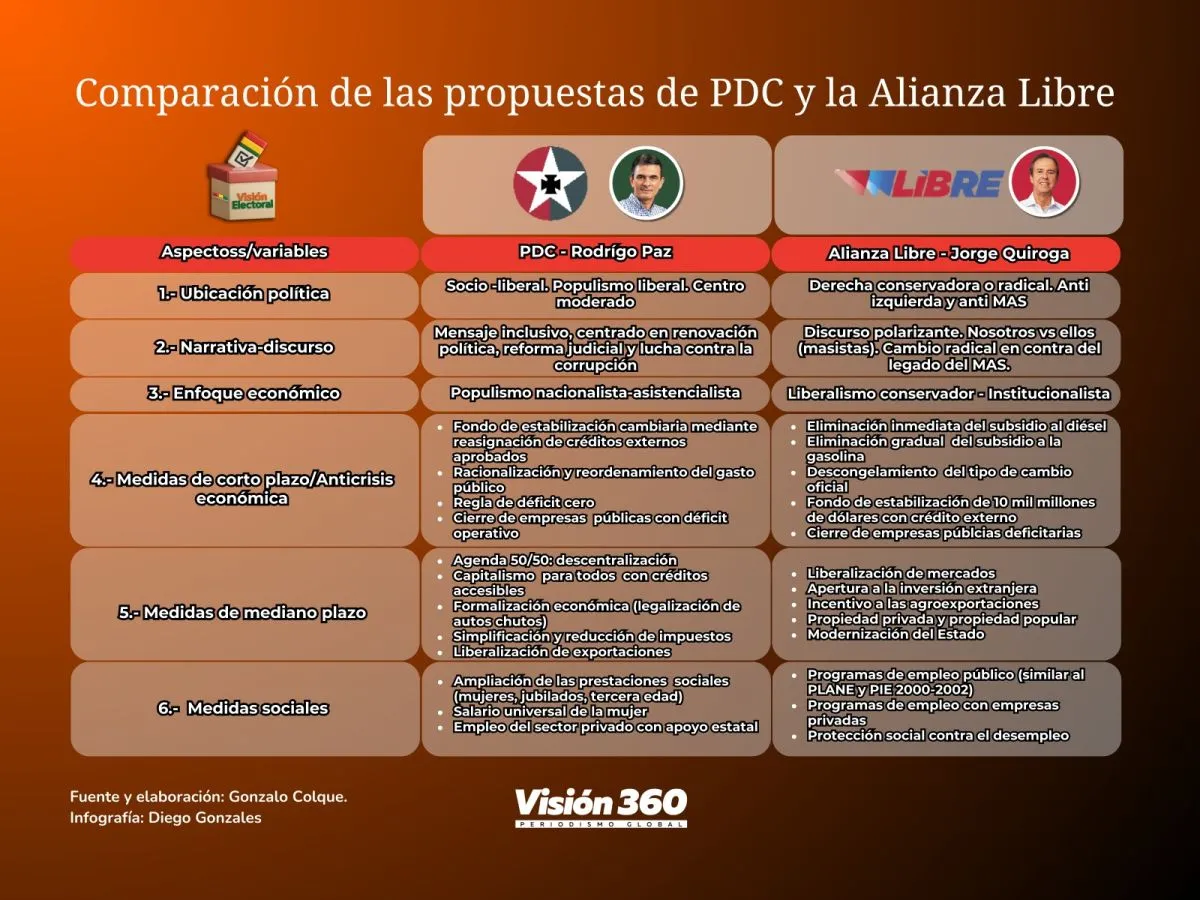
According to the former Tierra Foundation director, between PDC and Libre proposals, one side shows demagogy and the other ideological fundamentalism. “To face the crisis and stabilize the economy, what’s needed are concrete, pragmatic, and flexible measures, the kind that doesn’t care about the color of the cat as long as it catches mice. But to avoid a patchwork of isolated measures, a unifying and realistic direction must be outlined,” he stressed.
Thus, Colque raises the question: Will PDC and Libre be willing to review what they propose?
Libre Proposals
- Obtain freely available dollars – Seek credits from the IMF and FLAR; distribute dollars to the population through the financial system at a defined equilibrium exchange rate; repayment in dollars goes back to banks to reimburse savers.
- Reduce fiscal deficit – Cut unnecessary institutions, reduce ministries to no more than 12, eliminate some vice ministries and decentralized entities that serve no purpose. Review unprofitable state companies to make them profitable, sell, transfer to workers, or close them. Reduce unnecessary public staff and spending, targeting a deficit of 3% of GDP.
- Establish a single, real, and flexible exchange rate – Measures include a “Bolsín” and an independent Central Bank.
- Attract investment – Ensure legal security, economic stability, and a simple, clear tax system.
- Strengthen the financial system – Create a “business hospital,” promote exports with tax neutrality.
- Hydrocarbons – Increase domestic oil prices to make currently unprofitable reserves viable, refine domestically, improve fuel import logistics, ensure transparency, fully liberalize fuel imports, and target fuel subsidies.
- Mining – Guarantee legal security, investment protection agreements, and allow the concession system, which provides more certainty than the current system.
PDC Proposals
1. Implement a new economic model (50/50) – Fiscal redistribution between central government, subnational entities, and public universities.
2. Institutionalize the public sector – Reinstate professionalization and career paths in public service.
3. Promote sustainable tourism development.
4. Reactivate hydrocarbons – Encourage renewable energy use to ensure energy supply.
5. Sustainable mining development – Protect indigenous and community rights, and the environment; rationalize, order, and ensure transparency in public spending; freeze deficit-running state enterprises.
6. Hydrocarbons sector – Provide legal and fiscal incentives for investment; develop new strategic fields; promote renewable energies; modernize the hydrocarbon and energy regulatory framework.
7. Reduce subsidies – Restructure YPFB, YLB, and the National Electricity Company (Ende) to ensure economic viability.
8. Strengthen mining framework – Ensure legal security for investment, promote responsible mining, formalize cooperatives, and enhance governance and transparency in the production chain.
Por Marco Antonio Belmonte, Vision 360:
Analizan fortalezas y debilidades de las propuestas económicas de Quiroga y Paz
El análisis fue realizado por el exdirector de la fundación Tierra, Gonzalo Colque, quien señala que el talón de Aquiles de Paz y Lara es que prometen lo imposible: gastar más y, al mismo tiempo, recaudar menos, mientras Quiroga apunta a un ajuste de cinturones.
Jorge Quiroga y Rodrigo Paz competirán por la presidencia en una segunda vuelta electoral. Foto Quiroga / Paz
Un análisis sobre las propuestas económicas del Partido Demócrata Cristiano (PDC) y de la Alianza Libre, las fuerzas políticas que irán al balotaje, muestra las fortalezas y debilidades de los planes que tienen los candidatos a la presidencia Rodrigo Paz y Jorge Quiroga. La evaluación la realizó el exdirector de la fundación Tierra, Gonzalo Colque, luego de revisar los programas de ambos postulantes a gobernar el país los próximos cinco años.
Señaló que Rodrigo Paz y Edman Lara aciertan en algo clave: apoyar a lo que da de comer a la gente; es decir, a la economía popular o informal que emplea al 70% de la población. “Dos de cada tres bolivianos son transportistas, cuentapropistas o comerciantes. Es la familia gremial que más protesta por la escasez de dólares y combustibles”, precisó.
Por otro lado, dijo que Tuto Quiroga y su candidato a vicepresidente, Juan Pablo Velasco también tienen su mérito al poner sobre la mesa un tema incómodo pero urgente: combatir la crisis económica que afecta a todos. “La moneda nacional perdió su poder adquisitivo, tanto que vale la mitad de lo que valía hace un año y medio. La Alianza Libre advierte en voz alta lo que pasará de seguir postergándose las medidas de ajuste”, subrayó Colque.
Añadió que el talón de Aquiles de Paz y Lara es que prometen lo imposible: gastar más y, al mismo tiempo, recaudar menos, bajar impuestos, bajar aranceles, descentralización 50/50.
Todo esto con los números en rojo, con el gobierno central sin fondos suficientes para transferir a los subnacionales, los cuales a su vez deben sueldos y tienen obras paralizadas. “Sus propuestas, además de tener contradicciones e inconsistencias, fueron mutando desde ofertas moderadas hacia promesas cada vez más abultadas, demagógicas y populistas”, puntualizó.
La Alianza Libre en cambio, dijo, no promete dulces, sino terapia intensiva. Tuto Quiroga plantea un ajuste de cinturones, economía dura, ruptura radical con el estatismo. “El sacrificio pagaríamos todos, pero los beneficios serían mayormente para el sector privado. Es que la economía de goteo no viene con garantía de éxito para todos. Su plan, más que estar guiado por principios de racionalidad económica, tiene aires de complacencia con los agroexportadores y algo de revanchismo anti-masista”, observó Colque.
Para el exdirector de la Fundación Tierra entre las propuestas de PDC y Libre, hay demagogia de un lado y fundamentalismo ideológico del otro. “Para encarar la crisis y estabilizar la economía, lo que hace falta son medidas concretas, pragmáticas y flexibles, al estilo de no importa el color del gato, con tal de que cace ratones. Pero para evitar que sea un collage de medidas sueltas, hay que trazar un norte aglutinador y realista”, remarcó.
Por eso Colque plantea la interrogante ¿PDC y Libre estarán dispuestos a revisar lo que proponen?
Las propuestas de Libre
1. Conseguir dólares de libre disponibilidad
Se acudirá al FMI y al FLAR para obtener créditos de libre disponibilidad.
Se entregará dólares a la población mediante el sistema financiero, al tipo de cambio de equilibrio que se defina. Y se devolverá el dinero en dólares a los Bancos, para que estos devuelvan a los ahorristas.
2. Reducción del déficit fiscal
Para ello se reducirán la cantidad de instituciones que se han creado y que no se requieren. Se propone reducir los ministerios a no más de 12, eliminar algunos viceministerios y entidades descentralizadas que no cumplen ningún rol.
Se revisará las empresas públicas que son deficitarias, para volverlas rentables, venderlas, entregarlas a los trabajadores o cerrarlas, dependiendo cual sea la mejor solución.
Se reducirá el personal que no es necesario en el sector público y el gasto innecesario. La idea es reducir el déficit a un 3% del PIB.
3. Establecer un tipo de cambio único, real y flexible: con medidas como el Bolsín y un Banco Central independiente.
4. Atracción de inversiones con seguridad jurídica, estabilidad económica y un sistema impositivo simple y claro.
5. Creación de un hospital de empresas, fortalecer el sistema financiero e impulsar exportaciones con neutralidad impositiva.
6. En hidrocarburos el plan señala que en la actualidad se paga 27 dólares por barril de petróleo a los productores, pero se importa diésel y gasolina con un precio internacional del petróleo (hoy alrededor de 60 dólares) y a eso se debe sumar el costo de refinación y de transporte.
La propuesta es subir el precio interno, de manera que reservas que hoy no son rentables se vuelvan rentables y se pueda refinar ese petróleo. También mejorar la logística de compra de combustibles, con transparencia y liberando totalmente la importación de combustibles y focalizar el subsidio a los carburantes
7. En minería la propuesta es garantizar la seguridad jurídica, tener acuerdos de protección de inversiones con organismos multilaterales y bilaterales. Se debe permitir el sistema de concesiones que daba mayor seguridad jurídica que el sistema actual.
La propuesta del PDC
1. Implementar un nuevo modelo económico (50/50), basado en la redistribución fiscal entre el nivel central del Estado y las Entidades Territoriales Autónomas y las Universidades Públicas.
2. Institucionalizar el sector público reinstaurando la profesionalización y la carrera administrativa en el servicio público.
3. Promover el desarrollo sostenible de la actividad turística.
4. Reactivar la exploración y explotación de hidrocarburos y promocionar la utilización de energías renovables, con el objetivo de garantizar el abastecimiento energético.
5. Generar el desarrollo sostenible y equilibrado de la industria minera, protegiendo los derechos de los pueblos indígenas y comunidades, así como el medio ambiente.
La estrategia apunta a la racionalización, ordenamiento y transparencia el gasto público; el congelamiento de las actividades de todas las empresas públicas que mantengan déficits operativos.
6. En el sector hidrocarburos el Plan del PDC anuncia la generación de incentivos legales y fiscales para atraer inversión en exploración y explotación.
El Desarrollo y puesta en producción de nuevos yacimientos estratégicos, la promoción y desarrollo de energías renovables complementarias y la modernización del ordenamiento jurídico que regula la cadena hidrocarburífera y energética.
7. También se reducirán subsidios para garantizar viabilidad económica y se reestructurará Yacimientos Petrolíferos Fiscales Bolivianos (YPFB) y Yacimientos de Litio Bolivianos (YLB) y la Empresa Nacional de Electricidad (Ende).
8. Se plantea el fortalecimiento del marco normativo y seguridad jurídica para la inversión minera, la promoción de la minería responsable, formalización de cooperativas y el fortalecimiento de la gobernanza y transparencia en la cadena productiva minera.

 Bolivian Thoughts | Pensamientos Bolivianos (Bilingual/Bilingüe)