
By Correo del Sur:
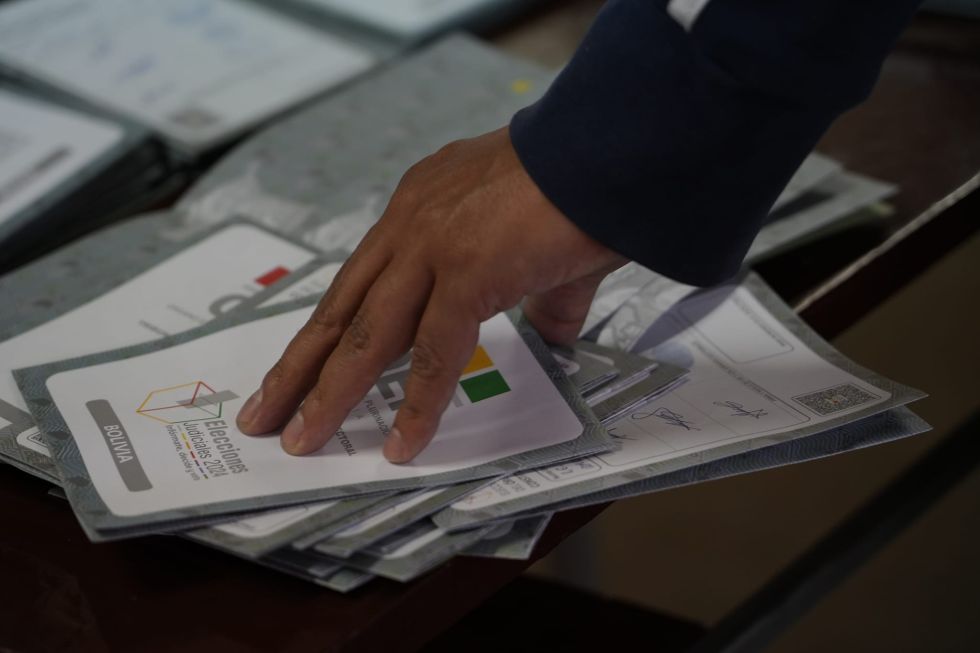
The central axis (La Paz, Cochabamba, and Santa Cruz) holds power in sheer numbers, concentrating 73.6% of all young voters in the country. Which candidate will win over this crucial bloc?
Less than a month before the general elections on August 17, while media attention is focused on the polls—all of which agree that Samuel Doria Medina and Jorge Tuto Quiroga are neck and neck for first place—the question sweeping the electoral landscape strikes at the demographic heart of the country: how decisive will the youth vote be in this year’s elections? With 3.3 million voters between the ages of 18 and 35, representing 44% of the electoral roll, this is a segment that, at least for now, candidates apparently fail to understand, attract, or represent.
What is this bloc of voters like? According to experts consulted by “Péndulo Político,” young people are pragmatic, distrust political parties, get their information from sources beyond traditional propaganda, and feel profoundly disconnected from the current political offerings. They are, in the words of the experts, the protagonists of a “liquid” election, where loyalties are volatile and the outcome unpredictable. While politicians continue to rely on “adult-centric” campaigns, the gateway to this segment now seems impenetrable.
The anatomy of the Electoral Roll
The numbers from the 2025 Electoral Roll are telling: of 7,567,207 registered voters, 3,333,562 are under the age of 36. This figure, representing 44.05% of the electorate, is the centerpiece of the race. Compared to the 2020 Roll, the total electorate has grown by 535,913 people, reflecting the demographic dynamism of the country.
However, a closer analysis reveals a significant detail: the percentage weight of the youth vote (ages 18–35) has slightly decreased, from 46.47% in 2020 (3,267,138 voters) to the current 44.05%. This suggests a slight aging of the voter base, but it does not diminish the strategic importance of a segment that, in absolute terms, remains enormous and decisive.
This youth power is not evenly distributed. The eastern and Amazonian regions are the youngest, with Pando (47.82%), Santa Cruz (46.38%), and Beni (46.64%) leading the way. In contrast, the central axis (La Paz, Cochabamba, and Santa Cruz) holds the most power in raw numbers, concentrating 73.6% of all young voters in the country. This makes the major cities the epicenter of a battle for votes that, according to experts, could prove decisive.
There is disconnection
Political strategist Andrés Delgadillo believes there is a gap between candidates and young voters. “They don’t feel represented by any political actor,” he states.
One reason, he argues, is that their campaigns are “entirely adult-centric,” relying on formats that to young people feel like an “archaic, stiff, and boring practice,” such as televised forums.
Candidates’ attempts to break into TikTok, rather than bridging the gap, often widen it, the expert adds. He also notes that their social media engagement is inauthentic. “If you audit their social media management, 90% of the likes and followers are bought. None of it is organic.”
For journalist and political analyst Andrés Gómez, this also ties into the current communication channels used by youth. The era of mass media delivering a single message to a passive audience is over, he says. Today, thanks to social networks, we live in a time of “demassification,” where a clever response from a young person “can go more viral than the politician’s own message.”
What are they like?
So what motivates this electorate? Far from grand ideological narratives, their behavior seems driven by pragmatism. “Young people are not as politicized or ideologized as those from the 1970s or 1980s. They’re increasingly pragmatic and don’t care whether someone is from the left or right, as long as they can solve everyday problems and offer opportunities for success,” says Gómez.
Political scientist Carlos Cordero describes them as a generation “more exposed to new technologies,” which makes them “more universal, less sectarian,” and above all, “highly reflective, analytical, and critical.” This capacity leads them to distrust empty promises, he says. “They are basically urban sectors with middle or higher education,” he adds, or high school graduates, in the case of 18-year-olds.
Within this framework, Delgadillo points out a misinterpretation by candidates of what young voters demand. “Young people don’t want a job: they want to make money. Those are two different things,” he notes as an example of what candidates are failing to understand.
“Young people are looking for someone who connects empathetically with their dreams and ideals. And all the politicians are doing is offering solutions to the crisis. That may not be enough—they need to offer a possible future. And so far, I don’t know if any candidate has done that,” Gómez adds.
How will this segment vote?
With such a disconnected and volatile electorate, the outcome is a mystery. Delgadillo describes the moment as an “open election” and “completely uncertain,” one that will result in “an election of surprises.” The absence of an outsider to channel discontent leaves a void that could lead to many possible outcomes, according to the expert. “Maybe if Mr. (Jaime) Dunn had been a candidate, it would have been different (…) It’s very hard to identify clear trends in this context,” he says.
Cordero believes that young voters could be the “protagonists” of a “protest vote” against the Movement Toward Socialism (MAS). “They could be the protagonists of the protest vote against MAS, because the messages are heading in that direction—suggesting that the current critical situation in the country, the authoritarianism, the paralysis, is MAS’s responsibility. There is no ‘Evo generation,’ a generation that strongly sympathized with MAS. It seems that now, the new generation—likely to be decisive in this electoral process—wants to cast a protest vote against the political party or ideological bloc they see as the cause of the crisis,” the expert says.
Gómez, meanwhile, notes that the youth vote is not entirely autonomous. He argues their decisions will mainly be influenced by two factors: their family nucleus and their circle of friends. Nevertheless, he affirms that “young people are currently among the undecided.” “It’s very likely they were waiting for an outsider (…) Young people like novelty. That’s why, in these elections, there may be a significant number of blank and null votes. And it’s very likely that much of that will come from young voters. But again: young people don’t necessarily break away from their family nucleus when casting a different vote,” he adds.
The problem is that there are no candidates generating a genuine emotional connection, according to Delgadillo. “Kids see Milei and run up to hug and kiss him during his campaign. That doesn’t happen in Bolivia,” he says.
The presence of young figures like Andrónico Rodríguez, Eva Copa, or Eduardo Del Castillo is not enough to capture a bloc that feels used, says Cordero. “Yes, people thought that one of the candidates who might resonate with youth was Mr. Jaime Dunn. Now, it’s unclear where the youth vote will go, but it may go to whoever best understands their demands,” he concludes.
Thus, on the eve of the August elections, this segment of the electorate remains an enigma. Their decision will likely be made in the final days, far from the campaign noise.
Por Correo del Sur:
El eje central (La Paz, Cochabamba y Santa Cruz) concentra el poder en números brutos, al aglutinar al 73,6% de todos los votantes jóvenes del país. ¿Qué candidato conquistará ese bolsón de votos?
A menos de un mes de las elecciones generales del 17 de agosto, mientras la atención mediática se concentra en las encuestas –todas coinciden en que Samuel Doria Medina y Jorge Tuto Quiroga se disputan el primer lugar–, la pregunta que recorre el escenario electoral es una que apunta al corazón demográfico del país: ¿qué tan decisivo será el voto de los jóvenes en los comicios de este año? Con 3,3 millones de electores de entre 18 y 35 años, que representan el 44% del padrón, se trata de un segmento que, al menos por ahora, los candidatos, aparentemente, no logran comprender, seducir ni representar.
¿Cómo es este bolsón de votantes? De acuerdo con expertos consultados por “Péndulo Político”, los jóvenes son pragmáticos, desconfían de los partidos, se informan por canales que escapan a la propaganda tradicional y se sienten profundamente ajenos a la oferta política actual. Son, en palabras de los entendidos, los protagonistas de una elección “líquida”, donde las lealtades son volátiles y el resultado, impredecible. Mientras los políticos insisten en campañas “adultocéntricas”, hoy la puerta de entrada de este segmento parece infranqueable.
La anatomía del Padrón Electoral
Los números del Padrón Electoral 2025 son elocuentes: de 7.567.207 votantes habilitados, 3.333.562 tienen menos de 36 años. Esta cifra, que representa un 44,05% del electorado, es el dato central de la contienda. Si se compara con el Padrón de 2020, el crecimiento total del electorado fue de 535.913 personas, un reflejo del dinamismo demográfico del país.
Sin embargo, un análisis más fino revela un dato no menor: el peso porcentual del voto joven (18-35 años) disminuyó ligeramente, pasando del 46,47% en 2020 (3.267.138 votantes) al 44,05% actual. Esto sugiere un leve envejecimiento del padrón, pero no disminuye la importancia estratégica de un segmento que, en términos absolutos, sigue siendo enorme y decisivo.
La distribución de este poder juvenil no es uniforme. El Oriente y la Amazonía aparecen como las regiones más jóvenes, con Pando (47,82%), Santa Cruz (46,38%) y Beni (46,64%) a la cabeza. En contraste, el eje central (La Paz, Cochabamba y Santa Cruz) concentra el poder en números brutos, al aglutinar al 73,6% de todos los votantes jóvenes del país. Esto convierte a las principales ciudades en el epicentro de una batalla por un voto que, según los expertos, puede ser definitorio.
Hay desconexión
El estratega político Andrés Delgadillo considera que hay una brecha entre los candidatos y los votantes jóvenes. “No sienten que estén representados por ningún actor político”, afirma.
Una de las razones, sostiene, es que sus campañas son “completamente adultocéntricas”, ancladas en formatos que para un joven son una “práctica arcaica, acartonada y aburrida”, como los foros televisivos.
El intento de los candidatos por incursionar en TikTok, lejos de acortar la distancia, en muchos casos, la agranda, añade el experto. Además, afirma que sus interacciones en las redes sociales no son reales. “Si vos les haces una auditoría al manejo de sus redes, el 90% son ‘likes’ y seguidores comprados. Ninguno tiene un crecimiento orgánico”.
Para el periodista y analista político Andrés Gómez, esto tiene que ver también con los actuales canales de comunicación que usan los jóvenes. La era de los medios masivos que creaban un mensaje único para una audiencia pasiva terminó, sostiene. Hoy, gracias a las redes sociales, se vive una “desmasificación”, donde un joven, con una respuesta ingeniosa, “puede ser más viral que el propio mensaje del político”.
¿Cómo son?
¿Qué mueve entonces a este electorado? Lejos de las grandes narrativas ideológicas, su comportamiento parece regirse por el pragmatismo. “Los jóvenes no están tan politizados ni ideologizados como los de la década del 70 o del 80. Son cada vez más pragmáticos y no les interesa si alguien es de izquierda o de derecha, sino que pueda resolver sus problemas cotidianos y les pueda garantizar posibilidades de éxito”, sostiene Gómez.
El politólogo Carlos Cordero los describe como una generación “más expuesta al uso de las nuevas tecnologías”, lo que los hace “más universales, menos sectarios” y, sobre todo, “altamente reflexivos, analíticos y críticos”. Esta capacidad los lleva a desconfiar de las promesas vacías, sostiene el experto. “Son básicamente sectores urbanos con educación media o alta”, añade, o bachilleres, en el caso de los jóvenes de 18 años.
En ese marco, Delgadillo identifica un error de interpretación de las campañas de los candidatos sobre lo que demandan los votantes de este segmento. “Los jóvenes no quieren empleo: quieren ganar dinero. Son dos cosas diferentes”, señala, a manera de ejemplo, no están sabiendo cómo satisfacer.
“La gente joven lo que está esperando es a alguien empático con sus sueños, con sus ideales. Y los políticos lo único que están haciendo es presentar soluciones a la crisis, y quizás no baste solamente eso, sino que les presenten un futuro posible. Y hasta ahora, no sé si algún candidato ha presentado eso”, agrega Gómez.
¿Cómo votará este segmento?
Con un electorado tan desconectado y volátil, el resultado es una incógnita. Delgadillo define el momento como una “elección abierta” y “completamente incierta”, cuyo desenlace será “una elección de sorpresas”. La falta de un “outsider” que canalice el descontento deja un vacío que podría traducirse en múltiples resultados, según el experto. “Tal vez si el señor (Jaime) Dunn hubiera sido candidato, habría sido diferente (…) Es muy difícil, en este contexto, marcar tendencias claras”, sostiene.
Cordero considera que los jóvenes podrían ser los “protagonistas” del “voto castigo” contra el Movimiento Al Socialismo (MAS). “Pueden ser los protagonistas del voto castigo contra el Movimiento Al Socialismo, porque los mensajes están yendo en esa dirección, es decir, que la situación que crítica que vive el país, el autoritarismo, la paralización del país es responsabilidad del Movimiento Al Socialismo. Y no hay una generación Evo, una generación que simpatizaba fuertemente con el MAS. Parece que, ahora, la nueva generación, que va a ser decisiva en este proceso electoral, está con la idea de emitir un voto castigo contra el partido político o el bloque ideológico que considera que es el causante de la crisis”, sostiene el experto.
Gómez, por su parte, señala que el voto de los jóvenes no es tan autónomo. Sostiene que su decisión estará determinada principalmente por dos variables: por su núcleo familiar y el de sus amigos. No obstante, afirma que hoy “los jóvenes están en el grupo de la gente de los indecisos”. “Es muy probable que hayan estado esperando un outsider (…) A los jóvenes les gusta lo nuevo. Quizás, en estas elecciones, (por eso mismo), haya bastante voto en Blanco y Nulo. Y es muy probable que, parte de ese voto Blanco y Nulo, sea de los jóvenes. Pero insisto: los jóvenes no necesariamente se desencajan del núcleo familiar para emitir un voto diferente”, añade.
El problema es que no hay candidatos que generen una conexión emocional genuina, en criterio de Delgadillo. “A Milei lo ven los niños y lo abrazan y lo besan, en campaña. Pero eso en Bolivia no pasa”, sostiene.
La presencia de figuras jóvenes como Andrónico Rodríguez, Eva Copa o Eduardo Del Castillo no es suficiente para capturar a una masa que se siente instrumentalizada, dice, por otra parte, Cordero. “Sí, se pensaba que uno de los candidatos que podría simpatizar con los jóvenes era el señor Jaime Dunn. Ahora no se sabe exactamente hacia dónde migrará el voto joven, pero podría ir a quien mejor interprete sus demandas”, concluye.
Así, a las puertas de las elecciones agosto, este segmento del electorado parece ser un enigma. Su decisión, probablemente será tomada en los últimos días y lejos del ruido de las campañas.

 Bolivian Thoughts | Pensamientos Bolivianos (Bilingual/Bilingüe)