
By Santa Cruz Governorate, Eju.tv:
Operation. It was led by the Noel Kempff Mercado Natural History Museum, in coordination with the Santa Cruz Governorship and with support from various institutions, which also rescued and relocated 17 river turtles
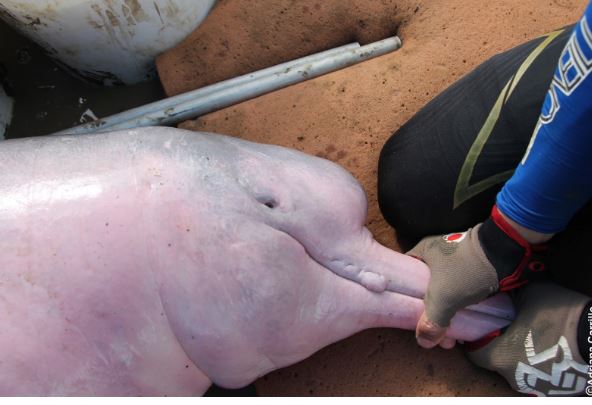
Source: Santa Cruz Governorship
A total of 27 bufeos (Inia boliviensis), freshwater dolphins endemic to Bolivia, were rescued after becoming trapped in water bodies cut off from the Río Grande, in an inter-institutional conservation operation carried out from June 21 to 25 in the municipality of San Pedro, Obispo Santistevan province.
The operation was led by the Noel Kempff Mercado Natural History Museum, as part of its Bufeo Conservation Program, with the support of the Santa Cruz Governorship through its Directorate of Conservation of Natural Heritage (DICOPAN) and the Directorate of Risk Management (DGR). The K-9 Volunteer Firefighters Unit, the Cros El Torno organization, and actors from the private sector and civil society also actively participated.
During five days of intense work, the teams managed to rescue and transfer the dolphins—adults, juveniles, and newborns (70% of them females)—to a former tributary connected to the Río Grande, within the area of influence of the Northern Wetlands Natural Heritage Conservation Unit (UCPN), administered by the Departmental Government. The operation also allowed for the relocation of 17 river turtles (Podocnemys unifilis), which shared the same isolated habitat.
Grimaldo Soto, biologist with the Governorship and head of the UCPN Northern Wetlands, indicated that before relocating the animals, they were fitted with identification chips to facilitate future monitoring. One of the rescued males had already been recorded in previous years.
No funding, but committed
For her part, Claudia Venegas, biologist with the Noel Kempff Mercado Museum, reported that the Bufeo Conservation Program does not have its own funding and relies entirely on the voluntary work of a multidisciplinary technical team and inter-institutional support from both the public and private sectors.
In this context, she thanked all the institutions that took part in the rescue, also highlighting the participation of Agrosem S.A. – La Moneda Agricultural Property, the Friends of Nature Foundation (FAN), Nick’s Adventures Bolivia, and local volunteers.
“This type of action strengthens our commitment to the conservation of bufeos. We hope to receive more support to ensure their survival,” said Venegas.
Por Gobernación Santa Cruz, Eju.tv:
Operativo. Fue liderado por el Museo de Historia Natural Noel Kempff Mercado, en coordinación con la Gobernación de Santa Cruz y el apoyo de diversas instituciones, quienes además rescataron y reubicaron a 17 petas de río
Fuente: Gobernación de Santa Cruz
Un total de 27 bufeos (Inia boliviensis), delfines de agua dulce endémicos de Bolivia, fueron rescatados tras quedar atrapados en cuerpos de agua desconectados del Río Grande, en un operativo interinstitucional de conservación que se extendió del 21 al 25 de junio en el municipio de San Pedro, provincia Obispo Santistevan.
La operación fue liderada por el Museo de Historia Natural Noel Kempff Mercado, en el marco de su Programa de Conservación del Bufeo, con el respaldo de la Gobernación de Santa Cruz, a través de su Dirección de Conservación del Patrimonio Natural (DICOPAN) y la Dirección de Gestión de Riesgo (DGR). También participaron activamente los Bomberos Voluntarios Unidad K-9, la organización Cros El Torno, y actores del sector privado y la sociedad civil.
Durante los cinco días de intenso trabajo, los equipos lograron rescatar y trasladar a los delfines, tanto adultos, juveniles y neonatos (70% de ellos hembras), a un antiguo afluente conectado al Río Grande, dentro del área de influencia de la Unidad de Conservación del Patrimonio Natural (UCPN) Humedales del Norte, administrada por el Gobierno Departamental. El operativo también permitió reubicar a 17 petas de río (Podocnemys unifilis), que compartían el mismo hábitat aislado.
Grimaldo Soto, biólogo de la Gobernación y responsable de la UCPN Humedales del Norte, indicó que antes de la reubicación de los ejemplares, se les colocó chips de identificación para facilitar su monitoreo el futuro. En esta ocasión, uno de los machos que fue rescatado, ya había sido registrado en años anteriores.
Sin fondos, pero con compromiso
Por su parte, Claudia Venegas, bióloga del Museo Noel Kempff Mercado, informó que el Programa de Conservación del Bufeo no cuenta con financiamiento propio, por lo que depende enteramente del trabajo voluntario de un equipo técnico multidisciplinario y del apoyo interinstitucional, tanto del sector público como privado.
En este contexto, agradeció a todas las instituciones que participaron en el rescate, destacando también la participación de la Empresa Agrosem S.A. – Propiedad Agrícola La Moneda, la Fundación Amigos de la Naturaleza (FAN), Nick’s Adventures Bolivia y voluntarios locales.
“Este tipo de acciones refuerzan nuestro compromiso con la conservación de los bufeos. Esperamos tener más apoyo para garantizar su existencia”, expresó Venegas.

 Bolivian Thoughts | Pensamientos Bolivianos (Bilingual/Bilingüe)