
By Erbol:
INVESTIGATING POSSIBLE TIES TO CHAPARE
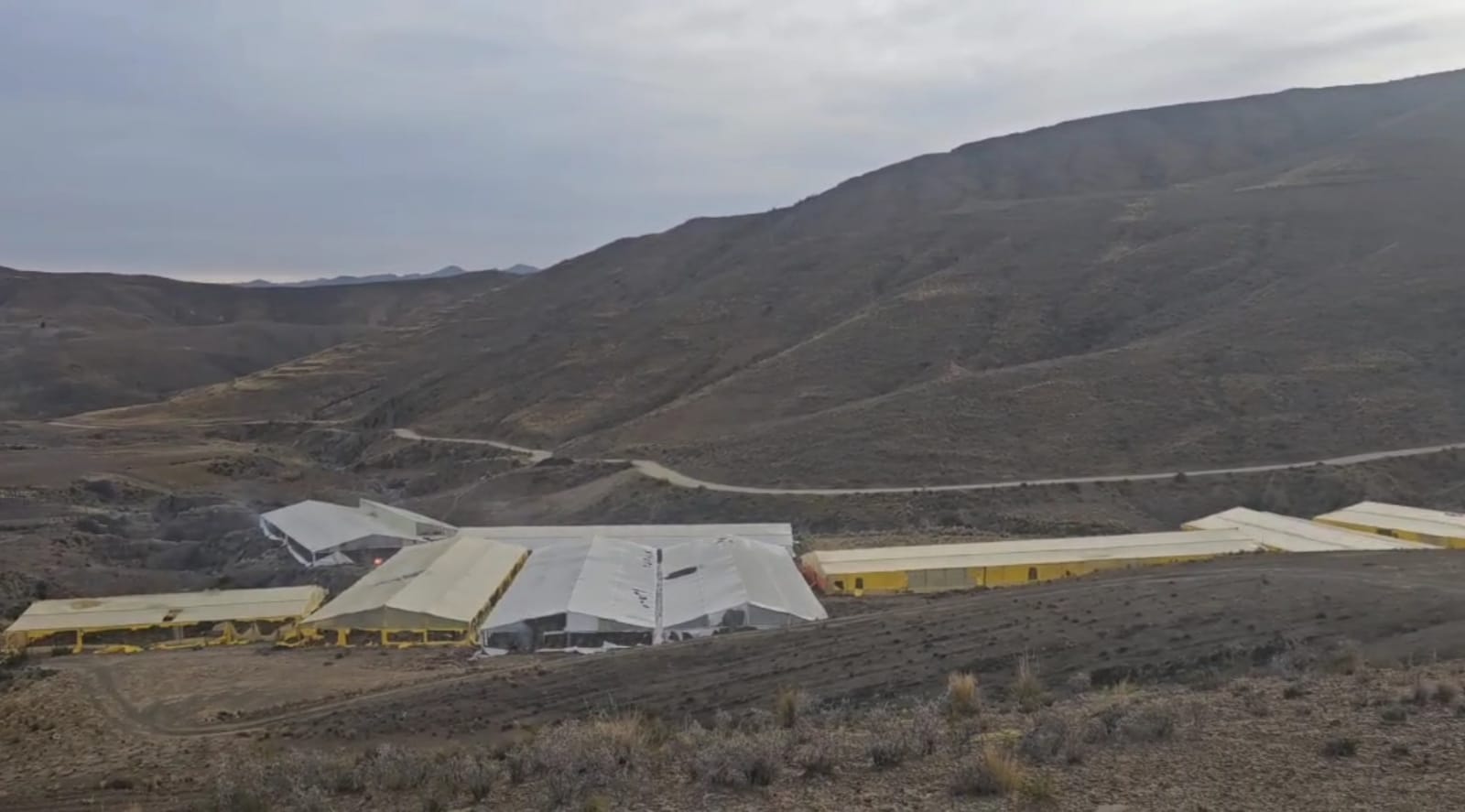
One of the nurseries found in Lagunillas. Photo: Ministry of Government
A total of 63 marijuana nurseries, amounting to 14.5 tons, were found and subsequently incinerated in the locality of Lagunillas, located 25 kilometers from the municipality of Llallagua, Potosí, reported the Minister of Government, Roberto Ríos.
During the operation carried out by the Special Force to Fight Drug Trafficking (FELCN), it was determined that each nursery measured 20 by 40 meters, meaning 800 square meters of surface area, of which 20 were in the harvesting stage and 43 were active.
The average weight of each of these plants was 700 grams, according to estimates made by FELCN in coordination with and in the presence of the Public Prosecutor’s Office.
“These criminal organizations, which have brought mourning to the Bolivian people and the police force, had ties to drug trafficking networks, and likewise, possible links to drug trafficking operations connected to the tropics of Cochabamba are under investigation,” he stated.
Ríos called the raid “historic” as it would be the first time they were able to enter that area with a planned strategy and without any casualties. The estimated blow to the illicit drug trade is $2,167,200.
The nurseries were set up in the Lagunillas mountain range. Since it is an arid terrain, the traffickers “found ways” to build them using an irrigation and heating system to achieve the appropriate temperature and humidity.
No individuals were present during the intervention, so no arrests were made. Operations in the area will continue in the coming days. ///agc
Por Erbol:
INDAGAN SI HAY VÍNCULOS CON EL CHAPARE
Uno de los viveros encontrados en Lagunillas. Foto: Ministerio de Gobierno
Un total de 63 viveros de marihuana, que representaban 14,5 toneladas, fueron encontrado y posteriormente incinerados en la localidad de Lagunillas, situado a 25 kilómetros del municipio de Llallagua, Potosí, informó el ministro de Gobierno, Roberto Ríos.
En el operativo, ejecutado por la Fuerza Especial de Lucha Contra el Narcotráfico (FELCN), se logró establecer que cada vivero era de 20 por 40 metros, es decir, 800 metros cuadrados de superficie, de los cuales, 20 se encontraban en proceso de cosecha y 43 estaban activos.
El peso promedio, por cada una de estas plantas era de 700 gramos, de acuerdo a las estimaciones que hizo la FELCN en coordinación y presencia del Ministerio Público.
“Estas organizaciones criminales que han dejado luto al pueblo boliviano y la familia policial tenían alguna vinculación con redes del narcotráfico y, de igual forma, está en investigación alguna vinculación con operaciones de narcotráfico relacionadas al trópico de Cochabamba”, indicó.
Ríos calificó la incursión como “histórica” porque sería la primera vez que se logró ingresar a esa zona con una estrategia planificada y sin dejar daños personales. La estimación de la afectación a la actividad ilícita del narcotráfico es de $us 2.167.200.
Loa viveros estaban instalados en la serranía de Lagunillas. Al ser un terreno árido, los narcotraficantes se “dieron modos” para construirlos con un sistema de riego y calor para obtener la temperatura y humedad adecuada.
Durante la intervención no hubo ninguna persona, por lo que no hubo ninguna persona aprehendida. En los próximos días se continuarán con los operativos en la zona. ///agc

 Bolivian Thoughts | Pensamientos Bolivianos (Bilingual/Bilingüe)