
By Visión 360:
Throughout his career, the artisan has designed rattles shaped like ships and televisions, as well as armadillos, teeth, and vintage vehicles.
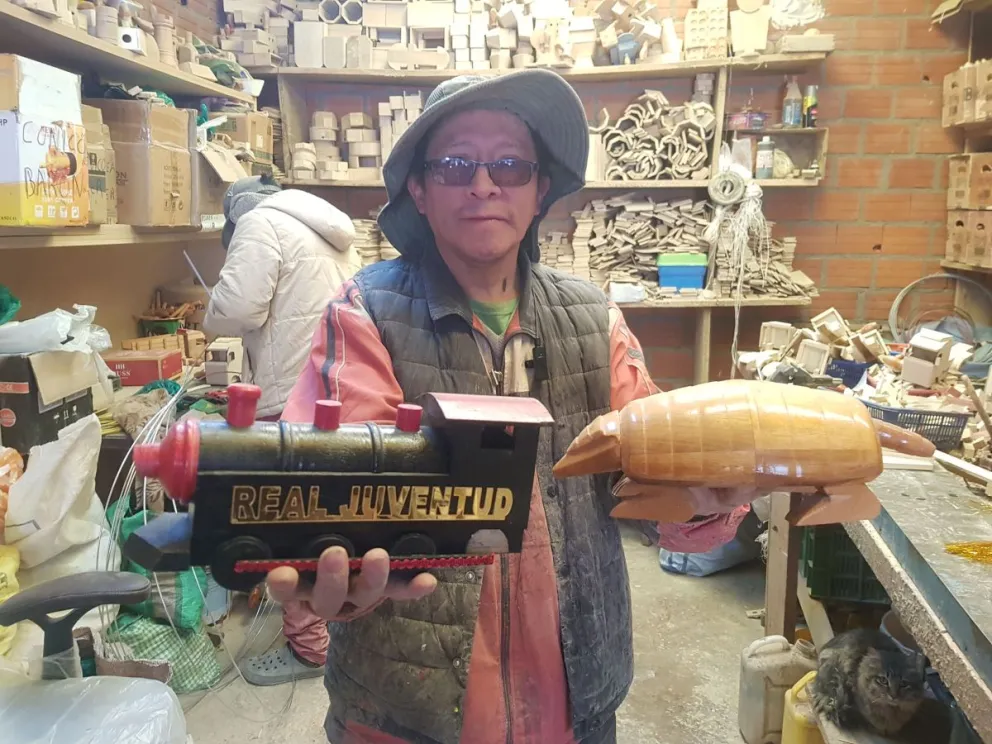
Artisan David Ibañez in his rattle workshop. Photo: Courtesy.
“As long as I have strength, I’ll keep making rattles. I don’t know how to do anything else, and I don’t want to do anything else,” says David Ibañez without hesitation. The La Paz-born artisan has dedicated over half a century to transforming blocks of wood into instruments that resonate with the soul of Bolivian and Peruvian religious festivities.
Councilman Javier Escalier highlights the wide variety of designs, ranging from ships and televisions to armadillos, teeth, and vintage vehicles. Ibañez has taken the art of rattles to an extraordinary level. “David’s rattles don’t just make noise—they tell stories. They’re part of the soul of our celebrations.”
The artisan proudly says he receives all kinds of requests: “People ask for everything, but I always put my heart into them, because each rattle has its own story, its own rhythm, and its owner.” He doesn’t work with metal because “wood has a better soundbox,” he explains, noting that he has even made tanker trucks and a replica of a 1950 Ford model.
The process starts with the essentials: “First, you select good wood, and most importantly, it has to be dry. If we buy it wet, we have to dry it ourselves. Then we cut it into slats, begin assembling, fine-tune it, adjust the angles, and give it a more handcrafted finish,” he explains precisely.
His technique isn’t improvised. David learned from his father, and after his father’s death, he and his four brothers set up workshops that are still active today. “When there are lots of orders, we help each other to get things done faster,” he shares.
Among his most challenging commissions is a hand-carved armadillo, piece by piece, with rounded legs that require special care. He also crafts rattle mechanisms separately, so other artisans can attach custom figures. Demand rises from May to September, peaking in June for the Gran Poder celebration and in February when shipments to Peru begin. “I recommend placing orders three months in advance to allow time for the wood to dry and to shape it as desired,” he advises.
For La Paz councilman Javier Escalier, Ibañez’s career is a true cultural treasure. “David Ibañez is a living heritage. His work is not only a symbol of faith and tradition, but also of creativity and perseverance,” he emphasizes.
Escalier stresses that the art of rattles deserves more support and visibility. “Each rattle David builds carries the spirit of our dances and traditions. He is an artist with deep commitment and passion.”
Beyond the sound, each creation by David Ibañez is an expression of devotion, artistry, and cultural resilience. And as long as his workshop stands, the rattles will keep turning to the rhythm of faith.
Por Visión 360:
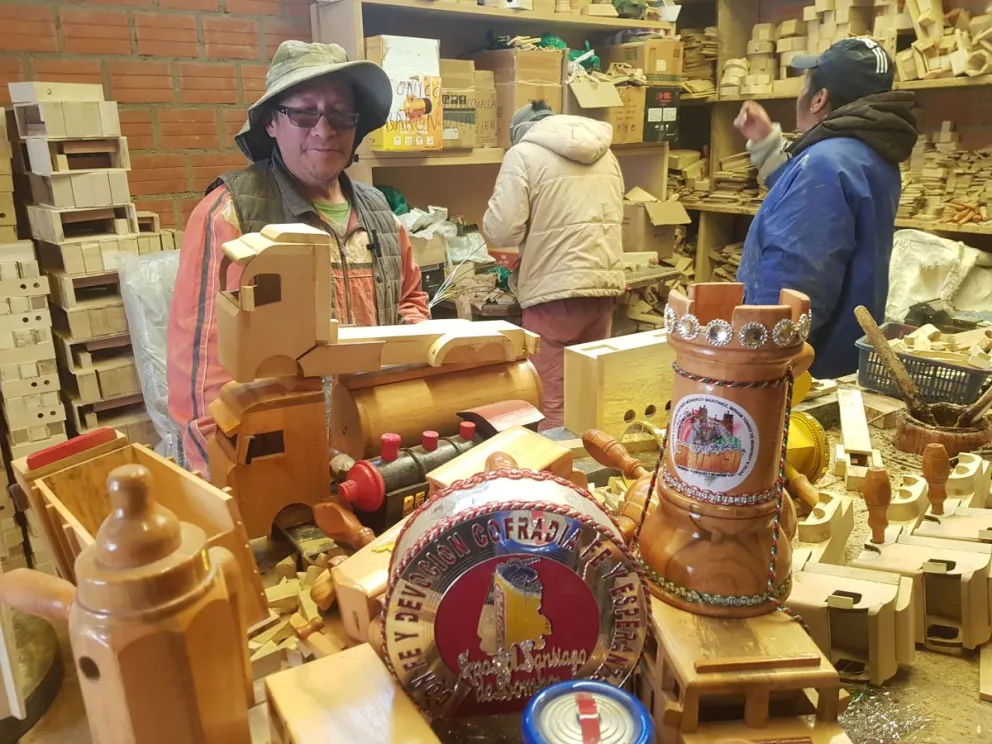
En toda su trayectoria, el artesano ha diseñado matracas que van desde barcos y televisores, hasta quirquinchos, dientes y vehículos antiguos.
El artesano David Ibañez en su taller de matracas. Foto: Cortesía.
“Mientras tenga fuerzas, seguiré haciendo matracas. No sé hacer otra cosa, y no quiero hacer otra cosa”, dice sin dudar David Ibañez, artesano paceño que ha dedicado más de medio siglo a transformar bloques de madera en instrumentos que resuenan con el alma de las festividades religiosas bolivianas y peruanas.
El concejal Javier Escalier destaca la gran variedad de los diseños, que van desde barcos y televisores, hasta quirquinchos, dientes y vehículos antiguos. Es que Ibañez ha llevado el arte de las matracas a un nivel extraordinario. “Las matracas de David no solo suenan, cuentan historias. Son parte del alma de nuestras festividades.”
El artesano cuenta con orgullo que le piden “de todo, pero siempre les pongo corazón, porque cada matraca tiene su historia, su ritmo y su dueño”. No trabaja en lata porque “la madera tiene mejor caja de resonancia”, afirma, señalando que incluso ha hecho camiones cisternas y una réplica de un Ford modelo 50.
El proceso empieza por lo esencial: “Primero se selecciona buena madera y lo más importante es que esté seca. Si compramos húmeda, debemos hacerla secar. Luego cortamos en tablitas, comenzamos a armar, le damos el afinado, los ángulos, con un acabado más artesanal”, explica con precisión.
La técnica no es improvisada. David aprendió de su padre y, tras su fallecimiento, él y sus cuatro hermanos montaron talleres que siguen activos hasta hoy. “Cuando hay muchos pedidos, nos ayudamos entre todos para avanzar más rápido”, relata.
Entre sus encargos más desafiantes destaca un quirquincho tallado pieza por pieza, con patas circulares que requieren especial cuidado. También elabora mecanismos de matraca por separado, para que otros artesanos les coloquen figuras personalizadas. La demanda se intensifica desde mayo hasta septiembre, con picos en junio por el Gran Poder y en febrero, cuando comienzan los envíos al Perú. “Recomiendo hacer los pedidos tres meses antes para tener tiempo de secar la madera y dar la forma que se desea”, aconseja.
Para el concejal paceño Javier Escalier la trayectoria de Ibañez es un verdadero tesoro cultural. “David Ibañez es un verdadero patrimonio vivo. Su trabajo no solo es un símbolo de fe y tradición, sino también de creatividad y perseverancia”, resalta.
Escalier enfatiza que el arte de las matracas merece mayor apoyo y visibilidad. “Cada matraca que David construye lleva el espíritu de nuestras danzas y tradiciones. Es un artista con profundo compromiso y pasión.”
Más allá del sonido, cada creación de David Ibañez es una expresión de devoción, arte y resistencia cultural. Y mientras su taller siga en pie, las matracas seguirán girando al ritmo de la fe.

 Bolivian Thoughts | Pensamientos Bolivianos (Bilingual/Bilingüe)