
By Dennys Peredo Borda, Eju.tv:
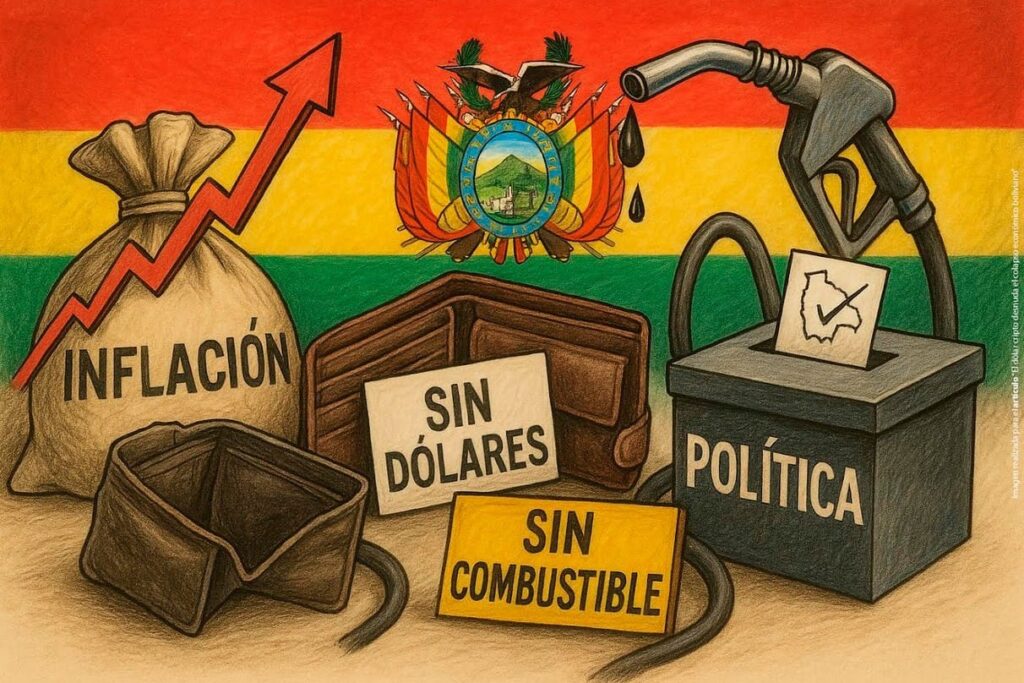
On the morning of April 25, I logged into Binance’s P2P market (a peer-to-peer exchange platform that allows direct buying and selling of cryptocurrencies) and observed that the USDT (crypto dollar) jumped from Bs 14.00 to Bs 14.25 within a matter of hours. This abrupt increase reflects a trend that can no longer be hidden; the parallel dollar has doubled the official rate set by the Central Bank of Bolivia (Bs 6.96). This exchange rate gap is the accumulated result of the political and economic tensions that have persisted since the end of the commodities supercycle around 2016.
How did we get here?
Since 2006, Bolivia adopted an economic model centered on the nationalization of natural resources, particularly gas, with the State playing a leading role in the economy. This model initially yielded notable results such as poverty reduction and increased governability. However, the depletion of gas fields and the lack of new investments (in exploration) have led to a more than 50% drop in gas exports over the past decade. Without a clear strategy for productive diversification, the country has shifted from a gas-based model to one based on debt.
The Arce administration, in power since 2020, has chosen to continue the economic model of its predecessor (Evo Morales), resisting the implementation of structural reforms. Despite the growing shortage of foreign currency and fuel, the president has defended his approach, backed by the “support” of some social organizations, even though international macroeconomic indicators are beginning to show signs of exhaustion.
The economy is now seriously suffering. The black market, the parallel dollar, and cryptocurrencies have become survival mechanisms for importers and private entrepreneurs. Net international reserves have dropped to critical levels, and despite government denials, reports from multilateral organizations warn of a rising and sustained inflationary scenario (according to the IMF, 15.8%).
In this context, politics has become even more unpopular. In a murky electoral environment, with fleeting alliances and a fragmented opposition, the ruling party is attempting a restructuring aimed at retaining power. But economic issues are overwhelming political ones, and ordinary citizens are beginning to distrust both the government’s narrative and the opposition’s lack of proposals.
The Argentine case may offer valuable lessons. Facing a similar exchange crisis, Milei’s government implemented a set of measures aimed at stabilizing the economy, such as the most recent one: “the partial removal of the currency controls” (state control over the purchase of foreign currency), public spending cuts, and direct negotiations with the International Monetary Fund (IMF). Although some analysts warn that these actions have been socially painful due to increased tariffs, inflation, and loss of purchasing power, they have begun to reduce the exchange rate gap and stabilize market expectations in the macroeconomy.
In Bolivia, it is urgent to learn from these experiences before economic collapse becomes inevitable. It is the responsibility of political actors (especially presidential pre-candidates and their teams) to seriously propose a sound economic roadmap. Are we willing to keep postponing change? If not, here are some minimum and essential measures:
- Reform of the economic model: diversify the productive matrix, reducing dependence on gas and raw materials.
- Institutional transparency: strengthen state institutions and promote public management with clear accountability, eliminating unnecessary public spending.
- Flexible exchange rate policy: adopt a system of exchange bands that allows the official exchange rate to adjust to real market conditions, thereby reducing the gap with the parallel dollar. While a fixed exchange rate can contribute to stability, its maintenance must be consistent with the evolution of the national economy to avoid distortions and financial imbalances.
- Responsible international agreements: negotiate external financing mechanisms without compromising national sovereignty.
- Political dialogue: promote broad consensus involving labor unions, business groups, universities, social organizations, and political parties, to implement reforms with social backing.
Bolivians must understand that this crisis is not merely circumstantial. It is the result of sustained political decisions and an already obsolete economic structure. Getting out of this maze requires technical audacity but, above all, political will. Overcoming sectoral interests, moving beyond managing scarcity, and building a new vision for the country is now, more than ever, a national urgency. This must be done as soon as possible, and maybe then we won’t have to hear, once again, that bitter warning: “Bolivia is dying on us.”
Lic. Dennys Peredo Borda
Vice President, College of Political Scientists of Santa Cruz
Por Dennys Peredo Borda, Eju.tv:
Durante la mañana del 25 de abril, ingresé al mercado P2P de Binance (una plataforma de intercambio «persona a persona» que permite la compraventa directa de criptomonedas) y observé que el USDT (dólar cripto) pasó de cotizarse a Bs 14,00 a Bs 14,25 en cuestión de horas. Esta subida abrupta refleja una tendencia que ya no puede ocultarse; el dólar paralelo ha duplicado la tasa oficial establecida por el Banco Central de Bolivia (Bs 6,96). Esta brecha cambiaria es el resultado acumulado de las tensiones políticas y económicas que se arrastran desde el fin del superciclo de las materias primas, allá por 2016.
¿Cómo llegamos a este punto?
Desde 2006, Bolivia adoptó un modelo económico centrado en la nacionalización de los recursos naturales, particularmente el gas, acompañado de un rol protagónico del Estado en la economía. Este modelo dio resultados interesantes como la reducción de la pobreza y otorgó gobernabilidad. Sin embargo, el agotamiento de los yacimientos y la falta de nuevas inversiones (en exploración) han hecho que las exportaciones de gas se reduzcan a menos de la mitad en la última década. Sin una estrategia clara de diversificación productiva, el país ha transitado de un modelo de gas a uno de deuda.
El gobierno de Arce, en el poder desde 2020, ha optado por la continuidad del modelo económico de su antecesor (Evo Morales), resistiéndose a implementar reformas estructurales. A pesar de la creciente escasez de divisas y combustibles, el presidente ha defendido su enfoque, anclado en el “respaldo” de algunas organizaciones sociales, aunque los indicadores macroeconómicos internacionales comienzan a mostrar señales de agotamiento.
La economía ha comenzado a resentirse seriamente. El mercado negro, el dólar paralelo y las criptodivisas se han convertido en mecanismos de supervivencia financiera para los importadores y empresarios privados. Las reservas internacionales netas han caído a niveles críticos, y los informes de organismos multilaterales, pese a ser desmentidos por el gobierno, advierten un escenario inflacionario creciente y sostenido (según el FMI 15,8%).
En este contexto, la política se ha vuelto aún más impopular. En un ambiente electoral enrarecido, con alianzas efímeras y una oposición fragmentada, el oficialismo ensaya una reestructuración con el objetivo de retener el poder. Pero lo económico desborda lo político, y el ciudadano de a pie empieza a desconfiar tanto del discurso gubernamental como de la falta de propuestas en la oposición.
El caso argentino puede ofrecer lecciones valiosas. Enfrentando una situación cambiaria similar, el gobierno de Milei aplicó un paquete de medidas orientadas a estabilizar la economía como la más reciente; “la eliminación parcial del cepo cambiario” (control estatal sobre la compra de divisas), el recorte del gasto público, y negociación directa con el Fondo Monetario Internacional (FMI). Estas acciones, aunque algunos analistas advierten que estas acciones han sido dolorosas en lo social por el aumento de tarifas, inflación y pérdida de poder adquisitivo, han comenzado a reducir la brecha cambiaria y estabilizar las expectativas del mercado en la macroeconomía.
En Bolivia, es urgente aprender de estas experiencias antes de que el colapso económico sea inevitable. Es responsabilidad de los actores políticos (en especial de los precandidatos presidenciales y sus equipos) plantear con seriedad una hoja de ruta económica seria. ¿Estamos dispuestos a seguir postergando los cambios? De no ser así, estas son algunas de las medidas mínimas e imprescindibles:
- Reforma del modelo económico: diversificar la matriz productiva, reduciendo la dependencia del gas y de las materias primas.
- Transparencia institucional: fortalecer las entidades estatales y promover una gestión pública con rendición de cuentas claras, eliminando el gasto público innecesario.
- Política cambiaria flexible: adoptar un sistema de bandas cambiarias que permita ajustar el tipo de cambio oficial a las condiciones reales del mercado, reduciendo así la brecha con el dólar paralelo. Si bien un tipo de cambio fijo puede contribuir a la estabilidad, su mantenimiento debe ser coherente con la evolución de la economía nacional para evitar distorsiones y desequilibrios financieros
- Acuerdos internacionales responsables: negociar mecanismos de financiamiento externo sin comprometer la soberanía nacional.
- Diálogo político: promover un consenso amplio que incluya a sindicatos, gremios empresariales, universidades, organizaciones sociales y partidos políticos, para implementar las reformas con respaldo social.
Los bolivianos debemos comprender que esta crisis no es simplemente coyuntural. Es el resultado de decisiones políticas sostenidas en el tiempo y de una estructura económica ya obsoleta. Salir de este laberinto requiere audacia (técnica), pero sobre todo voluntad política. Superar los intereses sectoriales, dejar de administrar la escasez y construir una nueva visión de país es, hoy más que nunca, una urgencia nacional. Esto se debe hacer lo antes posible y tal vez así no tengamos que escuchar, una vez más, aquella amarga advertencia: «Bolivia se nos muere.»
Lic. Dennys Peredo Borda
Vicepresidente Colegio de Politólogos Santa Cruz
https://eju.tv/2025/04/el-dolar-cripto-desnuda-el-colapso-economico-boliviano/

 Bolivian Thoughts | Pensamientos Bolivianos (Bilingual/Bilingüe)