
By Unitel:
“There is a clear intention to postpone the elections,” says Carlos Valverde in response to constitutional challenges
In his analysis, Valverde pointed to the government and also questioned why the Arcista bloc in the Chamber of Deputies has not advanced the package of laws to safeguard the process, despite having the majority.
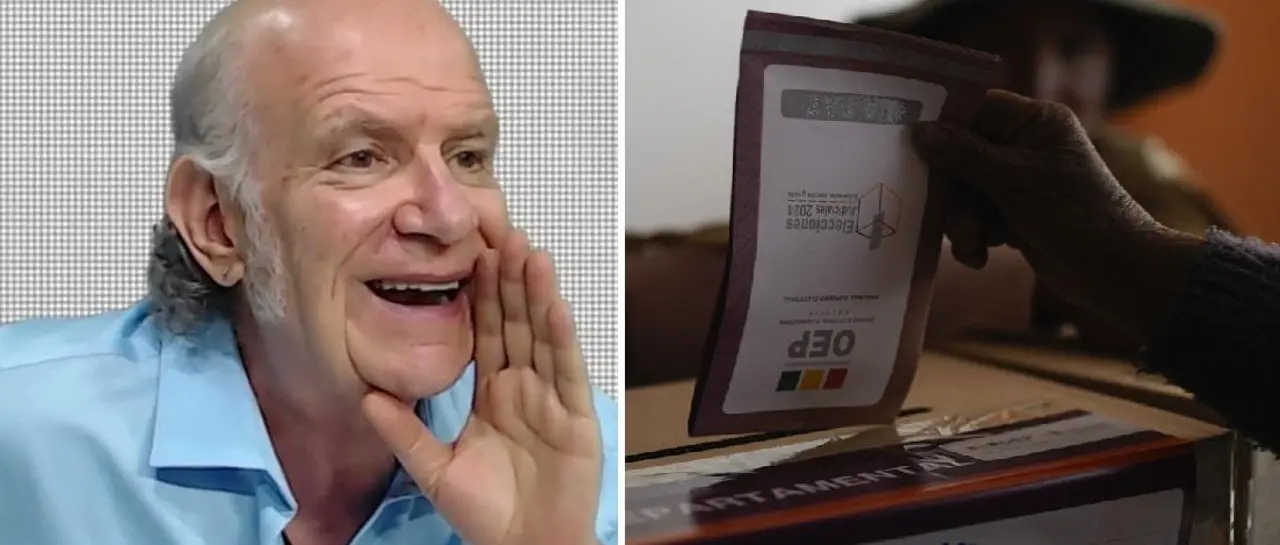
“There is no doubt this will benefit the government,” Valverde stated
In light of the announcement of new legal challenges against the general elections, journalist and political analyst Carlos Valverde noted that there is “a malicious political hand” aiming to halt the process currently in the hands of the Supreme Electoral Tribunal (TSE).
“It was assumed that (the process) was already under the control of the TSE and that no one was going to interfere. It’s called the principle of preclusion. And yet, they are turning to the Constitutional Court,” Valverde noted in an interview with UNITEL.
In recent days, Arcista deputy Israel Huaytari filed a legal challenge seeking to enforce gender parity in presidential tickets, while it also emerged that other actions are in the pipeline to ensure that Indigenous peoples can participate under equal conditions with political organizations.
The most recent came from the leader of Bolivia’s Qhara Qhara nation, Samuel Flores, who announced an unconstitutionality action before the Plurinational Constitutional Court (TCP) to demand the inclusion of the Indigenous sector, adding that starting Monday, he would begin a vigil outside the court’s offices in Sucre.
Meanwhile, the Confederation of Indigenous Peoples of the Bolivian East (Cidob) also reported being unable to participate in the elections because they do not have a political party, which has led them to file a similar complaint. Former magistrate Gualberto Cusi had previously announced the same.
“There is no doubt this will benefit the government,” Valverde said, also recalling that there has been no indication that President Luis Arce signed the agreement reached during the National Meeting for Democracy, which was held in February at the TSE.
Additionally, Valverde noted that the package of laws to safeguard the elections has not been approved, even though the Arcista faction holds a majority in the Chamber of Deputies. “They did nothing, they didn’t move a single thing,” he criticized.
He further recalled that Huaytari’s challenge would not have been necessary if the parity bill, which was sent to the legislature in October 2024, had been passed.
“I believe there is a clear and very obvious intention to postpone the elections, for what reason, I don’t know—so that Arce ends up with 0% (support)? Because I don’t think his numbers will go up with what he’s doing. His loans haven’t been approved and there’s no chance of anything moving forward—this is about destroying democracy and destroying everything,” Valverde concluded.
Por Unitel:
“Hay una clara intención de postergar las elecciones”, señala Carlos Valverde ante recursos constitucionales
En su análisis, Valverde apuntó al Gobierno y cuestionó también que la bancada arcista en la Cámara de Diputados no avanzó con el paquete de leyes para blindar el proceso, pese a tener la mayoría
“No hay ninguna duda que esto va a beneficiar al Gobierno”, consideró Valverde
Ante el anuncio de nuevos recursos contra las elecciones generales, el periodista y analista político Carlos Valverde observó que hay “una mano política malintencionada” que apunta a frenar el proceso que está en manos del Tribunal Supremo Electoral (TSE).
Se suponía que (el proceso) ya estaba bajo el dominio del TSE y que nadie se iba a meter. Se llama principio de preclusión. Y, sin embargo, están acudiendo al Tribunal Constitucional”, observó Valverde en una entrevista con UNITEL.
En los últimos días, el diputado arcista Israel Huaytari interpuso un recurso con miras a que se aplique la paridad de género en los binomios presidenciales, mientras que también trascendió que hay otros en agenda con miras a que los pueblos indígenas puedan participar en igualdad de condiciones que las organizaciones políticas.
Lo más reciente vino de parte del dirigente de la nación Qhara Qhara de Bolivia, Samuel Flores, quien anunció una acción de inconstitucionalidad ante el Tribunal Constitucional Plurinacional (TCP) para exigir la participación del sector indígena, acotando que desde el lunes iniciarà una vigilia en puertas de esta instancia estatal, en Sucre.
Mientras que la Confederación de Pueblos Indígenas del Oriente Boliviano (Cidob) también reportó que se ve impedida de participar en las elecciones porque no tienen un partido, por lo que se enfila un reclamo con el mismo matiz. Anteriormente, anunció lo propio el exmagistrado Gualberto Cusi.
“No hay ninguna duda que esto va a beneficiar al Gobierno”, consideró Valverde, al recordar también que no se conoció que el presidente Luis Arce hubiera firmado el acuerdo alcanzado en el Encuentro Nacional por la Democracia, que se llevó a cabo en febrero en el TSE.
Además, Valverde manifestó que tampoco se aprobó el paquete de leyes para blindar las elecciones, pese a que el arcismo tiene la mayoría en la Cámara de Diputados. “No hicieron nada, no movieron absolutamente nada”, cuestionó.
Es más, recordó que no hubiera sido necesario que Huaytari presentara un recurso si se hubiera aprobado el proyecto de ley de paridad que fue remitido al Legislativo en octubre de 2024.
“Yo creo que hay una clara y muy nítida intención de postergar las elecciones, no se para qué, para que Arce tenga 0% (de apoyo) porque no creo que vaya a subir con lo que está haciendo. No le han aprobado los créditos y no hay posibilidades que se mueva a ningún lado, esto ya es para destruir la democracia y destruir todo”, concluyó Valverde.

 Bolivian Thoughts | Pensamientos Bolivianos (Bilingual/Bilingüe)