
By Juan José Toro Montoya*, Vision 360:
The original portrait of the victor of Tumusla has appeared
Official Medinaceli
On the occasion of the bicentennial, his direct descendants from two lines arrived in Potosí; that is, from both his first and second marriages.
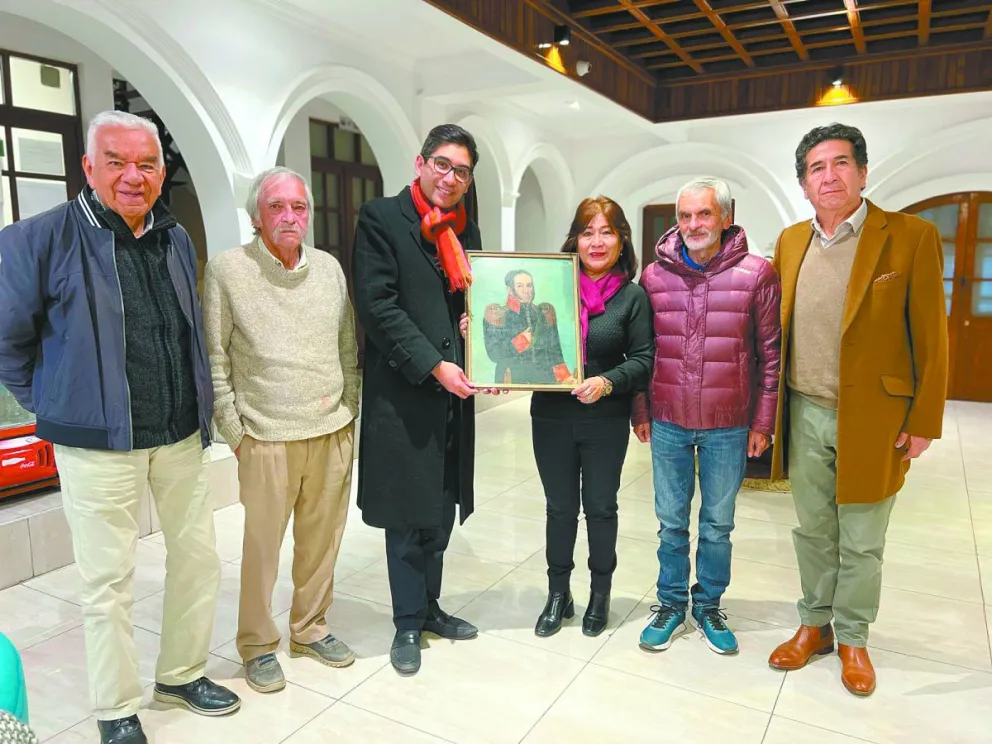
Descendants of Medinaceli show the original painting. Photos: SIHP
The bicentennial of the Battle of Tumusla served to put an end to certain controversies, including the version that this historical episode was merely a mutiny, which has now been dismissed. Another doubt that has been resolved is the image of the victor of that battle, General Carlos Medinaceli Lizarazu, which now has a version considered official.
On the occasion of the bicentennial, the direct descendants of Medinaceli from two lines arrived in Potosí; that is, from both his first marriage, to Gabina Leaño, and the second, which was celebrated with Martina Ortiz de Aramayo. The descendants from the first marriage are the holders of the true diary of the victor of Tumusla, which was authenticated by experts and publicly presented in La Paz on January 8, 2025, by the governor of Potosí, Marco Antonio Copa Gutiérrez.
The surprise prior to the main commemorative events was the presentation of the portrait of Carlos Medinaceli Lizarazu, which was painted in 1836 and is in the possession of the descendants from the second marriage. The person who presented the painting was Jenny Medinaceli Díaz, who explained that it was originally in the hands of her sister Cenia, who had it for about 20 years in France. After her death, the painting was brought back to Bolivia and came into Jenny’s possession in Tarija.
In this portrait, one can see a man with a broad forehead, sideburns, and a black military uniform. A green sash crosses his chest, and above it is his right hand, tucked into the jacket through the button area, while in his left hand he appears to be holding a staff of command, similar to those used by curacas. At the top of the painting is the inscription: “Carlos Medina Celi Primero Gral. del Departamento de Potosi año 1836.” The inscription matches the information provided by Gregorio Barrenechea (1925) and Julio Díaz Arguedas (1929), who stated that the victor of Tumusla was promoted to brigadier general in 1836.
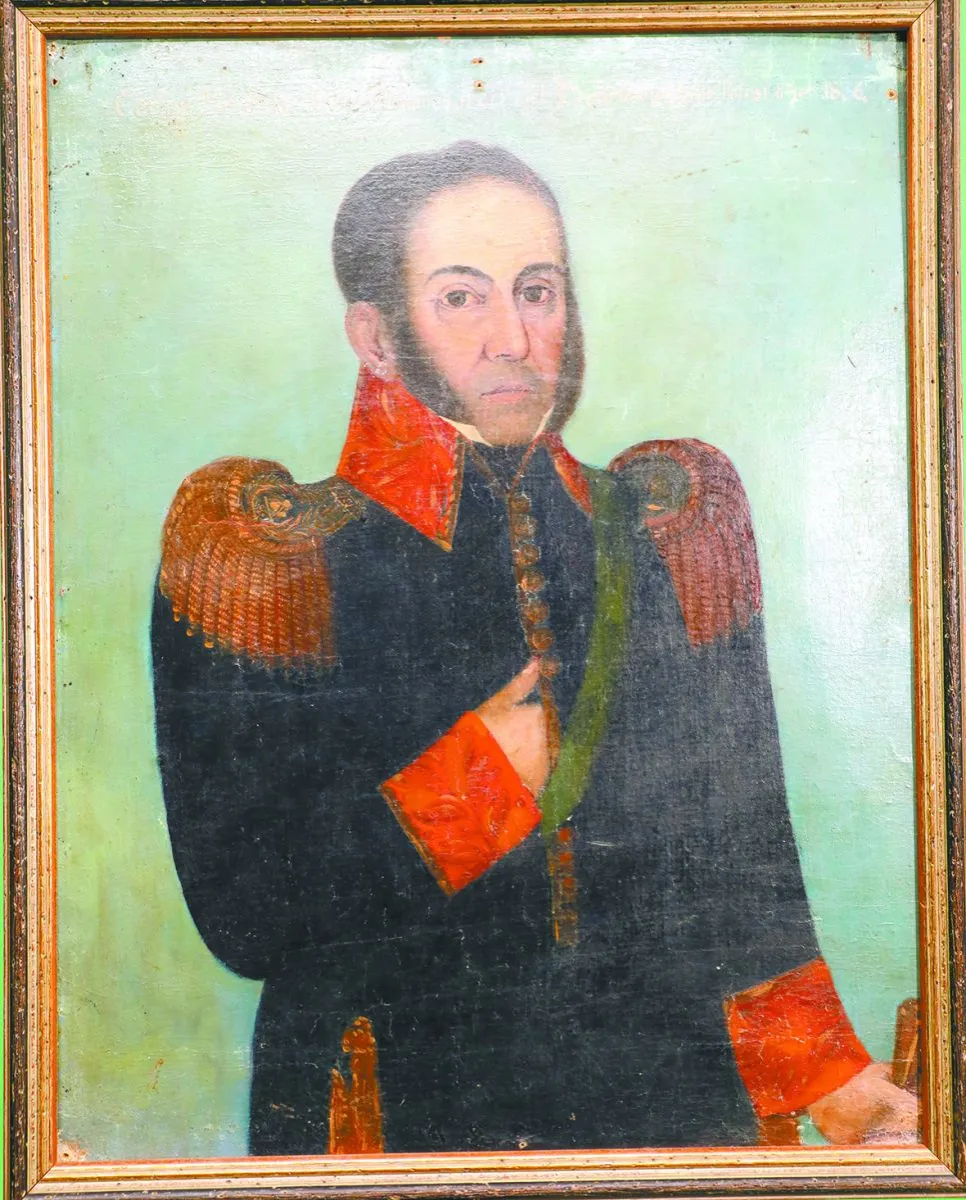
As with the diary, the painting will undergo expert analysis to determine its authenticity, but it has already been established that it is the original from which later copies were made. One of these copies appeared in a photograph in issue number 9 of the magazine Gesta Bárbara, on August 6, 1925, accompanying the biography of Gregorio Barrenechea, and its inclusion is attributed to the writer Carlos Medinaceli Quintana, future author of La Chaskañawi, who was the editor of that publication.
Researcher Eduardo Díaz-Romero notes that in 1925, on the occasion of the centennial of Bolivia’s independence, Lieutenant Colonel Díaz Arguedas went to Cotagaita in search of Medinaceli’s painting to include it in his book Generales de Bolivia, but he did not find it, so he had to use a graphite sketch. From these publications onward, portraits of Medinaceli appear only from the waist up, and the left hand holding the staff of command—visible in the original painting—is no longer shown.
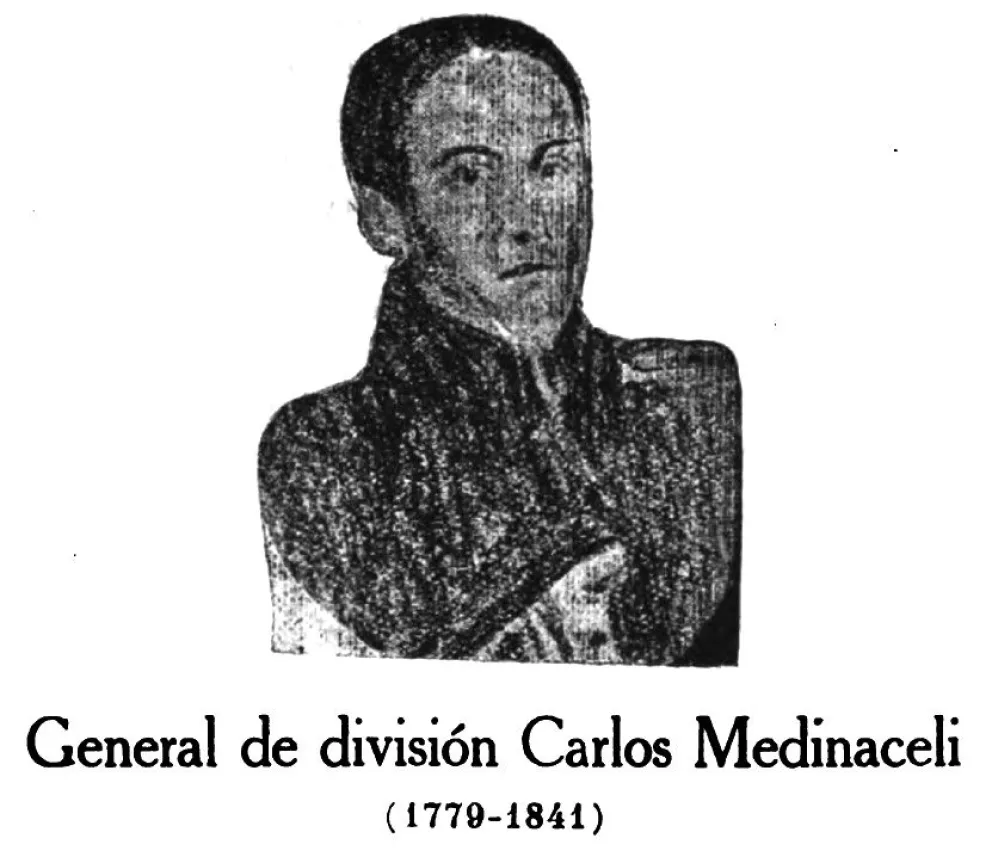
The photograph that appeared in Gesta Bárbara was later published alongside other articles, such as the anonymous piece “Sensational historical discovery consisting of unpublished letters from Bolívar and Sucre about a Bolivian hero,” published in La Calle, La Paz, on April 20, 1937, and in that same newspaper, “A hero who sealed Bolivia’s independence,” on August 12, 1945, signed by Emilio Medinaceli Quintana, brother of Carlos.
“Olañeta”
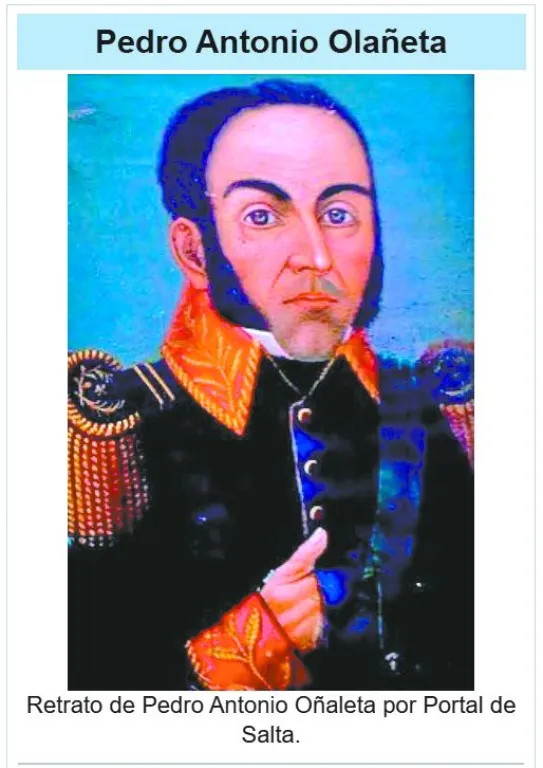
Carlos Medinaceli Lizarazu commanded the Chichas Hunters Battalion, which confronted the troops led by Field Marshal Pedro Antonio de Olañeta on April 1, 1825, in Tumusla. Ironically, a portrait of Medinaceli appears illustrating the entry “Pedro Antonio de Olañeta” in the digital encyclopedia Wikipedia.
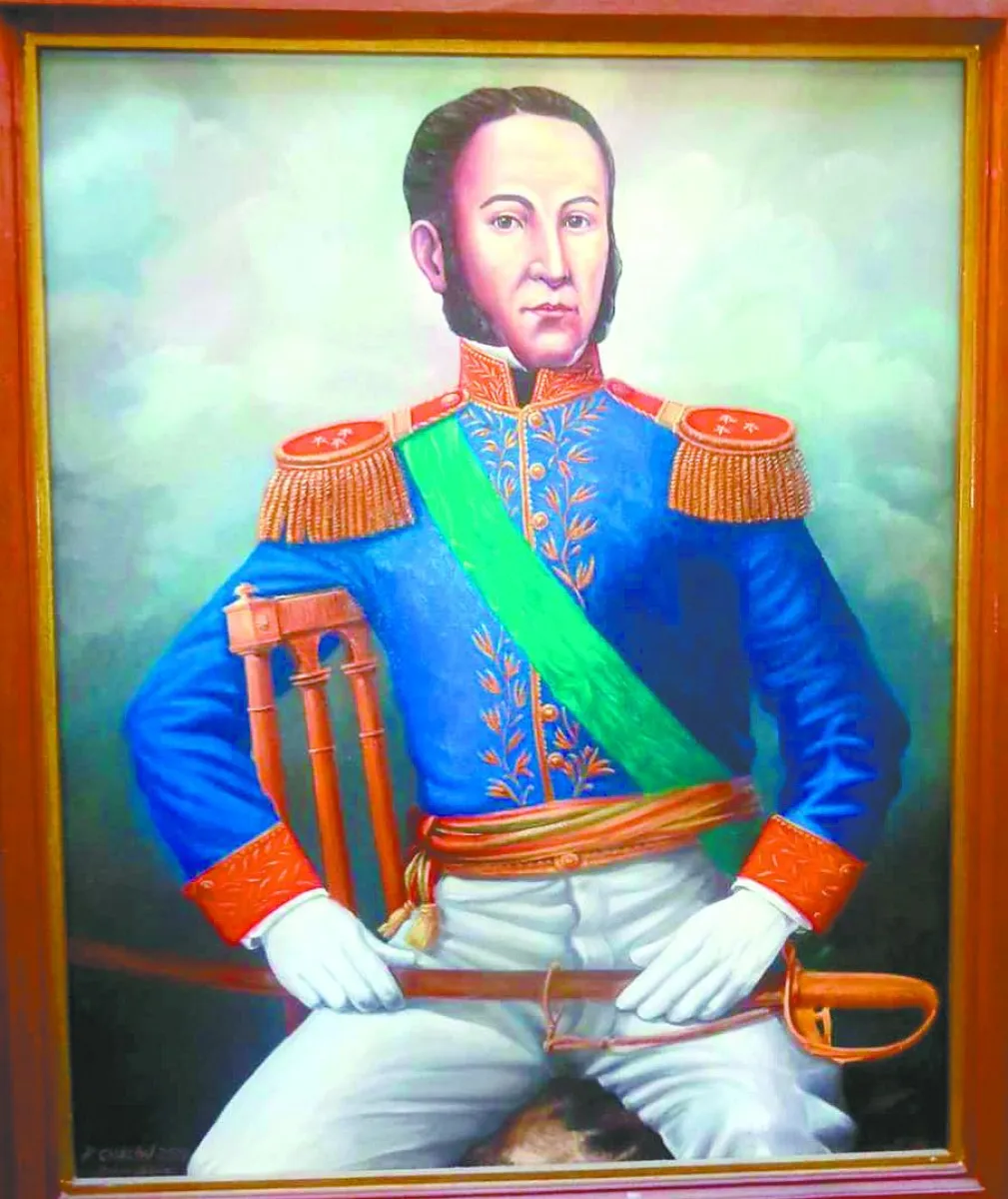
The portrait is a copy that remains today in the Corregimiento of Tumusla and appeared in 2005 on the cover of the book El Libertador de Charcas: entre Pedro Antonio y Casimiro Olañeta by Julio Ortiz Linares. This was the basis for a three-quarters portrait, 81 x 100 cm, painted by artist Russo Chacón and also appears on Wikipedia, falsely attributed to the Chamber of Senators. This painting was created by Chacón in 2009, at the express request of historian Walter Zavala Ayllón, and was based on the photograph published in Ortiz’s book.
In 2012, Víctor Hugo Medinaceli Suárez published Tumusla: la batalla que dio libertad e independencia a Bolivia, rescuing the photograph that appeared in Gesta Bárbara in 1925.
Historical Falsehood
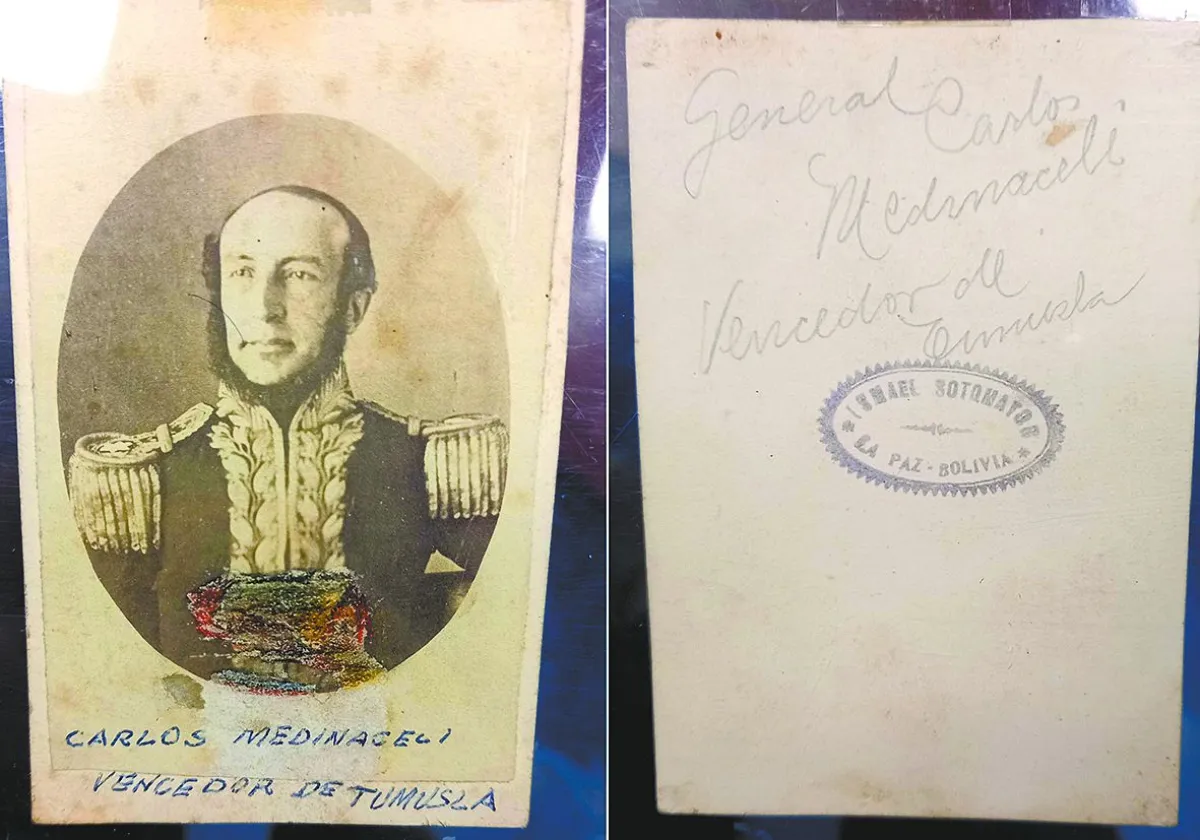
By 2025, in preparations for the bicentennial of the Battle of Tumusla, the photograph of Carlos Medinaceli Lizarazu, which appears on the official website of the Historical Archive of La Paz, was presented as a major novelty.
The background of this photo is from the Arturo Costa de la Torre Heritage Library, which is divided into sub-collections, one of which is the photographic collection of Gastón Velasco Carrasco, consisting of about 300 photos.
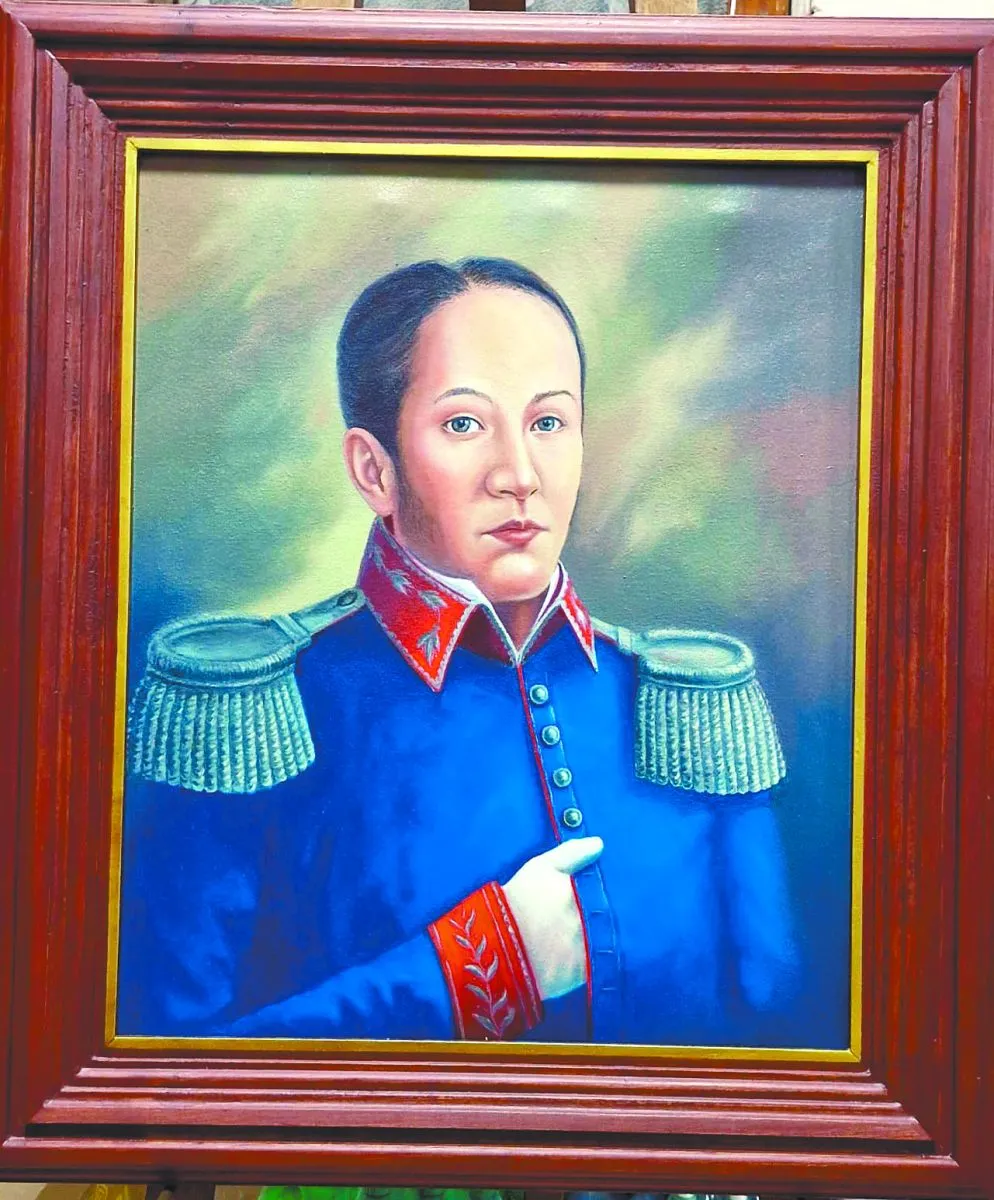
The one attributed to Medinaceli bears the signature BGV00160-3 and is a photo showing a man in a marshal’s uniform, with little hair and a beard, without a mustache, very similar to José Ballivián. According to the references on the website, it was received without much scrutiny and was even used as a model for the recreation of the Battle of Tumusla. However, the fact that Medinaceli died in 1841 and that the introduction of photography to Bolivia dates back to 1848 was overlooked.
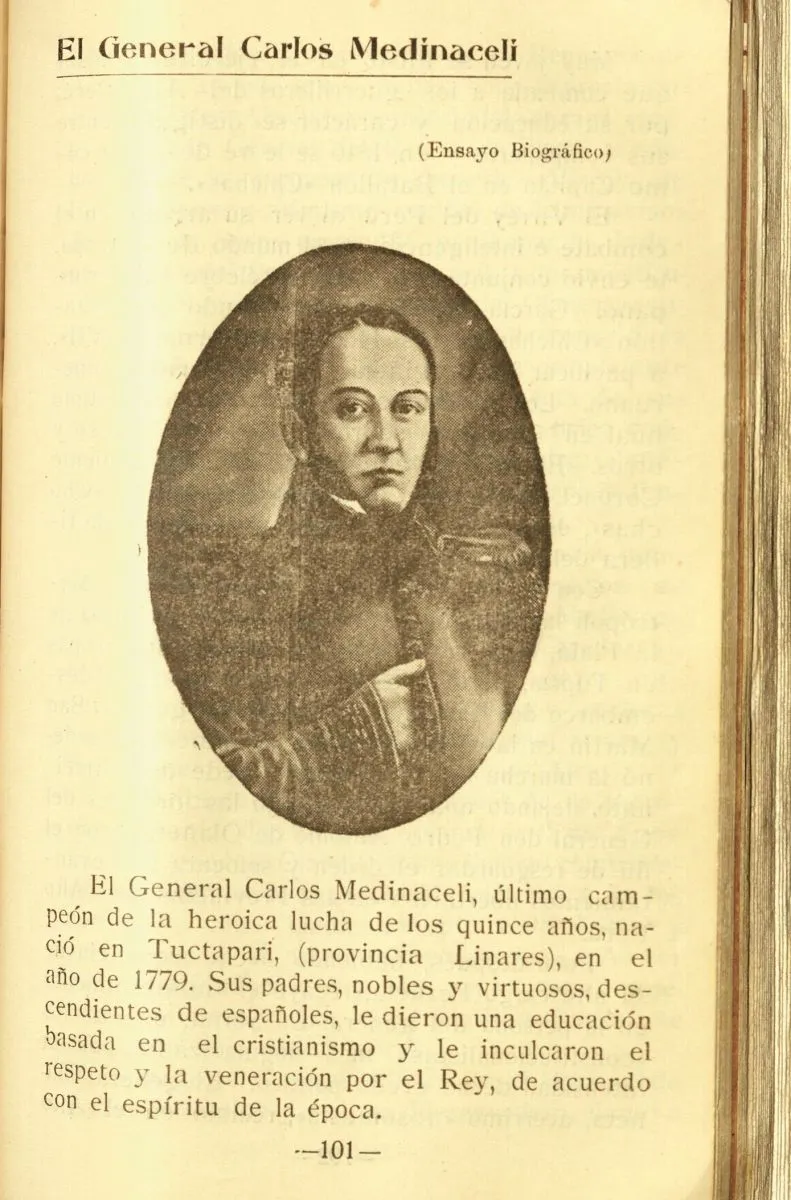
In his History of Photography in Bolivia, Fernando Suárez states that “it was the brothers Charles and Jacob Ward who, during their visit to Bolivia in 1848, carried their daguerreotype equipment on muleback and took several photographs in La Paz, Oruro, and Chuquisaca,” so it is impossible that Medinaceli could have had a daguerreotype taken before his death.
The photo was reviewed by Díaz-Romero, who verified that there is a pencil inscription on the back that reads “General Medinaceli, victor of Tumusla,” and below it is the seal of Ismael Sotomayor, who has a history of falsifying other supposedly historical documents.
(*) Juan José Toro is the founder of the Historical Research Society of Potosí (SIHP) and author of Tumusla: la batalla innegable.
Por: Juan José Toro Montoya*, Vision 360:
Apareció el retrato original del vencedor de Tumusla
Medinaceli oficial
Con motivo del bicentenario, llegaron a Potosí sus descendientes directos de dos líneas; es decir, tanto de su primer matrimonio como del segundo.
Descendientes de Medinaceli muestran el cuadro original. Fotos: SIHP
El bicentenario de la Batalla de Tumusla sirvió para cerrar algunas polémicas, incluida la versión de que ese episodio histórico fue simplemente un motín, que ya ha sido desechada. Otra duda que se cierra es la de la imagen del vencedor de esa batalla, el general Carlos Medinaceli Lizarazu, que ahora tiene una versión considerada oficial.
Con motivo del bicentenario, llegaron a Potosí los descendientes directos de Medinaceli de dos líneas; es decir, tanto de su primer matrimonio, con Gabina Leaño, como del segundo, que fue celebrado con Martina Ortiz de Aramayo. Los primeros son los poseedores del verdadero diario del vencedor de Tumusla, que fue autenticado por expertos y presentado públicamente en La Paz, el 8 de enero de 2025, por el gobernador de Potosí, Marco Antonio Copa Gutiérrez.
La sorpresa previa a los actos centrales de homenaje fue la presentación del retrato de Carlos Medinaceli Lizarazu que fue pintado en 1836 y está en poder de los descendientes del segundo matrimonio. Quien presentó el cuadro fue Jenny Medinaceli Díaz, que explicó que inicialmente estaba en manos de su hermana Cenia quien lo tuvo alrededor de 20 años en Francia. A la muerte de esta, la pintura fue traída nuevamente a Bolivia y estuvo en poder de Jenny, en Tarija.
En este retrato se puede ver a un hombre de frente ancha, con patillas y con uniforme militar de color negro. Una banda verde cruza su pecho, por encima está su mano derecha, introducida dentro de la chaqueta, por la parte de los botones, y en su mano izquierda parece portar un bastón de mando como el que suelen utilizar los curacas. Encima del cuadro está la leyenda “Carlos Medina Celi Primero Gral. del Departamento de Potosi año 1836”. La inscripción coincide con el dato proporcionado por Gregorio Barrenechea (1925) y Julio Díaz Arguedas (1929) que afirmaron que el vencedor de Tumusla fue ascendido a general de brigada en 1836.
Al igual que en el caso del diario, el cuadro será sometido a pericias para determinar su autenticidad, pero se ha establecido que se trata del original y del que se habrían hecho copias posteriores. Una de ellas apareció en fotografía en el número 9 de la revista Gesta Bárbara, el 6 de Agosto de 1925, acompañando la biografía de Gregorio Barrenechea, y su inclusión se atribuye al escritor Carlos Medinaceli Quintana, futuro autor de “La Chaskañawi”, que dirigía esa publicación.
El investigador Eduardo Díaz-Romero refiere que en 1925, con motivo del centenario de la independencia de Bolivia, el teniente coronel Díaz Arguedas fue hasta Cotagaita en busca del cuadro de Medinaceli, para incluirlo en su libro “Generales de Bolivia”, pero no lo encontró, así que tuvo que usar un grafito. A partir de estas publicaciones, los retratos de Medinaceli aparecen solo de medio cuerpo y ya no se ve la mano izquierda en la que está el bastón de mando, en el cuadro original.
La fotografía aparecida en Gesta Bárbara se publicó posteriormente, acompañando otros artículos, como, por ejemplo, el anónimo “Sensacional descubrimiento histórico constituido por cartas inéditas de Bolívar y Sucre sobre un héroe boliviano” publicado en La Calle, de La Paz, el 20 de abril de 1937 y, en ese mismo periódico, “Un héroe que selló la independencia de Bolivia”, el 12 de agosto de 1945 y con la firma de Emilio Medinaceli Quintana, hermano de Carlos.
“Olañeta”
Carlos Medinaceli Lizarazu comandaba el Batallón Cazadores de Chichas, que fue el que enfrentó a las tropas lideradas por el mariscal de campo Pedro Antonio de Olañeta el 1 de abril de 1825 en Tumusla. Irónicamente, un retrato de Medinaceli aparece ilustrando la entrada “Pedro Antonio de Olañeta” en la enciclopedia digital Wikipedia.
El retrato es el de una copia que permanece hasta hoy en el Corregimiento de Tumusla y apareció en 2005 en la tapa del libro “El Libertador de Charcas: entre Pedro Antonio y Casimiro Olañeta”, de Julio Ortiz Linares. Este fue la base para un cuadro de tres cuartos, de 81 x 100, pintado por el artista Russo Chacón y que también aparece en Wikipedia, con propiedad falsamente atribuida a la Cámara de Senadores. Este cuadro fue pintado por Chacón en 2009, por pedido expreso del historiador Walter Zavala Ayllón, y se basó en la fotografía publicada en el libro de Ortiz.
En 2012, Víctor Hugo Medinaceli Suárez publicó “Tumusla: la batalla que dio libertad e independencia a Bolivia” rescatando la fotografía aparecida en 1925 en Gesta Bárbara.
Falso histórico
Ya en 2025, en preparativos para el bicentenario de la Batalla de Tumusla, se presentó, como una gran novedad, la fotografía de Carlos Medinaceli Lizarazu que aparece en el sitio web oficial del Archivo Histórico de La Paz.
El fondo en el que está esa foto es el de la Biblioteca Patrimonial Arturo Costa de la Torre que, a su vez, está dividido en subfondos y uno de ellos es el de la colección fotográfica de Gastón Velasco Carrasco, integrada por unas 300 fotos.
La que se atribuye a Medinaceli tiene la signatura BGV00160-3 y es una foto en la que se ve a un hombre con uniforme de mariscal, con escaso cabello y barba, prescindiendo de bigote, muy parecido a José Ballivián. Por las referencias que acompaña la página web, fue recibida sin contemplaciones y hasta se usó de modelo para la recreación de la Batalla de Tumusla. No obstante, no se reparó en el hecho de que Medinaceli murió en 1841 y los antecedentes de la introducción de la fotografía en Bolivia datan de 1848.
En su “Historia de la fotografía en Bolivia”, Fernando Suárez afirma que “son los hermanos Charles y Jacob Ward quienes en su visita a Bolivia en 1848 cargaron, a lomo de mula, su equipo de daguerrotipia y tomaron varias fotografías en La Paz, Oruro y Chuquisaca”, así que es imposible que Medinaceli se haya tomado un daguerrotipo antes de su fallecimiento.
La foto fue revisada por Díaz-Romero, quien verificó que detrás está una inscripción con lápiz que dice “General Medinaceli vencedor de Tumusla” y abajo aparece el sello de Ismael Sotomayor, quien tiene el antecedente de haber falsificado otros documentos supuestamente históricos.
(*) Juan José Toro es fundador de la Sociedad de Investigación Histórica de Potosí (SIHP) y autor de “Tumusla: la batalla innegable”.
https://www.vision360.bo/noticias/2025/04/11/23157-medinaceli-oficial

 Bolivian Thoughts | Pensamientos Bolivianos (Bilingual/Bilingüe)