
By Boris Bueno, Eju.tv:
He states that beyond the political banner, what’s needed is a permanent coalition that can satisfactorily respond to the needs of the people.
Economist Jaime Dunn, announced by Acción Democrática Nacionalista (ADN) as its presidential pre-candidate, is proposing a coalition of opposition politicians—but without the presence of traditional figures who have been part of the national political landscape for decades. He believes that any proposal to the Bolivian people must be based on a renewal of ideas and the emergence of new leaders capable of rebuilding the country.
Dunn identified traditional politicians as including pre-candidates Jorge Tuto Quiroga, Samuel Doria Medina, and Carlos Mesa—three leaders who were part of the failed Unity Bloc—as well as other figures who have been trying to take control of the country for several election cycles. He also made it clear that, although this stance might provoke criticism, the economist is not afraid of being attacked for sidelining old political faces that, in his view, never offered a real alternative to Bolivians.
Click the photo to watch video:
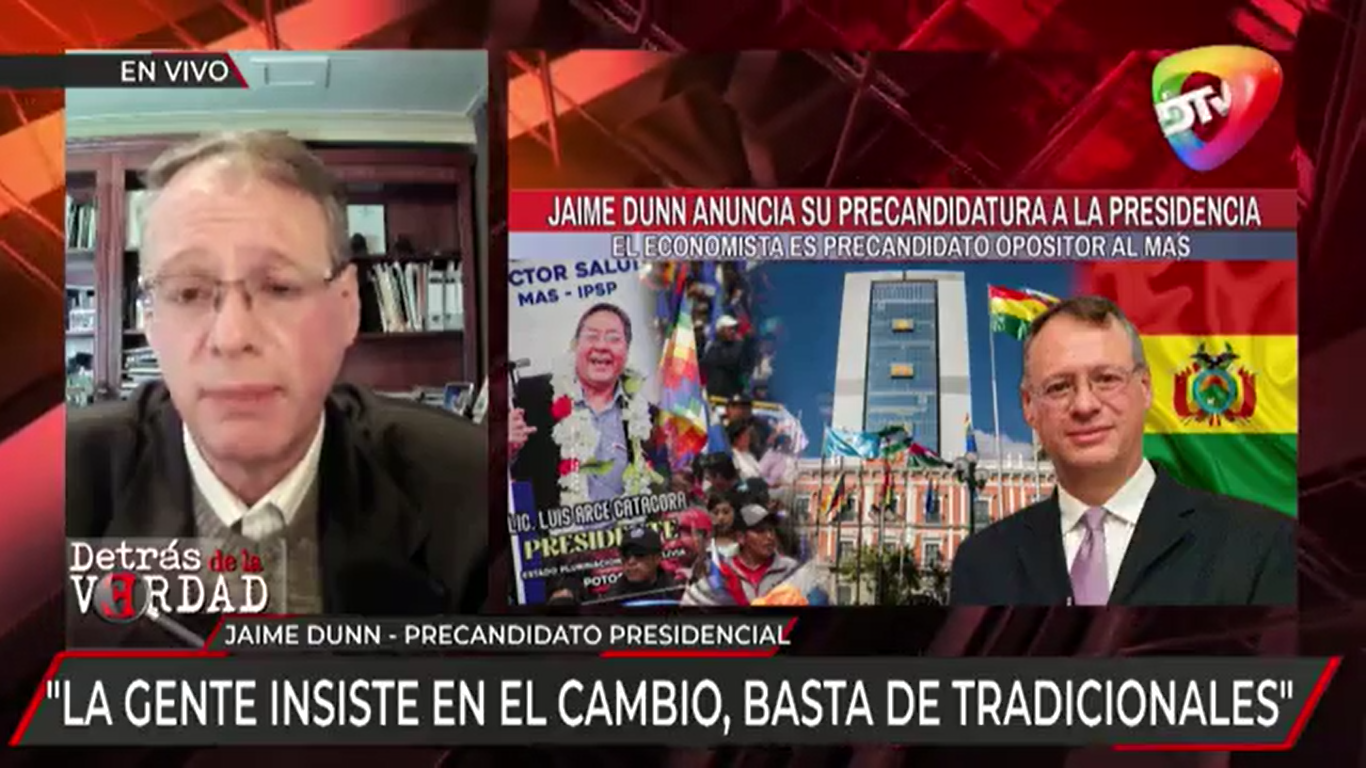
“This is about something that has never been done before—a broad and representative coalition of emerging forces, which would be the only option that should have always existed in the country. A coalition where there’s no debate over who the candidate is, no debate over how the candidate will be chosen, and no debate over whether statistical studies will be conducted or who will pay for them. What must unite this coalition of representative forces in Bolivia is precisely a shared vision for the country—the programmatic proposal that should be presented.”
However, he announced that he is in talks with several political groups to form a coalition based on offering the country a serious government plan—one capable of addressing the national population’s economic, political, and social demands. Hence, the importance of rebuilding democratic institutions in order to tackle the problems that affect society as a whole.
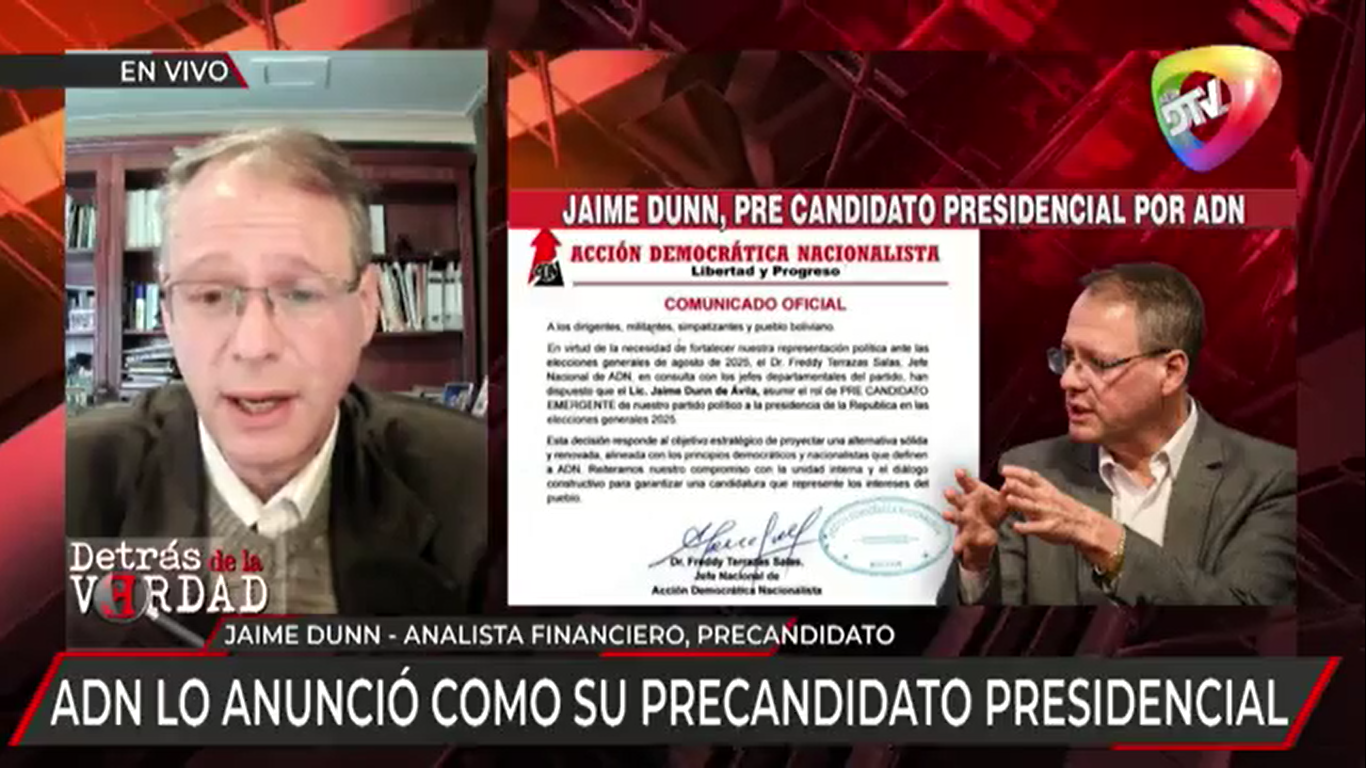
Photo: screen capture
Regarding ADN, whose president, Freddy Terrazas, announced him yesterday as the party’s presidential candidate, the economic analyst stated that it’s not about forming alliances by borrowing the acronym of just any political party. Instead, the focus must go beyond a circumstantial decision and center on the proposal that will be presented to the country. Consequently, he emphasized the importance of making a decision based on ideology and objectives, with the intention of forming a viable and permanent option.
“There must be a clear and strong orientation toward a shared understanding of what needs to be done for Bolivia. There must be ideological alignment and a common national vision, and that, at least in my case, narrows the field. There may be pre-candidates who don’t care about the political vehicle and just associate with anyone. That’s why I insist that this isn’t about borrowing a party acronym, but about forming a lasting and permanent bloc that can solve the country’s problems,” he stated.
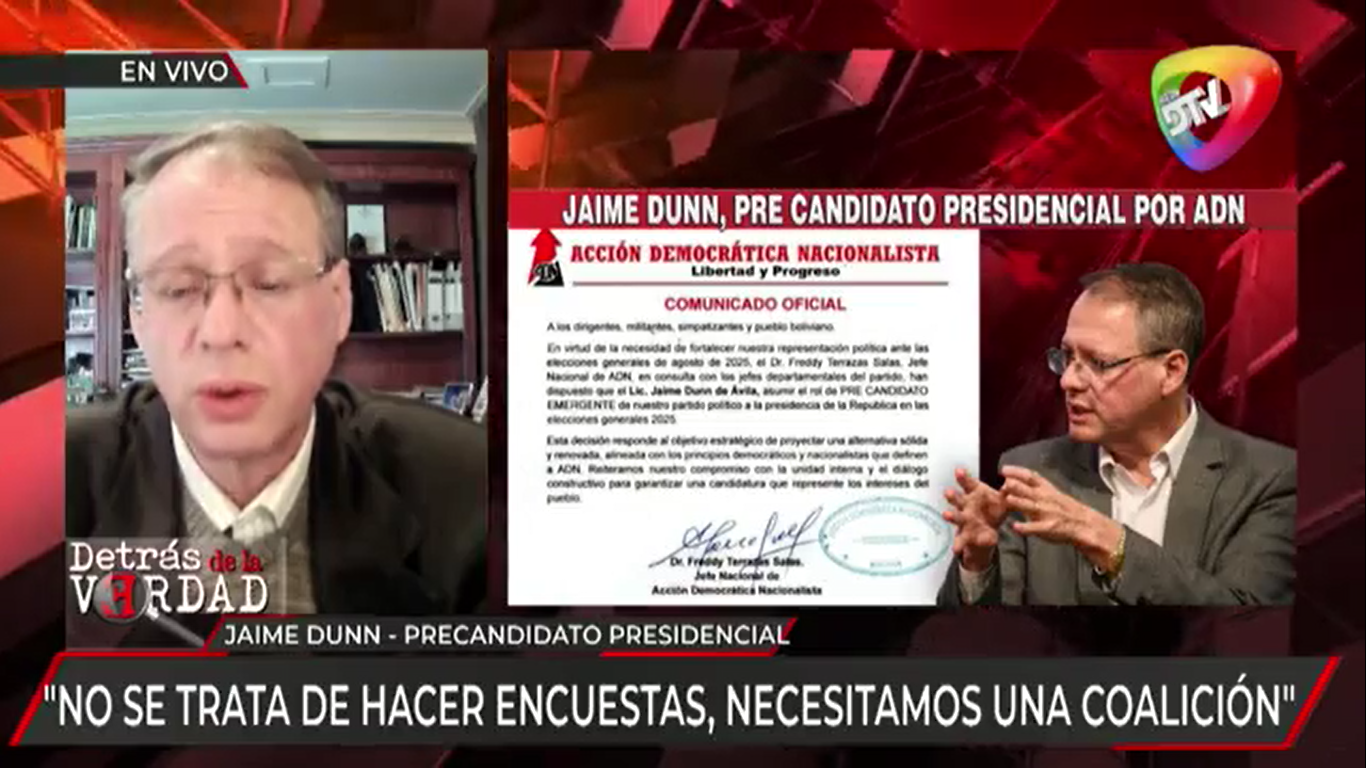
Photo: screen capture
He also pointed out that the public expects real proposals to address the country’s structural situation. In that sense, he criticized pre-candidates for focusing solely on talking about the economic crisis without offering a roadmap that would give Bolivians clarity on key issues such as the creation of development plans, job generation, support for productive sectors, and policies related to health, education, or departmental autonomies.
“There must be a broad debate to clearly define the national vision. Let’s ask what will happen with the Political Constitution of the State, what will happen with the concept of autonomy or federalism, what are their views on whether the State should be smaller or larger, how they plan to solve the economic issue. We are all distressed by the economic crisis, but that is a circumstantial issue—it will be resolved. The real question is what we do after that, what vision we have for the country. Otherwise, we risk facing the same crisis all over again,” he emphasized.
Por Boris Bueno, Eju.tv:
Afirma que más allá de la sigla, se necesita una coalición permanente que responda de manera satisfactoria a las necesidades de la gente.
El economista anunciado por Acción Democrática Nacionalista (ADN) como su precandidato presidencial, Jaime Dunn, plantea una coalición de políticos de oposición, pero sin la presencia de figuras tradicionales que están varias décadas en el espectro político nacional, debido a que la propuesta a la población boliviana debe tener como base la renovación de ideas y la irrupción de nuevos líderes que puedan reconstruir el país.
Dunn identificó entre los políticos tradicionales a los precandidatos Jorge Tuto Quiroga, Samuel Doria Medina y Carlos Mesa, tres líderes que fueron parte del fallido Bloque de Unidad, así como otros personajes que tratan con hacerse del mando de la Nación desde hace varias elecciones; además, dejó en claro que si bien existe la posibilidad de que esa determinación le genere críticas, el economista señala que no le teme a los ataques por dejar de lado a viejos rostros de la política que nunca ofrecieron una alternativa real a los bolivianos.
Haga click en la foto para ver el video;
“Se trata de algo que no se hizo, una coalición amplia y representativa de fuerzas emergentes que sería la única opción que siempre debería haber habido en el país, donde no se discuta quién es el candidato, no se discuta cómo se va a elegir al candidato y no se discuta si se va a hacer estudios estadísticos y quién las paga; aquí lo que tiene que unir a esta coalición de fuerzas representativas de Bolivia es justamente la visión de país, la propuesta de programa que se debería presentar”.
Sin embargo, anunció que tiene conversaciones con varias tiendas políticas para generar una coalición que tenga como base la oferta de un plan de gobierno serio al país y que tenga la capacidad de solucionar las demandas de la población nacional en lo económico, político y social; por ello, la importancia de la reconstrucción de la institucionalidad democrática para atender los problemas que aquejan a la sociedad en su conjunto.
Foto: captura pantalla
Respecto a ADN, cuyo presidente, Freddy Terrazas, lo anunció la pasada jornada como su candidato presidencial, el analista económico aseveró que no se trata de generar alianzas mediante el préstamo de la sigla de cualquier partido político; sino se tiene que ir más allá de una decisión coyuntural y pensar en la propuesta que se hará al país, en consecuencia, insistió en la trascendencia de tomar una determinación en función a la ideología y los objetivos con la intención de conformar una opción viable y permanente.
“Tiene que haber una contundente orientación clara de pensar lo mismo en cuanto a lo que hay que hacer por Bolivia, tiene que haber afinidad ideológica y un sentido de visión de país que sea común y eso hace que, por lo menos en mi caso, se reduzca más; puede haber precandidatos a los que no les interesa el vehículo y se asocian a cualquiera, por eso, insisto en que no se trata de prestarse una sigla, sino de conformar un bloque duradero y permanente que resuelva los problemas del país”, afirmó.
Foto: captura pantalla
Además, apuntó a que la población espera propuestas reales para la situación estructural del país, es así que cuestionó que los precandidatos solo se enfoquen en hablar de la crisis económica y no propongan un camino que permita a los bolivianos tener certidumbre sobre temas que son fundamentales como la generación de planes de desarrollo, la creación de empleos, o el apoyo a los sectores productivos, además de políticas que tienen que ver con salud, educación; o las autonomías departamentales.
“Tiene que haber un amplio debate para encontrar la visión de manera certera, preguntemos qué va a pasar con la Constitución Política del Estado, qué va a pasar con la palabra autonomía o el federalismo, qué opinan si el Estado será más chico o grande; cómo piensan solucionar el tema económico. Todos estamos angustiados con la crisis económica, pero es algo coyuntural, se va a solucionar, el tema es qué hacemos después de eso, qué visión de país tenemos, sino podemos tener la crisis de nuevo”, subrayó.

 Bolivian Thoughts | Pensamientos Bolivianos (Bilingual/Bilingüe)