
By Carlos Quisbert, Vision 360:
Products with Secret Ingredients
“They say the ‘jailoncitos’ are the ones who have the most faith in amulets and the effects of the ‘black table’ or essences like ‘Florida Water,’ ‘Tick Extract,’ ‘Llama silver, client, and love,’ or pills to boost libido.”
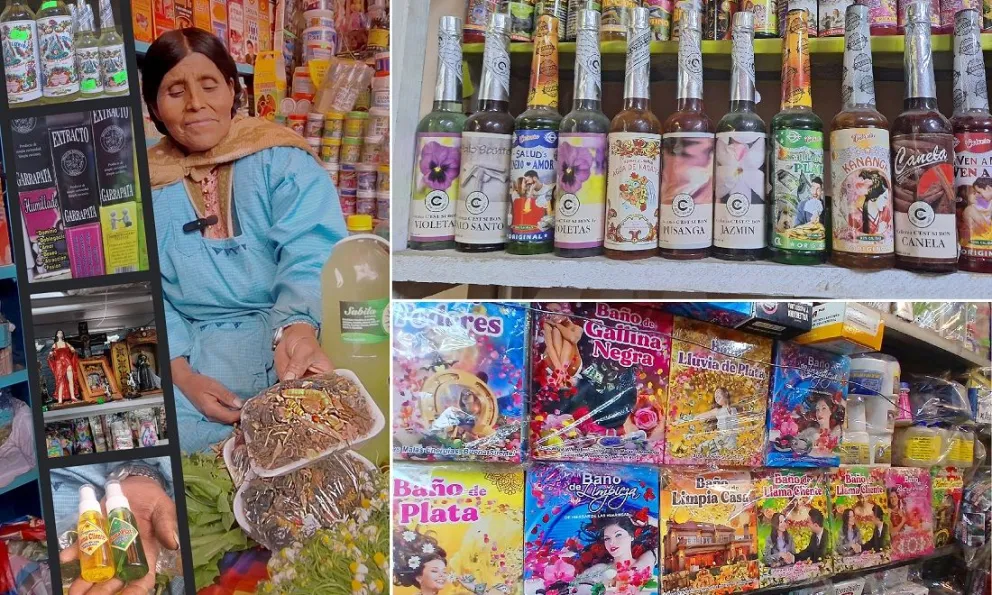
Salomé has been selling since she was 13, and in the photos, some esoteric products. Photo: Carlos Quisbert
Jéssica, a judicial officer from Santa Cruz, came to the city of La Paz for a procedure. Aware of the economic crisis in the country, with rising prices not only for food but also for cosmetics, she decided to take advantage of her visit to the seat of government and buy some hair products on Linares Street, better known as the “Witch’s Street.” The La Paz lawyers assured her that there she could buy shampoos made from rosemary or onion, and also, “it’s cheaper here,” they told her.
“In Santa Cruz, the aloe and rosemary shampoo went up (since January 2024) from 21 to 40 bolivianos; here I found it for 28, so I’ll take a dozen to sell at my office,” Jéssica tells Visión 360, very happy with her find, because it even makes her dream of a small business as a middleman.
However, while chatting, the seller makes other offers, and along with her companions, she learns about other highly sought-after products among her guild, including judges and lawyers, of which until that moment she had only heard the names, from stories of beliefs she had never taken seriously. But the friendly merchant also warns her: “Homemade, but this has also gone up, some things come from Peru and Brazil, because of (the shortage of) the dollar, and they say the sol (Peruvian currency) has also gone up.”
Then, “the homemade” seller begins a small and mischievous description of what is most commonly bought by lawyers and the faithful. “The black table, which is for warding off curses,” incense, red candles with figures “for love and business,” Peruvian essences with unknown ingredients like “Florida Water and Kananga, for curses,” among others.
Afterwards, Jéssica exchanges phone numbers with the seller and leaves the store laughing out loud, because despite her disbelief, the seller also offered her eye-catching products, not just for protection against curses, envy, and for attracting luck or clients, but also to attract a partner and help (with libido) for men.
In an independent survey, Visión 360 interviewed several sellers in the sector, and although some claimed that “a leader” had forbidden them from giving interviews for legal reasons, they agreed to explain that, for example, “Florida Water,” which in its largest presentation costs 35 bolivianos, or “Rose Water” at 55 bolivianos, had slowly gone up in price in recent months, just like most foreign products, “it’s gone up by five bolivianos at a time. But there are other things that have gone up double,” says a young seller.
On the list of products that have risen in price due to the shortage of dollars, lack of fuel, and the rising cost of food in Bolivia, are the bottles of capsules to increase libido, such as “Guanarpo,” which went up from 35 to 45 bolivianos. For women who want to attract a partner and have them submit to their desires, there is perfume made from “Tick Extract, a product of simple curiosity,” as stated on its packaging with a “Seal of Guarantee,” which also saw a price increase in similar proportions.
Mayra, a young lawyer with a two-year-old child in her arms, returns hurriedly and very seriously to her office after buying some food at the Rodríguez market. “Everything is expensive, everything has gone up,” she exclaims as she leaves the bags in a corner and takes out a bunch of broom, rue, rosemary, and incense.
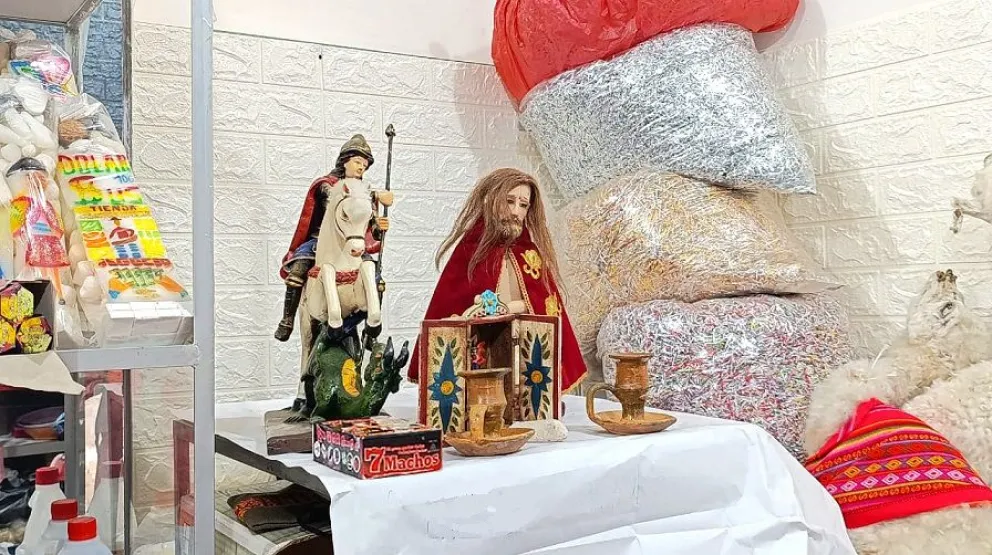
She lights the incense at the feet of the small plaster image that the owner of the office has behind a partition; it is the “Just Judge,” the protector of judges and lawyers. “May my body not be imprisoned, nor my blood spilled. Wherever I go, may your hands support me, your eyes watch over me, and your shadow shelter me. Amen,” says a small legend stuck to the shelf.
“It’s incredible how the prices have gone up at the market, even these things have gone up in price,” Mayra tells Visión 360 while she arranges the vase with broom, rosemary, and rue, and then prepares a couple of candles that the owner of the image will light upon arrival. Mayra explains that she is not a believer in these rituals, but the wife of the office’s head lawyer is.
“She says (the wife) that in this business, you have to protect yourself from curses; there’s always people who hate us, you know. For doing… or not doing our job (she laughs sarcastically, referring to the fact that they had to pay ‘tips’ to a judicial notifier so that a case wouldn’t fall apart). That’s why she makes offerings to Pachamama (Mother Earth),” Mayra recounts.
While speaking, she points to a small cube made of sheet metal, blackened by coal residue, in which, she reveals, “they burn black tables once a month… Seriously, even these things, to protect against curses and envy, have gone up (in price). The first time I worked here (two years ago), they’d send me to buy everything with 40 bolivianos, the small things, but now that costs 70, and her homemade stuff told me that if things keep going like this (with the dollar shortage), the Peruvian products will go up even more,” Mayra says, smiling and requesting with a plea that no photos be taken of the small altar.
Ethel, head of a unit at a bank, wife, and mother of three children, struggles to remember the exact price differences for some household items between last year and April of this year.
“The five-liter oil was 55 bolivianos, now it’s between 80 and 90 bolivianos. Rice went up since January of last year, from 300 for the quintal of ‘golden grain,’ the best one, to 550, 600 bolivianos. Ground beef went up from 30 to 45 bolivianos, and the special one was 37 and now it’s 60 (bolivianos) per kilo. Oh, I remember, and it’s enough to complain and suffer,” Ethel responds to the inquiry from this outlet.
Ana, a telecommunication company operator; Estéfani, a merchant in El Alto; and Reynaldo, an employee at another bank, report similar figures, with variations of up to 10% between products, depending on the market and the area where they live. When asked, they all blame the current government and the leaders of MAS, who imposed a radical stance against capitalism and, at least in rhetoric, promoted the rules of the socialist market, such as fuel subsidies, the creation of state-owned companies, and the opening of the market to ideologically aligned countries like China.
But in Bolivia, on the streets of Santa Cruz, Linares, and Illampu in the city of La Paz, the market for ingredients for witchcraft, protection against curses, envy, the evil eye, and unregistered traditional medicines, is fully governed by the liberal system. Free supply and demand prevail, and no one would think of denouncing the street vendors, who, in turn, buy everything at a markup from the wholesalers.
And this has always been the case, as there has never been, or at least no official record has been found, of a street blockade in protest over the rise in prices for the ingredients for a ritual table, for Pachamama offerings, or a cleansing. In this market, remedies against envy are purchased at the price offered.
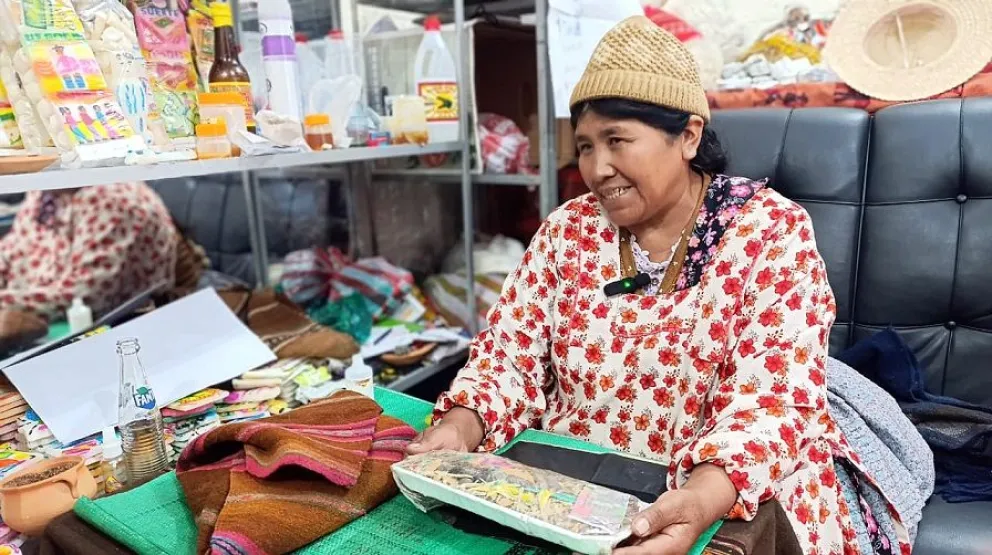
This is how Salomé understands it, who has her sales stall for all these ingredients located at the corner of Illampu and Max Paredes streets. Salomé kindly explains the composition of the “black table,” made on a plastic tray with a variety of seeds and other elements, but with a base of black paper and sheep wool. She assures that its function is to ward off curses from homes, businesses, or to perform cleansings for health. Her nearly 40 years of experience in this field vouch for her.
On the other hand, Doña Máxima, who has her store on Melchor Jiménez street, confirmed that the black table is in high demand for koar (offering to Pachamama) on Fridays, with the aim of protecting businesses. The woman in a pollera (traditional skirt) is a wise woman, reads the fortune in coca leaves, and claims to be the spiritual advisor of ministers and important politicians.
Prices
- Cure. A 250-milliliter can of extra virgin olive oil, from an Argentine industry, used for liver treatment, increased from 30 to 70 bolivianos in the last year.
- Shampoo. Shampoos made with onion, rosemary, and other herbs increased in price by 20% in just six months.
- Bruises. Ointments or preparations like the lizard patch, used to treat bruises or pulmonary diseases, increased by up to 30%, although they do not have sanitary registration.
Por Carlos Quisbert, Vision 360:
Productos con ingredientes secretos
“Los jailoncitos”, aseguran, son los que más fe tienen en amuletos y los efectos de la “mesa negra” o las esencias de “Agua de Florida”, “Extracto de garrapata”, “Llama plata, cliente y amor” o las pastillas para aumentar la libido.
Salomé es vendedora desde sus 13 y en los cuadros, algunos productos esotéricos. Foto: Carlos Quisbert
Jéssica, funcionaria judicial de Santa Cruz, llegó a la ciudad de La Paz para un trámite. Consciente de la crisis económica que se vive en el país, con el alza de precios no solo de los alimentos, sino también de los cosméticos, decidió aprovechar su visita a la sede de Gobierno y comprar algunos productos para el cabello en la calle Linares, más conocida como la “Calle de las Brujas”. Los abogados paceños le aseguraron que allí podría comprar champús elaborados con base en romero o cebolla, además, “ahí es más barato”, le indicaron.
“En Santa Cruz, el champú con sábila y romero subió (desde enero de 2024) de 21 a 40 bolivianos; aquí encontré a 28, me voy a llevar una docena, para vender en mi oficina”, relata Jéssica a Visión 360, muy alegre por su hallazgo, porque incluso le da para soñar con un pequeño negocio de intermediaria.
Sin embargo, al charlar, la vendedora le hace otras ofertas y junto con sus acompañantes se entera de otros productos muy cotizados por su gremio, entre jueces y abogados, y de los cuales hasta ese momento ella solo había escuchado los nombres, entre relatos de creencias que ella nunca tomó en serio. Pero la gentil comerciante también le advierte: “Casera, pero esto también ha subido, es que algunas cosas llegan de Perú y de Brasil, por (la escasez de) el dólar y dicen que el sol (moneda peruana) también ha subido”.
Entonces, “la casera” inicia una pequeña y picaresca descripción sobre lo que entre abogados y la gente creyente compran más. “La mesa negra, que es para koar contra las maldiciones”, inciensos, velas rojas con figuras “para el amor y los negocios”, esencias peruanas con ingredientes desconocidos como “Agua de Florida y Kananga, contra las maldiciones”, entre otros.
Luego, Jéssica intercambia números telefónicos con la vendedora y sale de la tienda riendo a carcajadas, porque ante su incredulidad, la vendedora también le ofreció productos llamativos, no solo para blindarse de maldiciones, la envidia y atraer suerte o clientes, sino también para atraer pareja y para ayudar (con la libido) a los hombres.
En un sondeo independiente, Visión 360 entrevistó a varias vendedoras del sector y aunque algunas afirmaron que “un dirigente” les prohibió dar entrevistas, por temas legales, accedieron a explicar que, por ejemplo, el “Agua de Florida”, que en su presentación más grande cuesta 35 bolivianos, o el “Agua de rosa” a 55 bolivianos, subieron de precio “de a poco” en los últimos meses, al igual que la mayoría de los productos extranjeros “de cinco en cinco (bolivianos) ha subido. Pero hay otras cosas que han subido al doble”, afirma una joven vendedora.
En la lista de los productos que subieron de precio, por la escasez de dólares, la falta de combustible y el encarecimiento de los alimentos en Bolivia, están los frascos con cápsulas para incrementar la libido, como el “Guanarpo”, que subieron de 35 a 45 bolivianos. Para las mujeres que quieren atraer una pareja y tenerla sometida a sus deseos, se ofrece perfume de “Extracto de garrapata, producto de simple curiosidad”, se lee en su empaque con un “Sello de garantía”, que también elevó su precio en similares proporciones.
Mayra, una joven abogada, con un niño de dos años en brazos, regresa agitada y muy seria a su oficina, luego de comprar algunos alimentos en el mercado Rodríguez. “Todo está caro, todo ha subido (de precio)”, exclama mientras deja las bolsas en una esquina y saca de una ellas un ramo de retama, ruda, romero e incienso.
Enciende esto último a los pies de la diminuta imagen de yeso que el dueño del bufete tiene tras una mampara; se trata del “Justo Juez”, el protector de jueces y abogados. “Que mi cuerpo no sea preso, ni mi sangre derramada. Adonde quiera que yo vaya, tus manos me sostengan, tus ojos me miren y tu sombra me cobije. Amén”, dice una pequeña leyenda pegada en el estante.
“Es increíble como subieron los precios en el mercado, hasta estas cosas han subido de precio”, relata Mayra a Visión 360, mientras manipula el florero en el que coloca la retama, el romero y la ruda, para luego dejar preparadas un par de velas que encenderá el dueño de la imagen al llegar. Mayra explica que no es creyente de esos ritos, pero la esposa del jefe de los abogados de esa oficina, sí.
“Dice (la esposa) que en este negocio hay que cuidarse de las maldiciones; no falta la gente que nos odia, pues. Por hacer… o no hacer nuestro trabajo (ríe sarcástica, refiriéndose a que tuvieron que pagar ‘propinas’ a un notificador judicial, para que no se les caiga un caso). Por eso koa (hace ofrendas a la Pachamama o Madre Tierra)”, relata Mayra.
Mientras habla, señala un pequeño cubo fabricado con plancha, tiznado de restos de carbón, en el que, revela, “queman mesas negras, una vez al mes (…) En serio, hasta estas cosas, contra las maldiciones y la envidia han subido (de precio). La primera vez, cuando entré a trabajar (dos años antes), me mandaban a comprar todo con 40 bolivianos, las cosas pequeñas, pero ahora eso ya cuesta 70 y su casera me ha dicho que si seguimos así (con la escasez de dólares) las cosas peruanas van a subir más”, relata Mayra, mientras sonríe y pide con un ruego no tomar fotos al pequeño altar.
Ethel, jefa de una unidad en la banca, esposa y madre de tres niños, hace un esfuerzo por recordar con precisión la diferencia de los precios de algunos productos de la canasta familiar, entre los del año pasado y abril de esta gestión.
“El aceite de cinco litros estaba en 55 bolivianos, ahora está entre 80 y 90 bolivianos. El arroz subió desde enero del año pasado, de 300 el quintal de grano de oro, es decir el mejorcito, a 550, 600 bolivianos. La carne molida corriente subió de 30 a 45 bolivianos, la especial estaba hasta en 37 y ahora es a 60 (bolivianos) el kilo. Ay, me acuerdo y es para renegar y sufrir”, responde Ethel a la consulta de este medio.
Ana, operadora de una empresa telefónica; Estéfani, comerciante en El Alto; y Reynaldo, empleado en otra entidad bancaria refieren datos similares, con variaciones de hasta un 10% entre productos, según el mercado y la zona donde viven. Al ser consultados, todos le echan la culpa al actual Gobierno y a los líderes del MAS, que impusieron una postura radical contra el capitalismo y, al menos en el discurso, promovieron las reglas del mercado socialista, como la subvención del combustible, la creación de empresas estatales y apertura del mercado a países con la misma línea ideológica, como China.
Pero en Bolivia, en las calles Santa Cruz, Linares e Illampu, de la ciudad de La Paz, el mercado de ingredientes para brujerías, protección contra las maldiciones, la envidia, el mal de ojo y medicinas tradicionales sin registro de sanitario, rige en plenitud el sistema liberal. La libre oferta y demanda se impone y nadie pensaría en denunciar por agio a las caseras que, a su vez adquieren todo con un sobreprecio de los mayoristas.
Y esto fue siempre así, pues nunca se dio, o al menos no se encontró, registro oficial de un bloqueo de calles en protesta por el alza de los insumos para una mesa, para el ritual para la Pachamama o una limpia. En este mercado se compra el remedio contra la envidia al precio que se oferta.
Así lo entiende Salomé, que tiene su puesto de venta de todos estos insumos ubicado en la esquina de las calles Illampu y Max Paredes. Salomé explica muy amable la composición de la “mesa negra”, elaborada en una bandeja de plástico con base en una variedad de semillas y otros elementos, pero con una base de papel negro y lana de oveja. Asegura que su función es alejar las maldiciones del hogar, de los negocios o hacer limpias por salud. Sus casi 40 años de experiencia en este rubro la avalan.
Por otro lado, doña Máxima, que tiene su tienda en la calle Melchor Jiménez, confirmó que la mesa negra es muy requerida para koar los viernes, con el propósito de cuidar los negocios. La mujer de pollera es una amauta, lee la suerte en la hoja de coca y relata que es consejera espiritual de ministros y políticos importantes.
Precios
- Cura. Una lata de 250 mililitros de aceite de oliva extra virgen, de industria argentina, usado para el tratamiento del hígado, se incrementó de 30 a 70 bolivianos en el último año.
- Champú. · Los champús elaborados con base en cebolla, romero y otras yerbas subieron de precio un 20%, en solo seis meses.
- Golpes.· Los ungüentos o preparados como el parche de lagarto, para tratar golpes o enfermedades pulmonares, se incrementaron hasta un 30%, aunque no tienen registro sanitario.

 Bolivian Thoughts | Pensamientos Bolivianos (Bilingual/Bilingüe)