
Por CAIO RUVENAL, El País:
Las redes internacionales de furtivos han convertido al país suramericano en la meca del tráfico de felino. La falta de personal y de preparación de las autoridades entorpece las investigaciones
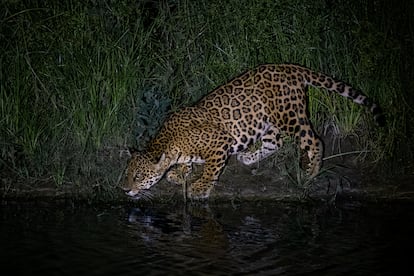
“Es época de incendios y sale un bichote increíble que mata a todos los caballos”. Jorge Néstor Noya, jefe de una red de caza ilegal con sede en Argentina, describía así al jaguar en un audio de WhatsApp dirigido a sus cómplices. Intentaba convencer al empresario español Luis Villalba, uno de sus varios clientes internacionales, para adentrarse en la selva de Bolivia y cazar al felino más grande de América. Este imponente animal, que puede llegar a medir dos metros de largo y pesar más de 130 kilos, ha sido venerado como símbolo de fuerza e incluso considerado una deidad por las culturas ancestrales. Razones que lo convierten en el trofeo de caza más apreciado, lo que ha llevado a europeos y asiáticos a buscarlo en el corazón de Suramérica. Mientras, las investigaciones contra estos crímenes se ven entorpecidas por la falta de personal y de preparación de las autoridades bolivianas. De hecho, el fiscal al cargo no lleva ni tres meses en el puesto y hasta ahora lideraba una unidad contra el narcotráfico.
“Desde 2015, Bolivia es la meca de la caza de jaguares. Es el lugar donde se han encontrado los casos más relevantes y las redes más grandes. Vienen a América con la mentalidad de ‘me falta este para mi colección”, asegura Lisa Corti, representante del colectivo activista Llanto del Jaguar. En Bolivia, se cazan furtivamente cerca de 60 jaguares al año, la mayor cantidad de toda Latinoamérica, según un informe de 2022 de la Convención sobre el Comercio de Especies Amenazadas (Cites). A nivel mundial, el 50% de la distribución histórica de este animal se ha perdido y, en la actualidad, existen cerca de 64.000 ejemplares, casi todos concentrados en la Amazonía y el Pantanal.
Cuanto más escaso, más codiciado. Con ese discurso, Noya, veterinario de profesión, promocionaba paquetes de caza de hasta 48.000 euros en las páginas web Online Hunting y African Hunting, además de captar clientes presencialmente en eventos cinegéticos de España y Estados Unidos. En la lista de precios del argentino, en la que se ofrecían hasta 15 tipos de especies, el jaguar no solo era el más caro, sino que la diferencia de precios era abismal. La caza de un ejemplar costaba 10.000 euros, mientras que el segundo más costoso, el ocelote, tenía un precio de 1.700.
Miles de colmillos traficados
“Se presentaba como una empresa legal que cazaba animales regulados y, una vez hecho el contacto, incluía a la fauna protegida”, explica el abogado Rodrigo Herrera, uno de los denunciantes del caso que fue abierto por la fiscalía boliviana a finales de enero. Herrera también se enfrentó a una mafia china que, entre 2013 y 2018, exportó cientos de miles de colmillos de jaguar a Asia. Los cabecillas de la organización eran una pareja que fue sorprendida con 185 dientes del felino y varias otras partes del cuerpo, como las garras y las extremidades.
“En China, los colmillos se usan como amuletos o collares porque se cree que ofrecen protección contra los malos espíritus. Además, otras partes se utilizan en la medicina tradicional. Ellos piensan que no fueron obtenidos matándolos, sino recogiéndolos de cuerpos que fallecieron por causas naturales”, cuenta el guardaparques y uno de los investigadores del crimen, Marcos Uzquiano. A través de anuncios en la radio en municipios de la Amazonía boliviana, como San Borja o Rurrenabaque, se ofrecían 250 dólares (unos 238 euros) por cada jaguar cazado. En Asia, sin embargo, se comercializaban por hasta 2.500 dólares (2.380 euros). “Los ganaderos lo aceptan porque los felinos, a causa de los incendios y la deforestación en la Amazonía y la Chiquitanía, no tienen otra opción que salir del corazón del bosque y atacar al ganado”, detalla Uzquiano.
De hecho, otra de las grandes razones por las que el jaguar está amenazado es la pérdida de su hábitat: hasta 2015, la deforestación de espacios naturales alcanzó los 5,7 millones de hectáreas en Bolivia, según la organización WWF. “De todas las incautaciones realizadas desde 2010 en adelante, más del 50% están relacionadas con China de alguna manera”, apunta el abogado Herrera. La creciente presencia de migrantes chinos en Bolivia se debe a las cercanas relaciones diplomáticas entre ambos países, que han permitido la concesión de proyectos de infraestructura, como carreteras y obras civiles. Antes del caso de la pareja traficante, entre 2014 y 2016, la policía boliviana incautó 337 partes de jaguar en 16 paquetes, 14 de ellos enviados por ciudadanos chinos que trabajaban en Bolivia.
El caso de la pareja china terminó con una sentencia de cuatro años para el hombre, quien sigue prófugo desde su imputación, y tres años para su pareja, quien cumplió su condena en 2021. Sin embargo, el tráfico del felino no ha cesado: en abril de 2024, dos mujeres fueron sorprendidas comercializando nueve colmillos de jaguar en la ciudad de Trinidad. Hasta 2020, se sabía de 20 procesos abiertos relacionados con la caza furtiva del depredador. Ahora, a estos casos se suma el de Noya, en detención domiciliaria en Argentina, donde también es investigado, y el del español Villalba, presunto autor de la matanza de al menos cuatro jaguares y cuyo paradero se desconoce. Este último habría entrado y salido del país por La Paz en 2018, para después borrar su rastro al interior con vuelos no comerciales.
Ineficacia judicial
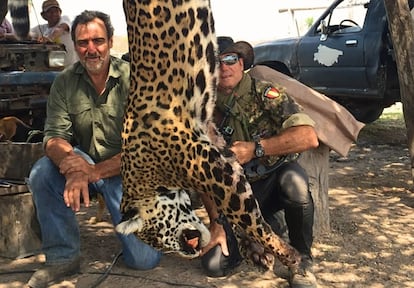
Ambos están acusados de tres delitos: biocidio, destrucción y deterioro de la riqueza nacional, y tráfico ilegal de vida silvestre. No obstante, el Código Penal boliviano no suma las penas de manera acumulativa, sino que impone la más alta (ocho años en este caso), aunque se puede añadir un agravante proporcional. Quienes siguen el caso de cerca lamentan que la investigación transcurra de forma atropellada y lenta. El fiscal asignado al caso, Miguel González, todavía no ha recibido una respuesta del Instituto Nacional de Reforma Agraria (INRA) sobre si la casona que aparece en las fotos de Noya con los cadáveres de los jaguares es privada o pública para proceder con un allanamiento.
“Lamentablemente, el Estado es demasiado débil en su capacidad institucional para hacer cumplir la ley. Además, el personal público está muy mal capacitado”, denuncia el abogado Herrera. La activista Corti, ejemplifica este desconocimiento cuando los jueces del caso de la mafia china se quedaron, en un principio, con las pieles y colmillos incautados, cuando por normativa debían ser entregados al Museo de Historia Natural Noel Kempff. El proceso tuvo 12 audiencias suspendidas.
El mismo González reconoce que, desde que asumió el cargo de fiscal medioambiental en diciembre, aún se está familiarizando con los procesos. Antes lideraba la lucha contra el narcotráfico como director de la Fuerza Especial de Lucha Contra el Crimen (FELCC).”No hay una ruta institucional clara para estos casos, ni plazos definidos como en otras áreas. Llevamos más de 40 días hábiles sin respuesta. Tengo que ir a rogar a las instituciones”, afirma González. Sostiene que trabaja de forma conjunta con Argentina y que pidió a la Fiscalía General del Estado de España que le tomen declaraciones a Villalba.
A la incompetencia gubernamental se suma la anarquía e impunidad en las zonas selváticas y fronterizas con Brasil. Uzquiano señala que en estas regiones el narcotráfico opera sin restricciones: “San Matías es el puente aéreo de la droga que ingresa por Perú y sale por el Beni con destino a Brasil. Temo mucho que la investigación se vea interferida por este contexto. Los mismos pobladores tienen miedo de informar; saben el riesgo. Una cosa es denunciar desde lejos y otra estar ahí”.
By CAIO RUVENAL, El Pais:
International poaching networks have turned the South American country into a mecca for feline trafficking. The lack of personnel and poor training of the authorities hinders the investigations
“It is the season of fires and an incredible beast is coming out and killing all the horses,” said Jorge Néstor Noya, head of an illegal hunting network based in Argentina, to describe the jaguar in a WhatsApp audio to his accomplices. He was trying to convince the Spanish businessman Luis Villalba, one of his international clients, to go into the Bolivian jungle and hunt the largest feline in America. This imposing animal, which can reach two meters in length and weigh more than 130 kilos, has long been venerated as a symbol of strength and even considered a deity by ancient cultures. For these reasons it has become the most highly appreciated hunting trophy, and has led Europeans and Asians to look for it in the heart of South America. Meanwhile, investigations into these crimes are hampered by a lack of personnel and poor training of Bolivian authorities. In fact, the prosecutor in charge of pursuing these crimes has been in the job for not quite three months yet, and prior to this he was leading an anti-drug trafficking unit.
“Since 2015, Bolivia has been the mecca of jaguar hunting. It is the place where the most relevant cases and the largest networks have been found. They come to America with the mentality of ‘I need this one for my collection,’” says Lisa Corti, representative of the activist collective Llanto del Jaguar. In Bolivia, about 60 jaguars are poached each year, the largest number in all of Latin America, according to a 2022 report by the Convention on Trade in Endangered Species (CITES). Globally, 50% of the historical distribution of this animal has been lost and there are currently about 64,000 specimens, almost all concentrated in the Amazon and the Pantanal.
The rarer they are, the more coveted. Using this logic, Noya, a veterinarian by trade, promoted hunting packages of up to €48,000 on the websites Online Hunting and African Hunting; he also attracted clients in person at hunting events in Spain and the United States. In the Argentine price list, which offered up to 15 types of species, the jaguar was not only the most expensive, but the difference in prices was tremendous. The hunt for one specimen cost €10,000, while the second most expensive, the ocelot, had a price tag of €1,700.
Thousands of tusks trafficked
“It presented itself as a legal company that hunted animals lawfully and, once contact was made, it would include protected fauna,” explains the lawyer Rodrigo Herrera, one of the plaintiffs in the case that was opened by the Bolivian prosecutor’s office at the end of January. Herrera also faced up to a Chinese mafia that, between 2013 and 2018, exported hundreds of thousands of jaguar fangs to Asia. The leaders of the organization were a couple who were caught with 185 of the feline’s teeth and several other body parts, such as claws and limbs.
“In China, fangs are used as amulets or necklaces because they are believed to offer protection against evil spirits. Other parts are also used in traditional medicine. They think that they were not obtained by killing the animals, but by collecting them from bodies that died of natural causes,” says park ranger and one of the crime investigators, Marcos Uzquiano. Through radio advertisements in municipalities in the Bolivian Amazon, such as San Borja or Rurrenabaque, $250 were offered for each hunted jaguar. In Asia, however, they were being sold for up to $2,500. “The ranchers accept it because the felines, due to the fires and deforestation in the Amazon and the Chiquitanía, have no other option than to leave the heart of the forest and attack the cattle,” explains Uzquiano.
In fact, another one of the main reasons why the jaguar is threatened is the loss of its habitat: up to 2015, deforestation of natural spaces reached 5.7 million hectares in Bolivia, according to the WWF organization. “Of all the seizures made since 2010 onwards, more than 50% are related to China in some way,” says lawyer Herrera. The growing presence of Chinese migrants in Bolivia is due to the close diplomatic relations between the two countries, which have led to contracts for infrastructure projects such as roads and civil works. Before the case of the trafficking couple, between 2014 and 2016, the Bolivian police seized 337 jaguar parts in 16 packages, 14 of them sent by Chinese citizens working in Bolivia.
The case of the Chinese couple ended with a four-year sentence for the man, who remains at large since his indictment, and three years for his partner, who completed her sentence in 2021. However, the trafficking of the feline has not stopped: in April 2024, two women were caught selling nine jaguar fangs in the city of Trinidad. Until 2020, there were 20 open cases related to jaguar poaching. Now, these cases are joined by the case involving Noya, who is under house arrest in Argentina, where he is also under investigation, and the Spaniard Villalba, who allegedly shot dead at least four jaguars and whose whereabouts are unknown. The latter is said to have entered and left the country through La Paz in 2018, and then concealed his trail inland with non-commercial flights.
Judicial ineffectiveness
Both men are accused of three crimes: biocide, destruction and deterioration of national wealth, and illegal wildlife trafficking. However, the Bolivian Penal Code does not add up the sentences cumulatively, but instead imposes the highest (eight years in this case), although a proportional aggravating factor can be added. The prosecutor assigned to the case, Miguel González, has not yet received a response from the National Institute of Agrarian Reform (INRA) on whether the house that appears in Noya’s photos with the jaguar carcasses is private or public so that they can proceed with a search.
“Unfortunately, the State is too weak in its institutional capacity to enforce the law. In addition, public personnel are very poorly trained,” complains the lawyer Herrera. Activist Corti illustrates this lack of knowledge with an anecdote about the judges in the Chinese mafia case, who initially kept the confiscated skins and tusks, when by law they should have been handed over to the Noel Kempff Natural History Museum. That legal process had 12 suspended hearings.
González himself admits that, since he took up the post of environmental prosecutor in December, he is still familiarizing himself with the procedures. Previously, he led the fight against drug trafficking as director of the Special Force to Fight Crime (FELCC). “There is no clear institutional route for these cases, nor defined deadlines as in other areas. We have spent more than 40 working days without a response. I have to go and beg the institutions,” says González. He maintains that he works jointly with Argentina and that he has also asked the Attorney General of Spain to take a statement from Villalba.
Government incompetence is compounded by anarchy and impunity in the jungle and border areas with Brazil. Uzquiano points out that drug trafficking operates without restrictions in these regions: “San Matías is the air bridge for drugs that enter through Peru and leave through Beni bound for Brazil. I am very afraid that the investigation will be interfered with by this context. The residents themselves are afraid to report; they know the risk. It is one thing to report from afar and another to be there.”

 Bolivian Thoughts | Pensamientos Bolivianos (Bilingual/Bilingüe)