
By El Diario:
- The project is based on gas flaring from the X1 gas well in Warnes, owned by YPFB.
- Another potential energy source for Bitcoin mining operations comes from sugarcane waste produced by various mills across the country.
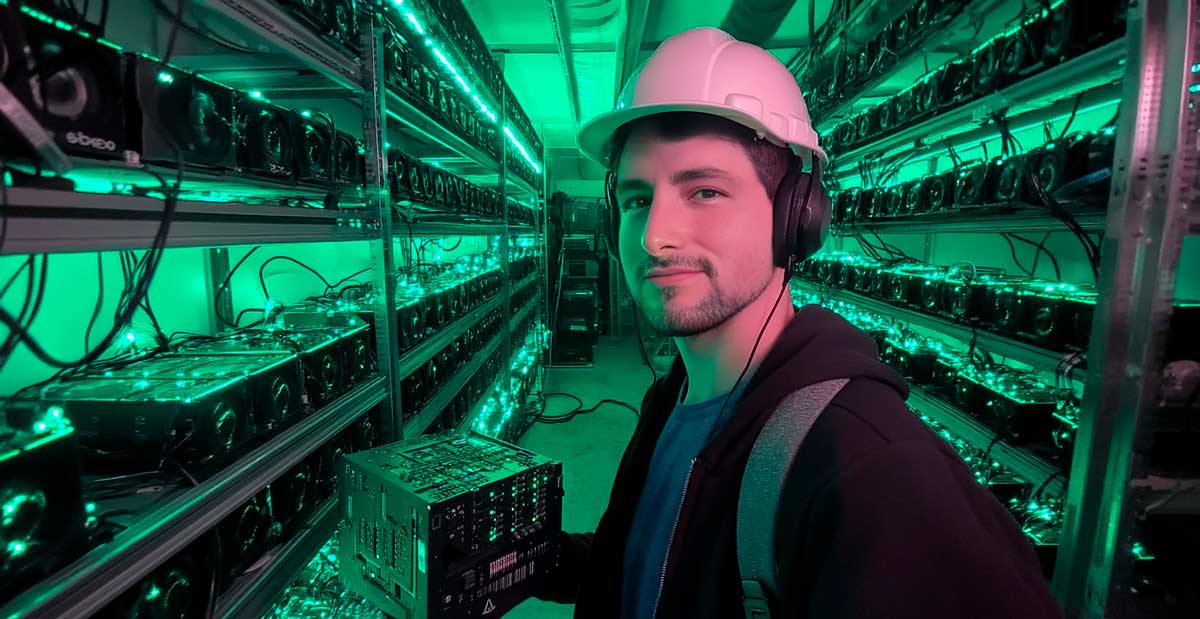
The gas that Bolivia burns in its wells and the residues from sugarcane can be used to generate electricity to power Bitcoin mining centers. These centers convert energy into computing power, which connects to cryptocurrency mining pools via the internet.
Diego Monroy Marinkovic, a project engineer for power generation with Capstone microturbines and a specialist in sales and applications at the international company Luka Industries LLC, has already developed a pilot project at YPFB’s Warnes X1 Well. The facility will have an installed capacity of 90 kW, powered by flare gas. This capacity was determined based on a gas volume of 206,712.64 m³ per year, which is currently burned without generating revenue.
The expert explained to “eco$com” that this infrastructure is expected to produce between 0.04 and 0.2 Bitcoins per month, assuming an average Bitcoin price of $100,000. Each mining unit installed in Warnes will have a computing power of 112 TH/s (terahashes per second), with a total of 24 units deployed, amounting to a total capacity of 2,688 TH/s.
To make a cryptocurrency mining operation profitable, cheap and abundant energy is required. That’s why the Bolivian engineer’s proposal is viable, utilizing the untapped potential of flare gas—an energy source currently wasted in gas fields such as Margarita, Incahuasi, and Monte Cristo. At these sites, large volumes of gas are flared, but this wasted resource could instead be converted into electricity to power Bitcoin mining data centers. The 36-year-old engineer, who studied at the Universidad Privada de Santa Cruz and earned an MBA from Texas A&M University–Corpus Christi, explains that this could create new value from otherwise wasted resources.
The specialist also proposes biogas as another key energy source for Bitcoin mining. This biogas is produced from the decomposition of vinasse and filter cake—organic byproducts from sugarcane extraction. This approach promotes a circular economy model, enabling electricity production at a lower cost than the subsidized rate in industrial parks, which is currently around $0.06/kWh. This low-cost energy would be crucial for competing in the Bitcoin and cryptocurrency mining industry, where energy efficiency is a key profitability factor.
The Warnes cryptoproject requires an estimated investment of $193,000, which could be repaid within 28 months. The mine’s installation would take a maximum of six months, provided that YPFB makes the decision and the government supports it with the necessary regulations.
Por El Diario:
- El proyecto se hizo sobre la base de gas que se quema en el pozo gasífero X1 de Warnes, perteneciente a YPFB.
- Otra fuente para crear minas de Bitcoins, son los residuos de caña de azúcar de varios ingenios del país.
El gas que Bolivia quema en sus pozos y los residuos de la caña de azúcar pueden aprovecharse para generar electricidad, para alimentar centros de minería de Bitcoin. A través de estos centros, la energía se convierte en poder de cómputo, que se conecta a piscinas de criptominería mediante internet.
Diego Monroy Marinkovic, ingeniero de proyectos para generación eléctrica con microturbinas Capstone y especialista en ventas y aplicaciones en la compañía internacional Luka Industries LLC, ya elaboró el proyecto piloto en el Pozo Warnes X1 de YPFB, el cual contará con una capacidad instalada de 90 kW (kilovatios), alimentada por “flare gas” (antorcha de gas). Esta capacidad instalada fue dimensionada en función del volumen de gas que asciende a 206.712,64 m³ por año y que actualmente se quema sin generar ingresos.
El experto explicó a “eco$com” que, con esta infraestructura, se estima una producción mensual de entre 0,04 y 0,2 Bitcoins, suponiendo un precio promedio del Bitcoin de $us 100.000. En términos de infraestructura, cada equipo de minería instalado en Warnes tendrá una capacidad de cómputo de 112 TH/s (terahashes por segundo), y en total se desplegarán 24 equipos, sumando una capacidad de 2.688 TH/s.
Para que una mina de criptoactivos sea rentable, se necesita energía barata y en grandes cantidades, por eso es viable la propuesta del joven ingeniero boliviano que propone el uso de un enorme potencial para la minería de Bitcoin, gracias al “flare gas”, una fuente de energía desaprovechada que actualmente se quema sin generar valor en plantas de procesamiento de campos gasíferos como Margarita, Incahuasi y Monte Cristo, entre otros. En estos sitios, grandes volúmenes de gas son eliminados mediante antorchas de combustión, ese gas deperdiciado bien podría ser convertido en electricidad para suministrar energía a “data centers” de minería de Bitcoin, explica el ingeniero de 36 años que estudió en la Universidad Privada de Santa Cruz y logró un MBA de la Universidad Texas A&M Corpus Christi.
El especialista también propone el biogás como otra fuente importante para la creación de Bitcoins, –el mismo que se genera por la descomposición de la vinaza y la torta de filtración-subproductos orgánicos del proceso de extracción de la caña de azúcar– para, de esta manera, promover un modelo de economía circular, enfoque que permitiría producir electricidad a un costo inferior al precio subvencionado en parques industriales, que actualmente ronda los $us 0.06/kWh, lo cual es un factor clave para competir en la industria de la minería de Bitcoin y otros criptoactivos, donde el bajo costo energético es un elemento determinante de rentabilidad.
Para el crioptoproyecto de Warnes se requiere una inversión estimada en 193 mil dólares, la cual se podría repagar en 28 meses; en tanto que la instalación de la mina demandaría un tiempo máximo de seis meses, siempre y cuando YPFB tome la decisión y el Gobierno acompañe con las regulaciones necesarias.

 Bolivian Thoughts | Pensamientos Bolivianos (Bilingual/Bilingüe)