
Por Bird Guides:
Un tordo misterioso ha sido documentado en Bolivia por primera vez en más de una década.
El tordo unicolor, considerado Casi Amenazado, es endémico de las tierras bajas del norte de Bolivia y tan difícil de encontrar y poco conocido que incluso los observadores de aves más experimentados de la región comenzaban a dudar de su existencia como especie.
Antes de agosto de 2024, solo existía una fotografía (tomada en 2011) de esta especie en eBird, junto con un pequeño número de grabaciones de sonido publicadas en xeno-canto.
El comportamiento y los desafíos para identificarlo han contribuido a la falta de registros del tordo unicolor. Parece especializarse en los bosques estacionalmente inundados a lo largo de los ríos, y posiblemente anida y es más vocal durante la temporada de lluvias, cuando el nivel del agua alcanza su punto más alto y acceder a su hábitat adecuado es casi imposible. La especie no tiene marcas conspicuas que confirmen su identidad y también parece ser muy tímida, lo que dificulta aún más su detección.
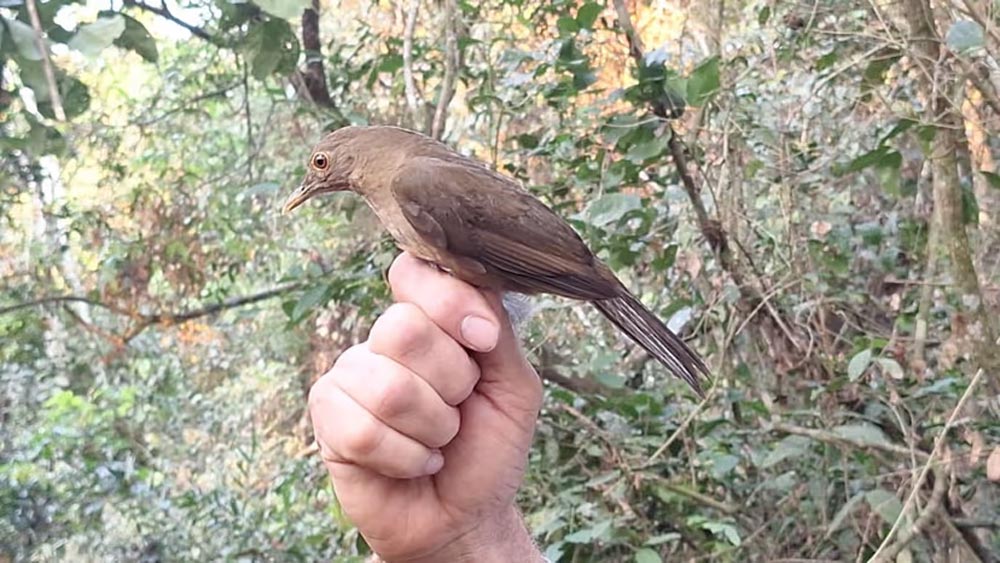
Tordo unicolor capturado en la Reserva Ecológica Chuchini en agosto de 2024 (Tini y Jacob Wijpkema).
Descubrimiento de observadores holandeses
Los ciudadanos holandeses Tini y Jacob Wijpkema han vivido en Bolivia durante más de 10 años y dedican gran parte de su tiempo a buscar y estudiar aves en todo el país. En la última década, han registrado 1,309 especies de aves en Bolivia. Esto incluyó pasar un tiempo considerable observando aves en el hábitat del Tordo Unicolor, pero nunca habían visto uno de estos tordos. Tras tantos intentos fallidos, Jacob comenzó a dudar de la existencia del Tordo Unicolor.
Eso cambió el 14 de agosto de 2024, cuando Tini y Jacob encontraron un inusual tordo marrón uniforme en una de sus redes de niebla mientras realizaban un proyecto de investigación en la Reserva Ecológica Chuchini, una reserva privada cerca de la ciudad de Trinidad, en el departamento del Beni. Tan pronto como vieron el ave, Tini y Jacob sospecharon que era un Tordo Unicolor y rápidamente compartieron sus fotografías con amigos y colegas para confirmar la identificación y difundir la buena noticia.
Otros expertos habían tenido dudas similares sobre el tordo.
“Después de buscar al Tordo Unicolor varias veces sin suerte, también comencé a preguntarme si realmente era una especie – especialmente porque otra especie, el Tordo de Hauxwell, puede parecerse mucho y es común en la misma región,” explicó Joe Tobias, profesor en el Imperial College, quien escribió uno de los primeros artículos sobre aves perdidas en las Américas y ayudó a Tini y Jacob a confirmar la identificación. “Ha habido algunos avistamientos y grabaciones de sonido en los últimos años, pero esta serie de fotografías de Jacob y Tini de un individuo capturado en red es la mejor evidencia de que el Tordo Unicolor sigue sobreviviendo incluso cerca de la ciudad de Trinidad.”
Registros previos
Los últimos registros documentados del Tordo Unicolor que el proyecto Search for Lost Birds conoce son grabaciones de sonido en xeno-canto realizadas por Dan Lane en septiembre de 2013. Estas forman parte de una serie de grabaciones de la especie realizadas por Dan y Frank Rheindt entre 2010 y 2013. Hubo varios avistamientos de la especie en los años posteriores, por ejemplo, por Sebastian Herzog en 2015 y nuevamente por Dan Lane en 2016, pero ninguno de estos avistamientos más recientes incluyó oportunidades para fotografiar o grabar sonidos de la especie.
El Tordo Unicolor fue incluido en la actualización más reciente de la Lista de Aves Perdidas en agosto de 2024. Curiosamente, esto ocurrió solo dos días antes de que Tini y Jacob capturaran su ave.
Se espera que la nueva serie de fotografías anime a más personas a realizar mayores esfuerzos para encontrar y documentar este esquivo tordo.
Joe Tobias añadió: “El hecho de que Chuchini, donde Tini y Jacob encontraron al tordo, sea un área protegida también es una buena noticia y aumenta las esperanzas de que una población de esta misteriosa ave pueda ser protegida y estudiada.”
By Bird Guides:
A mysterious thrush has been documented in Bolivia for the first time in more than a decade.
The Near Threatened Unicoloured Thrush is endemic to the lowlands of northern Bolivia and is so difficult to find and poorly known that even long-time birders in the region were beginning to doubt whether it existed as a species at all.
Prior to August 2024, only one photograph (taken in 2011) existed of the species on eBird, with a small handful of sound recordings published on xeno-canto.
Behaviour and identification challenges have contributed to the lack of records of Unicoloured Thrush. The species appears to specialise in seasonally flooded forests along rivers and the birds may nest and be most vocal during the rainy season, when the water levels are at their highest and accessing the proper habitat to look for the bird is nearly impossible. The species has no conspicuous markings to confirm its identity and also seems to be very shy, which doesn’t help with detection.
Unicoloured Thrush trapped at Chuchini Ecological Reserve in August 2024 (Tini and Jacob Wijpkema).
Dutch birders’ discovery
Dutch nationals Tini and Jacob Wijpkema have lived in Bolivia for more than 10 years and dedicate much of their time to searching for and studying birds across the country. In the past decade, they have seen 1,309 bird species in Bolivia. This has included spending considerable amounts of time birding in Unicolored Thrush habitat, but never once had they actually seen one of the thrushes. After so little success, Jacob was starting to doubt if the Unicolored Thrush existed at all.
That changed on 14 August 2024, when Tini and Jacob found an unusual, plain brown thrush in one of their mistnets while conducting a research project at Chuchini Ecological Reserve, a private nature reserve near the town of Trinidad in El Beni department. As soon as they saw the bird, Tini and Jacob suspected it was a Unicolored Thrush, and quickly shared their photographs with friends and colleagues to confirm the identification and share the good news.
Other experts had faced similar doubts about the thrush.
“After searching for Unicolored Thrush several times myself with no luck, I had also started to wonder whether it was a real species – particularly since another species, Hauxwell’s Thrush, can look very similar and is common in the same region,” explained Joe Tobias, a professor at Imperial College who authored one of the first papers on lost birds in the Americas and helped Tini and Jacob confirm the identification. “There have been a few sightings and sound recordings in recent years but this series of photographs by Jacob and Tini of a mistnetted individual is the best evidence that the Unicolored Thrush continues to survive even close to the town of Trinidad.”
Previous records
The last documented records of Unicolored Thrush that the Search for Lost Birds knows of are sound recordings on xeno-canto that Dan Lane made in September 2013. These are part of a series of recordings of the species that were made by Dan and Frank Rheindt between 2010 and 2013. There were a number of sightings of the species in the intervening years, for example by Sebastian Herzog in 2015 and again by Dan Lane in 2016, but none of these more recent observations included opportunities to photograph or sound record the species.
Unicolored Thrush was added to the most recent update of the Lost Birds List in August 2024. Coincidentally, this turned out to be only two days before Tini and Jacob caught their bird.
It is hoped that the new set of photographs will encourage more people to make further efforts to find and document this elusive thrush.
Joe Tobias added: “The fact that Chuchini, where Tini and Jacob found the thrush, is a protected area is also good news and raises hopes that a population of this mysterious bird can be protected and studied.”
https://www.birdguides.com/news/mysterious-thrush-found-in-bolivia/

 Bolivian Thoughts | Pensamientos Bolivianos (Bilingual/Bilingüe)