
By Deisy Ortiz, El Deber:
The rains arrive, but warnings are issued about the risks of ‘black rain’ and ashes
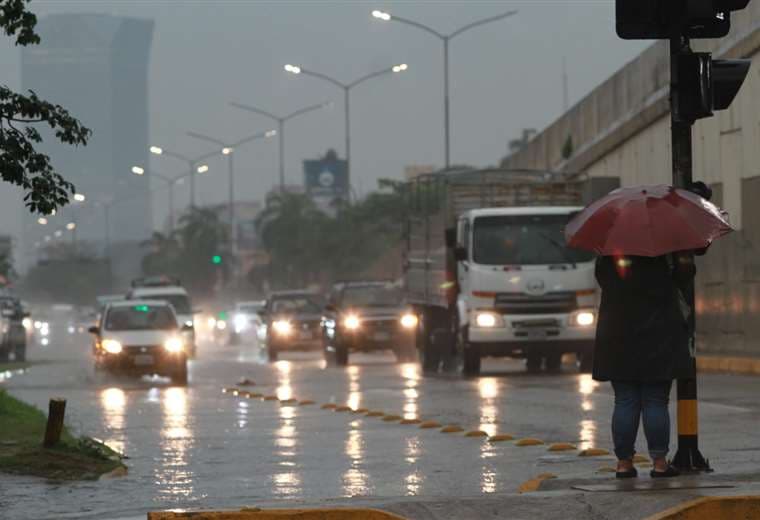
They can contaminate water sources and cause health problems for the population consuming it, as well as affect the ecosystem. Thursday’s rainfall did not clear the air, but it had features that sparked curiosity.
The rains that have begun to fall in the Santa Cruz region bring hope that they could extinguish the forest fires. However, the first downpours may be harmful due to so-called ‘black rain,’ filled with soot, and the runoff of sediments and ashes, which can pollute rivers, streams, and reservoirs that supply the municipalities in the provinces.
On Wednesday, the city of Santa Cruz and the northern area of the department experienced a heavy rainfall, which was unusual because it was accompanied by thunderstorms and a darkened sky, followed by a low dense cloud cover. Experts, such as environmental engineer Sandra Quiroga and Dr. Daniel Avellaneda, a physician at the San Ignacio de Velasco hospital, attributed the phenomenon to environmental conditions resulting from wildfire smoke combined with extreme heat. It is even said that in the northern area, there was the occurrence of ‘black rain,’ which has affected other countries like Argentina and Paraguay.
They warn that after the fires, the rainwater drags contaminants such as soot and ash to the surface, which dirties the water and may even change its color, a phenomenon known as ‘black rain.’
It can also pollute water sources and cause health problems for people who consume it, as well as impact the ecosystem.
Avellaneda warns that in the provinces, where the population gets drinking water from reservoirs or streams, there could be an increase in health problems due to the runoff of these contaminants, affecting the water quality. He notes that even now, without intense rains in the area, cases of diarrhea in children over five years old have tripled due to ash falling directly into water sources, similar to other areas affected by fires. “Generally, in areas where people get water from reservoirs, the filters used are not effective at filtering out soot and ash particles,” Avellaneda says, recommending that the population use water only from pumps that extract it from underground sources or drink bottled water. While boiling water helps eliminate pathogens, it does not remove sediments like soot and ash, Avellaneda clarifies. Fortunately, most provinces have water pumps.
Engineer Quiroga explains that post-fire rains can contaminate water sources. “Ashes, when mixed with water, produce acidity. Technically, this is called eutrophication, which occurs when there is a loss of oxygen,” leading to the proliferation of algae and other organisms, as well as a loss of water quality and the appearance of toxins. She points out that trees usually absorb these contaminants, but since everything has burned, even the riverbanks, there is nothing to minimize the harmful effects.
Fog, smoke, or steam?
It wasn’t just the lightning and thunder that caught people’s attention during Wednesday’s rain in the city but also the low-lying fog-like phenomenon that covered the atmosphere in the afternoon and evening. Unlike previous days, the sun was clearly visible this time.
Is it fog, smoke, or steam? Many wondered while traversing the streets, assuming that the rain would help clear the smoke. Engineer Quiroga says she was curious about this too and concluded that it was a mix of smoke and moisture. With the change in winds, the smoke may have been mixed with rain vapor, she notes.
For his part, Luis Alberto Alpire, known as the “Weather Man,” believes the rain did not entirely clear the smoke from the city. “When it rains from the north and fires persist, the smoke is carried back,” he indicates.
Ramiro Soliz, regional director of the National Meteorology and Hydrology Service (Senamhi), indicated that Wednesday’s rain was unusual because the sky darkened, likely as a result of the fires.
He explained that high temperatures cause rainwater to evaporate quickly, which is also a consequence of the fires.
Impact on health
Diarrhea was the main issue affecting residents of the Candelaria indigenous community in Concepción, one of the hardest-hit by fire and drought. The 138 families had to use water from a pond because the only well could not supply enough water and had to be locked at night to accumulate some of the liquid for the following day.
Bartolomé Suárez, president of the OTB, said the 800 residents living there are somewhat relieved because the regional government has installed a pump that now also provides them with water. However, they are awaiting the repair of another pump for greater extraction capacity.
“Due to air and water pollution, illnesses have emerged. Most of the children and elderly suffered from stomach pain because sometimes we had to drink water from a pond, which was contaminated with ash and green water, but we had no other choice,” said Suárez.
Por Deisy Ortiz, El Deber:
Llegan los aguaceros, pero advierten de los riesgos de la ‘lluvia negra’ y las cenizas
Pueden contaminar las fuentes de agua y traer problemas de salud en la población que la consume, como también afectar al ecosistema. Las precipitaciones del jueves no limpiaron el aire, pero tuvieron características que despertaron curiosidad
Las lluvias que han empezado a caer en la región cruceña traen esperanza de que puedan extinguir los incendios forestales. Pero, los primeros aguaceros pueden ser nocivos por la llamada ‘lluvia negra’, llena de hollín, y el arrastre de sedimentos y cenizas, lo que puede contaminar ríos, arroyos y represas, que abastecen a los municipios de provincias.
El miércoles, en la capital cruceña y la zona norte del departamento despertaron con una lluvia copiosa, que fue poco usual porque estuvo acompañada con tormentas eléctricas y el oscurecimiento del ambiente, seguida de una densa nubosidad a poca altura. Entendidos, como la ingeniera ambiental Sandra Quiroga y el doctor Daniel Avellaneda, médico del hospital de San Ignacio de Velasco, atribuyen el fenómeno a las condiciones medioambientales, consecuencia del humo de los incendios forestales, sumado al calor extremo. Incluso, se dice que en la zona norte registraron la conocida ‘lluvia negra’, que ha afectado a otros países, como Argentina y Paraguay.
Advierten que, luego de los incendios, las precipitaciones arrastran hasta la superficie contaminantes, como hollín y cenizas, que ensucian el agua, que incluso puede adquirir otra tonalidad, lo que se conoce como ‘lluvia negra’.
También puede contaminar las fuentes de agua y traer problemas de salud en la población que la consume, como también afectar al ecosistema.
Avellaneda advierte que en las provincias, donde la población se provee de agua para el consumo de represas o riachuelos, de un posible incremento en los problemas de salud debido al arrastre de estos contaminantes, que inciden en la calidad del agua. Señala que, incluso, ahora que no ha habido lluvias intensas en esa zona, los casos de diarrea en niños mayores de cinco años se han triplicado, por la caída directa de cenizas a las fuentes de agua, lo mismo que en otros sectores afectados por los incendios. “Generalmente en zona donde la población se provee de agua de represas, los filtros que se usan no son efectivos para filtrar las partículas de hollín y cenizas”, dice Avellaneda, al señalar que la recomendación a la población es que utilice agua para el consumo únicamente de las bombas que extraen el líquido de corrientes subterráneas o que se tome agua de botella. Si bien, hervir el agua ayuda a eliminar patógenos, no elimina los sedimentos, como el hollín y las cenizas, aclara Avellaneda. Señala que afortunadamente en la mayoría de las provincias hay bombas de agua.
La ingeniera Quiroga explica que las lluvias, tras los incendios, pueden contaminar las fuentes. “Las cenizas, al combinarse con el agua, producen acidez. Técnicamente a esto se llama eutrofización, que es cuando hay pérdida de oxígeno”, lo que da lugar a la proliferación de algas y otros organismos, además de la pérdida de la calidad del agua y la aparición de toxinas. Señala, que los árboles son los que absorben estos contaminantes, pero como todo se ha quemado, incluso las riberas de los ríos, no hay nada que minimice los efectos nocivos.
¿Neblina, humo o vapor?
No solo fueron las descargas eléctricas, con truenos y relámpagos, lo que despertó la atención de la gente durante la lluvia del miércoles en la ciudad, sino principalmente la especie de neblina a poca altura que cubrió el ambiente por la tarde y por la noche. A diferencia de anteriores días, esta vez el sol se podía observar con nitidez.
¿Es neblina, humo o vapor?, fue la pregunta que se hicieron muchos al recorrer las vías, al suponer que las lluvias ayudan a despejar la humareda. La ingeniera Quiroga señala que esto también le causó curiosidad y concluye que el fenómeno se debió a una mezcla de humo y humedad. Es posible que, con el cambio de los vientos, estos hayan arrastrado humo mezclado con el vapor de la lluvia, señala.
Por su lado, Luis Alberto Alpire, el Señor del Clima, cree que la lluvia no despejó del todo el humo en la urbe. “Cuando llueve de norte, y si persisten los incendios, nuevamente arrastra la humareda”, indica.
Ramiro Soliz, director departamental del Servicio Nacional de Meteorología e Hidrología (Senamhi), indicó que la lluvia del miércoles fue poco usual porque el ambiente se oscureció, lo que puede ser un efecto de los incendios.
Explicó que las temperaturas altas provocan que el agua de las lluvias se evapore rápidamente, lo que también es una consecuencia de los incendios.
El impacto en la salud
Problemas de diarrea fue lo que más afectó a los pobladores de la comunidad indígena Candelaria, en Concepción, una de las más golpeadas por el fuego y la sequía. Son 138 familias las que tuvieron que utilizar agua de un atajado porque la única noria no abastecía y debían cerrar con candado en la noche para que pueda juntar algo del líquido elemento para el día siguiente.
Bartolomé Suárez, presidente de la OTB, señala que los 800 habitantes que viven allí están algo aliviados porque la Gobernación habilitó una bomba que ahora también les permite tener agua. Sin embargo, aguardan el arreglo de otra para un mayor capacidad de extracción.
“Por la contaminación del aire y del agua han surgido enfermedades. La mayoría de los niños y los de la tercera edad sufrieron dolor de barriga, porque a veces teníamos que tomar agua de un atajado, que estaba contaminado por ceniza y con agua verde, pero no teníamos más opción”, dijo Suárez.

 Bolivian Thoughts | Pensamientos Bolivianos (Bilingual/Bilingüe)