
By La Razon, Eju.tv:
Is the Unity of the Opposition Possible? Intense Lobbying Coincides with the MAS Crisis
On the morning of October 3rd, Comunidad Ciudadana (CC) congresswoman Luisa Nayar filed a motion for freedom in favor of the elected governor Luis Fernando Camacho, leader of Creemos. Now, both organizations are seeking unity.
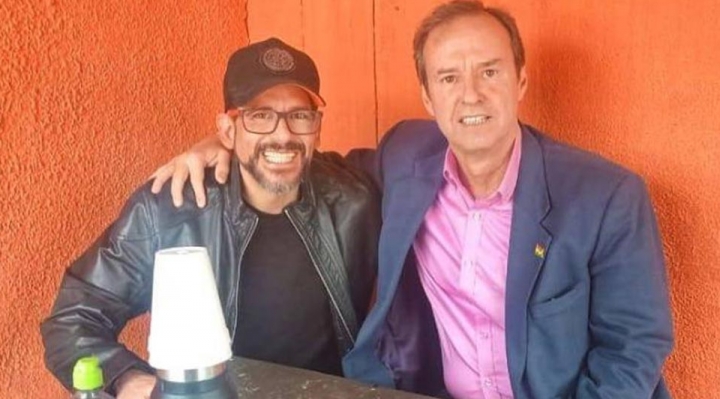
On the morning of October 3, Comunidad Ciudadana (CC) deputy Luisa Nayar filed a freedom action in favor of elected governor Luis Fernando Camacho, leader of Creemos.
Coincidence? A few days later, the leader of her alliance, former President Carlos Mesa (2003-2005), met with the detainee at the Chonchocoro prison.
This situation differs from when Camacho, arriving in La Paz during the 2019 post-election conflicts, avoided Mesa to—as he said at the time—”not politicize” the movement against Evo Morales’ government. On November 6, Mesa and former president Jorge Quiroga attempted to meet Camacho at El Alto airport but were unsuccessful.
Like Mesa, who in January 2023 declined to join a march in support of Camacho, who has been imprisoned since December 30, 2022, in the Viacha prison, La Paz, accused in the Golpe de Estado I case related to the protests before Morales’ resignation in 2019. “I said that I thought it was a mistake to politicize and electoralize any legitimate and civic protest action,” the CC leader justified.
Visits to Camacho
Now, in the midst of the internal dispute within the Movimiento Al Socialismo (MAS), Mesa visited Camacho in prison on Tuesday.
“The only solution” is “to build a credible government that can solve the macroeconomic and microeconomic future for 2025-2030,” the former president said after leaving the penitentiary.
“We have used the word ‘unity’ several times as an approach with Luis Fernando Camacho to establish the logic that unity should not just be a word but a real possibility,” Mesa emphasized.
A few days earlier, on October 1, former president Jorge Quiroga (2001-2002) also visited Camacho. They also discussed unity.
“What we are talking about is a political alternative to save Bolivia from the disaster of Movimiento Al Socialismo (MAS),” the former president commented after their meeting.
Unity
Meanwhile, the Santa Cruz leader remarked that “the Bolivian people demand unity from the opposition, and steps must be taken to form the broadest possible democratic platform.”
“We need a platform that can defeat the authoritarian MAS at the polls and also be capable of generating a new country project, with modernity, work, and freedom,” Camacho said after his meeting with Quiroga.
Samuel Doria Medina, leader of Unidad Nacional (UN), also informed about his lobbying with the former civic leader, despite launching his electoral campaign with the slogan “Today I take a step forward.”
He also said he met with Mesa, Vicente Cuéllar, and “Tuto’s people” (Quiroga). “Here, the important thing is not the tool, the most important thing is the political will to say, ‘Perfect, let’s see who has the most support,’ and the one with the most support is the candidate,” he told the press.
Reyes Villa
Cochabamba mayor Manfred Reyes Villa, who has already expressed his interest in running for president and opened the registration books for members of his party, Alianza por Bolivia Súmate, differs in his views on opposition unity.
“There should be unity among the people, not politicians or leaders, because votes cannot be transferred,” said the political leader.
Initially skeptical of “traditional” politicians, Vicente Cuéllar, current rector of the Universidad Autónoma Gabriel René Moreno (UAGRM), entered the political arena through Cambio25.
In September, he presented his alliance with the Movimiento Sin Miedo (MSM), the budding party of former La Paz mayor Juan del Granado. At that time, the former lawyer who prosecuted the dictator Luis García Meza (+) already called Cuéllar “the future president of the Bolivians.”
Cuéllar challenged the country to weigh continuing with MAS or seeking “unity to rebuild this country and provide a better future for the new generations.”
Arias
Though somewhat isolated from the others, La Paz mayor Iván Arias, leader of the Por el Bien Común group, is preparing a meeting with opposition leaders to also seek unity.
Councilman Jorge Dulón shared this news on Thursday on La Razón Radio.
At the end of September, Arias already sealed a pre-electoral alliance with former Santa Cruz governor Rubén Costas, leader of the Movimiento Social Demócrata (Demócratas). “Unity begins at home,” the Santa Cruz leader urged at the time.
This Friday, Branko Marinkovic, declared a candidate in Brazil in a meeting with former president Jair Bolsonaro himself, along with the head of Movimiento Nacionalista Revolucionario (MNR), Jhonny Torres; the leader of Somos Pueblo, Rafael “Tata” Quispe; and Cuéllar, met with the same goal in Tarija.
MAS
Meanwhile, MAS is sinking deeper into its internal crisis, now with accusations linking President Luis Arce to various cases. These opposition figures are positioning themselves with less than a year left before the general elections scheduled for August 17, 2025.
Morales, however, has already been declared a candidate. But doubts remain about that possibility, beyond the disagreements and internal conflicts.
Of the 12 parties registered with the Tribunal Supremo Electoral (TSE), four have not complied with the resolution to renew their leadership and update their statutes, including MAS.
Elections are expected to be called in April 2025, and alliances should be registered with the Electoral Body by February.
Por La Razon, Eju.tv:
¿Es posible la unidad de la oposición? Un intenso cabildeo coincide con la crisis del MAS
La mañana del 3 de octubre, la diputada de Comunidad Ciudadana (CC) Luisa Nayar interpuso una acción de libertad a favor del gobernador electo Luis Fernando Camacho, líder de Creemos. Ahora, ambas organizaciones buscan unidad.
La mañana del 3 de octubre, la diputada de Comunidad Ciudadana (CC) Luisa Nayar interpuso una acción de libertad a favor del gobernador electo Luis Fernando Camacho, líder de Creemos.
¿Casualidad? Días después, el jefe de su alianza, el expresidente Carlos Mesa (2003-2005), se reunió con el detenido en la cárcel de Chonchocoro.
La circunstancia fue distinta a la vez en que Camacho, al llegar a La Paz en los conflictos poselectorales de 2019, eludió a Mesa para —como dijo entonces— “no politizar” la movilización contra el gobierno de Evo Morales. El 6 de noviembre, Mesa y el también expresidente Jorge Quiroga fueron al alcance sin éxito, en el aeropuerto de El Alto, del entonces presidente del Comité pro Santa Cruz.
Como Mesa, cuando en enero de 2023 evadió la posibilidad sumarse a una marcha a favor de Camacho, detenido desde el 30 de diciembre de 2022 en la cárcel de Viacha, La Paz, acusado en el caso Golpe de Estado I, relativo a las movilizaciones antes de la renuncia de Morales en 2019. “Dije que me parecía un error politizar y electoralizar cualquier acción de protesta legítima y ciudadana”, justificó el líder del CC.
Visitas a Camacho
Ahora, en medio del fragor de la disputa interna del Movimiento Al Socialismo (MAS), Mesa fue al encuentro con Camacho en prisión, el martes.
La “única solución” es “construir un gobierno creíble y que resuelva macrcoeconómicamente y microeconómicamente el futuro 2025-2030”, dijo el exmandatario al salir del recinto penitenciario.
“La palabra unidad es la que hemos utilizado varias veces como una aproximación con Luis Fernando Camacho para establecer la lógica de que la unidad no sea solo una palabra, sino una posibilidad real”, subrayó Mesa.
Días antes, el 1 de octubre, el también expresidente Jorge Quiroga (2001-2002) visitó también a Camacho. También hablaron de unidad.
“Lo que estamos hablando es de una alternativa política para salvar Bolivia del desastre del Movimiento Al Socialismo (MAS)”, comentó el exmandatario al salir de su encuentro.
Unidad
En tanto, el líder cruceño comentó que “el pueblo boliviano demanda unidad de la oposición y hay que dar esos pasos para conformar una plataforma democrática, lo más amplia posible”.
Necesitamos una plataforma “que sea capaz de vencer en las urnas al autoritarismo masista y, también, sea capaz de generar un nuevo proyecto de país, con modernidad, con trabajo y con libertad”, dijo Camacho luego de su reunión con Quiroga.
Quien también informó de sus cabildeos con el otrora líder cívico fue Samuel Doria Medina, dirigente de Unidad Nacional (UN) que, no obstante, lanzó su campaña electoral con el eslogan de “hoy doy un paso adelante”.
Dijo, además, que se reunió con Mesa, Vicente Cuéllar y la “gente de Tuto” Quiroga. “Aquí, lo importante no es el instrumento, lo más importante es la voluntad política de decir ‘perfecto, vemos quién es el que tiene más apoyo’ y el que tiene más apoyo es el candidato”, dijo a la prensa.
Reyes Villa
Quien difiere de esos criterios de unidad de la oposición es el alcalde de Cochabamba, Manfred Reyes Villa, quien ya expresó su interés de ser candidato presidencial y abrió los libros de inscripción de militantes de su partido Alianza por Bolivia Súmate.
“Debería haber la unidad del pueblo, no de los políticos ni de los líderes, porque el voto no se transfiere”, dijo el dirigente político.
Aunque escéptico al principio con los políticos “tradicionales”, Vicente Cuéllar, actual rector de la Universidad Autónoma Gabriel René Morales (UAGRM), se lanzó a la arena política a través de Cambio25.
En septiembre presentó su alianza con el Movimiento Sin Miedo (MSM), el partido en ciernes del exalcalde de La Paz Juan del Granado. Entonces, el otrora abogado que enjuició al dictador Luis García Meza (+) ya lo llamó “futuro presidente de los bolivianos”.
Cuéllar desafió al país a sopesar sobre continuar con el Movimiento Al Socialismo (MAS) o buscar “la unidad para reconstruir este país y brindar un futuro mejor a las nuevas generaciones”.
Arias
Aunque de manera aislada de todos, el alcalde de La Paz, Iván Arias, líder de la agrupación Por el Bien Común, prepara una reunión con líderes de la oposición con el fin de buscar también unidad en la oposición.
Así lo adelantó el jueves el concejal Jorge Dulón en La Razón Radio.
A finales de septiembre, Arias ya selló una alianza preelectoral con el otrora gobernador de Santa Cruz Rubén Costas, líder del Movimiento Social Demócrata (Demócratas”. “La unidad empieza por casa”, exhortó entonces el líder cruceño.
Este viernes, Branko Marinkovic, declarado en Brasil candidato en un encuentro con el mismísimo expresidente Jair Bolsonaro; el jefe del Movimiento Nacionalista Revolucionario (MNR), Jhonny Torres; el jefe de Somos Pueblo, Rafael “Tata” Quispe, y Cuéllar se reunieron con ese mismo propósito en Tarija.
MAS
Mientras el MAS se enloda cada vez más en su crisis interna, ahora con denuncias que vinculan al presidente Luis Arce con distintos casos, son esas caras visibles en la oposición a menos de un año de las elecciones generales fijadas para el 17 de agosto de 2025.
Sin embargo, Morales ya fue declarado candidato. Pero hay reparos sobre esa posibilidad más allá de los desacuerdos y conflictos internos.
De 12 partidos inscritos en el Tribunal Supremo Electoral (TSE), cuatro no cumplieron con la resolución de renovación de directivas y adecuación de estatutos, entre ellos el MAS.
Se prevé que los comicios sean convocados en abril de 2025 y para febrero deberían estar inscritas las alianzas en el Órgano Electoral.

 Bolivian Thoughts | Pensamientos Bolivianos (Bilingual/Bilingüe)