
By Unitel, Eju.tv:
Census: Analyst Chávez Argues that Incorrect Data Can “Blind” Bolivia’s Economic and Social Challenges
Economist Gonzalo Chávez analyzed the information presented by the National Institute of Statistics (INE), emphasizing that the INE’s low credibility stems not only from the Census but also from the “abusive use” of economic data.
The 2024 Census data presented by the INE continues to spark discussion, not just due to the concerns raised by various regional authorities and institutions regarding population figures, but also because this information will serve as the foundation for new public policies in the country, according to economist Gonzalo Chávez.
In an interview with UNITEL, Chávez provided an analysis that goes beyond the population issue, which could lead to improper income distribution. He also highlighted the declining credibility of the INE concerning macroeconomic data it has reported in recent years.
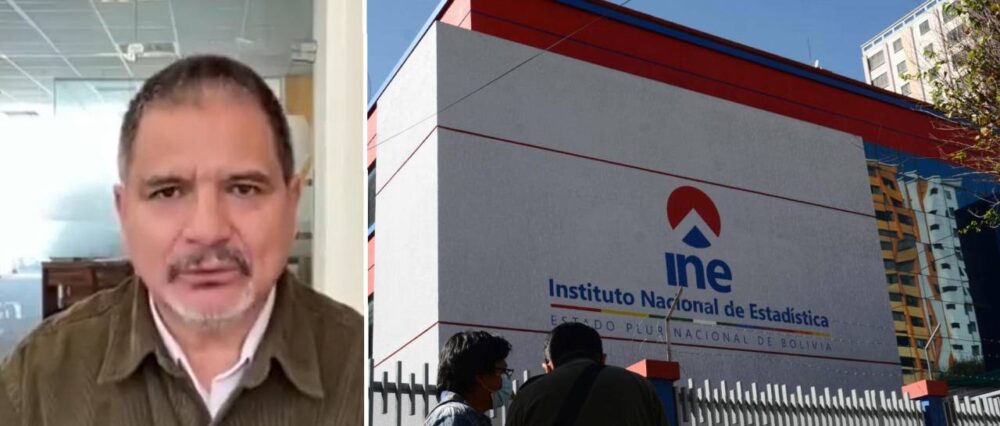
Economist Gonzalo Chávez highlighted that the inconsistencies in the Census data go beyond mere projections or population figures
“With incorrect data, the reality becomes obscured, and social, economic, health, and education policies lack the foundation to be effective,” Chávez warned, pointing out that there is a double problem: one of income and another of political power, as the population data will also affect representation in Parliament.
The INE released preliminary results indicating that Bolivia has 11,312,620 inhabitants. However, this figure contrasts with the agency’s own projections, which estimated a population of 12,332,252 for 2024.
Earlier, Planning Minister Sergio Cusicanqui stated that the INE is open to providing any technical information or reviewing the census process, explaining that “a projection is an exercise conducted based on available information and assumptions.”
Nevertheless, Chávez argued that the INE faces a scenario of low credibility regarding its data, which also harms the state entity’s reputation.
“The INE is paying the price for having made abusive and often manipulated use of macroeconomic data, inflation data, and for not having properly planned the Census and delaying it. The majesty of the data has been lost, and the INE has a credibility deficit, which is very serious,” he emphasized.
He also noted that technical and projection inconsistencies highlight the need for a thorough technical audit, going beyond the methodologies currently used by the INE.
What Are These Inconsistencies?
According to INE data, between 2012 and 2024, the national annual growth rate was 1%. In contrast, between 2001 and 2012, this rate was 2%.
“A 1% growth rate suggests that the Bolivian economy was in a disastrous state over the past twelve years, while the government claimed that the average growth from 2012 to 2023, excluding COVID-19, was 3.37%, and including COVID-19, it was 4.5%,” Chávez said, indicating that during the so-called “economic miracle” (the economic boom of the last decade), people were actually leaving Bolivia.
He also noted that the government’s narrative highlights improvements in health and education, which historically lead to higher birth rates. However, in Bolivia, the opposite occurred. “Health improved, and we had fewer children, or perhaps the reality is that all those indicators were actually weak. People in Bolivia live longer, around 73–74 years, yet these figures suggest that they die faster,” he questioned.
Por Unitel, Eju.tv:
Censo: Analista Chávez sostiene que datos equivocados pueden “enceguecer” desafíos económicos y sociales de Bolivia
El economista Gonzalo Chávez hizo un análisis sobre la información reflejada por el INE, remarcando que la baja credibilidad del INE no es solo por el Censo, sino también por el “uso abusivo” de datos económicos
Los datos del Censo 2024 presentados por el Instituto Nacional de Estadística (INE) siguen dando tela que cortar y no solo por el ‘ruido’ que generan las cifras de población que han sido advertidas por autoridades e instituciones de diferentes regiones, sino también porque es la información que dará pie a nuevas políticas públicas para el país, según el economista Gonzaló Chávez.
En un contacto con UNITEL, Chávez realizó un análisis que no solo contempla el tema poblacional, el cual puede conllevar a que no se distribuyan los ingreso como corresponde, sino la baja credibilidad que viene arrastrando el INE en torno a la información macroeconómica que viene reflejando en los últimos años.
Para Chávez, el problema de las inconsistencias no solamente están con las proyecciones o con los datos de población
“Con datos que están equivocados se oscurece la realidad y las políticas sociales, económicas, de salud y de educación, pues no tienen la base para ser efectivas”, contempló el economista al advertir que hay un doble problema: de ingresos y también de poder político, puesto que los datos poblacionales también tendrá consecuencias en la representación que pueda tener la población en el Parlamento.
El INE presentó los resultados preliminares que indican que Bolivia tiene 11.312.620 habitantes; sin embargo, esta cifra difiere con las propias proyecciones de la entidad estatal que apuntan a una población estimada de 12.332.252 habitantes para el presente 2024.
Más temprano, el ministro de Planificación, Sergio Cusicanqui, sostuvo que el INE está abierto a brindar cualquier información técnica o generar la revisión del proceso censal, explicando que “una proyección es un ejercicio que se lo realiza en función a la información disponible y en base a supuestos”.
No obstante, Chávez manifestó que el INE enfrenta un escenario de baja credibilidad en torno a sus datos, lo que también implica un daño a la reputación de la entidad estatal.
“Se está pagando haber hecho un uso abusivo y muchas veces manipulado de los datos macroeconómicos, de los datos de inflación, de haber no haber hecho bien planificado el Censo y de haber retrasado el censo. Entonces, se ha perdido la majestad de los datos y el INE tiene un déficit de credibilidad y eso es muy serio”, resaltó.
En esta línea, observó que las inconsistencias técnicas y de proyecciones ponen sobre la mesa la necesidad de una auditoría técnica profunda que vaya más allá de las metodologías técnicas que maneja el mismo INE.
¿Cuáles son estas inconsistencias?
Según la información del INE, entre 2012 y el 2024 a escala nacional se tuvo una tasa de crecimiento anual del 1%. En contraste, entre 2001 y 2012, esta tasa era del 2%.
“Un crecimiento de 1% significa pues que la economía boliviana estuvo un desastre en los últimos doce años y el Gobierno nos dijo que el crecimiento promedio del 2012 al 2023 sin covid-19 fue 3,37% y con covid-19 de 4,5%”, sostuvo Chávez al advertir que significaría que en tiempos del “milagro económico” (la bonanza económica de la década pasada) la gente se ha ido de Bolivia.
Asimismo, recordó que el Gobierno maneja un discurso en el que resalta que mejoró la salud, la educación y eso -históricamente- lleva a mayor tasa de natalidad y en Bolivia fue al revés. “Mejoró la salud y tuvimos menos hijos o realmente lo que pasó, todos esos indicadores eran realmente débiles (…) La gente vive más tiempo en Bolivia, 73 – 74 años, y aquí esto está mostrando que muere más rápido”, cuestionó.

 Bolivian Thoughts | Pensamientos Bolivianos (Bilingual/Bilingüe)