
By Lourdes Molina Rea, El Deber:
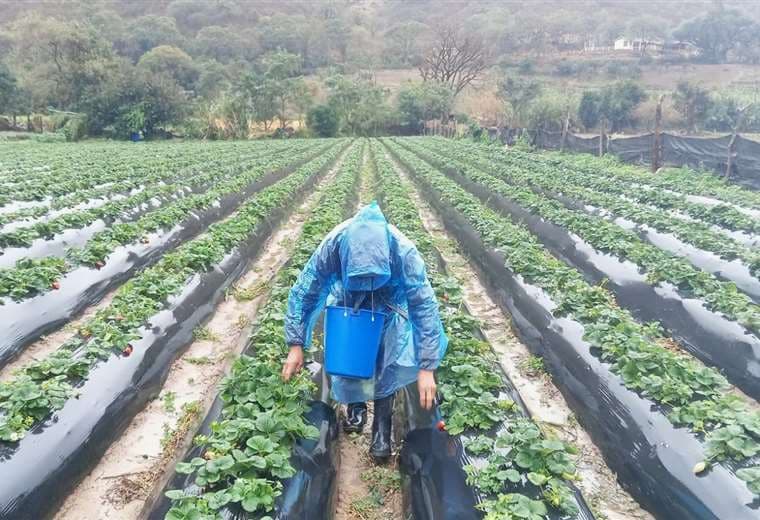
According to expert analysis, the Cruceño valleys and Cordillera have been the most affected regions by the ‘surcito’.
According to the experts, two phenomena occur when low temperatures are recorded: snowfalls and frosts. The first can be beneficial for agricultural crops, but the second can destroy production.
“What has been recorded so far in the Cruceño valleys is snowfall; however, in Cordillera, it is frost,” clarified Luis Alberto Alpire, better known as the weather man.
Snowfall
According to Alpire, snowfall in the valleys can affect fruit trees that are in bloom or bearing fruit. “Early peaches are particularly vulnerable; the snowfall destroys the flowers and the fruit. If the fruit is already developed, it suffers.”
He added that grass and forage for livestock get burned, “it dries out and does not nourish the animals. It can also affect some tubers like potatoes, but it is not as harmful as frost,” Alpire explained.
Therefore, the expert recommended foliar spraying with potassium silicate, “because it helps the plant endure and prevents it from affecting its development. Today, they should have done foliar applications.”
He also clarified that traditional methods help too, “like placing lard cans with sawdust at the bottom and a cloth with diesel to generate smoke and heat around. It is advised to place four to five cans around the crop to generate heat, so the low temperature does not affect it in the early morning. This is a method I recommend because it is cheap and not as costly as sprinkler irrigation.”
He mentioned that snow is still expected this Saturday, “but later there may be frost in the valleys. We hope it won’t affect much or impact production significantly.”
Alpire’s version was confirmed by Jaime Chávez, coordinator of the Horticultural Health Program of the Governor’s Office. He alerted producers that, despite this phenomenon not yet occurring in the lower areas, preventive measures should still be taken to avoid crop losses.
He added that the most damaging climatic phenomenon is black frost, which affects the plant tissues causing death.
Conversely, he explained that these low temperatures also benefit the fruit sector as the plants need cold hours to promote fruit growth.
In Cordillera
The weather man explained that although frost has not yet been recorded, it will affect forage for livestock. However, he clarified that “during this winter period, no agricultural crops are sown in Cordillera. They are now harvesting corn, which is in the final stage, so there is no harm to agricultural crops.”
Por Lourdes Molina Rea, El Deber:
De acuerdo con el análisis de expertos, los valles cruceños y Cordillera han sido las regiones más golpeadas con el ‘surcito’
De acuerdo con la versión de los expertos existen dos fenómenos que se presentan cuando se registran bajas temperaturas: nevadas y heladas. La primera puede resultar hasta beneficiosa para los cultivos agrícolas; pero la segunda, puede acabar con la producción.
“Lo que hasta ahora se ha registrado en los valles cruceños son nevadas; sin embargo, en Cordillera son heladas“, aclaró Luis Alberto Alpire, mejor conocido como el señor del clima.
La nevada
Según Alpire, en los valles la nevada puede afectar a los frutales que están en flor o que están en fruto. “Los frutales son los duraznos tempraneros, a la flor la deshace, acaba con el fruto. Y si están en fruto lo castiga”.
Agregó que el pasto, el forraje para el ganado queda quemado, “lo reseca y este no lo nutre al animal y además puede afectar a algunos tubérculos como la papa, pero no es tan nociva como la helada”, aclaró Alpire.
Por eso, el experto recomendó foliar con silicato de potasio, “porque con ello, le da para aguantar a la planta, para que no le afecte a su desarrollo. Pero hoy han debido hacer aplicaciones foliares”.
Es más, aclaró que los procedimientos tradicionales también ayudan, “como latas de manteca echarle aserrín al fondo y un trapo con diésel, que le genere humo y caliente alrededor. Se aconseja ubicar entre cuatro a cinco latas alrededor del cultivo para generar calor, para que la baja temperatura no le afecte en la madrugada. Este un procedimiento que recomiendo, porque es barato, no es tan costoso como el riego por aspersión”.
Aunque aseveró que este sábado todavía se prevé nevada, “posteriormente puede haber helada en los valles. Que esperemos no afecte mucho ni incida, puede helar pero no afectará tanto a la producción“.
La versión de Alpire fue confirmada por Jaime Chávez, coordinador del Programa de Sanidad Hortofrutícola de la Gobernación, alertó a los productores que, a pesar de en las zonas bajas aún no se ha presentado este fenómeno, igual hay que tomar medidas de prevención de sus cultivos para evitar pérdidas de los mismos.
Añadió que el fenómeno climático que hace mayor daño es la helada negra, que afecta los tejidos de la planta provocando la muerte.
En contrapartida, explicó que estas bajas temperaturas a la vez favorecen al sector frutícola debido a que las plantas necesitan horas-frías para favorecer el crecimiento de los frutos.
En Cordillera
El señor del clima explicó que a pesar de que aún no se ha registrado, la helada afectará al forraje para el ganado, el pasto. Sin embargo, aclaró que “en esta coyuntura de invierno no se siembra cultivos agrícolas en Cordillera. Y ahora están cosechando el maíz, ya están en la última etapa, no hay perjuicio para el cultivo agrícola”.

 Bolivian Thoughts | Pensamientos Bolivianos (Bilingual/Bilingüe)