

Rolando Telleria, Los Tiempos:
The division within the Movement Towards Socialism (MAS) also carries regional connotations. While during the almost 14 years of hegemony — to put it that way, borrowing from Gramsci — there was an interesting cohesion that allowed Evo Morales to serve three consecutive terms, today the MAS is also divided territorially.
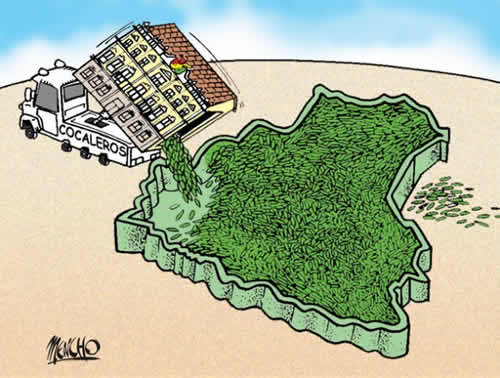
The truth is that, in this division, we have El Alto as the bastion of the renewed MAS. It is the headquarters of the “arcista” MAS. On the other side is the Cochabamba tropics, home to the six federations of coca growers, Morales’ impregnable stronghold.
It’s clear that the division doesn’t stem from ideological origins but rather from interests, envies, resentments, and passions.
We could assert that the division began with Morales’ unfortunate decision to designate Luis Arce Catacora as the MAS presidential candidate for the 2020 elections, while the Unity Pact proposed David Choquehuanca. Morales chose Arce because he considered him more faithful, loyal, and submissive, thinking that he would govern from Chapare behind the scenes. It’s clear now that these circumstances wouldn’t have arisen if not for the terrible crisis of 2019, which led to Morales’ resignation. It’s also clear that the 2019 crisis stemmed from the non-compliance with the results of the 21F referendum, a significant milestone and turning point.
To have a more comprehensive view of this territorial division, it’s important to examine what happened during Morales’ 14 years in power. Throughout that period, the hegemony of the Chapare coca growers’ bloc was very pronounced, both among leaders and within the various organizations comprising the Unity Pact. Those who benefited the most from power, with parliamentary seats, ministries, deputy ministries, diplomatic positions, and others, were the MAS members from the Chapare bloc. The Cochabamba tropics represented the Super-State.
Not only that, but the tropics also benefited from huge investments during the boom years. There’s the Urea Plant, which required nearly $1 billion in investment. Unlike any other region, it boasts three stadiums. Additionally, there’s all that formidable infrastructure like the South American Village, among many other significant projects.
The other MAS bloc, now based in El Alto, during those 14 years of Chapare hegemony, had no significance. They had no influence in political decisions or presence in state apparatus positions. Some voices indicate they were rather sidelined.
They were also ignored in terms of investments and major projects. Apart from the Cable Car, I can’t find any investment comparable in magnitude to those in Chapare, despite major political struggles and victories, such as the gas war, occurring precisely in El Alto. Morales’ government never recognized their significant contributions and struggles with “projects.”
All of this has undoubtedly fueled an inevitable process of division, which was triggered — as political analysts say — by Luis Arce’s presidency, a result of the 2020 elections with 55% of the vote.
With “Lucho’s” rise to power, the Chapare MAS bloc, contrary to expectations, lost its hegemony. The unexpected happened because it was assumed that during Lucho’s government, the center of power would remain in the tropics.
Instead, Arce Catacora’s government sidelined all the tropics’ leaders from public positions.
In this struggle, the nerve centers of both regions are gaining paramount importance. In Lauca Ñ, Morales’ base in the tropics, the first — annulled — MAS congress took place, aiming to maintain hegemony and singular leadership. In contrast, the “arcista” bloc held a massive gathering in El Alto, attended by public officials and grassroots social organizations. During MAS’s 29th-anniversary celebrations, the tropics, this time Yapacaní, took center stage again.
Now, it is anticipated that the most important event where the future of the party and the ownership of the acronym will be decided will take place in El Alto. Likewise, if the “evista” faction fulfills its threats to disrupt the country from Chapare, El Alto will become the headquarters of the “renewalist” wing.
In the impending disputes and conflicts, El Alto and the tropics dominate the political agenda.
La división del Movimiento al Socialismo (MAS) también tiene connotaciones de orden regional. Si bien, en los casi 14 años de hegemonía —por decirlo así, sin Gramsci—, hubo una cohesión interesante que permitió a Evo Morales ejercer tres mandatos continuos; hoy el MAS se parte también territorialmente.
Lo cierto es que, en esa división, tenemos a El Alto, como bastión del MAS renovador. Es la sede del MAS “arcista”. En la otra vereda está el trópico de Cochabamba, sede de las seis federaciones de productores cocaleros, el fortín inexpugnable de Morales.
Está claro que la división no tiene origen ideológico, más bien raíces en intereses, envidias, resentimientos y pasiones.
Podríamos afirmar que la división tiene inicio en la desafortunada decisión de Morales, cuando designa, como candidato a la presidencia por el MAS, para las elecciones del 2020, a Luis Arce Catacora, momento en que el Pacto de Unidad proponía a David Choquehuanca. Morales se decide por Arce, pues lo consideraba más fiel y leal, además de sumiso, pensando que detrás del trono, él gobernaría desde Chapare. Ahora, está claro que esas circunstancias no se hubieran producido si no habríamos tenido de por medio la terrible crisis del 2019 que derivó en la renuncia de Morales. Está claro, también, que la crisis de 2019 tiene origen en el incumplimiento a los resultados del 21F, el gran hito y el punto de inflexión.
Para contar con una mirada más completa de esta división, ahora territorial, es importante ver qué es lo que sucedió durante los 14 años de Morales. En todo ese periodo, la hegemonía del bloque cocalero chapareño fue muy marcada, de los dirigentes, de las distintas organizaciones que componen el Pacto de Unidad. Quienes se beneficiaron más del poder con escaños, ministerios, viceministerios, cargos diplomáticos y otros fueron los masistas del bloque chapareño. En el trópico cochabambino estaba el Super-Estado.
No sólo eso. También el trópico se benefició, en la época de bonanza, con enormes inversiones. Ahí tenemos la Planta de Urea, que demandó cerca de 1.000 millones de dólares. Tiene, como ninguna otra región, tres estadios. Quedó ahí, asimismo, toda esa formidable infraestructura que la Villa Sudamericana, por citar, entre otras muchas cosas más de gran significación.
El otro bloque del MAS, ahora con sede en El Alto, durante esos 14 años de hegemonía chapareña, no tuvo ninguna trascendencia. Ni en las decisiones políticas ni en la presencia en cargos en el aparato del Estado. Hay voces que indican que fueron más bien relegados.
También, en inversiones y grandes obras, fueron ignorados. No encuentro, salvo el Teleférico, ninguna inversión que se acerque a ésas de magnitud emplazadas en Chapare, pese a que las grandes luchas y conquistas políticas, como la guerra del gas, tuvieron lugar precisamente en El Alto. El gobierno de Morales nunca reconoció con “obras” esa gran entrega y lucha.
Todo esto, ciertamente, ha ido germinando un inevitable proceso de división que se “gatillea” —como dicen los politólogos— con la llegada a la presidencia de Luis Arce, producto de los resultados de las elecciones del 2020, con el 55% de la votación.
Con la llegada al poder del compañero “Lucho”, el bloque masista chapareño, contrariamente a lo que se esperaba, pierde hegemonía. Sucedió lo imprevisto, pues se calculó que, durante el gobierno de Lucho, el centro del poder iba a continuar en el trópico.
El gobierno de Arce Catacora más bien alejó de cargos públicos a todos los dirigentes del trópico.
En esa lucha, los centros neurálgicos de ambas regiones van cobrando importancia de primer orden. En Lauca Ñ, la sede de Morales en el trópico, se realizó el primer congreso —anulado— del MAS, donde se pretendió mantener hegemonía y liderazgo único. En contrapartida, el bloque “arcista” realiza el cabildo de El Alto, multitudinaria concentración con la presencia de funcionarios públicos y bases de las organizaciones sociales. En los festejos del MAS, por su 29 aniversario, nuevamente la región del trópico, esta vez Yapacaní, toma protagonismo.
Ahora, se prevé que, el evento más importante donde se definirá el futuro del partido y la propiedad de la sigla, se efectuará en El Alto. Asimismo, si la corriente “evista” cumple sus amenazas de convulsionar el país desde Chapare, El Alto, se convertirá en el cuartel general del ala “renovadora”.
En la disputa y en los conflictos que se avecinan, El Alto y el trópico, coparan la agenda política.
https://www.lostiempos.com/actualidad/opinion/20240331/columna/alto-versus-chapare

 Bolivian Thoughts | Pensamientos Bolivianos (Bilingual/Bilingüe)