
By Germaine Barriga, Vision 360:
Corruption
Bolivia Shaken as Current and Former Officials Across All Three Branches of Government, the Public Prosecutor’s Office, and the Police Lose Their U.S. Visas
Officials from the legislative, judicial, and executive branches responded to the measure taken by the United States. They called for the resignation of those named on the list, warned that these officials must be held accountable before the justice system, and did not rule out legal action once the reasons for the visa revocations become known.
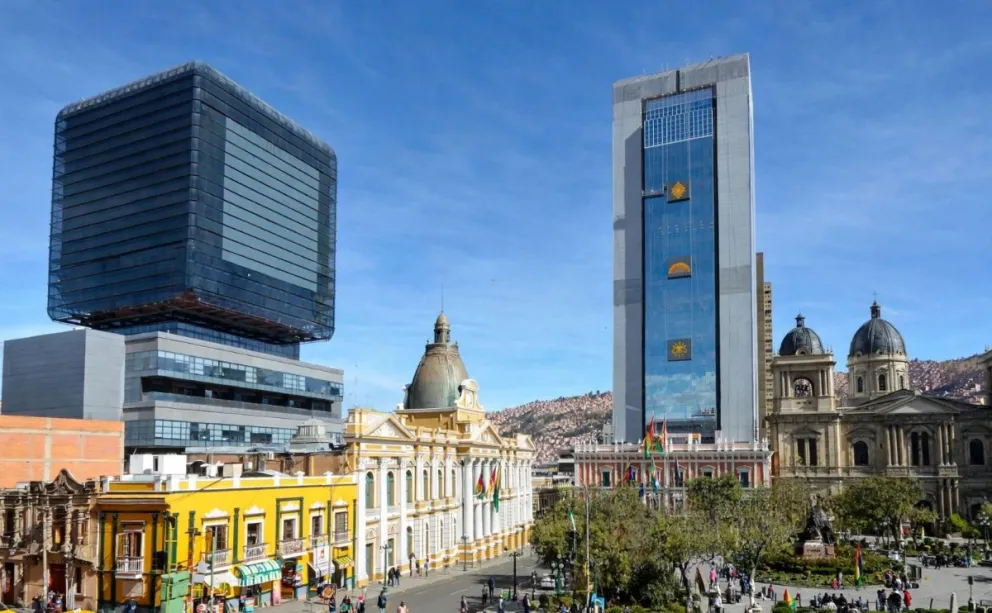
Reference image of Plaza Murillo, where the executive and legislative branches are headquartered. Photo: Ombudsman’s Office
Bolivia’s three branches of government were shaken on Thursday following the release of a list of 15 current and former officials from the executive, judicial, and legislative branches, as well as the Public Prosecutor’s Office and the Bolivian Police, whose visas to enter the United States had been revoked.
Following the release of the list, calls emerged for those named to resign. Edmand Lara, president of the Legislative Assembly, announced investigations, while Acting Attorney General José Armando Urioste dismissed two prosecutors from Santa Cruz. Meanwhile, Supreme Court President Romer Saucedo called for the resignation of two judicial officials.
The national government responded through presidential spokesperson José Luis Gálvez, who, hours after the list became public, guaranteed that absolutely no one would receive protection or be shielded from accountability. He stressed that holding public office, wielding influence, or wearing a uniform would not provide immunity.
On Thursday afternoon, the U.S. Department of State released the list, which included Rafael López, a deputy representing the Libre Alliance; Rolando Pacheco, a deputy from the Popular Alliance; and Diego Barboza, who until just hours earlier had served as executive director of the Financial Investigations Unit (UIF).
Also affected were Aldo Quezada, president of the Santa Cruz Departmental Court of Justice; Oscar Ortiz, director of the General Personal Identification Service (Segip) in Santa Cruz; Julio Alba, a judge at the Santa Cruz Departmental Court of Justice; prosecutors Félix Balderas and Julio César Porras; and Freddy Pereira, the departmental police commander in Tarija.
The list also included former Attorney General Juan Lanchipa; former head of Airport Security for the Special Force to Combat Drug Trafficking (FELCN), Fernando Velasco; former Director General of Migration Katherine Calderón; former sentence enforcement judge José Ayaviri; and former La Paz prosecutor Armando Rojas.
Once the list became public, Jorge Quiroga, national leader of the Libre Alliance, demanded that López be removed from the Chamber of Deputies, arguing that the political organization had received more than three million votes. López, meanwhile, announced that he would defend his innocence, honor, and record.
For his part, Pacheco, a deputy from the Popular Alliance (AP), the party led by former Senate President Andrónico Rodríguez, insisted that his “hands are clean” and said he was willing to cooperate with any investigation.
In response, Lara called for both deputies to be referred to the Ethics Committee. He also announced that he would request information about a broader list of 40 individuals whose visas had reportedly been revoked, as it allegedly included two cabinet ministers serving under President Rodrigo Paz.
Lara stated that once all the information about those barred from entering the United States was obtained, he would not rule out initiating legal proceedings. However, he emphasized the need to determine whether those involved had links to drug trafficking or other crimes.
Speaking from Santa Cruz, Urioste announced the dismissal of prosecutors Balderas and Porras after reviewing information already available about the two officials.
“We made this decision based on certain background information available to the Public Prosecutor’s Office, and we have terminated the employment of the two officials who worked for the institution,” he explained.
Supreme Court of Justice (TSJ) President Romer Saucedo, meanwhile, recommended that Aldo Ismael Quezada Cerruti, president of the Santa Cruz Departmental Court of Justice, and Julio Nelson Alba Flores, a judge on that court, submit their resignations after learning that both were among the Bolivian citizens affected by the visa restrictions imposed by the United States.
Hours later, Quezada submitted his resignation as president of the Santa Cruz Departmental Court of Justice.
“I hereby inform you, honorable members of the court, of my irrevocable resignation from the position of president of the Santa Cruz Departmental Court of Justice,” stated part of the letter circulated by several media outlets.
Another official who addressed the situation was Oscar Mauricio Ortiz, who had left his position as director of Segip in Santa Cruz. He revealed that he had held the post until October 16 and expressed surprise at the decision taken by the United States against him and his family.
“I respect the laws and regulations of my country, as well as the immigration, anti-corruption, and anti-drug-trafficking policies of foreign governments, including the support that the United States provides to Bolivia,” he stated in a message expressing his willingness to cooperate with any investigation or proceeding.
At 7:30 p.m., President Rodrigo Paz’s government reiterated that it would provide absolutely no “protection” or “shielding” to anyone, according to presidential spokesperson José Luis Gálvez. He emphasized that Bolivia shares with its partners in the Shield of the Americas initiative a commitment to confronting the criminal organizations threatening their countries.
Gálvez stated that the government would act not because of external pressure but out of its own responsibility. He announced that everyone named by the U.S. government who had held a position during the current administration had already been removed from office, some weeks earlier and others just days before.
He was referring, among others, to former UIF director Diego Barboza, who was dismissed on Thursday.
The spokesperson warned that any current or former official named on the list would have to answer before the appropriate authorities if sufficient evidence emerged to justify legal proceedings. He also emphasized four principles guiding the government’s handling of the matter.
He stated that the administration would neither cover up wrongdoing, protect those responsible, nor negotiate impunity. However, he maintained that the truly serious issue for Bolivia was the possibility that criminal organizations had infiltrated the very institutions responsible for protecting society.
Amid the crisis, Lara announced that he would formally request, through the Ministry of Foreign Affairs, that the U.S. Department of State provide the complete list of 40 individuals whose visas had reportedly been revoked, following unofficial reports suggesting that ministers in President Rodrigo Paz’s cabinet were among them.
“We want the complete lists (…). We do not want them to selectively release the names of those whose visas have been revoked. Beyond that, we want to know why their visas were revoked—whether because of corruption, links to drug trafficking, or other reasons. These matters must be investigated,” he declared.
Por Germaine Barriga Velarde, Vision 360:
Corrupción
Bolivia sacudida por lista de autoridades y exautoridades de los tres poderes del Estado, el Ministerio Público y la Policía que perdieron su visa a EEUU
Autoridades de los poderes Legislativo, Judicial y Ejecutivo se pronunciaron sobre la medida asumida por Estados Unidos. Demandaron la renuncia de las personas mencionadas en la lista, advirtieron que estos funcionarios deben rendir cuentas ante la justicia y no descartaron iniciar acciones legales, una vez que se conozcan las causas de la revocación de sus visas.
Imagen referencial de la plaza Murillo, donde se encuentran los edificios de los órganos Ejecutivo y Legislativo. Foto: Defensoría del Pueblo
Los tres órganos del Estado boliviano fueron sacudidos este jueves con la difusión de una lista de 15 ciudadanos que cumplen y cumplían funciones en los poderes Ejecutivo, Judicial y Legislativo, además del Ministerio Público y la Policía Boliviana, que perdieron su visa de ingreso a Estados Unidos (EEUU).
Una vez que se conoció la lista, se registraron pedidos de renuncia de los nombrados. También se anunciaron investigaciones por parte del presidente de la Asamblea Legislativa, Edmand Lara, y se registraron destituciones de dos fiscales de Santa Cruz por parte del fiscal general del Estado (a.i.), José Armando Urioste, mientras que el presidente del Tribunal Supremo de Justicia, Romer Saucedo, pidió la renuncia de dos autoridades judiciales.
El Gobierno nacional se pronunció a través del vocero presidencial, José Luis Gálvez, horas después de haberse conocido la lista, y garantizó que no habrá protección ni blindaje absolutamente a nadie. Además, aseguró que el cargo no protege, la influencia no protege y el uniforme no protege.
La tarde de este jueves, el Departamento de Estado de Estados Unidos divulgó la lista, en la que se encuentran los diputados por la Alianza Libre, Rafael López, y por Alianza Popular, Rolando Pacheco, así como el hasta hace pocas horas director ejecutivo de la Unidad de Investigaciones Financieras (UIF), Diego Barboza.
También fueron afectados por esa medida el presidente del Tribunal Departamental de Justicia de Santa Cruz, Aldo Quezada; el director del Servicio General de Identificación Personal (Segip) de Santa Cruz, Oscar Ortiz; el juez del TDJ de Santa Cruz, Julio Alba; los fiscales Félix Balderas y Julio César Porras, y el comandante departamental de Tarija, Freddy Pereira.
Además, figuran el exfiscal general Juan Lanchipa, el exjefe de Seguridad Aeroportuaria de la FELCN Fernando Velasco, la exdirectora general de Migración Katherine Calderón, el exjuez de ejecución penal José Ayaviri y el exfiscal de La Paz Armando Rojas.
Una vez que se conoció la lista, el jefe nacional de la Alianza Libre, Jorge Quiroga, demandó la separación de López de la Cámara de Diputados, con el argumento de que esa organización política es depositaria de más de 3 millones de votos de la población, mientras que el parlamentario anunció que defenderá su inocencia, su honor y su trayectoria.
Por su parte, el diputado de AP, partido que lidera el expresidente del Senado Andrónico Rodríguez, aseguró que tiene las “manos limpias” y sostuvo que está abierto a cualquier investigación.
Ante esta información, Lara se pronunció y pidió que los dos diputados sean remitidos ante la Comisión de Ética. También anunció que solicitará información sobre la lista de las 40 personas que perdieron su visa, porque, entre ellas, figurarían los nombres de dos ministros del gabinete del presidente Rodrigo Paz.
Lara sostuvo que, después de tener toda la información de las personas que tienen prohibido ingresar a EEUU, no descarta iniciar acciones legales. Sin embargo, precisó que se debe conocer si tienen vínculos con el narcotráfico y otros delitos.
Urioste anunció desde Santa Cruz la destitución de los fiscales Balderas y Porras, después de haber recibido información previa sobre la situación de ambos funcionarios.
“Nosotros hemos tomado esa decisión, en base a algunos antecedentes que se tienen en el Ministerio Público y se ha agradecido el servicio de los dos funcionarios que trabajan en el Ministerio Público”, informó.
El presidente del Tribunal Supremo de Justicia (TSJ), Romer Saucedo, por su parte, recomendó al presidente del Tribunal Departamental de Justicia de Santa Cruz, Aldo Ismael Quezada Cerruti, y al vocal ordinario Julio Nelson Alba Flores presentar su renuncia, luego de conocer que ambos fueron incluidos entre los ciudadanos bolivianos alcanzados por las restricciones de visa impuestas por Estados Unidos.
Por su parte, el presidente del Tribunal Departamental de Justicia de Santa Cruz, Aldo Quezada, horas después presentó su carta de renuncia a la Presidencia de esta institución. “Pongo en conocimiento de ustedes señores vocales, mi renuncia irrevocable al cargo de presidente del Tribunal Departamental de Justicia de Santa Cruz”, sostiene parte de la misiva, difundida por varios medios de comunicación.
Otro de los funcionarios que se pronunció sobre lo sucedido fue Oscar Mauricio Ortiz, quien dejó la dirección del Segip de Santa Cruz y reveló que ocupó el cargo hasta el pasado 16 de octubre. Manifestó su sorpresa por la decisión asumida por EEUU contra él y su familia.
“Soy respetuoso de las leyes y normas de mi país y de las políticas de migración, lucha contra la corrupción y narcotráfico de gobiernos extranjeros , así como el apoyo que Estados Unidos le brinda a Bolivia”, sostiene parte de un mensaje en el que expresa su predisposición a colaborar en cualquier situación.
A las 19:30, el Gobierno del presidente Rodrigo Paz reiteró que no dará “protección” ni “blindaje” absolutamente a nadie, advirtió el vocero presidencial, José Luis Gálvez, quien aseguró que se comparte con los aliados del Escudo de las Américas la lucha frontal contra las estructuras criminales que acosan a nuestros países.
Dijo que el Gobierno no actuará por imposición externa, sino por responsabilidad propia, y anunció que todas las personas mencionadas por el Gobierno de EEUU que desempeñaron funciones en algún momento de esta gestión fueron cesadas en sus cargos: algunas hace semanas y otras hace unos días. Se refirió así al exdirector de la UIF, Diego Barboza, quien fue destituido este jueves.
Advirtió que cualquier autoridad o exautoridad mencionada en esa lista deberá responder ante las instancias correspondientes si existen elementos que ameriten procesos judiciales. Además, remarcó cuatro principios en el tratamiento de este tema.
Manifestó que este Gobierno no encubrirá, no protegerá ni negociará la impunidad, pero que lo verdaderamente grave para Bolivia es que organizaciones criminales hayan penetrado instituciones encargadas de proteger a la sociedad, sostuvo.
En medio de esta crisis, Lara anunció que solicitará, vía Cancillería, que el Departamento de Estado de Estados Unidos entregue la lista completa de las 40 personas que perdieron su visa, ante versiones extraoficiales de que ministros del gabinete del presidente Rodrigo Paz estarían incluidos en ella.
“Queremos listas completas (…), no queremos que saquen a conveniencia a los que están también con la visa revocada y, más allá de eso, queremos saber por qué se les revoca, por hechos de corrupción, vínculos con el narcotráfico; hay que investigar”, afirmó.


Leave a Reply