By El Diario:
Human Capital and Development
- Bolivia’s educational quality ranks below that of other countries in the region, prompting calls for technical reforms and policy changes to improve the national economy.
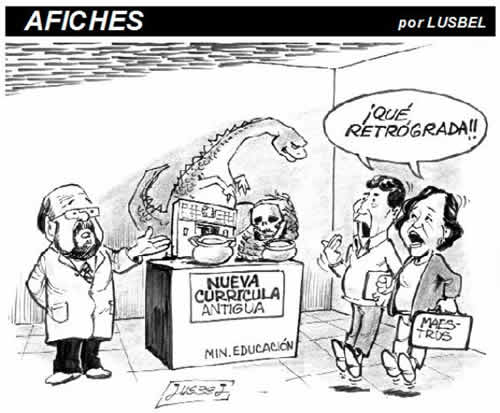
In recent years, Bolivia has lost ground in educational quality and, consequently, in human capital development, which directly affects productivity. Analysts argue that authorities must undertake major reforms to reverse this trend and confront unions that defend their privileges.
The country also records low educational quality and, at the regional level, setbacks have been observed in this area, according to the PISA Report (Programme for International Student Assessment).
Bolivia has fallen behind in human capital formation because successive governments focused on exploiting natural resources without offering alternatives to transform the productive structure. After gas production declined, the country entered an economic and energy crisis.
Education
According to economists consulted, the current state of human capital development stems from insufficient investment in educational quality and a lack of meaningful reforms, with policies often driven more by political and ideological considerations than by technical criteria.
For example, economist and professor at the Technical University of Oruro (UTO), Ernesto Bernal, points to the educational reform embodied in the Avelino Siñani Law, which he says emphasizes ideological student training.
He argues that educational improvement should begin in the earliest school years, with students receiving an International Baccalaureate-style education, similar to systems used in some countries in the region and available in Bolivia only at very high cost.
Bernal proposes that students should learn English, strengthen their mathematics skills, and improve in other core subjects so they can enter secondary school with a solid academic foundation and be prepared for greater challenges.
He therefore suggests developing a new educational reform based on this model while simultaneously training teachers to adapt to the changes.
“Structural changes take time,” he noted, adding that results would be visible only in the long term, approximately 10 to 20 years.
According to Bernal, a better-educated population would be more productive, leading to higher economic growth.
Bolivia has faced major structural problems since becoming primarily an exporter of raw materials and neglecting the expansion of its productive base due to a shortage of human capital, a problem dating back to the country’s founding.
An educational reform based on these recommendations would improve training, individual productivity, and employment opportunities, generating a significant impact on national economic growth.
To advance such a process, all key stakeholders—including teachers—must be involved. The government would need to explain that educational changes would not threaten teaching jobs while also implementing training programs in multiple disciplines to improve human capital development.
However, this process requires funding, and Bolivia currently lacks the necessary resources. This financial constraint, combined with politicians’ failure to prioritize education policies, could become another obstacle to reform.
Investing in Human Capital
Economic analyst Gustavo Machicado argues that Bolivia has not invested meaningfully in human capital since the 1980s.
“If there has been any investment, it has produced no results, and the reforms that were needed were never implemented,” he said.
The shortage of human capital affects the economy through lower productivity and slower growth rates.
Machicado stated that educational reforms aimed at strengthening human capital are difficult throughout Latin America because powerful interest groups, including unions in the health and education sectors, resist change.
“Investing in human capital requires reforms in education and healthcare,” he said, adding that unions often block such efforts, making reforms difficult, though changes can still be achieved through alternative approaches.
Reform
Machicado highlighted the educational reform introduced in 1955 through the Bolivian Education Code, which increased productivity. He argued that its results partly explain the economic growth experienced during the 1960s and 1970s. Since then, no comparable reform has been implemented.
He explained that the reform promoted the mass construction of rural schools. Once that objective was achieved, progress stalled. Future initiatives, he said, should have focused on improving educational quality in urban and provincial areas, a task that remains unfinished.
Machicado also noted that the lack of human capital is reflected in the shortage of professionals capable of guiding authorities through the current economic crisis and designing effective strategies. In the absence of such expertise, Bolivia often turns to the International Monetary Fund (IMF) for guidance.
Low Levels
Economic analyst Bernardo Fernández said that human capital encompasses the full range of skills and abilities developed from the earliest stages of education through professional life.
He acknowledged that Bolivia possesses a certain level of human capital that helps sustain the economy, but compared with neighboring countries, there remains a significant gap and overall lower levels of development.
Measuring Human Capital
Fernández explained that one common way to measure human capital across economies is through average worker productivity, which remains low in Bolivia.
This productivity is sometimes reflected in minimum wages. However, during the gas boom years, the minimum wage rose significantly under policies implemented by the Movement for Socialism (MAS), despite not necessarily corresponding to average worker productivity.
“At first, the average minimum wage did not reflect people’s productivity—it was unfair,” he said, adding that later reforms under the MAS government reversed the situation.
“Bolivia has not managed to make the leap into the digital era. It does not fully utilize technology, keep up with best practices, or maximize the use of equipment and tools, all of which directly affect productivity levels,” he observed.
Regionally, Bolivia lags behind in human capital and productivity because governments have focused heavily on exploiting natural resources—particularly minerals and hydrocarbons—at the expense of other sectors.
“There are no incentives for diversifying productive activity. We have not encouraged young people to think about emerging careers, new market trends, or new production methods linked to artificial intelligence and economic digitalization,” he explained.
Fernández lamented that the revenues generated during the commodity boom were not invested in other productive sectors.
“And when the money runs out, we find ourselves where we are today,” he said.
The lack of human capital also hinders changes in the productive and energy matrix, limits solutions to declining gas production, and reduces the country’s ability to identify new sectors capable of supporting economic growth.
“We find ourselves at this crossroads,” he concluded.
Finally, he noted that society is not accustomed to long-term change, making it challenging for authorities to implement educational reforms whose benefits take years to materialize.
“In developing countries like Bolivia, the long term barely exists—it is extremely short-term,” he said, emphasizing that education is inherently a long-term process.
Analysis
According to Ipsos’ 2026 Education Monitor, 52% of respondents say the quality of the educational system is poor, while only 2% rate it as good. Criticism is strongest in Cochabamba (66%) and among Generation X respondents (66%).
The survey also found that 70% support banning children from accessing social media, while only 41% believe artificial intelligence should be prohibited in schools.
Bolivians are more likely to recommend that young people attend university before entering the labor market: 45% favor university first, while 26% support entering the workforce directly.
Meanwhile, 51% believe the current school curriculum adequately prepares students for future careers, while 68% think young people would have better opportunities if they moved abroad.
Por El Diario:
Capital humano y desarrollo
- La calidad educativa de Bolivia está por debajo de los países de la región, por lo que plantean cambios y reformas con criterios técnicos para mejorar la economía nacional.
Bolivia, en los últimos años, perdió terreno en calidad educativa y con ello capital humano, que incide en la productividad, por lo que las autoridades deben abordar reformas importantes para revertir esta situación y enfrentarse a sindicatos que defienden sus privilegios.
Asimismo, registra una baja calidad educativa y a nivel regional se observan retrocesos en este tema, de acuerdo con el Informe PISA (en español, Programa para la Evaluación Internacional de los Estudiantes).
El país se alejó en la formación de capital humano debido a que los gobiernos de turno se enfocaron en la explotación de los recursos naturales, sin presentar opciones para cambiar la matriz productiva; y luego de reducir su producción de gas, ingresó en una crisis económica y energética.
Educación
Para los economistas consultados, la situación actual de la formación de capital humano obedece a una falta de inversión en la calidad educativa, pero también en reformas educativas, con más tinte político e ideológico que técnico.
Por ejemplo, el economista y docente de la Universidad Técnica de Oruro (UTO), Ernesto Bernal, señala a la reforma educativa, plasmada en la Ley Avelino Siñani, que apunta a una formación de estudiantes a nivel ideológico.
Además, sostiene que la mejora de la educación debe partir desde el primer año, donde los estudiantes tengan una formación de bachillerato internacional, como manejan algunos países de la región, también en Bolivia, con costos altísimos.
Plantea que los estudiantes deben aprender inglés, fortalecer las matemáticas, entre otras materias, para que pasen a secundaria con buena base de conocimientos y encarar en este nivel otros desafíos.
Por ello sugiere que se debe avanzar en la elaboración de una reforma educativa bajo el esquema que plantea y paralelamente en la capacitación de docentes para enfrentar los cambios.
“Los cambios estructurales tardan”, apuntó a tiempo de señalar que los resultados se observarán en el largo plazo, de aproximadamente 10 a 20 años.
Según Bernal, una población con mayor educación va ser más productiva para nuestro país y el crecimiento económico va aumentar.
Bolivia enfrenta grandes problemas estructurales desde que se convirtió en solo un exportador de materias primas y se olvidó ampliar la base productiva por falta de capital humano, que data desde la fundación de la República.
Una reforma educativa, con la sugerencia mencionada, mejora la formación, la productividad de cada persona y su fuente laboral, que tendrá un gran impacto en el crecimiento de la economía nacional.
Para avanzar en ese proceso se debe tomar en cuenta a todos los actores principales, como los profesores, y el Gobierno deberá explicar a los involucrados que los cambios en la educación no perjudicarán las fuentes laborales de los maestros, pero también deberá implementar capacitación en varias materias, con el objetivo de mejorar la formación de capital humano.
Sin embargo, ese proceso requiere presupuesto y Bolivia no cuenta en la actualidad con recursos, que representa un problema; los políticos no priorizan las políticas de educación, lo que puede ser otro freno para una reforma educativa.
Invertir
Para el analista económico Gustavo Machicado, Bolivia no invierte en capital humano desde los 80.
“Si hay algo de inversión, no hay resultados; y no se han hecho las reformas que se debían hacer”, acotó.
La falta de capital humano tiene su efecto en la economía por el lado de la productividad y en las tasas de crecimiento.
Machicado sostuvo que todas las reformas en educación para mejorar el capital humano son complejas en América Latina, debido a que hay grupos de poder que evitan los cambios, como los sindicatos, en salud y educación.
“Invertir en capital humano implica reformas en educación y salud” y los sindicatos no permiten, por ello “se torna difícil de hacer reformas, siempre hay maneras, no poniendo, pero si con cambios”, reflexionó.
Reforma
Destacó la reforma que se aplicó el 55, con el Código de la Educación Boliviana, que elevó la productividad y los resultados en parte explican los crecimientos que se registraron en los años 60 y 70, después de esta iniciativa, una similar ya no hubo.
Explicó que esa reforma alentó la construcción masiva de escuelas en el área rural, una vez que concluyó la meta, se acabó, y las nuevas iniciativas tenían que dar el siguiente paso, apuntar a la calidad a nivel urbano y provincial, lo que está pendiente.
Asimismo, el entrevistado indicó que la falta de formación de capital humano se refleja en la ausencia de profesionales que orienten a las autoridades a cómo salir de la crisis económica y en la elaboración de una estrategia, pero como no se cuenta con este perfil, se debe acudir al Fondo Monetario Internacional (FMI) para que nos diga cuál es el camino a seguir.
Bajo
El analista económico Bernardo Fernández dijo que el capital humano tiene que ver con toda esa complejidad de habilidades y capacidades que se gestan desde las primeras etapas de la formación hasta que las personas ejecutan estas habilidades, talentos y conocimientos a nivel profesional.
Señaló que Bolivia tiene un cierto nivel de capital humano, que seguramente sostiene la economía del país, a comparación con los países vecinos hay una brecha en la formación y es mucho más bajo.
Medir
Fernández explica que la manera de medir el capital humano con otras economías, una de las muchas que existen, está en la productividad promedio del trabajador, que en el caso de Bolivia es baja.
Esa productividad se refleja a veces también en el salario mínimo. Sin embargo, en el período del boom de gas, el salario mínimo subió de manera significativa por la política del Movimiento al Socialismo (MAS), sin tener relación con la productividad promedio del trabajador.
“Al principio el salario mínimo promedio no reflejaba la productividad de las personas, era injusto”, pero con las reformas aplicadas por el gobierno del MAS, la situación se dio la vuelta.
“Bolivia no ha podido dar el salto a la era digital, no utiliza tecnología, no está al día con las mejores prácticas, mejor uso de equipamiento y herramientas, que tiene impacto directo en los niveles de productividad”, observó.
A nivel regional, el país está rezagado en capital humano y productividad, debido a que los gobiernos de turno se enfocaron más en la explotación de los recursos naturales, como en el caso de Bolivia, minerales e hidrocarburos, en desmedro de otras áreas.
“No hay incentivo para la diversificación de la actividad productiva. No hemos impulsado a los jóvenes en pensar en las nuevas carreas, nuevas tendencias de los mercados, en las nuevas formas de producción, que implica la inteligencia artificial, la digitalización de la economía”, detalló.
Lamentó al indicar que los ingresos que tuvo el país no se invirtieron en otras áreas productivas, “y cuando se agota el dinero estamos donde estamos”.
La falta de capital humano frena el cambio de la matriz productiva y energética, también en elaborar soluciones ante la falta de gas y presentar sectores que ayudarán a la economía nacional. “Nos encontramos en esta encrucijada”, expresó.
Finalmente, aseguró que la población no está acostumbrada a los cambios de largo plazo y este es un desafío que debe enfrentar las autoridades para implementar las reformas en educación, que tardan en dar los resultados.
“En los países en desarrollo, como Bolivia, el largo plazo casi no existe, es de muy corto plazo”, indicó a tiempo de señalar que la educación es un proceso de muy largo plazo.
Análisis
El 52% afirma que la calidad del sistema educativo es mala; sólo 2% la califica como buena. La crítica es más alta en Cochabamba (66%) y entre la Gen. X (66%).
El 70% apoya que se prohíba a los niños el acceso a las redes sociales… solo 41% cree que la Inteligencia Artificial (IA) debería prohibirse en las escuelas, son los resultados del Monitor de Educación de Ipsos 2026.
El documento señala que los bolivianos son más propensos a recomendar a los jóvenes la universidad antes de entrar en el mercado laboral. 45% primero va a la universidad y 26% se incorpora directamente al mercado laboral.
El 51% cree que el currículo escolar actual prepara adecuadamente a los estudiantes para futuras carreras profesionales, mientras que el 68% cree que los jóvenes tendrían mejores oportunidades si se mudaran al extranjero.
https://www.eldiario.net/portal/2026/09/18/el-rezago-educativo-frena-la-productividad/


Leave a comment