
By El Dia:
March 19: the little-known history of Father’s Day in Bolivia
Father’s Day in Bolivia did not originate as an immediate state decree or as an unquestioned inherited tradition.
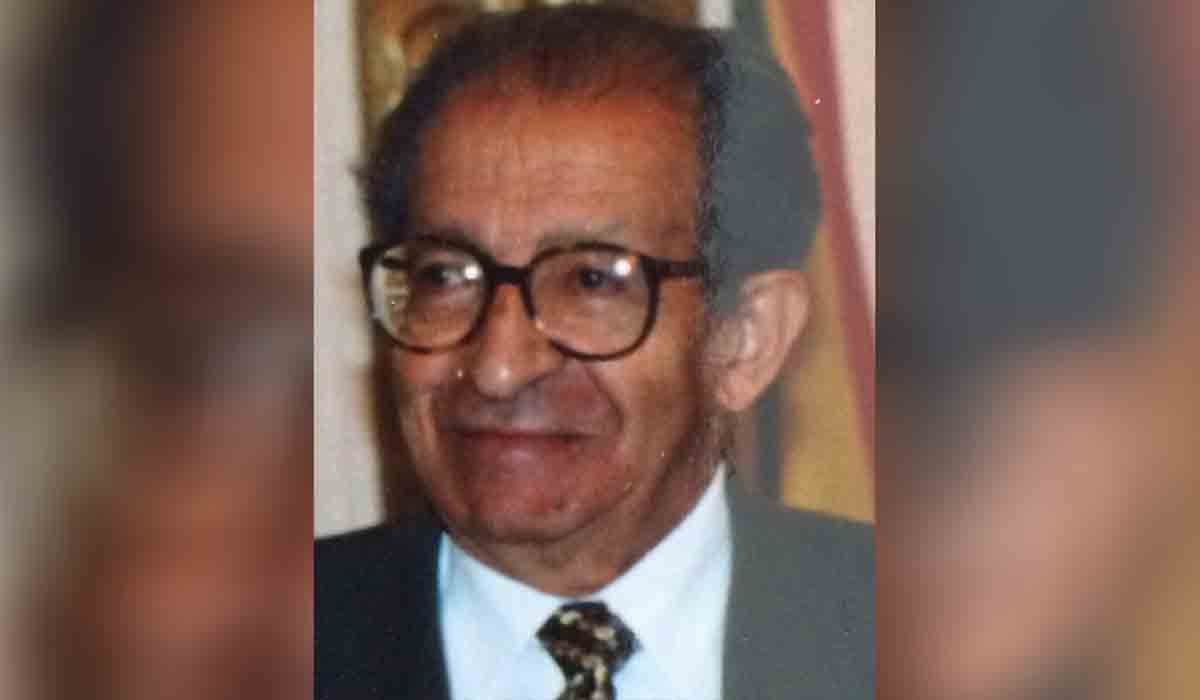
Víctor Handal Salame, who promoted the creation of Father’s Day in Bolivia starting in 1958. Photo: RRSS.
Every March 19 in the country, many fathers are honored with gifts, lunches, and messages of affection; however, behind this date lies a little-known history that combines personal initiative, religious tradition, and a proposal that, at first, few believed possible.
Father’s Day in Bolivia did not arise as an immediate state provision nor as an unquestioned inherited custom. Its origin dates back to 1958, when Bolivian businessman Víctor Handal Salame decided to promote the creation of a date dedicated exclusively to fathers.
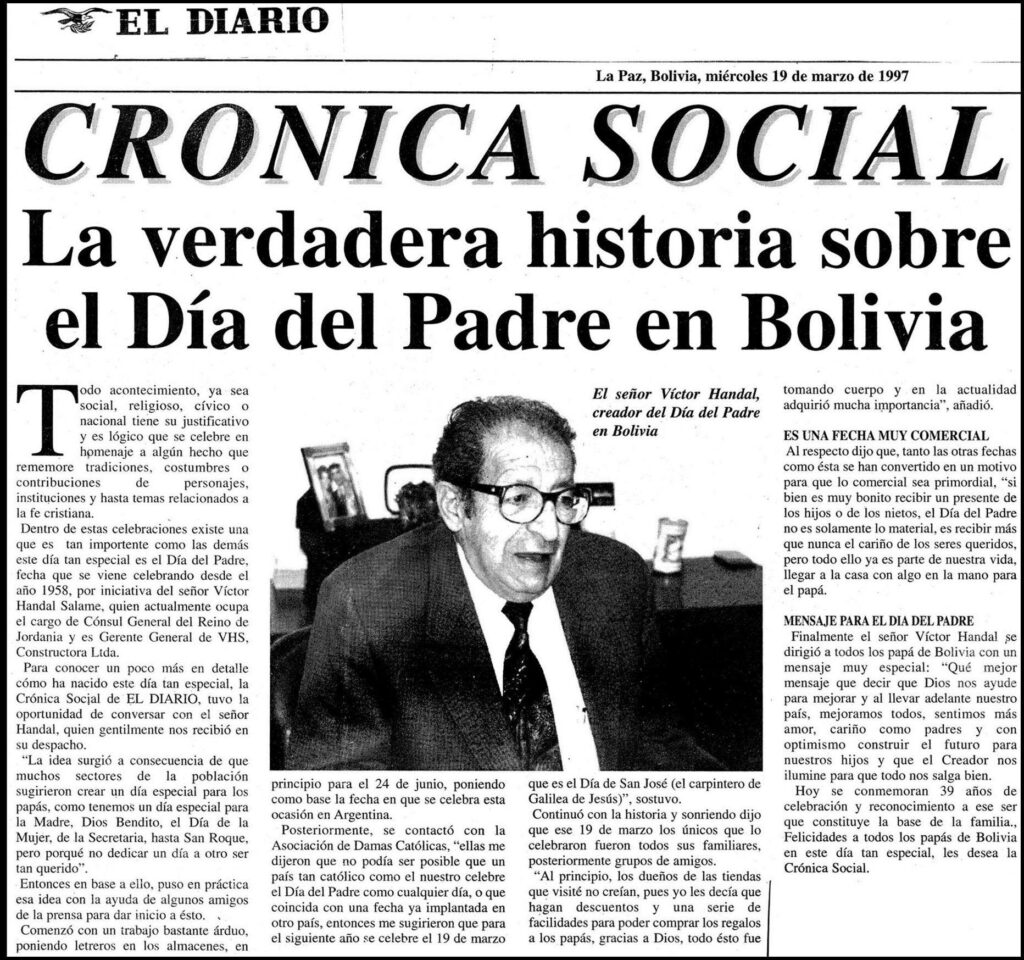
Years later, in an interview given to a La Paz media outlet in 1997, Handal Salame—who at the time served as Consul General of the Kingdom of Jordan and was general manager of VHS Constructora Ltda.—recalled the moment when the idea emerged.
“Many sectors of the population suggested creating a special day for fathers. We have a day for mothers, for women, for secretaries (…), but why not dedicate a day to another being so dear,” he noted.
What began as a concern soon turned into a concrete campaign. Handal visited shops, spoke with merchants, and put up signs to promote the celebration. Initially, the proposal pointed to June 24, following the reference of other countries in the region.
The story took a decisive turn when the Asociación de Damas Católicas intervened with a suggestion that would change the course of the initiative. They proposed moving the celebration to March 19, the date of Saint Joseph, a central figure in Christian tradition and considered a model father.
“They told me that it could not be that such a Catholic country celebrate Father’s Day on just any date or an imported one,” Handal recalled in that interview.
The first March 19 went almost unnoticed. Only family members and a few friends joined the celebration. Merchants were doubtful, promotions were unconvincing, and the idea seemed destined to fail. But persistence made the difference.
Over the years, the date began to gain ground in Bolivian society. Official recognition came in 1974, when a supreme decree, during the government of Hugo Banzer Suárez, institutionalized March 19 as Father’s Day throughout the country.
The choice of the date is not accidental. Saint Joseph, a carpenter and father of Jesus in Christian tradition, represents values deeply rooted in Bolivian culture: constant work, family responsibility, respect, and quiet love.
His figure symbolizes the father who teaches by example, who builds through everyday life, and who supports his family with effort. Hence, the day also coincides with Carpenter’s Day, in homage to that trade historically linked to his image.
Today, decades after that almost solitary initiative, the celebration has become established. Although the commercial component has grown over time, the meaning of the date maintains its essence.
Handal himself expressed it clearly in 1997: “the value of Father’s Day is not measured in gifts, but in affection. It is the embrace, the timely word, and presence that truly define the day.”
That is why every March 19, Bolivia not only celebrates fathers. It also remembers a story of conviction and effort that succeeded in establishing a tradition that is now part of the lives of millions of families.
Por El Dia:
19 de marzo: la historia poco conocida del Día del Padre en Bolivia
El Día del Padre en Bolivia no nació como una disposición inmediata del Estado ni como una costumbre heredada sin cuestionamientos.
Víctor Handal Salame, quien promovió la creación del Día del Padre en Bolivia desde 1958. Foto: RRSS.
Cada 19 de marzo, en el país, muchos padres son homenajeados con regalos, almuerzos y mensajes de cariño; sin embargo, detrás de esta fecha hay una historia poco conocida que combina iniciativa personal, tradición religiosa y una apuesta que, en sus inicios, pocos creyeron posible.
El Día del Padre en Bolivia no nació como una disposición inmediata del Estado ni como una costumbre heredada sin cuestionamientos. Su origen se remonta a 1958, cuando el empresario boliviano Víctor Handal Salame decidió impulsar la creación de una fecha dedicada exclusivamente a los padres.
Años después, en una entrevista concedida a un medio de comunicación paceño en 1997, Handal Salame —quien entonces ocupaba el cargo de Cónsul General del Reino de Jordania y era gerente general de VHS Constructora Lida— recordó el momento en que surgió la idea.
“Muchos sectores de la población sugerían crear un día especial para los papás. Tenemos un día para la madre, para la mujer, para la secretaria (…), pero por qué no dedicar un día a otro ser tan querido”, señaló.
Lo que comenzó como una inquietud pronto se transformó en una campaña concreta. Handal recorrió tiendas, habló con comerciantes y colocó letreros para promover la celebración. En un inicio, la propuesta apuntaba al 24 de junio, siguiendo la referencia de otros países de la región.
La historia dio un giro decisivo cuando la Asociación de Damas Católicas intervino con una sugerencia que cambiaría el rumbo de la iniciativa. Propusieron trasladar la celebración al 19 de marzo, fecha de San José, figura central de la tradición cristiana y considerado un modelo de padre.
“Ellas me dijeron que no podía ser que un país tan católico celebre el Día del Padre en una fecha cualquiera o importada”, recordó Handal en aquella entrevista.
El primer 19 de marzo pasó casi desapercibido. Apenas familiares y algunos amigos se sumaron al festejo. Los comerciantes dudaban, las promociones no convencían y la idea parecía destinada a quedar en el intento. Pero la persistencia marcó la diferencia.
Con el paso de los años, la fecha comenzó a ganar espacio en la sociedad boliviana. El reconocimiento oficial llegó en 1974, cuando un decreto supremo, durante el gobierno de Hugo Banzer Suárez, institucionalizó el 19 de marzo como el Día del Padre en todo el país.
La elección de la fecha no es casual. San José, carpintero y padre de Jesús en la tradición cristiana, representa valores profundamente arraigados en la cultura boliviana: el trabajo constante, la responsabilidad familiar, el respeto y el amor silencioso.
Su figura simboliza al padre que enseña con el ejemplo, que construye desde lo cotidiano y que sostiene a su familia con esfuerzo. De ahí que la jornada también coincida con el Día del Carpintero, en homenaje a ese oficio ligado históricamente a su imagen.
Hoy, décadas después de aquella iniciativa casi solitaria, la celebración se ha consolidado. Aunque el componente comercial ha crecido con el tiempo, el sentido de la fecha mantiene su esencia.
El propio Handal lo expresó con claridad en 1997: “el valor del Día del Padre no se mide en regalos, sino en el afecto. Es el abrazo, la palabra oportuna y la presencia lo que realmente define la jornada”.
Es por eso que cada 19 de marzo, Bolivia no solo celebra a los padres. También recuerda una historia de convicción y esfuerzo que logró instalar una tradición que hoy forma parte de la vida de millones de familias.

 Bolivian Thoughts | Pensamientos Bolivianos (Bilingual/Bilingüe)