
By Pablo Peralta, Visión 360:
A decade since 21F, the referendum that dealt a blow to Evo and marked the beginning of the MAS decline in power
February 21, 2016 became the prelude to the transition from the regime of the Movimiento Al Socialismo to the administration of President Rodrigo Paz.
That day, then–Vice President Álvaro García Linera arrived at the polling station with his wife and his pet, along with some thirty militants from the blue party. After casting his vote, he left the premises, but when he did something happened: he departed not only amid cheers, but also among whistles against him, according to press reports. That night, the results would seal the course of the next decade. The calendar read February 21, 2016.
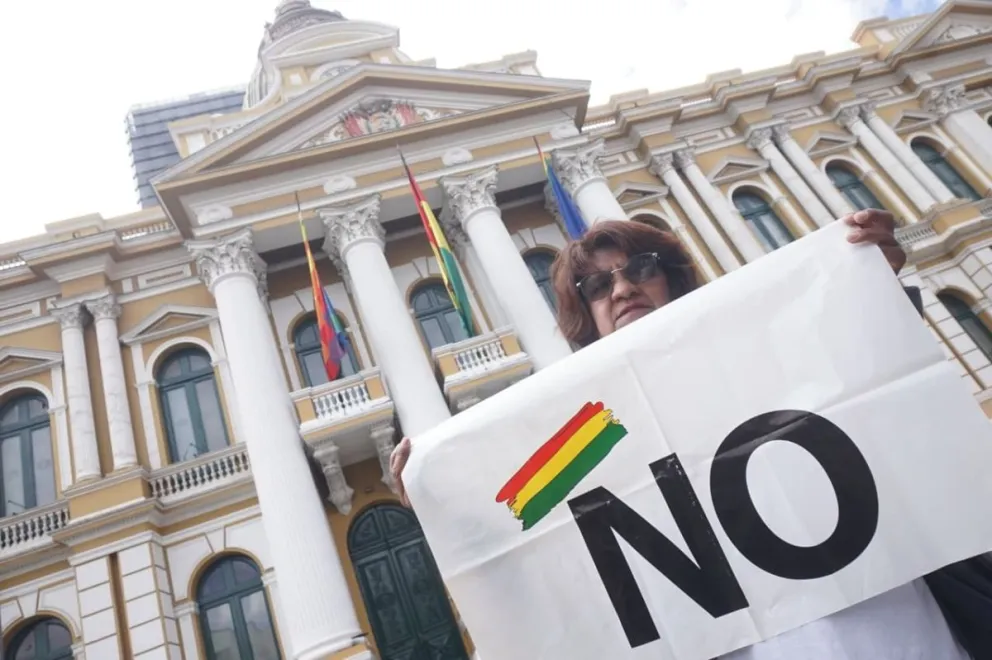
The “No” to reelection won that time with 51.30%, representing a difference of 136,382 votes compared to the second option. Ten years have passed since that consultation, whose results dealt a blow to the reelection ambitions of the blue party and then-President Evo Morales. That date became the origin and the prelude to the transition from the regime of the Movimiento Al Socialismo (MAS) to the administration of President Rodrigo Paz.
The referendum
Those who promoted the referendum sought to amend Article 168 of the Political Constitution of the State (CPE), which establishes that the presidential term is five years and that the president may be reelected only once consecutively. Those who pushed for that consultation aimed for the president to be reelected “for two consecutive terms.”
The “No” to that possibility obtained 2,682,517 votes (51.3%); meanwhile, the “Yes” received 2,546,135 (48.7%). “Now, perhaps we have lost a battle, but not the war,” Morales acknowledged one day after the defeat.
With that result, the purpose of modifying the CPE for reelection ambitions was brought to a halt. However, the attempt to place Morales on the ballot did not cease and, in the end, he was enabled thanks to a 2017 constitutional ruling, which was promoted by MAS legislators and some allies.
Lesson in democracy
The president of the Senate, Diego Ávila, maintained that in the February 21, 2016 referendum a lesson in democracy was delivered, which was complemented by the 2019 uprising following the failed elections of that year.
“On February 21, 2016, the Bolivian people gave the entire political establishment a lesson in democracy that was complemented years later with the greatest popular uprising in our history against the one who sought to disregard the unappealable ruling of the ballot boxes,” he stated.
Samuel Doria Medina, leader of the Unidad alliance, said that the struggle for democracy began with that referendum: “Everything we did in 2019 against the fraud and in 2025 to put an end to the MAS had its original reference in 21-F. The struggle for the pluralist democracy that we have won in the country began precisely a decade ago, on February 21, 2016.”
Meanwhile, former president Jorge Tuto Quiroga stated that ten years ago “almost all democrats” began “the end of the evista tyranny when Bolivia said No.” Quiroga also recalled that five years ago the Inter-American Court of Human Rights issued Advisory Opinion OC-28/21, which establishes that indefinite reelection does not constitute a human right. With that — said Quiroga — “the door was closed forever to the ‘eternal one.’”
Zvonko Matkovic, departmental assembly member and candidate for vice governor of Santa Cruz, maintained that 21F was not just a date, but the day when “Bolivia woke up” and decided to defend its democracy with courage.
“Ten years ago a civic struggle began that united thousands of Bolivians around a shared sentiment: to make the voice of the people be respected and to defend the democratic values that sustain our future,” he expressed.
Por Pablo Peralta Miranda, Visión 360:
Una década del 21F, el referendo que le dio un revés a Evo y marcó el inicio del declive del MAS en el poder
El 21 de febrero de 2016 se convirtió en el preámbulo de la transición del régimen del Movimiento Al Socialismo a la administración del presidente Rodrigo Paz.
Aquella jornada, el entonces vicepresidente Álvaro García Linera llegó al recinto junto a su esposa y su mascota, además de una treintena de militantes del partido azul. Tras sufragar, se marchó del lugar, pero cuando lo hizo sucedió algo: se fue no solo en medio de vítores, sino también entre silbidos en su contra, según los registros de prensa. Por la noche, los resultados sellarían el devenir de la próxima década. El calendario marcaba el 21 de febrero de 2016.
El “No” a la reelección ganó aquella vez con el 51,30%, lo que representó una diferencia de 136.382 votos respecto a la segunda opción. Han pasado 10 años de aquella consulta, cuyos resultados dieron un revés a las pretensiones reeleccionistas del partido azul y del entonces presidente Evo Morales. Aquella fecha se convirtió en el origen y la antesala de la transición del régimen del Movimiento Al Socialismo (MAS) a la administración del presidente Rodrigo Paz.
El referendo
Los impulsores del referendo apuntaban a modificar el artículo 168 de la Constitución Política del Estado (CPE), que dispone que el periodo de mandato del presidente es de cinco años y que puede ser reelecto por una sola vez de manera continua. Quienes promovieron esa consulta buscaban que el mandatario pudiera ser reelecto “por dos veces de manera continua”.
El “No” a esa posibilidad logró 2.682.517 votos (51,3%); en cambio, el “Sí” obtuvo 2.546.135 (48,7%). “Ahora, será que hemos perdido una batalla, pero no la guerra”, reconoció Morales un día después de la derrota.
Con ese resultado, el propósito de modificar la CPE por afanes reeleccionistas fue frenado en seco. Sin embargo, el intento de poner a Morales en la papeleta no cesó y, al final, fue habilitado gracias a una resolución constitucional de 2017, que fue impulsada por legisladores masistas y algunos afines.
Lección de democracia
El presidente del Senado, Diego Ávila, sostuvo que en el referendo del 21 de febrero de 2016 se dio una lección de democracia, la cual se complementó con la rebelión de 2019, tras las elecciones fallidas de ese año.
“El 21 de febrero del 2016, el pueblo boliviano dio a toda la institucionalidad política una lección de democracia que se complementó años después con la mayor rebelión popular de nuestra historia contra quien quiso desconocer el fallo inapelable de las urnas”, expresó.
Samuel Doria Medina, líder de la alianza Unidad, sostuvo que la lucha por la democracia comenzó en ese referendo: “Todo lo que hicimos en 2019 en contra el fraude y en 2025 para acabar con el MAS tuvo su referente original en el 21-F. La lucha por la democracia pluralista que hemos ganado en el país comenzó hace justamente una década, el 21 de febrero de 2016”.
En tanto, el expresidente Jorge Tuto Quiroga manifestó que hace diez años “casi todos los demócratas” dieron inicio “al fin de la tiranía evista cuando Bolivia dijo No”. Quiroga también recordó que hace cinco años la Corte Interamericana de Derechos Humanos emitió la opinión consultiva OC-28/21, que dispone que la reelección indefinida no constituye un derecho humano. Con ello —dijo Quiroga— se le cerró “la puerta para siempre al ‘eterno’”.
Zvonko Matkovic, asambleísta departamental y candidato a vicegobernador de Santa Cruz, sostuvo que el 21F no fue solo una fecha, sino el día en que “Bolivia despertó” y decidió defender su democracia con valentía.
“Hace 10 años comenzó una lucha ciudadana que unió a miles de bolivianos alrededor de un mismo sentimiento: hacer respetar la voz del pueblo y defender los valores democráticos que sostienen nuestro futuro”, expresó.

 Bolivian Thoughts | Pensamientos Bolivianos (Bilingual/Bilingüe)