
The election of Rodrigo Paz provoked immediate reactions in the foreign exchange markets: the quotation in the parallel market is rising.
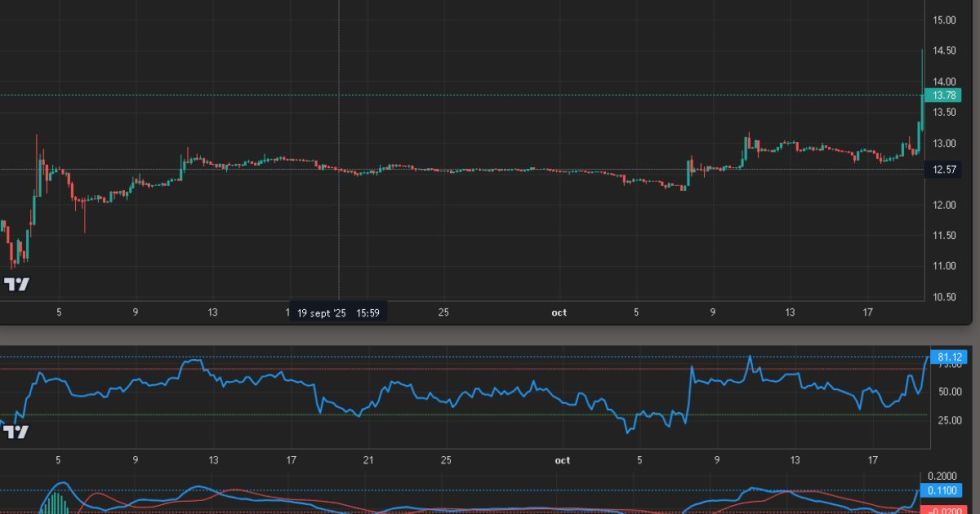
Evolution of the UDST. Photo: Correo del Sur
The confirmation of Rodrigo Paz’s victory in the second round triggered visible movements in the Bolivian currency market. Although the official exchange rate administered by the Central Bank of Bolivia (BCB) remains immovable, the quotation in the parallel market — the unofficial reference used by people when seeking liquidity — has shot up and reached fourteen bolivianos for buying, although it later dropped to Bs 13.50.
According to the portal Dólar Bolivia Hoy, the parallel exchange rate was at Bs 14 for buying and Bs 13.90 for selling around 9:00 p.m. Just one day earlier, on Saturday, the rate remained around Bs 12.80. A similar behavior was observed on the page Dólar Blue Bolivia, where the buying price reached Bs 13.95 and the selling price Bs 13.85. During the week prior to the runoff, the quotation showed a relatively stable trend, as it did not exceed Bs 13.
Why did the unofficial exchange rate react? The causes are multiple and verifiable: During the campaign and in public statements, Paz showed himself willing to push for more pro-market reforms than the outgoing government, with measures that could open the economy and modify the management of the exchange rate and subsidies. That expectation affects the market amid uncertainty over the transition and potential adjustments in macroeconomic policies.
Bolivia comes to this election with major economic pressures: high inflation, falling hydrocarbon revenues and the existence of a parallel market with quotations far above the official rate. International and investment reports had already warned of a significant gap between the official and parallel rates and of tension in the reserves. In markets with these characteristics, a political shock raises demand for dollars and pushes the parallel quotation upward.
Companies and savers who fear volatility or rapid changes in the rules (subsidies, price controls, access to foreign currency) usually buy dollars at the slightest sign of uncertainty. That behavior does not necessarily imply a permanent flight, but it does raise the quotation in the short term, especially through informal channels. International media also covered the expectation of reforms that could entail fiscal or monetary adjustments, which reinforces that behavior.
The quotations published by sites specialized in the “blue dollar” and the parallel market showed upward movements after the election day; local platforms of the parallel market reported an increase in the quotation, a habitual response to major political changes. These platforms act as a thermometer of immediate demand for foreign currency outside the banking circuit.
Analysts agree that the reaction of the parallel dollar is more an immediate response to uncertainty and risk hedging than the uncontestable start of a permanent exchange crisis. Nevertheless, the risk of fiscal issuance, financing needs or reserve constraints could turn a temporary rise into a larger-scale problem if stabilization measures are not adopted. The critical point will be the first economic decisions of the incoming government.
The new government must send clear signals on fiscal targets, spending control and the management of the fuel subsidy to diminish panic and ease pressure on the parallel dollar. Although the rise of the dollar in the parallel market after the victory of Rodrigo Paz reflects a rational reaction by economic agents to a political change that may entail economic reforms, for now it is a sign of uncertainty and risk coverage rather than confirmation of an immediate exchange collapse.
The difference between the official and parallel quotations, the health of the reserves and, above all, the clarity of the new government’s first measures will determine whether the adjustment is transitory or whether it forces deeper interventions. Rodrigo Paz has surrounded himself with a solid economic team that can restore certainty to the markets and the population. A strong, clear initial signal will allow the parallel dollar quotation to decrease.
by Boris Bueno
La elección de Rodrigo Paz provocó reacciones inmediatas en los mercados cambiarios: sube la cotización en el mercado paralelo.
Evolución del UDST. Foto: Correo del Sur
La confirmación de la victoria de Rodrigo Paz en la segunda vuelta despertó movimientos visibles en el mercado de divisas boliviano. Si bien el tipo de cambio oficial administrado por el Banco Central de Bolivia (BCB) continúa inamovible, la cotización en el mercado paralelo – la referencia no oficial que usa la gente cuando busca liquidez— se ha disparado y llegó a los catorce bolivianos para la compra, aunque posteriormente bajó hasta los Bs 13,50.
De acuerdo con el portal Dólar Bolivia Hoy, el tipo de cambio paralelo se ubicó en Bs 14 para la compra y Bs 13,90 para la venta alrededor de las 21.00 horas. Solo un día antes, el sábado, la cotización se mantenía en torno a Bs 12,80. Un comportamiento similar se observó en la página Dólar Blue Bolivia, donde el precio de compra alcanzó los Bs 13,95 y el de venta Bs 13,85. Durante la semana previa al balotaje, la cotización mostró una tendencia relativamente estable, porque no sobrepasó los Bs 13.
¿Por qué reaccionó el tipo de cambio no oficial? Las causas son múltiples y contrastables: Durante la campaña y en declaraciones públicas, Paz se mostró dispuesto a impulsar reformas de signo más promercado que el Gobierno saliente, con medidas que podrían abrir la economía y modificar el manejo de tipo de cambio y subsidios. Esa expectativa afecta al mercado ante la incertidumbre sobre la transición y posibles ajustes en políticas macroeconómicas.
Bolivia llega a esta elección con presiones económicas importantes: alta inflación, caída de ingresos por hidrocarburos y la existencia de un mercado paralelo con cotizaciones muy por encima del tipo oficial. Informes internacionales y de inversión ya advirtieron sobre una brecha importante entre el tipo oficial y el mercado paralelo y sobre tensiones en las reservas. En mercados con estas características, un shock político eleva la demanda de dólares y presiona al alza la cotización paralela.
Las empresas y ahorristas que temen volatilidad o cambios rápidos en las reglas (subsidios, control de precios, acceso a divisas) suelen comprar dólares al menor signo de incertidumbre. Ese comportamiento no implica necesariamente una fuga permanente, pero sí eleva la cotización en el corto plazo, especialmente en canales informales. Los medios internacionales cubrieron además la expectativa de reformas que podrían implicar ajustes fiscales o monetarios, lo que refuerza esa conducta.
Las cotizaciones que publican sitios especializados en el “dólar blue” y el mercado paralelo mostraron movimientos al alza tras la jornada electoral; plataformas locales del mercado paralelo informaron aumento en la cotización, una respuesta habitual ante cambios políticos de calado. Estas plataformas actúan como termómetro de la demanda inmediata de divisas fuera del circuito bancario.
Los analistas coinciden en que la reacción del dólar paralelo es más una respuesta inmediata a la incertidumbre y a las coberturas de riesgo que el inicio incontestable de una crisis cambiaria permanente. No obstante, el riesgo de emisiones fiscales, necesidades de financiamiento o restricciones en las reservas podría transformar una subida temporal en un problema de mayor envergadura si no se adoptan medidas de estabilización. El punto crítico serán las primeras decisiones económicas del gobierno entrante.
El nuevo gobierno debe dar señales claras sobre metas fiscales, control del gasto y manejo del subsidio de los combustibles para disminuir el pánico y relajar la presión sobre el dólar paralelo. Si bien la subida del dólar en el mercado paralelo tras la victoria de Rodrigo Paz refleja una reacción racional de agentes económicos ante un cambio político que puede implicar reformas económicas, por ahora, es una señal de incertidumbre y cobertura de riesgo más que la confirmación de un colapso cambiario inmediato.
La diferencia entre la cotización oficial y la paralela, la salud de las reservas y, sobre todo, la claridad de las primeras medidas del nuevo gobierno definirá si el ajuste es transitorio o si obliga a intervenciones más profundas. Rodrigo Paz se ha rodeado de un equipo económico sólido que puede devolver la certidumbre a los mercados y a la población. Una señal clara fuerte de inicio permitirá que la cotización del dólar paralelo disminuya.
por Boris Bueno

 Bolivian Thoughts | Pensamientos Bolivianos (Bilingual/Bilingüe)