
By Jorge Soruco, Vision 360:
Apps Make People’s Lives Easier
They make transactions easier, prevent users from carrying large sums of cash, and help when they “run out of change.” A foundation points out that this business keeps growing.

A reference image of mobile wallet use for purchases. PHOTO: Social media
It’s time to pay. It doesn’t matter if it’s for food, a movie, or even a minibus fare — it can always happen that the user realizes they’ve run out of cash, doesn’t have the exact amount, and the vendor has no change… or simply didn’t want to leave home with too much money in their pockets. In the past, that was a daily problem. Today, instead, it’s enough to ask: “Caserita, can I yapear you?” — and mobile wallets come to the rescue for both parties.
In Bolivia, there are at least eight mobile wallets, and data show that operations have grown remarkably in recent years. Users highlight that these tools are convenient and help avoid problems related to cash handling and lack of change.
“We found that mobile wallets are among the most common startups (digital ventures). It’s a type of business that, to date, has yielded good returns and continues to grow,” said Rolando Sahonero, program director at Fundación para la Producción (FUNDA-PRÓ), one of the institutions involved in mapping this type of initiative.
It’s not surprising, since according to a study conducted late last year, the use of electronic payment instruments in Bolivia experienced unprecedented growth — especially in payments through QR codes and mobile wallets. So much so that even state institutions like the Plurinational Legislative Assembly and the Cultural Foundation of the Central Bank of Bolivia now have their own applications of this kind.
3.1 million wallets were enabled by 2024, according to official records from the Financial System Supervisory Authority (ASFI).
According to data from the Central Bank of Bolivia (BCB), this payment method grew by 415% in nearly four years, consolidating itself as a key tool for modernizing the financial system and promoting inclusion among wide sectors of the population.
“Mobile wallets, another widely used instrument, also grew notably. In 2021 there were 54 million operations through this medium; by October the figure had climbed to 278 million — a 415% increase,” stated a BCB report in December last year.
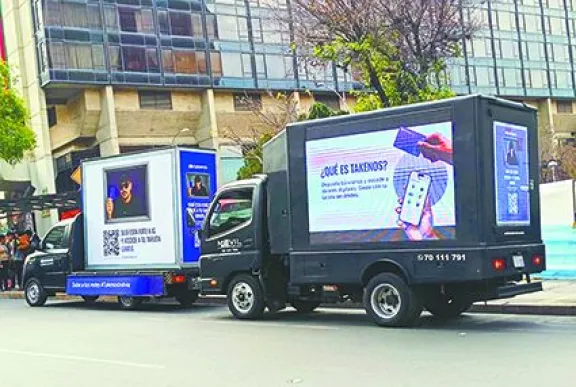
For the Friedrich-Ebert-Stiftung (FES) Foundation in Bolivia, there are two main trends regarding the digitalization of financial transactions: the first is the growing emergence of new business models, and the second, the increasing interest of regulators in ensuring the security, reliability, and affordability of these payment systems.
The second trend refers to a strong emphasis on interconnection and interoperability within the payment process.
415% growth in the use of mobile wallets, according to records from the Central Bank of Bolivia between 2021 and 2024.
They’re used not only for service payments but also for salary deposits and management of both institutional and personal finances. There was a time when the company Tigo, for instance, advertised its system as a tool to help individuals and families control their spending. It also helps avoid the eternal fight over “small change” with vendors.
“There’s no other way — you’ve got to have your Yape, your Togo, or your Yalo. That way you avoid a lot of problems, like finding someone to break a large bill or preventing your employees from ‘killing’ your change,” said Don Nicolás, a 52-year-old street vendor who sells movies.
“I don’t like it, I’m too old and don’t trust those gadgets. But my daughter taught me how to use it, and I must admit it’s very convenient. Plus, I no longer argue with the casera about paying for some bread with a 10 boliviano bill,” countered Claudia Mamani, a 60-year-old shopper.
What Is a Mobile Wallet and How Does It Work?
Technology within reach.
A mobile wallet, also called a digital wallet or e-wallet, is an app for smart devices like cell phones or tablets that allows users to make secure and fast transactions in physical stores, online, and within other apps. It eliminates the need to carry a physical wallet.
“It’s a type of business that, to date, has generated good returns and continues to grow.”
— Rolando Sahonero
Some devices come with built-in wallet apps, but most users download their preferred option. These programs vary: some require users to enter a specific amount, while others stay constantly connected to their bank accounts.
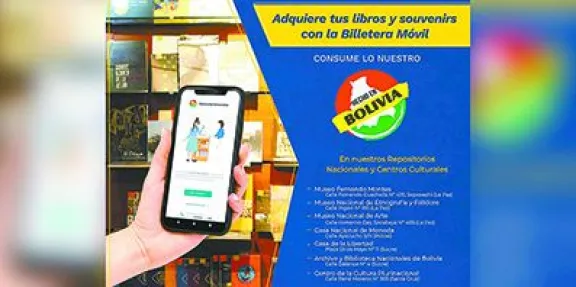
According to Bolivian law, a mobile wallet is a mobile payment service that can be offered by Mobile Payment System Companies (ESPM) or by financial entities authorized by the Financial System Supervisory Authority (ASFI).
Both ESPMs and financial institutions must meet minimum operational security requirements for mobile wallets, established by the BCB, in order to ensure standards and best practices in payment systems.
There are even platforms and businesses that include mobile wallets as an additional feature to make payments easier — for example, Pedidos Ya, where users can accumulate credit to pay more conveniently.
“There’s a growing interest from regulators in maintaining the security, reliability, and affordability of these payment systems.”
— Friedrich-Ebert-Stiftung Report
The ASFI notes that mobile wallets have become an innovative and convenient solution for managing financial transactions. Currently, there are over 3.1 million active wallets, reflecting a remarkable growth in user adoption of this technology, the institution highlights in a report.
But despite this success, Sahonero warns that permanence isn’t guaranteed, since the field is highly volatile. “What must be understood is that in the world of tech startups, one can grow very fast but also fall just as quickly. This is true for mobile wallets, online sales platforms, and cryptocurrency systems.”
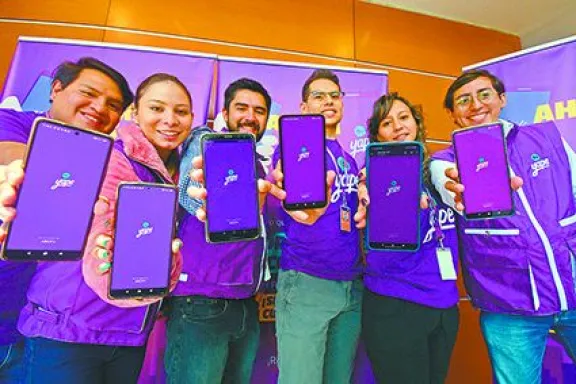
According to official data, the mobile wallets currently operating in Bolivia, independently, are:
- Bille BNB, a service of Banco Nacional de Bolivia that allows electronic money transfers.
- Yape BCP, from Banco de Crédito del Perú, one of the most popular, used by over 500,000 businesses.
- Yolo Pago, from Banco Ganadero, allows cash withdrawals and deposits at more than 600 Yolo Points in Bolivia; it also supports remittance payments, transfers to other bank accounts or wallets, and more.
- Altoke, from BancoSol, a digital solution designed to boost the growth of microbusinesses. It allows QR payments, income and expense tracking.
- Yasta, from Banco Unión, enables money loading, cardless ATM withdrawals, ID renewal via QR payment, and sending money to other wallets or phone contacts.
- Movilink, from Banco Bisa, lets users digitize debit and credit cards on their phone.
- Zaz, the mobile wallet from Banco Económico.
- Tigo Money, which allows users to load specific amounts for later use and pay for services, among others.
- And the State-run “Consume lo Nuestro”, which shows the growing number of apps aiming to connect suppliers and consumers.
The 4 Advantages of Using a Mobile Wallet
SALARY. For the State, it simplifies salary and bonus deposits.
EASE. Financial transactions become simpler and faster — just a few taps and the debt is settled.
SECURITY. Users don’t need to carry cash or any kind of card. Systems are also protected.
UNIVERSALITY. Vendors don’t need card readers, making it suitable for payments to street vendors and public transport.
Por Jorge M Soruco, Vision 360:
Las aplicaciones facilitan la vida de la gente
Facilitan las transacciones, evitan que el usuario lleve grandes sumas en efectivo y lo ayudan cuando se “queda sin suelto”. Una fundación señala que este negocio no deja de crecer.
Una imagen referencial del uso de las billeteras móviles para hacer compras. FOTO: Redes sociales
Llega el momento de pagar. No importa si se trata de comida, una película o incluso el pasaje de un minibús: siempre puede ocurrir que el usuario se dé cuenta de que se quedó sin efectivo, no tiene el monto exacto y el proveedor no tiene cambio… o simplemente no quiso salir de casa con mucho dinero en los bolsillos. Antes, era un problema diario. Hoy, en cambio, basta con preguntar: “Caserita, ¿te puedo yapear?”, y las billeteras móviles acuden al rescate de ambos.
En Bolivia existen al menos ocho billeteras móviles y los datos muestran que las operaciones han crecido de forma notable en los últimos años. Por su parte, los usuarios destacan que este tipo de herramientas son cómodas y ayudan a evitar problemas relacionados con el uso de dinero en efectivo y la falta de cambio.
“Descubrimos que las billeteras móviles se encuentran entre las startup (emprendimientos del ámbito digital) más comunes. Es un tipo de negocio que, hasta la fecha, ha dado un buen rédito y que siempre va en crecimiento”, aseguró Rolando Sahonero, director de programas de la Fundación para la Producción (FUNDA-PRÓ), una de las instituciones que trabajó en la realización de un mapeo de este tipo de iniciativas.
No es sorprendente, ya que, según un estudio realizado a finales del año pasado, en Bolivia el uso de instrumentos electrónicos de pago experimentó un aumento sin precedentes, especialmente en el pago mediante código QR y el uso de billeteras móviles. Tanto es así, que incluso instituciones estatales como la Asamblea Legislativa Plurinacional y la Fundación Cultural del Banco Central de Bolivia cuentan ya con sus propias aplicaciones de este tipo.
3,1 millones de billeteras fueron habilitadas hasta 2024, según los registros oficiales de la Autoridad de Supervisión del Sistema Financiero (ASFI).
Según datos del Banco Central de Bolivia (BCB), este medio de pago registró un crecimiento del 415% en casi cuatro años, consolidándose como una herramienta clave para la modernización del sistema financiero y la inclusión de amplios sectores de la población.
“Las billeteras móviles, otro de los instrumentos de amplio uso, también crecieron notablemente. En 2021 se registraron 54 millones de operaciones a través de este medio; a octubre la cifra trepó a 278 millones, que representa un 415% de crecimiento”, indicó un informe del BCB, en diciembre del año pasado.
Para la Fundación Friedrich-Ebert-Stiftung (FES) en Bolivia, existen dos tendencias respecto a la digitalización de las transacciones financieras: la primera es la creciente aparición de nuevos modelos de negocio y la segunda, el creciente interés de los reguladores por garantizar la seguridad, la confiabilidad y un costo asequible de estos sistemas de pago.
La segunda se refiere al fuerte énfasis en la interconexión e interoperabilidad de los sistemas dentro del proceso de pagos.
415% de crecimiento en el uso de billeteras móviles, según registros que realizó el Banco Central de Bolivia entre 2021 y 2024.
No solo sirve para el pago de servicios, sino también para el depósito de salarios y el control de las finanzas institucionales y personales. Hubo un tiempo en que la empresa Tigo, por ejemplo, publicitaba su sistema como una herramienta para el control de gastos de la persona o la familia. Además, ayuda a evitar la eterna pelea por el “solo sueltitos” con los proveedores.
“No hay otra, tienes que tener tu Yape, tu Togo o tu Yalo. Así te evitas muchos problemas, ya sea buscar a alguien que te cambie un billete grande o evitar que tus empleados te ‘maten’ el cambio”, aseguró don Nicolás, un vendedor gremial de películas de 52 años.
“No me gusta, soy muy vieja y no confío mucho en esos bichos. Pero mi hija me enseñó a usarlo y debo reconocer que es muy cómodo; además, ya no tengo que pelearme con la casera por pagar unos panes con un billete de 10”, contrarrestó Claudia Mamani, una compradora de 60 años.
¿Qué es una billetera móvil y cómo funciona?
Tecnología al alcance.
Una billetera móvil, también llamada billetera digital o monedero móvil, es una aplicación para dispositivos inteligentes como celulares o tabletas que permite realizar transacciones seguras y rápidas en tiendas físicas, en línea y dentro de otras aplicaciones. Esto elimina la necesidad de que el usuario cargue con una billetera física.
“Es un tipo de negocio que, hasta la fecha, ha generado buenos rendimientos y que continúa en constante crecimiento”.
Rolando Sahonero
Algunos dispositivos vienen con aplicaciones de este tipo instaladas de fábrica, pero la mayoría de los usuarios descargan la que prefieren. Los programas varían entre sí: algunos requieren que el usuario ingrese el monto específico, mientras que otros mantienen una conexión constante con las cuentas.
De acuerdo con la legislación boliviana, la billetera móvil es un servicio de pago móvil que puede ser ofrecido por Empresas de Sistema de Pago Móvil (ESPM) o por entidades financieras autorizadas por la Autoridad de Supervisión del Sistema Financiero (ASFI).
Tanto las ESPM como las entidades financieras deben cumplir con requerimientos operativos mínimos de seguridad para billeteras móviles, establecidos por el BCB, con el fin de aplicar estándares y buenas prácticas en los sistemas de pago que operan.
Incluso hay plataformas y otros negocios que incluyen la billetera móvil como una función adicional para facilitar los pagos, como por ejemplo Pedidos Ya, en el que los usuarios acumulan saldo para realizar pagos más fácilmente.
“Hay un creciente interés de los reguladores para mantener la seguridad, confiabilidad y un costo accesible de estos sistemas de pagos”.
Informe Friedrich-Ebert-Stiftung
La ASFI señala que las billeteras móviles se han convertido en una solución innovadora y conveniente para la gestión de transacciones financieras. Actualmente, hay más de 3,1 millones de billeteras habilitadas, lo que refleja un notable crecimiento en la adopción de esta tecnología por parte de los usuarios, destaca en un informe la institución.
Pero, pese a ese éxito, Sahonero advierte con que no es garantía de permanencia, ya que este campo es muy volátil. “Lo que hay que comprender es que en el mundo de las start up tecnológicas se puede crecer muy rápido, pero también se puede caer así de veloz. Esto se registra tanto en las billeteras móviles como en las plataformas de venta y de criptomonedas”.
Según datos oficiales, las billeteras móviles que operan en Bolivia, de forma independiente, son: Bille BNB, un servicio del Banco Nacional de Bolivia que permite transferir dinero electrónico; Yape BCP, del Banco de Crédito del Perú, una de las más populares, con más de 500 mil negocios que la utilizan.
Yolo pago, del Banco Ganadero, permite retirar y depositar dinero en los más de 600 Puntos Yolo en Bolivia; además, posibilita el cobro de remesas, transferencias a cuentas de otros bancos o a billeteras móviles de manera segura y otros beneficios.
Altoke, de BancoSol, es una solución digital, diseñada para impulsar el crecimiento de los negocios de las empresarias y empresarios de la microempresa. Permite pagos y cobros con QR, visualizar ingresos y egresos.
Yasta, del Banco Unión, permite cargar dinero, retirar dinero de cajeros sin tarjeta, renovar la cédula de identidad mediante pago QR, enviar dinero a otra billetera móvil y enviar dinero a los contactos de teléfono móvil.
Movilink, del Banco Bisa, permite digitalizar tarjetas de débito y crédito en celular. Zaz, por otro lado, es la billetera móvil del Banco Económico.
Tigo Money, que permite cargar montos determinados para posterior uso. Permite pago de servicios, entre otros. Y el Estado tiene Consume lo nuestro, lo que demuestra que el número va en aumento, siempre buscando llegar a proveedores y compradores.
Las 4 ventajas de utilizar una billetera móvil
1 FACILIDAD. Las transacciones financieras se vuelven más sencillas y rápidas. Unas simples operaciones con el dedo y la deuda es saldada.
2 SEGURIDAD. El usuario no necesita cargar dinero en efectivo, ni tarjetas de ningún tipo. Asimismo, los sistrmas están protegidos.
3 UNIVERSALIDAD. El vendedor no necesita equipos de lectura de tarjetas, por lo que sirve para pagar a gremiales y transporte urbano.
4 SALARIO. En el caso del estado, permite facilidad a la hora de depositar salarios o bonos correspondientes.

 Bolivian Thoughts | Pensamientos Bolivianos (Bilingual/Bilingüe)