
By Fernando Chávez, Vision 360:
Leco Indigenous People Recover the Population of a Bolivian Endemic Bird Believed Extinct for Nearly a Century
Two of these birds appeared before the eyes of Remmy Huanca as he rested under the shade of a tree in the Bolivian Amazon.
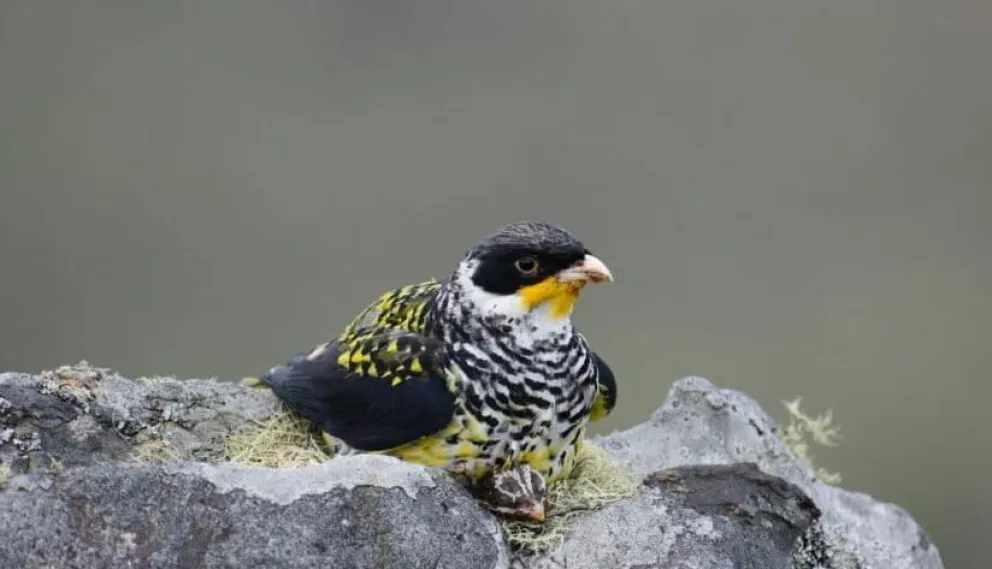
A specimen of the small bird known as the palkachupa cotinga. Photo: Mongabay
The Palkachupa Program, coordinated by the environmental organization Armonía along with five communities of the Leco people, managed to establish, through 2034, Community Protection Areas that safeguard 23.6% of the habitat of a small bird with a distinctive forked tail known as the palkachupa cotinga.
Remmy Huanca discovered that this species, endemic to Bolivia, had been believed extinct for nearly a century, and its population was so small that seeing one was almost a miracle. That “miracle” happened in 2022, when, at 33 years old and without even imagining it, two of these birds appeared before his eyes while he rested in the shade of a tree in the Bolivian Amazon.
The Leco Indigenous people’s philosophy of life is based on the concept of “guardians and nurturers.” They are protectors and companions of the entire natural environment around them. The Leco decided to become guardians of the palkachupa (Phibalura boliviana) when they discovered it was endangered and that, besides being a bird found only in Bolivia, it lives exclusively in a small region of the Apolo municipality in La Paz.
The palkachupa was rediscovered in 2000, after nearly a century without any sighting records, and from then until August 2025, its population increased from around 600 individuals to more than 1,900.
The Leco included the palkachupa in their Life Plan, a social organization tool that ensures its protection, after making it the emblem of their Indigenous nation.
“The palkachupa is a natural icon of the Leco people; it’s a bird that represents us because it exists only in Apolo,” says Huanca, an Indigenous leader of the Leco people.
Huanca, who is also an agronomist and technician with Armonía, recalls that the palkachupas he saw seemed tame, as they remained still while he observed them from different angles. “It was really beautiful to see them,” the 36-year-old Indigenous leader told Mongabay Latam.
For Dionisio Gutiérrez, the capitán grande (highest authority) of the Leco people, the story was different. He recounts that as a child, he used to see the palkachupa while collecting firewood in the forest.
He confesses that he was among those who tried to catch it as a game, unaware that it was a unique species in his region and even less that it was endangered. “Within our territory, we are fortunate to have very rich biodiversity, which is part of our daily life, our surroundings, and our subsistence,” he affirms.
According to Mongabay, the Palkachupa Program began in 2022 and managed to establish 1,888 hectares of Community Protection Areas within their Original Community Land (TCO), through agreements between the Central Organization of the Leco People of Apolo (CIPLA) and two Quechua farming communities. With this progress, they were able to protect, through 2034, 23.6% of the palkachupa’s breeding habitat.
Por Fernando Chávez Virreira, Vision 360:
Indígenas leco recuperaron la población de un ave endémica de Bolivia que se creía extinta durante casi un siglo
Dos estas se aparecieron frente a los ojos de Remmy Huanca, mientras descansaba bajo la sombra de un árbol en la Amazonia boliviana.
Un ejemplar de la pequeña ave conocida como palkachupa cotinga. Foto: Mongabay
El Programa Palkachupa, coordinado por la organización ambiental Armonía junto con cinco comunidades del pueblo leco, logró establecer, hasta 2034, las Áreas de Protección Comunitaria que resguardan el 23,6 % del hábitat de una pequeña ave con una llamativa cola bifurcada conocida como palkachupa cotinga.
Remmy Huanca descubrió que esta especie, endémica de Bolivia, se creyó extinta durante casi un siglo, por lo que su población era tan reducida que verla era casi un milagro. Y ese “milagro” ocurrió en 2022, a sus 33 años, cuando, sin siquiera imaginarlo, se aparecieron frente a sus ojos dos de estas aves, mientras descansaba bajo la sombra de un árbol en la Amazonia boliviana.
La filosofía de vida del pueblo indígena leco se sustenta en el concepto “cuidantes y criantes”. Ellos son los protectores y acompañantes de todo el entorno natural que los rodea. Los lecos decidieron convertirse en guardianes de la palkachupa (Phibalura boliviana) cuando descubrieron que estaba en peligro de extinción y que, además de ser un ave que solo habita en Bolivia, vive únicamente en una pequeña región del municipio de Apolo, en La Paz.
La palkachupa fue redescubierta en 2000, tras casi un siglo de no tener registros de avistamientos, y desde entonces hasta agosto de 2025, la población pasó de cerca de 600 individuos a más de 1.900.
Los leco incluyeron a la palkachupa en su Plan de Vida, un instrumento de organización social que permite su protección, tras convertirla en el í¿icono de la nación indígena.
“La palkachupa es un icono natural del pueblo leco, es un ave que nos representa porque solo existe en Apolo”, dice Huanca, indígena y dirigente leco.
Huanca, quien además es agrónomo y técnico de Armonía, recuerda que las palkachupas que vio parecían dóciles porque permanecieron inmóviles mientras las observaba desde diferentes ángulos. “Realmente fue bonito conocerlas”, le dijo a Mongabay Latam el dirigente indígena, de 36 años.
Para Dionisio Gutiérrez, capitán grande del pueblo leco, la máxima autoridad de esta nación indígena, la historia fue diferente. Cuenta que cuando era niño veía a la palkachupa mientras recogía leña por el bosque.
Confiesa que era de los que buscaba atraparla como juego, sin saber que era una especie única en su región y menos que estaba en peligro de extinción. “Dentro del territorio tenemos la dicha de tener una biodiversidad bastante amplia que es parte de nuestra vivencia, de nuestro entorno y de nuestra subsistencia”, afirma.
Según informa el sitio Mongabay, en 2022 inició el Programa Palkachupa, logró establecer 1.888 hectáreas de Áreas de Protección Comunitaria dentro de su Tierra Comunitaria de Origen (TCO), a través de acuerdos entre la Central Indígena del Pueblo Leco de Apolo (CIPLA) y dos comunidades campesinas quechuas. Con ese avance, se pudo resguardar, hasta 2034, el 23,6 % del hábitat reproductivo de la palkachupa.

 Bolivian Thoughts | Pensamientos Bolivianos (Bilingual/Bilingüe)