
By EFE, Vision 360:
Açaí produced by Tacana Indigenous people in the Bolivian Amazon is sold across from the White House in Washington
They affirm that the “trilogy of producers–private company–FAO” has already allowed Bolivian products to be sold in the form of ice cream and smoothies across from the White House.
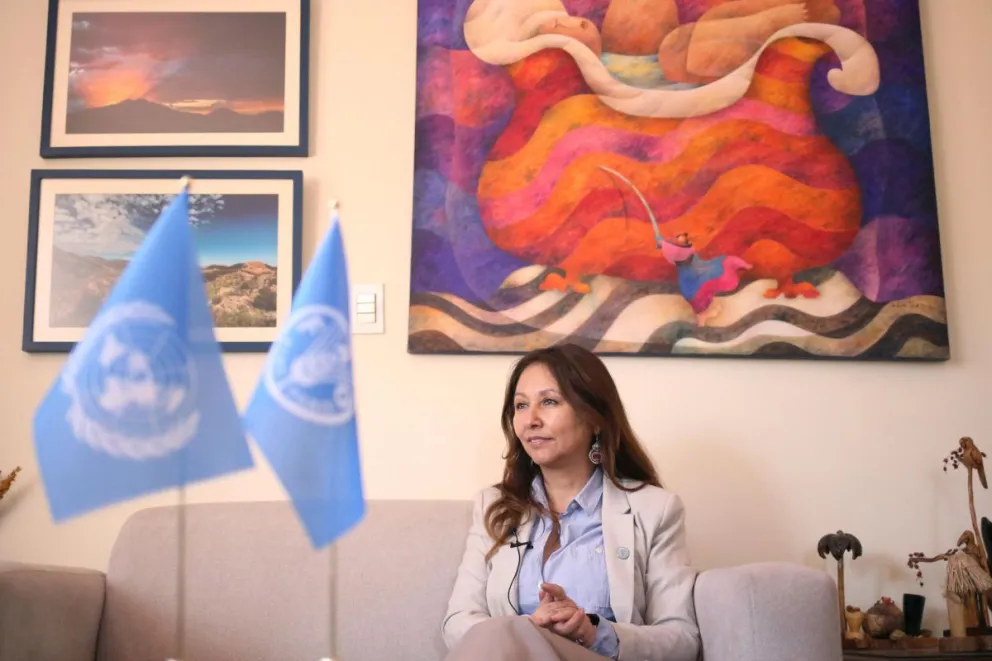
FAO’s deputy representative in Bolivia, Rosse Noda. Photo: EFE
Wild açaí harvested and sustainably processed by Indigenous people of the Tacana nation in their territories in the Bolivian Amazon has found a market in Washington, where the fruit began arriving this month thanks to a private initiative supported by organizations such as the FAO.
The sale was finalized through a direct export contract between the U.S. franchise Fruitive, dedicated to offering healthy and organic food, and the Bolivian company Biofood Srl, which works with Indigenous communities to bring Amazonian wild fruits abroad.
The agreement is backed by the United Nations Food and Agriculture Organization (FAO) and WWF Bolivia, within the framework of the Sustainable Forests project financed by the European Union’s Environmental Platform and Sweden.
The journey to Washington begins in Tacana territories, in areas such as the north of the department of La Paz, where communities like Santa Rosa de Maravilla, Tumupasa, and Carmen Pecha are located.
In this last community lives Leónidas Zambrana, a producer who emphasized that this opening of the U.S. market “has been an opportunity” for them, and noted that the businesspeople themselves were able to see firsthand the potential of Bolivian açaí.
“If they are going to buy (…) for us that is good, because harvesting gives work to the men and the plant where they pulp (the fruit) also gives work to the women,” something important “today more than ever, because of the crisis,” Zambrana told EFE.
The Tacana territory in Carmen Pecha covers an area of 11,998 hectares, of which 350 are part of a “management plan” for wild açaí harvesting “without cutting down a single palm,” explained the producer, since the Indigenous people know that each new plant “takes about 13 years to bear fruit, and that’s a long time.”
Thus, men climb with the help of harnesses to the top of the palms, which reach about 18 meters, to extract the fruit and then send it to the community, where women obtain the pulp.
Weaving alliances
“Not a single palm is cut down, the harvest is done naturally and with safe climbing. We collect our fruits in a way that is friendly to our flora and fauna, encouraging conservation and generating economic income for our families,” said Jorge Canamari, president of the Indigenous Council of the Tacana People (Cipta), to EFE.
The leader valued that alliances such as the one forged with Biofood offer Tacana families better income and “economic security,” in addition to “encouraging conservation.”
He also highlighted FAO’s technical support so that communities can, for example, improve their safety when climbing palms.
It was also through that organization that the alliance with Biofood was established. Since 2018, Biofood has been working with natural and healthy products such as açaí, “recognized worldwide for its antioxidant properties,” said the company’s manager, Martín Dick, to EFE.
The company was already working with harvesters in the Amazonian regions of Pando and Beni, and in eastern Santa Cruz, and through the FAO, by the end of 2024 it connected with communities in northern La Paz.
Dick stressed that the U.S. company receiving the açaí is interested “even in maintaining exclusivity” because of the “quality of the product.”
“Our flagship is açaí, but there is an endless number of Amazonian products (…) Our commitment is to bring these foods to other countries so that these communities can have means of subsistence,” as well as supporting conservation, he added.
The FAO’s Deputy Representative in Bolivia, Rosse Noda, told EFE that wild açaí, harvested and sustainably processed by the Tacana people in the Bolivian Amazon, has found a market in Washington. The fruit began arriving this month thanks to a private initiative supported by organizations such as the FAO.
The sale was secured through a direct export contract between Fruitive, a U.S. franchise specializing in healthy organic food, and the Bolivian company Biofood Srl, which works with Indigenous communities to market Amazonian wild fruits abroad.
The agreement is backed by the UN’s Food and Agriculture Organization (FAO) and WWF Bolivia under the Sustainable Forests project, financed by the European Union’s Environmental Platform and Sweden.
The journey to Washington begins in the Tacana territories, in areas such as the north of the department of La Paz, where communities like Santa Rosa de Maravilla, Tumupasa, and Carmen Pecha are located.
In this last community lives Leónidas Zambrana, a producer who highlighted that for them “this market opening has been an opportunity” and emphasized that the entrepreneurs themselves were able to see firsthand the potential of Bolivian açaí.
“If they are going to buy (…) it’s good for us, because the harvest gives work to the men and the plant where they pulp (the fruit) also gives work to the women,” something important “today more than ever, given the crisis,” Zambrana told EFE.
The Tacana territory in Carmen Pecha covers an area of 11,998 hectares, of which 350 are part of a “management plan” for the wild harvest of açaí “without cutting down a single palm tree,” explained the producer, since the Indigenous people know that each new plant “takes around 13 years to bear fruit and that’s a long time.”
Thus, men climb with the help of harnesses to the very top of the palms, which measure about 18 meters, to extract the fruits and then send them to the community, where the women obtain the pulp.
The deputy representative of the FAO in Bolivia, Rosse Noda, told EFE that the “trilogy of producers-private companies-FAO” allowed Bolivian products “to already be sold in the form of ice cream and smoothies right in front of the White House in Washington.”
Noda mentioned that the organization’s work aims to generate “a sustainable production system,” “resilient,” “inclusive,” and a “bioeconomy” so that no resource is wasted.
This work, also framed within Sustainable Forests, is more advanced in Pando, where producers supply the fruit for school breakfasts and also to the state-owned Empresa Boliviana de Alimentos y Derivados (EBA), and in Bajo Paraguá, in Santa Cruz, where açaí biofreeze is already being produced.
Noda mentioned that the organization’s work aims to generate “a sustainable production system,” “resilient,” “inclusive,” and a “bioeconomy” so that no resource is wasted.
This work, also framed within Sustainable Forests, is more advanced in Pando, where producers supply the fruit for school breakfasts and also to the state-owned Empresa Boliviana de Alimentos y Derivados (EBA), and in Bajo Paraguá, in Santa Cruz, where açaí biofreeze is already being produced.
Por EFE, Vision 360:
El asaí que producen indígenas tacanas en la Amazonia de Bolivia se vende frente a la Casa Blanca, en Washington
Aseguran que la “trilogía productores-empresa privada-FAO” ya permitió que los productos bolivianos se vendan en forma de helados y de batidos al frente a la Casa Blanca.
La representante adjunta de la FAO en Bolivia, Rosse Noda. Foto: EFE
El asaí silvestre cosechado y procesado de forma sostenible por indígenas del pueblo tacana en sus territorios en la Amazonia de Bolivia halló mercado en Washington, a donde el fruto comenzó a llegar este mes por una iniciativa privada con el apoyo de organismos como la FAO.
La venta se concretó mediante un contrato de exportación directa entre la franquicia estadounidense Fruitive, dedicada a la oferta de comida saludable y orgánica, y la empresa boliviana Biofood Srl, que trabaja con comunidades indígenas para ofrecer fuera del país los frutos silvestres amazónicos.
El acuerdo está respaldado por la Organización de las Naciones Unidas para la Alimentación (FAO) y WWF Bolivia, dentro del proyecto Bosques Sostenibles que financia la Plataforma Ambiental de la Unión Europea (UE) y Suecia.
El recorrido hasta Washington comienza en los territorios de los tacanas, en zonas como el norte del departamento de La Paz donde están asentadas comunidades como Santa Rosa de Maravilla, Tumupasa y Carmen Pecha.
En esta última comunidad vive Leónidas Zambrana, un productor que destacó que para ellos “ha sido una oportunidad” esta apertura del mercado estadounidense y destacó que los mismos empresarios pudieron comprobar in situ el potencial del asaí boliviano.
“Si ellos van a comprar (…) para nosotros está bien, porque la cosecha da trabajo a los varones y la planta en la que despulpan (el fruto) también da trabajo a las mujeres”, algo importante “hoy más que nunca, que está la crisis”, dijo Zambrana a EFE.
El territorio tacana en Carmen Pecha tiene un área de 11.998 hectáreas, de las que 350 son parte de un “plan de manejo” para la cosecha silvestre del asaí “sin tumbar ni una palmera”, explicó el productor, pues los indígenas saben que cada nueva planta “tarda en dar frutos como 13 años y es mucho el tiempo”.
Así, los hombres trepan con ayuda de arneses hasta lo más alto de las palmas, que miden unos 18 metros, para extraer los frutos y enviarlos luego a la comunidad, donde las mujeres obtienen la pulpa.
Tejiendo alianzas
“No se tumba absolutamente ni una palmera, se hace de manera natural y con trepado seguro la recolección de nuestros frutos. Lo cosechamos de manera amigable con nuestra flora y fauna, incentivando la conservación, generando ingresos económicos a nuestras familias”, señaló a EFE el presidente del Consejo Indígena del Pueblo Tacana (Cipta), Jorge Canamari.
El dirigente valoró que alianzas como la forjada con Biofood ofrecen a las familias tacanas mejores ingresos y “seguridad económica”, además de “incentivar la conservación”.
También resaltó el apoyo técnico de la FAO para que las comunidades puedan, por ejemplo, mejorar su seguridad al trepar las palmas.
Fue también a través de ese organismo que se tejió la alianza con Biofood, que desde 2018 trabaja con productos naturales y saludables como el asaí, “reconocido mundialmente por sus propiedades antioxidantes”, comentó a EFE el gerente de la compañía, Martín Dick.
La empresa ya trabajaba con recolectores de las regiones amazónicas de Pando y Beni, y de la oriental Santa Cruz, y mediante la FAO, a fines de 2024 conectó con las comunidades del norte de La Paz.
Dick destacó que la compañía estadounidense que recibe el asaí tiene interés “incluso en mantener una exclusividad” por la “calidad del producto”.
“Nuestra bandera es el asaí, pero existe una infinidad de productos amazónicos (…) Nuestro compromiso es poder llevar esos alimentos a otros países para que esas comunidades puedan tener medios de subsistencia”, además de apoyar a la conservación, agregó.
La representante adjunta de la FAO en Bolivia, Rosse Noda, dijo a EFE que La Paz, 20 sep (EFE).- El asaí silvestre cosechado y procesado de forma sostenible por indígenas del pueblo tacana en sus territorios en la Amazonia de Bolivia halló mercado en Washington, a donde el fruto comenzó a llegar este mes por una iniciativa privada con el apoyo de organismos como la FAO.
La venta se concretó mediante un contrato de exportación directa entre la franquicia estadounidense Fruitive, dedicada a la oferta de comida saludable y orgánica, y la empresa boliviana Biofood Srl, que trabaja con comunidades indígenas para ofrecer fuera del país los frutos silvestres amazónicos.
El acuerdo está respaldado por la Organización de las Naciones Unidas para la Alimentación (FAO) y WWF Bolivia, dentro del proyecto Bosques Sostenibles que financia la Plataforma Ambiental de la Unión Europea (UE) y Suecia.
El recorrido hasta Washington comienza en los territorios de los tacanas, en zonas como el norte del departamento de La Paz donde están asentadas comunidades como Santa Rosa de Maravilla, Tumupasa y Carmen Pecha.
En esta última comunidad vive Leónidas Zambrana, un productor que destacó que para ellos “ha sido una oportunidad” esta apertura del mercado estadounidense y destacó que los mismos empresarios pudieron comprobar in situ el potencial del asaí boliviano.
“Si ellos van a comprar (…) para nosotros está bien, porque la cosecha da trabajo a los varones y la planta en la que despulpan (el fruto) también da trabajo a las mujeres”, algo importante “hoy más que nunca, que está la crisis”, dijo Zambrana a EFE.
El territorio tacana en Carmen Pecha tiene un área de 11.998 hectáreas, de las que 350 son parte de un “plan de manejo” para la cosecha silvestre del asaí “sin tumbar ni una palmera”, explicó el productor, pues los indígenas saben que cada nueva planta “tarda en dar frutos como 13 años y es mucho el tiempo”.
Así, los hombres trepan con ayuda de arneses hasta lo más alto de las palmas, que miden unos 18 metros, para extraer los frutos y enviarlos luego a la comunidad, donde las mujeres obtienen la pulpa.
La representante adjunta de la FAO en Bolivia, Rosse Noda, dijo a EFE que la “trilogía productores-empresa privada-FAO” permitió que los productos bolivianos “estén vendiéndose ya en forma de helados y de batidos al frente de la Casa Blanca en Washington”.
Noda mencionó que el trabajo del organismo apunta a para generar “un sistema de producción sostenible”, “resiliente”, “inclusivo” y una “bioeconomía” para que no se desperdicie ningún recurso.
Esta labor, enmarcada también en Bosques Sostenibles, tiene más recorrido en Pando, donde los productores proveen el fruto para el desayuno escolar y también a la estatal Empresa Boliviana de Alimentos y Derivados (EBA), y en el Bajo Paraguá, en Santa Cruz, donde ya se produce asaí biofilizado.
Noda mencionó que el trabajo del organismo apunta a para generar “un sistema de producción sostenible”, “resiliente”, “inclusivo” y una “bioeconomía” para que no se desperdicie ningún recurso.
Esta labor, enmarcada también en Bosques Sostenibles, tiene más recorrido en Pando, donde los productores proveen el fruto para el desayuno escolar y también a la estatal Empresa Boliviana de Alimentos y Derivados (EBA), y en el Bajo Paraguá, en Santa Cruz, donde ya se produce asaí biofilizado.

 Bolivian Thoughts | Pensamientos Bolivianos (Bilingual/Bilingüe)