
By Caio Ruvenal, El País; Eju,tv:
The communities that benefited from MAS-driven social mobility are now voting for Rodrigo Paz in Bolivia’s presidential elections.

The sweeping electoral victory of the Christian Democratic Party (PDC) in Bolivia’s Andean region is largely due to its strategy of courting the so-called “new Aymara rich,” or qamiris. Nearly 60% of the vote in El Alto —a city adjacent to La Paz and home to the indigenous bourgeoisie— went to Rodrigo Paz, who will face Jorge “Tuto” Quiroga in a runoff on October 19. This city of over a million inhabitants, practically nonexistent just 50 years ago, had long been a MAS stronghold. Founded by Evo Morales, MAS had fostered the social rise of peasants who migrated there. Over time, a new social class consolidated, now demanding lower taxes and greater opportunities to build wealth.
In Aymara, qamiri means “wealthy or affluent.” Edgar Morales, now head of the PDC campaign, coined the term qamirismo, presenting it as a vision he promotes among young people in Aymara- and Spanish-language talks in schools and universities. “Qamirismo is an economy rooted in Aymara family work. Father, mother, brother, daughter are the ones who sell, import, and manage. The advantage is that they don’t have to pay social benefits that keep small entrepreneurs from prospering,” Morales says. The interview with El País takes place just a few streets from El Alto’s Avenida 16 de Julio, the epicenter of qamirismo, lined with the colorful and luxurious cholets —flamboyant buildings proudly built by merchants.
Owners of these buildings rent out party halls for up to $2,000, alongside commercial spaces that sell expensive jewelry and clothing for La Paz’s cholas. The avenue also hosts, on Thursdays and Sundays, a massive fair considered the largest street market in South America. More than 10,000 vendors fill the streets with electronics, clothes, spare parts, vehicles, light machinery, and household goods, moving an estimated $2 million in just two days, according to municipal data.
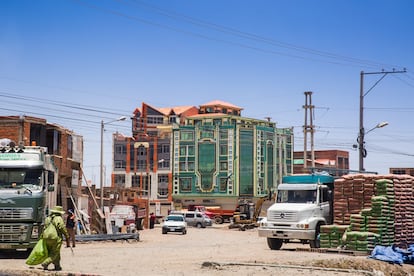
Most goods come from China, a strategic partner under MAS that became Bolivia’s top source of imports between 2014 and 2018. Another major flow enters through contraband along the Chilean and Peruvian borders. “For everyone to pay taxes, they need to be lower. A car that costs $11,000 abroad ends up at $18,000 here. They even charge you when you leave Bolivia; Customs takes money from everywhere,” Morales argues.
Thus, while qamiris were once a crucial electoral base for MAS —which, riding the commodity boom from 2006 to 2014, cut poverty in half and boosted urban consumption— in recent years they have opposed tax measures they deem harmful. The PDC offers them relief with a proposal to cap tariffs at 10%. Presidential candidate Paz calls it “capitalism for all,” while Morales reframes it as “qamirismo for all”: “Everyone can be a qamiri and own their building on Avenida 16 de Julio,” he told students in one of his talks.
Other promises luring the Aymara bourgeoisie include loans at 3% interest (currently reaching up to 18%) and a “tax pardon” that would forgive fines, interests, and penalties in exchange for paying the principal debt. Morales, who initially sought to run with his own party, Direct Democracy, but lacked funds, dreams of other qamirismo-driven policies, such as institutionalizing the Andean practice of pasanaku.
Pasanaku is a form of rotating savings that has spread even to major cities. Morales explains: “One person collects a daily fixed amount from participants. At month’s end, the pooled money goes to a participant in turn, based on a prior draw. Usually, the winner travels to China to bring back merchandise.”
According to Lorgio Orellana, researcher at the Universidad Mayor de San Andrés (UMSA), qamirismo lies in the “antipodes” of the MAS-led movement of social, peasant, and labor organizations. “If in the early stages of the process of change the predominant force was the Aymara and Quechua working classes, today it is chiefly qamirismo as the guiding ideology.” For Edgar Morales, however, the Aymara have always been economically qamiri: “In our language, there is no word for its opposite, unlike Spanish, where you have rich-poor.”
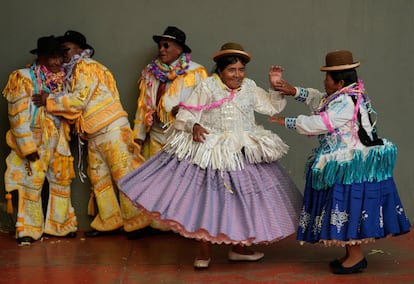
He points to the reputation of Aymara migrants in Brazil or Argentina as proof of this: hardworking, saving as much as possible, and putting in long hours. “They splurge only once, and that’s on parties. They spend thousands of dollars on halls, drinks, and international bands. In a single day they enjoy what they earned all year,” he concludes, laughing.
by Omar Pereyra
Por Caio Ruvenal, El País; Eju,tv:
Las comunidades que se beneficiaron de la movilidad social del MAS votan a Rodrigo Paz en las presidenciales de Bolivia.
La contundente victoria electoral del Partido Demócrata Cristiano (PDC) en la zona andina boliviana se debe en gran medida a su estrategia para captar a los llamados “nuevos ricos aymaras” o qamiris. Cerca del 60% de los votos de la ciudad de El Alto, colindante con La Paz y donde se concentra la burguesía indígena, fue para Rodrigo Paz, quien peleará la presidencia en una segunda vuelta el 19 de octubre con Jorge Tuto Quiroga. Esta urbe de más de un millón de habitantes, casi inexistente hace solo 50 años, fue uno de los bastiones, durante dos décadas, del Movimiento Al Socialismo (MAS), fundado por Evo Morales, que fomentó el ascenso social de los campesinos que migraron allí. Con el paso del tiempo se consolidó una nueva clase social que ahora exige menos impuestos y mayores facilidades para amasar su fortuna.
En aimara, qamiri significa “rico o acaudalado”. El conferencista Edgar Morales, hoy jefe de campaña del PDC, acuñó el término qamirismo para convertirlo en una visión que pregona entre jóvenes, mediante charlas en aimara y en español en colegios y universidades. “El qamirismo es una economía propia de los aymaras que se caracteriza por el trabajo en familia. El padre, la madre, el hermano, la hija son quienes venden, importan, administran. La ventaja es que no se pagan beneficios sociales que no dejan prosperar a los pequeños empresarios”, asegura Morales. La entrevista con EL PAÍS ocurre a unas calles de la avenida 16 de julio de El Alto, epítome del qamirismo por los lujosos y coloridos edificios conocidos como cholets, que los comerciantes ornamentan con orgullo.
Los propietarios de estos inmuebles alquilan sus salones de fiesta por hasta 2.000 dólares, además de locales comerciales donde se suelen vender costosas joyas y ropa para las cholas paceñas. También en la avenida 16 de julio se instala, los jueves y domingos, una feria considerada el mercado popular más grande de Sudamérica. Más de 10.000 vendedores se extienden por las calles ofreciendo aparatos electrónicos, ropa, repuestos, vehículos, maquinaria ligera y artículos para el hogar en dos jornadas en las que, según datos del municipio, se mueven alrededor de dos millones de dólares.
La mayoría de los productos provienen de China, país que el MAS convirtió en aliado estratégico, transformándolo en el principal origen de las importaciones entre 2014 y 2018. La otra gran parte del comercio llega desde la frontera con Chile y Perú, marcada por el contrabando. “Para que todos paguen impuestos, tienen que ser más bajos. Un auto que en el exterior cuesta 11.000 dólares aquí llega a 18.000. Te cobran hasta cuando sales de Bolivia, la Aduana saca dinero de todos lados”, argumenta Morales.
Por ello, aunque los qamiris fueron una base electoral clave para el MAS —que aupado por el boom de las materias primas entre 2006 y 2014 redujo la pobreza a la mitad y aumentó el consumo urbano—, en los últimos años han presionado contra medidas tributarias que consideran lesivas. El PDC les ofrece una salida proponiendo aranceles que no superen el 10%. El “capitalismo para todos” que ha convertido en lema el candidato presidencial Paz, Morales lo transforma en “qamirismo para todos”: “Todos podemos ser qamiris y tener nuestro edificio en la 16 de julio”, dijo el conferencista en una de sus charlas con estudiantes.
Otras promesas que han seducido a la burguesía aimara son créditos con intereses al 3% (actualmente pueden llegar al 18 %) o un “perdonazo tributario”, con el que se condonarían multas, intereses y sanciones a contribuyentes a cambio de que paguen el capital de la deuda. Morales, quien en realidad quería candidatear con su partido Democracia Directa pero no tuvo sustento económico, sueña con otras políticas para el qamirismo, como institucionalizar la práctica andina del pasanaku.
El pasanaku es una forma de ahorro rotativo que se ha extendido hasta las grandes capitales y que Morales describe así: “Una persona se encarga de recoger un monto diario fijado de los participantes. El dinero recaudado se entrega a final de mes a los concursantes por turno, en un sorteo celebrado previamente. Generalmente, el beneficiario se va a China con ese dinero a traer mercadería”.
El investigador de la Universidad Mayor de San Andrés (UMSA) Lorgio Orellana dice en un análisis reciente que la visión del qamirismo se encuentra en las “antípodas” de aquel movimiento de organizaciones sociales, campesinas y obreras que fue el MAS. “Si en las etapas iniciales del proceso de cambio el peso predominante lo tenían las clases trabajadoras aimaras y quechuas, hoy es principalmente el qamirismo la ideología dirigente”. Para Edgar Morales, sin embargo, el aimara siempre ha sido económicamente qamiri: “En nuestro idioma no hay una palabra que represente su oposición, como sucede en el castellano con rico-pobre”.
Prueba de ello, asegura, es la fama de arduos trabajadores que se han ganado los aimaras que migran a Brasil o Argentina. Existe una tendencia al mayor ahorro posible y a trabajar la mayor cantidad de horas posibles. “Solo derrochan en un momento y es en las fiestas. Gastan miles de dólares en salones, bebida y bandas internacionales. En un día disfrutan lo que han ganado en todo el año”, concluye entre risas.
por Omar Pereyra

 Bolivian Thoughts | Pensamientos Bolivianos (Bilingual/Bilingüe)