
Overall assessment: Who is most likely to win the second round?
- Current situation: Rodrigo Paz led the first round and appears as a centrist candidate; Jorge “Tuto” Quiroga is the right-wing contender with a more realistic approach and coherent reforms to address the debacle left by the MAS.
- Probability: Based on his first-round lead and his ability to attract centrist votes and a portion of the electorate disenchanted with the MAS, Rodrigo Paz is the slight favorite. However, the race is competitive: Quiroga could narrow the gap if he manages to consolidate the right and attract rural/peri-urban voters with economic promises and tough measures against impunity. Decisive factors will be: post-first-round agreements (endorsements), performance in debates, effective management of the economic crisis (dollar, diesel, prices), and territorial mobilization.
By eju.tv:
The 10 MOST relevant things from the last hours that we recommend you read.
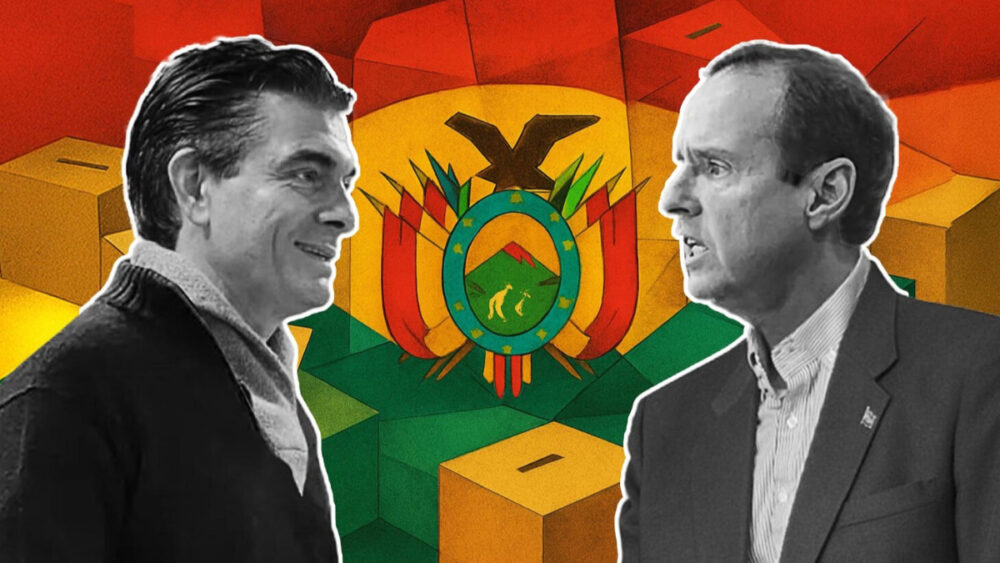
Random image Paz and Quiroga go to the runoff. Illustration: Bolivia Verifica
Polarization resurfaces on the way to the runoff, and leaders lack a discourse of reconciliation – “Change comes with reconciliation”: Tuto opens doors to those who worked with MAS, but not at a high level – Lara says that “now more than ever” he is fully convinced of Paz’s honesty. eju.tv recommends reading the 10 MOST relevant things from the last hours:
– Polarization resurfaces on the way to the runoff, and leaders lack a discourse of reconciliation
Polarization and fragmentation are two realities that exist and are rekindled in Bolivia’s current political context, analysts and experts argue. Dichotomizing is the way to portray the opponent as the “political enemy” ahead of the runoff, in which the narrative of reconciliation is totally absent. Evo Morales’ government coined a political style based on disqualification and labeling opponents as “enemies” and “traitors.” It also maintained permanent tension with the media and journalists. Currently, the candidacy of Rodrigo Paz, but especially his running mate Edman Lara for the PDC, has revived the discourse of rich vs. poor, populist measures, social offers, and attacks on the media. This candidacy embraces the so-called popular bloc, which brings together organizations that previously supported MAS and embody this vision of Bolivia.
– “Change comes with reconciliation”: Tuto opens doors to those who worked with MAS, but not at a high level
The presidential candidate for the Libre alliance, Jorge Tuto Quiroga, opened the doors to people who voted for MAS and those who worked in the governments of the blue party, except those who were in the top leadership of masismo. “I don’t close the doors to someone who voted for MAS or even to someone who in 2007, 2009, 2010, 2012, joined that party to get a position because it was mandatory by statute. I don’t demonize that, otherwise it would be demonizing what at that time was 64% of Bolivia. Change comes with reconciliation. What I can tell you clearly is that you won’t find in Libre the lawyers of narco-policemen or people who worked at a high level with Evo Morales,” he said. Regarding his elected deputy Pamela Jaldín Vélez, who is a MAS militant, he argued that her affiliation may have been without her consent, or she joined MAS to be able to work in the State.
– Elected legislators: Libre stresses it will prioritize solving the crisis, and PDC says it works with sectors on its legislative agenda
The two political organizations heading into the runoff, Libre and PDC, are already working on their legislative agendas for the new term of the Plurinational Legislative Assembly (ALP) that will begin in November. PDC says it is drafting its plan “with the people,” “with different sectors,” while Libre stresses it will prioritize the economic crisis. Rafael López, elected deputy for Libre from constituency 45 in Santa Cruz, and Catherine Pinto, elected deputy from constituency 11 in La Paz for PDC, shared some details of the work they will carry out. López stated that resolving the economic crisis and deepening autonomies will be the priority. “The deepening of autonomy and immediately overcoming the economic crisis, we’re working on that. Tuto’s project is structured, we will get out of the crisis, we need to inject dollars into the economy and bring household basket prices back to normal,” he said. He also stressed that “the issue now is the economic crisis.”
– Lara says that ‘now more than ever’ he is fully convinced of Paz’s honesty
The PDC vice-presidential candidate, Edman Lara, said he is “more than ever” convinced of the honesty of his running mate, presidential candidate Rodrigo Paz Pereira. “I want to tell you that I am calm. Yesterday I spoke with Rodrigo, he explained the situation to me. Honestly, now more than ever, more than ever, I am fully convinced of that man’s honesty,” he said in a TikTok video. In a previous video, Lara had questioned the participation of people he claimed were linked to Samuel Doria Medina and Bolívar club president Marcelo Claure in a meeting Paz held with President Luis Arce. Although he did not give names, he referred to businessman Dardo Gómez, vice president of Bolívar, and economist José Gabriel Espinoza, who was part of Doria Medina’s economic team.
– PDC’s economic adviser rules out short-term payment of a Bs 2,000 Renta Dignidad
Economist José Gabriel Espinoza, former adviser to Samuel Doria Medina and current member of Rodrigo Paz’s PDC economic team, ruled out the possibility of raising the Renta Dignidad from 350 to 2,000 bolivianos per month in the short term. He stated that before considering such a measure, it is necessary to stabilize the country’s “battered macroeconomy.” In an interview with Erbol’s Hagamos Democracia, Espinoza was asked about the feasibility of granting a 2,000-boliviano monthly allowance to the poorest sectors. He responded that it was “a campaign proposal related to increasing pensions received by retirees through Renta Dignidad.” However, he clarified that “this is probably not possible in the short term because the first thing that must be done is to stabilize the macroeconomy.”
– “The latest judicial decisions put compliance with the GIEI recommendations at risk,” says the Attorney General
Attorney General Ricardo Condori said on Sunday that the latest judicial decisions in favor of former president Jeanine Áñez, Santa Cruz governor Luis Fernando Camacho, and former civic leader Marco Pumari could generate state liability for non-compliance with the recommendations of the final report of the Interdisciplinary Group of Independent Experts (GIEI-Bolivia) regarding the 2019 events. “With the decisions taken by some justice operators in recent days, effective compliance with these recommendations is at risk, which has been reviewed by international organizations,” he said. He added that if the State fails to comply, “it will be responsible,” which could lead to severe sanctions. “Not the Executive Branch in particular, not the Judicial Branch in particular; I am referring to the State as a whole and all its components,” he noted.
– De la Cruz will push for a trial of responsibilities against Morales and Áñez for the Senkata and Sacaba massacres in 2019
Constitutional lawyer Roberto de la Cruz announced that he will request the new Legislative Assembly to initiate a trial of responsibilities against Evo Morales and Jeanine Áñez for the 2019 Senkata (El Alto) and Sacaba (Cochabamba) massacres, which left more than 30 dead. “Jeanine Áñez goes in by default in her capacity as commander-in-chief of the Armed Forces (she ordered the military intervention), and who provoked from the streets? Who fled? Who abandoned the Government Palace? Evo Morales. Therefore, for that conduct, he also falls under the type of responsibility trial,” De la Cruz said. He argued that Morales caused economic damage to the State by disregarding the results of the February 21, 2016 referendum and forcing his candidacy. “Breach of duties, resolutions contrary to the Constitution, and economic damage to the State—thus a trial of responsibilities applies,” he explained.
– Why is the digital dollar dropping? INE identifies three factors
INE director Humberto Arandia said on Sunday that three factors are behind the fall of the digital dollar, which on Sunday morning was trading below Bs 12.12. The first factor is “greater availability of foreign currency in the market due to positive trade balance surpluses,” he said. The second factor is the approval of legislative credits, which allowed for greater dollar supply. The third factor is “reduced speculation,” he stressed. “A drop from 20 bolivianos to 12.3 since May could only be linked to the main factor: the economy of Bolivians was being toyed with,” he stated. Arandia also asked municipalities to control the indiscriminate rise in prices since this is their jurisdiction. When asked whether the elections also influenced the drop in the dollar, he replied that analysts forget that the dollar is an economic variable, not a political one.
– Diesel shortage drives up the price of chicken and vegetables in La Paz and Cochabamba
The diesel shortage is severely hitting the productive sector and is also felt in La Paz and Cochabamba markets. Vegetables and chicken are the most affected, as regular transport is not available due to the lack of fuel, according to vendors and buyers. In La Paz markets, some products remain stable, such as potatoes, onions, and tomatoes, but others like broad beans and fruits have gone up in price. “The housewives come and leave upset,” said one vendor, explaining, “It’s because of diesel and also chicken feed, which isn’t arriving.” Another vendor added, “They bring products at a higher cost because they say there’s no diesel and they have to do it.” In La Paz, chicken is sold at 23.5 bolivianos with giblets. In Cochabamba, the situation is similar, with chicken reaching 24 bolivianos as supplies from Santa Cruz arrive irregularly.
– Diesel shortage continues; YPFB expects a ship to unload in Arica on Sunday the 7th
YPFB’s director of Hydrocarbons Commercialization and Importation, Marcos Eduardo Durán, said that unloading of a diesel tanker at the Sica Sica terminal in Arica is expected to start on Sunday, September 7. Meanwhile, the shortage of this fuel and long lines of vehicles persist nationwide. “The Bolivian State is making its best effort in this regard, and it is important to announce that our main delivery point is Arica, the largest and most economical, where we have a delivery window between September 7 and 13,” he explained in an interview with Bolivia TV. It is expected that on September 7, a ship with 45 million liters of diesel will begin unloading, followed by another operation on September 10. “This delivery window will also allow, after unloading, based on estimates, another ship on September 10,” he indicated.
– YPFB: Bolivia has the third cheapest fuel in the region
According to YPFB, Bolivia has the third cheapest fuel in the region, only behind Venezuela and Ecuador. In Bolivia, a liter of diesel sells for Bs 3.72, while gasoline sells for Bs 3.74. However, these costs can triple in some neighboring countries. “In the region, we see different prices in bolivianos per liter. Except for Venezuela and Ecuador, all the others are above the subsidized price given by the Bolivian State. Argentina, Brazil, Chile, Colombia, Paraguay, Peru, and Uruguay are all above Bs 3.72,” said Marcos Durán, YPFB’s commercialization director, in an interview with Bolivia TV. He highlighted the importance of the subsidy, which allows the State to cover the cost of importing fuels in order to keep prices frozen.
by Boris Bueno
Evaluación global: ¿quién tiene más probabilidades de ganar la segunda vuelta?
- Situación actual: Rodrigo Paz lideró la primera vuelta y aparece como candidato centrista; Jorge “Tuto” Quiroga es el contendiente de derecha con un discurso más realista y reformas coherentes para hacer frente a la debacle que deja el masismo.
- Probabilidad: Con base en el liderazgo en la primera vuelta y su capacidad para atraer votos de centro y parte del electorado desencantado con el MAS, Rodrigo Paz parte ligeramente como favorito. Sin embargo, la contienda es competitiva: Quiroga puede estrechar la diferencia si logra consolidar la derecha y captar votantes rurales/periurbanos con promesas económicas y medidas de mano dura contra la impunidad. Factores decisivos serán: acuerdos post-1ª vuelta (endorsements), desempeño en debates, manejo real de la crisis económica (dólar, diésel, precios) y movilización territorial.
Por eju.tv:
Las 10 COSAS más relevantes de las últimas horas que le recomendamos leer.
Paz y Quiroga van a la segunda vuelta. ILustración: Bolivia verifica
Reflota la polarización rumbo a la segunda vuelta y los líderes carecen de discurso de reconciliación – “El cambio es con reconciliación”: Tuto abre las puertas a los que trabajaron con el MAS, pero no a alto nivel – Lara dice que “ahora más que nunca” está totalmente convencido de la honestidad de Paz. eju.tv le recomienda leer las 10 COSAS más relevantes de las últimas horas:
La polarización y la fragmentación son dos realidades que existen y se reavivan en el actual contexto político de Bolivia, sostienen analistas y expertos en la materia. Dicotomizar es la vía para mostrar al oponente como el “enemigo político” rumbo a una segunda vuelta, en la que la narrativa de la reconciliación está totalmente ausente. El gobierno de Evo Morales acuñó un estilo de hacer política con base en la descalificación y el señalamiento de los opositores como los “enemigos” y “vende patrias”. Además, de una permanente tensión con los medios de comunicación y los periodistas. Actualmente, la candidatura de Rodrigo Paz, pero sobre todo de su acompañante Edman Lara, por el PDC, ha reflotado el discurso de ricos Vs pobres, las medidas populistas, las ofertas sociales y el ataque a los medios de comunicación. Esta candidatura acoge al denominado bloque popular, que agrupa a las organizaciones que antes apoyaron al MAS y que encarnan esta visión de Bolivia.
El candidato presidencial por la alianza Libre, Jorge Tuto Quiroga, le abrió las puertas a la gente que votó por el Movimiento Al Socialismo (MAS) y a quienes trabajaron en los gobiernos del partido azul, excepto los que estuvieron en la cúpula del masismo. “Yo no le cierro las puertas a alguien que votó por el MAS o incluso a alguien que 2007, 2009, 2010, 2012, para tener un cargo, se afilió (a ese partido), porque era obligatorio por el estatuto. Yo no satanizo eso ni voy a demonizar eso, de lo contrario sería demonizar y satanizar a lo que fue en su momento el 64% de Bolivia. El cambio es con reconciliación, lo que te puedo decir claramente es que no vas a encontrar (en Libre) a los abogados de narcopolicías o a gente que hubiera estado con Evo Morales trabajando a alto nivel”, aseguró. Sobre su diputada electa Pamela Jaldín Vélez, quien es militante del MAS; argumentó que probablemente su militancia responda a que fue inscrita sin su consentimiento, o se inscribió al partido azul para lograr trabajar en el Estado.
Las dos organizaciones políticas en carrera para la segunda vuelta, Libre y PDC, ya trabajan sus agendas legislativas de cara a la nueva gestión de la Asamblea Legislativa Plurinacional (ALP) que arrancaré en noviembre. PDC dice que elabora su plan de trabajo “con el pueblo”, “con distintos sectores”, mientras Libre remarca que priorizará la crisis económica. Rafael López, diputado electo de Libre por la circunscripción 45, de Santa Cruz, y Catherine Pinto diputada electa por la circunscripción 11 de La Paz por PDC, dieron algunos detalles del trabajo que realizarán. López indicó que resolver la crisis económica y la profundización de las autonomías serán la prioridad. “La profundización de la autonomía y de salir de la crisis económica inmediatamente, estamos con eso. El proyecto de Tuto es estructurado, vamos a salir de la crisis, necesitamos inyectar dólares a la economía, y que los precios de la canasta familiar vuelvan a la normalidad”, afirmó. Aseveró también que “el tema ahora es la crisis económica».
– Lara dice que “ahora más que nunca” está totalmente convencido de la honestidad de Paz
El candidato a la vicepresidencia por el Partido Demócrata Cristiano (PDC), Edman Lara, afirmó que “más que nunca” está convencido de la honestidad de su compañero de fórmula, el aspirante presidencial Rodrigo Paz Pereira. “Quiero decirles que estoy tranquilo. Ayer conversé con Rodrigo, me explicó la situación. De verdad ahora más que nunca, más que nunca, estoy totalmente convencido en la honestidad de ese hombre”, dijo en un video subido en TikTok. En un video anterior, Lara había cuestionado que en la reunión que Paz sostuvo el martes con el presidente del Estado, Luis Arce, participaran personas que, según él, estarían vinculadas al excandidato presidencial por Unidad, Samuel Doria Medina, y al presidente del club Bolívar, Marcelo Claure. Aunque no dio nombres, el vicepresidencial se refirió al empresario Dardo Gómez, vicepresidente del club Bolívar, y al economista José Gabriel Espinoza, quien integró el equipo económico de la candidatura de Doria Medina.
– Asesor económico del PDC descarta pago de la Renta Dignidad de Bs 2.000 en el corto plazo
El economista José Gabriel Espinoza, exasesor de Samuel Doria Medina y actual miembro del equipo del candidato presidencial del Partido Demócrata Cristiano (PDC), Rodrigo Paz Pereira, descartó este domingo la posibilidad de incrementar en el corto plazo la Renta Dignidad de 350 a 2.000 bolivianos mensuales. Señaló que antes de pensar en esa medida es necesario estabilizar la “golpeada macroeconomía” del país. Durante una entrevista en el programa Hagamos Democracia de la red Erbol, Espinoza fue consultado sobre la viabilidad de otorgar un bono mensual de 2.000 bolivianos a los sectores más empobrecidos. El economista respondió que aquello “era una propuesta que surge en campaña y que tiene que ver con el incremento de las rentas que perciben los jubilados, de la renta dignidad”. Sin embargo, aclaró que “esto probablemente no sea posible en el corto plazo, porque lo primero que se tiene que hacer es estabilizar la macroeconómica”.
El procurador general del Estado, Ricardo Condori, dijo el domingo que las últimas decisiones judiciales que favorecieron a la expresidenta Jeanine Áñez, al gobernador de Santa Cruz Luis Fernando Camacho y al exdirigente cívico Marco Pumari pueden generar responsabilidad para el Estado por el incumplimiento de las recomendaciones del informe final del Grupo Interdisciplinario de Expertas y Expertos Independientes (GIEI-Bolivia) sobre los hechos de 2019. “Con las decisiones que han tomado algunos operadores de justicia estos últimos días, está en riesgo el cumplimiento efectivo de esas recomendaciones que ha sido revisado por estos organismos internacionales”, afirmó. Dijo que si el Estado incumple las recomendaciones “va a ser responsable” lo que puede generar sanciones severas. “No al Órgano Ejecutivo de manera particular, no al Órgano Judicial de manera particular, me refiero a todo el Estado y a todos los que componen este Estado”, indicó.
El abogado constitucionalista Roberto de la Cruz anunció que pedirá a la nueva Asamblea Legislativa un juicio de responsabilidades contra Evo Morales y Jeanine Áñez por las masacres de Senkata, El Alto, y Sacaba, Cochabamba, en 2019, que dejó más de una treintena de muertos. “De cajón ingresa la señora Jeanine Añez en su condición de capitán general de las Fuerzas Armadas (ordenó la intervención militar) y ¿quién provocó desde las calles? ¿quién huyó? se escapó abandonando el Palacio de Gobierno? fue Evo Morales, por tanto, por esa misma conducta también se subsume al tipo penal de juicio de responsabilidad”, dijo De la Cruz. El abogado consideró que Morales ocasionó un daño económico al Estado al no acatar el resultado del referéndum del 21 de febrero de 2016 y forzar su habilitación como candidato. “Incumplimiento de deberes, resoluciones contrarias a la Constitución Política de Estado y daño económico al Estado y corresponde juicio de responsabilidad”, explicó.
– ¿Por qué baja el dólar digital? El INE identifica tres factores
El director del Instituto Nacional de Estadistica (INE), Humberto Arandia, afirmó el domingo que hay tres factores que generan la baja del dólar digital, que en la mañana de este domingo cotizaba por debajo de Bs 12,12. El primer factor es “la mayor disponibilidad de divisas en el mercado producto de los saldos de balanza comercial que es positivo”, dijo. El segundo factor, según Arandia, es que la aprobación de los créditos legislativos que han permitido la mayor oferta de dólares. El tercer factor es “la reducción de la especulación”, puntualizó. “Una caída de 20 bolivianos a 12,3, desde mayo solo podía estar asociado al factor principal, que es que se estaba jugando con la economía de los bolivianos”, afirmó. El director del INE pidió a las alcaldías del país que controlen el alza indiscriminada de precios, porque es una competencia municipal. Consultado sobre si las elecciones también fueron un factor que bajó el precio del dólar, Arandia dijo que los analistas olvidan que el dólar es una variable económica, no política.
– Falta de diésel provoca aumento de precio de pollo y verduras en La Paz y Cochabamba
La falta de diésel golpea duramente al sector productivo y también se siente el efecto en los mercados populares de La Paz y Cochabamba. Las verduras y el pollo son los más afectados, debido a que no hay transporte regular por falta de combustible, según reportaron comerciantes y compradores. En mercados de La Paz, algunos productos se mantienen estables, como la papa, cebolla y el tomate, pero en otros casos, como el haba y las frutas, han incrementado su precio. “Las amas de casa vienen y se van molestos”, afirmó una de las vendedoras y señaló que “es por el diésel y también por la comida de los pollos, que no está llegando”. Otra “caserita” explicó que “hacen llegar los productos con costo más elevado porque dicen que falta diésel y que tienen que hacer”. El pollo en La Paz se vende a 23,5 bolivianos con menudencia. En Cochabamba la situación no es diferente. El pollo subió hasta 24 bolivianos porque el alimento, que viene de Santa Cruz, no llega con regularidad por la falta de diésel.
– Sigue la escasez de diésel; YPFB prevé que el domingo 7 pueda ser descargado un buque en Arica
El director de Comercialización e Importación de Hidrocarburos de Yacimientos Petrolíferos Fiscales Bolivianos (YPFB), Marcos Eduardo Durán, informó que se prevé iniciar el domingo 7 de septiembre la descarga de un buque con diésel en la terminal de Sica Sica, en el puerto de Arica. Mientras tanto, la escasez de este combustible y las largas filas de vehículos continúan en el país. “El Estado boliviano está haciendo su máximo esfuerzo al respecto, y es importante anunciar que nuestro punto de entrega principal es Arica, es el punto de mayor volumen y el más económico que tenemos, en el cual tenemos una ventana para la fecha del 7 al 13 de septiembre”, explicó en una entrevista con Bolivia Tv. Se espera que el 7 de septiembre comience la descarga de un buque con 45 millones de litros de diésel y que el 10 se inicie la operación de otra nave. “Esta ventana correspondiente va a permitir también después de que se descargue, en función de la estimación, otro buque para el 10 de septiembre.”, indicó.
– YPFB: Bolivia tiene el tercer combustible más barato de la región
De acuerdo con Yacimientos Petrolíferos Fiscales Bolivianos (YPFB), el país tiene el tercer combustible más económico de la región, solo por detrás de Venezuela y de Ecuador. En el territorio nacional, el litro de diésel se comercializa a Bs 3,72, mientras que el de gasolina se vende a Bs 3,74. Sin embargo, estos costos pueden hasta triplicarse en algunos de los países vecinos. “A nivel de la región, vemos distintos precios en bolivianos/litro. Con excepción de Venezuela y Ecuador, todos los demás están por encima del precio subvencionado que da el Estado boliviano. Tanto Argentina, Brasil, Chile, Colombia, Paraguay, Perú y Uruguay están por precios por encima del 3,72 (bolivianos)”, afirmó Marcos Durán, director de Comercialización e Importación de Hidrocarburos de YPFB, en entrevista con Bolivia Tv. Por ello, destacó la importancia de la subvención que permite que el Estado asuma el costo de la importación de combustibles con la finalidad de mantener los precios congelados.
por Boris Bueno

 Bolivian Thoughts | Pensamientos Bolivianos (Bilingual/Bilingüe)