
By Visión 360:
21 elected legislators belong to parties different from the ones that nominated them
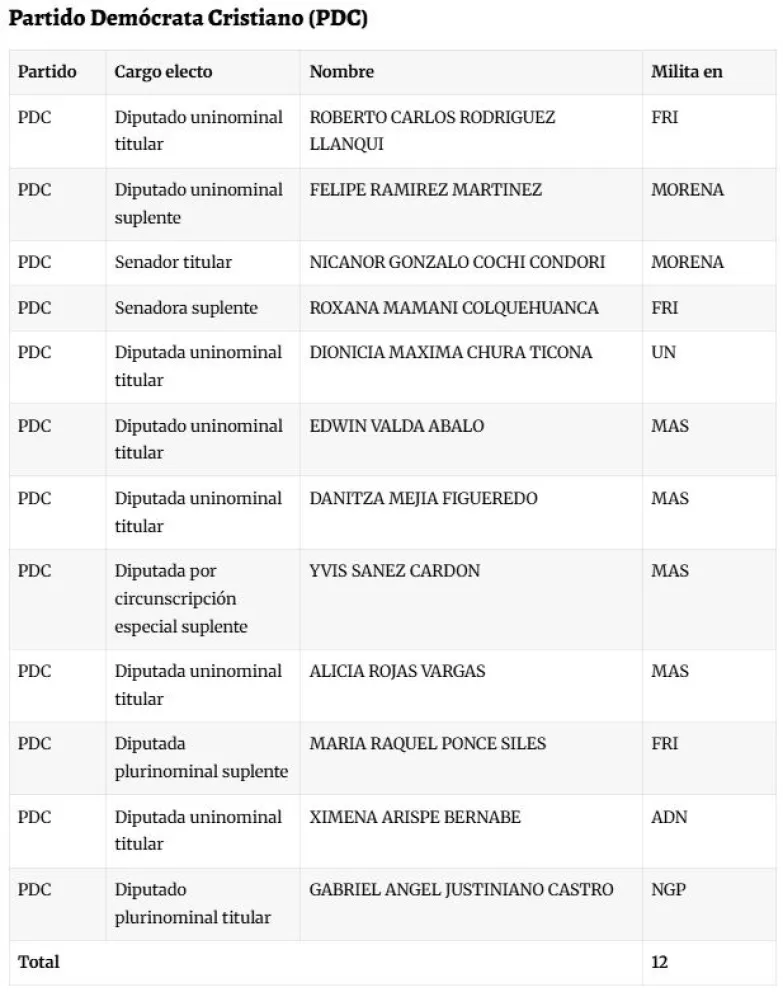
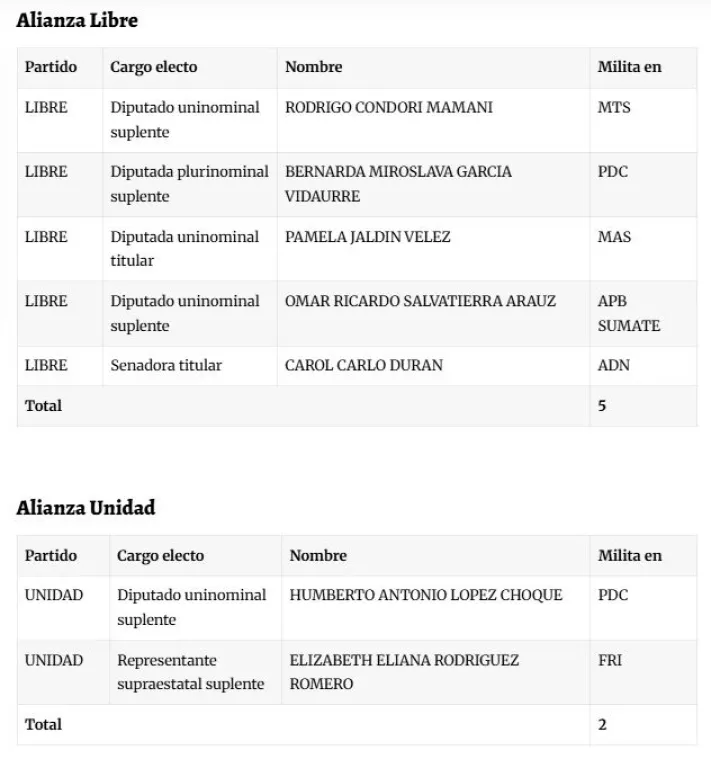
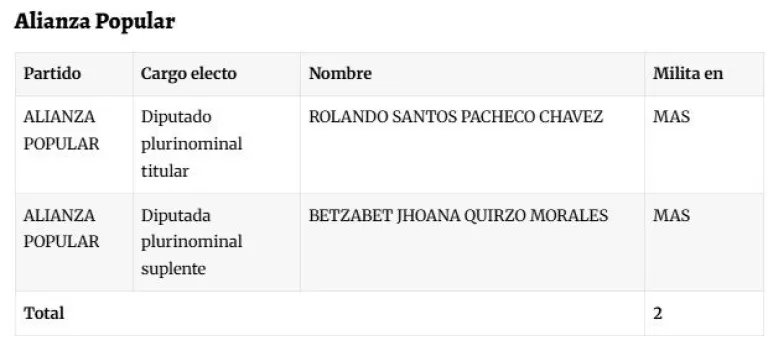
In the case of the PDC, 4 are members of MAS, 3 of the FRI, and 2 of Morena. On the side of Alianza Libre, there are affiliates in the MTS, the PDC, MAS, Súmate, and ADN (one in each). In Alianza Unidad, there’s one from the PDC and one from the FRI. And in Alianza Popular, 2 from MAS.
A total of 21 elected assembly members, both full and alternates, are affiliated with national political organizations other than the party or alliance that nominated them for the 2025 general elections.
Bolivia Verifica analyzed the list of elected authorities in both chambers, and found that 21 senators and deputies entered the Plurinational Legislative Assembly (ALP) while being registered in other parties and political organizations, including MAS, Morena, ADN, MNR, MTS, among others.
The following tables summarize this information:
Not considered turncoatism, but questions rules and statutes
Can this practice be considered political turncoatism? The Secretariat of the Chamber of the Supreme Electoral Tribunal (TSE) explains that it cannot.
Turncoatism, considered a “very serious” electoral violation, occurs when an elected authority in office registers with another political organization or publicly declares adherence to another political front.
“The figure (of turncoatism) applies later (once the authority assumes office). That is, if a current deputy registers in another political organization, then the figure of ‘tránsfuga’ applies. But in this case, they already came with prior membership, and the same party (that nominated them) chose them that way or, in some cases, invited them, because many party statutes allow non-members to appear on their candidate lists,” explained Fernando Arteaga, Chamber Secretary of the TSE.
According to him, some statutes are stricter, requiring candidates to necessarily be party members.
“It’s still an unresolved issue under the law, but also unresolved within the political organizations themselves,” he argued.
72 PDC and Libre candidates were members of another organization
On the other hand, it is noteworthy that in the lists of candidates approved by the PDC and Libre, a total of 72 ran for seats in the Senate and Deputies while being members of other political fronts.
But there were also members who ran under their own political banners. In the case of the PDC, there were 11, and in Alianza Libre, 44: 30 belonged to the Democrats and 14 to the FRI. Both parties formed the alliance that nominated Jorge Quiroga.
Por Visión 360:
21 legisladores electos militan en partidos distintos al que los postuló
En el caso del PDC, 4 militan en el MAS, 3 en el FRI y 2 en Morena. Por el lado de Alianza Libre hay inscritos en el MTS, el PDC, MAS, Súmate y ADN (a uno de cada partido). En Alianza Unidad hay uno del PDC y uno del FRI. Y en Alianza Popular, 2 del MAS.
Un total de 21 asambleístas electos, entre titulares y suplentes, militan en organizaciones políticas de alcance nacional distintas al partido o alianza que los postuló a las elecciones generales de 2025.
Bolivia Verifica analizó la lista de autoridades electas en ambas cámaras y un total de 21 senadores y diputados electos llegaron a la Asamblea Legislativa Plurinacional (ALP) estando inscritos en otros partidos y organizaciones políticas, entre ellos el MAS, Morena, ADN, MNR, MTS y otros.
Los siguientes cuadros resumen esta información:
No se constituye en transfugio, pero pone en cuestión la norma y los estatutos
¿Puede considerarse esta práctica como transfugio político? Desde la secretaría de Cámara del Tribunal Supremo Electoral (TSE) explican que no.
El transfugio, que es considerada una infracción «muy grave» en la normativa electoral, se comete cuando la autoridad electa en ejercicio se inscribe en otra organización política a declara públicamente su adhesión a otro frente político.
«La figura (de transfugio) es de aplicación posterior (cuando la autoridad asume el cargo). Es decir, si un diputado actual se registra en otra organización política, ahí se aplica la figura de tránsfuga. Pero en este caso, ellos ya venían con una militancia previa y el mismo partido (que los postuló) los ha elegido así o en su caso los ha invitado, porque muchos de los estatutos de los partidos permiten que en sus listas de candidatos figuren personas que no necesariamente sean militantes», expone Fernando Arteaga, secretario de Cámara del TSE.
Según la autoridad, algunos estatutos son un poco más estrictos al exigir que quienes opten por una candidatura sean necesariamente militantes.
«Es un tema todavía no resuelto a través de la ley, pero también no resuelto dentro de las mismas organizaciones políticas», sostiene.
72 postulantes del PDC y Libre militan en otra organización
Por otro lado, llama la atención que en las listas de candidatos habilitados por el PDC y Libre, un total de 72 pugnaron por un curul en el Senado y en Diputados siendo militantes de otros frentes políticos.
Pero también hubo militantes que postularon por su propia tienda política. En el caso del PDC fueron 11 y en Alianza Libre, 44: 30 pertenecían a Demócratas y 14 al FRI. Ambos partidos formaron la alianza que postula Jorge Quiroga.

 Bolivian Thoughts | Pensamientos Bolivianos (Bilingual/Bilingüe)