
By Edwin Conde Villarreal, El Diario:
National Museum of Archaeology
- The facial reconstruction of mummies will restore the identity of pre-Hispanic inhabitants of the Bolivian highlands, according to an announcement made by Bolivian researcher Guido Valverde.
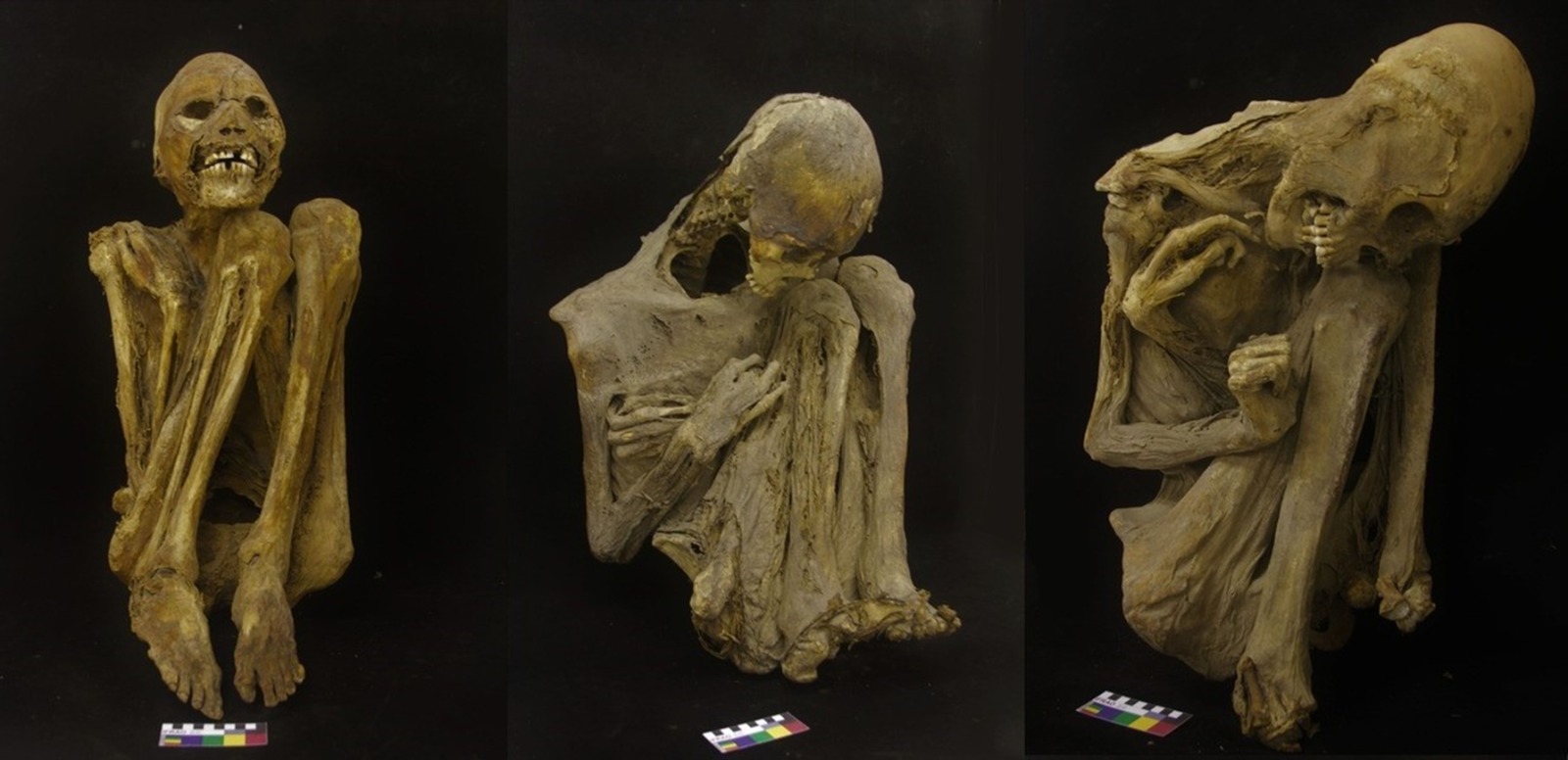
An interdisciplinary scientific project that includes the facial reconstruction of several individuals from the mummy collection at the National Museum of Archaeology (Munarq) will restore the identity of pre-Hispanic inhabitants of the Bolivian highlands, with the participation and consensus of current residents of the region’s communities, who will decide whether to “bring their ancestors into the present.”
The announcement was made by Bolivian researcher Guido Valverde of the Institute for Mummy Studies at Eurac Research in Bolzano, Italy. “We’re going to organize a meeting in Oruro with the Apu Mallkus, or traditional leaders of Carangas, so they can consult with their communities to decide if they agree to participate. They have the final say, because most of the 50 mummies at Munarq come from that highland region of Bolivia,” he revealed.
“Facial representations as a tool for the ethical museographic dissemination of pre-Hispanic human remains in Bolivia” is the project jointly developed by the National Museum of Archaeology, the Ministry of Cultures, the Institute for Mummy Studies – Eurac Research, and Face Lab at Liverpool John Moores University in England.
The human remains are being studied by experts from various fields (archaeology, conservation, genetics, anthropology) to understand the history of the people and their world before European colonization.
Regarding the age of Munarq’s mummy collection (50 complete and incomplete individuals and more than 500 skulls with cranial deformation and trepanation), the expert explained that based on dating of 15 individuals through the Mummies of Bolivia project, they were found to belong to the Late Intermediate Period (approximately between 1000 A.D. and 1450 A.D.), that is, after Tiwanaku.
Valverde believes that since several international institutions are involved, the act of decolonization is very important, “which is why the goal is not to impose, but rather to offer a service to the local population, because ethically, for example, when working with DNA studies, communities must be asked for their consent, since they are ultimately the heirs of that cultural heritage.”
FACIAL RECONSTRUCTION
Italian forensic artist Viviana Conti of Face Lab at Liverpool John Moores University will carry out the facial reconstructions as part of the Mummies of Bolivia project. She will initially work on individuals who have been analyzed through CT scans, and with additional available data, she will be able to achieve the most accurate approximation of what pre-Hispanic faces looked like.
“The focus is mainly on the communities because respecting the will of the local people is very important,” stated the Italian expert. She noted that there is no existing database for soft tissue thickness in Bolivian faces, so photographs of Bolivian individuals, especially from the communities, will be taken to complete the identity restoration of the mummies.
The greater the number of photos collected from individuals, the more possible it will be to reconstruct the faces of the mummified remains selected from the Munarq collection.
“All scientific knowledge is valuable and scientific dissemination is important, as it shows how the faces of ancient people looked. But since several institutions around the world are collaborating, the decolonial perspective of this research is not to impose but to reach agreements with rural communities,” said Conti, who has also reconstructed faces of mummies from Egypt.
She invited Bolivian citizens to have their photos taken at Munarq to be part of the project by joining a database that will support the facial reconstruction of pre-Hispanic inhabitants of the Bolivian highlands. “We invite you to be part of this scientific research, it will only take 10 minutes. Your photos will not be published and will only be used privately by the researchers,” she added. (CienciaBolivia)
Por Edwin Conde Villarreal, El Diario:
Museo Nacional de Arqueología
- La reconstrucción facial de momias devolverá la identidad de habitantes prehispánicos de la región del altiplano boliviano, según el anuncio realizado por el investigador boliviano Guido Valverde.
Un proyecto científico interdisciplinario que incluye la reconstrucción facial de varios individuos de la colección de momias del Museo Nacional de Arqueología (Munarq) devolverá la identidad de los habitantes prehispánicos de la región del altiplano boliviano, con la participación y consenso de los pobladores actuales de las comunidades de la región, que decidirán “traer al presente a sus ancestros o antepasados”.
El anuncio fue realizado por el investigador boliviano Guido Valverde del Instituto de Estudios de Momias de Eurac Research en Bolzano, Italia. “Vamos a organizar una reunión en Oruro con los Apu Mallkus o dirigentes originarios de Carangas, para que puedan consultar con sus comunidades si están de acuerdo en participar, ellas tienen la última palabra, porque la mayoría de las 50 momias del Munarq provienen de esa región altiplánica de Bolivia”, reveló.
“Las representaciones faciales como herramienta para la difusión ética museográfica de restos humanos prehispánicos en Bolivia” es el proyecto entre el Museo Nacional de Arqueología, el Ministerio de Culturas, el Instituto de Estudios de Momias – Eurac Research y Face Lab de la Universidad John Moores de Liverpool, Inglaterra.
Los restos humanos son estudiados por expertos de distintos campos (arqueología, conservación, genética, antropología) para comprender la historia de los pobladores y su mundo antes de la colonización europea.
Respecto de la antigüedad de la colección de momias del Munarq (50 individuos completos e incompletos y más de 500 cráneos con deformación craneana y trepanaciones), el experto informó que según la datación de 15 individuos que fue posible con el proyecto Momias de Bolivia se pudo descubrir que pertenecen al período Intermedio Tardío (aproximadamente entre 1000 después de Cristo d.C. y 1450 d.C.), es decir post Tiwanaku.
Valverde considera que al tener varios institutos internacionales es muy importante el acto de descolonización, “por lo que no se intenta imponer sino ofrecer como un servicio a los pobladores del lugar, porque por ética por ejemplo cuando se trabaja con estudios de ADN, hay que preguntar a las comunidades si están de acuerdo, porque finalmente son ellos los herederos de ese patrimonio cultural”.
RECONSTRUCCIÓN FACIAL
La artista forense Italiana Viviana Conti de Face Lab de la Universidad John Moores de Liverpool, Inglaterra realizará la reconstrucción facial que forma parte del proyecto Momias de Bolivia, inicialmente trabajará con los individuos que han sido analizados mediante tomografía computarizada y que conjuntamente con otros datos que dispone logrará la aproximación más fidedigna de cómo lucían los rostros prehispánicos.
“La intervención es principalmente con las comunidades porque es importante el respeto a la voluntad que tienen los pobladores”, aseveró la experta de Italia. Dijo que no se cuenta con una base de datos del espesor de los tejidos de la piel de los rostros de Bolivia, por lo que se procederá a fotografiar a las personas bolivianas, especialmente de las comunidades para completar la restitución de la identidad de las momias.
Cuanto mayor sea la cantidad de fotos que se obtengan de las personas, posibilitará la reconstrucción facial de los restos momificados que fueron elegidos de la colección del Munarq.
“Todo saber científico es bueno y la divulgación científica es importante mostrando cómo lucían los rostros de los antiguos, pero al estar colaborando varios institutos del mundo, la óptica de la descolonización de la investigación es no imponer sino consensuar con las comunidades rurales”, sostuvo Conti que reconstruyó otros rostros de momias de Egipto.
Invitó a la ciudadanía boliviana a fotografiarse en el Munarq, para ser parte del proyecto incluyéndose en una base de datos que permitirá la reconstrucción facial de los habitantes prehispánicos de la región del altiplano boliviano. “Los invitamos a ser parte de esta investigación científica y sólo les tomará 10 minutos, sus fotografías no serán publicadas y sólo serán usadas de forma privada por los investigadores”, agregó. (CienciaBolivia)

 Bolivian Thoughts | Pensamientos Bolivianos (Bilingual/Bilingüe)