
By ANF, Eju.tv:
They predict a good year for llama and alpaca breeding: “There is plenty of forage and water”
Apaza, who lives in the Pacajes province, third section of Calacoto, on the border with Chile, states that in his community, the main activity is camelid breeding, especially llamas and alpacas.
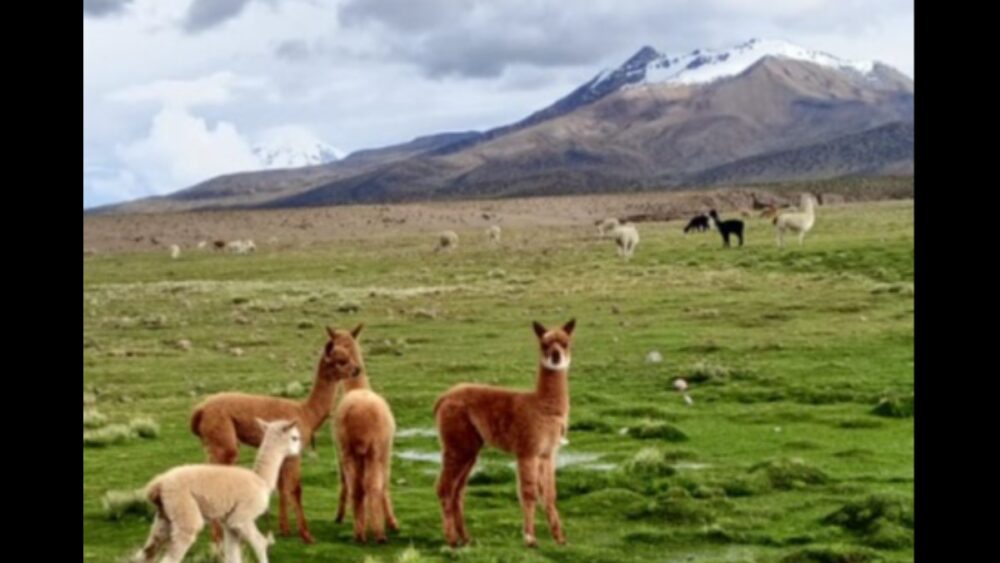
Llama and alpaca breeding in the department of La Paz is experiencing a good period due to the availability of forage and water, which predicts a prosperous year for camelid producers.
According to Eliseo Apaza, president of the Departmental Association of Camelid Producers (Adepca), rainfall has been favorable in several areas, allowing pastures to grow and ensuring livestock feed.
Apaza, who lives in the Pacajes province, third section of Calacoto, on the border with Chile, states that in his community, the main activity is camelid breeding, especially llamas and alpacas.
“Here, the rain is good, there’s forage for the livestock; it’s a good year because other years it doesn’t rain, and we worry, but this year, no,” said the leader in an interview with ANF.
The water supply is also an advantage in the region due to the presence of “large springs and rivers that flow through here.”
“Water constantly flows down from the glaciers,” Apaza explained. However, in lower-altitude communities, the situation is different, as they must rely on water harvesting to store the resource for use during dry months.
Despite these challenges, producers have implemented strategies to cope with water scarcity, working with various projects such as those from the Indigenous Fund, which have helped with water provision, “so it’s not much of a problem,” the Adepca representative highlighted.
The good condition of the livestock is another positive factor for breeders. “There have been plenty of births, the livestock is fat, there’s nothing to worry about,” Apaza stated, noting that weather conditions have favored the reproduction of llamas and alpacas.
However, some health challenges persist, such as tick and lice infestations, which primarily affect young animals. “During Easter, we give all alpacas and llamas an anti-mange bath to protect them,” Apaza explained.
Additionally, diarrhea is a common issue when animals consume frozen grass, but producers apply appropriate treatments.
Another health concern for camelids is fever, although veterinary products are available for treatment. “There are some veterinary products for that, and we treat them with those,” Apaza assured, emphasizing the breeders’ efforts to keep their animals in good condition.
In the community of Tanapaca, where Apaza lives, about 1,000 people are engaged in camelid breeding, with a herd of approximately 18,000 animals. At the level of the third section of Calacoto, around 90,000 llamas and alpacas are counted.
Besides these domesticated camelids, the region also hosts a significant population of vicuñas.
“There are also many vicuñas in this plain; some roam alone, there are male troops, and also family groups, quite a lot of vicuñas around here—about 5,000 in this area,” the leader indicated.
With this favorable outlook, camelid producers in La Paz face the year with optimism, confident that weather conditions and management efforts will ensure the well-being of their livestock and the stability of their primary economic activity.
Por ANF, Eju.tv:
Auguran buen año para la crianza de llama y alpaca: “Hay bastante forraje y agua”
Apaza, quien reside en la provincia Pacajes, tercera sección de Calacoto, en la frontera con Chile, señala que en su comunidad la actividad principal es la crianza de camélidos, especialmente llamas y alpacas.
La crianza de llamas y alpacas en el departamento de La Paz atraviesa un buen momento debido a la disponibilidad de forraje y agua, lo que augura un año próspero para los productores de camélidos.
Según Eliseo Apaza, presidente de la Asociación Departamental de Productores de Camélidos (Adepca), las lluvias han sido favorables en varias zonas, permitiendo el crecimiento de pastizales y garantizando la alimentación del ganado.
Apaza, quien reside en la provincia Pacajes, tercera sección de Calacoto, en la frontera con Chile, señala que en su comunidad la actividad principal es la crianza de camélidos, especialmente llamas y alpacas.
“Aquí la lluvia está bien, hay forraje para los ganaditos, es buen año, porque otros años no sabe llover, sabemos estar preocupados, pero este año, no”, afirmó el dirigente en contacto con ANF.
El abastecimiento de agua también es una ventaja en la región debido a la existencia de “grandes manantiales de agua y ríos que pasan por aquí”.
“De los nevados baja el agua, es constante”, explicó Apaza. Sin embargo, en comunidades más bajas la situación es distinta, ya que deben recurrir a la cosecha de agua para almacenar el recurso para su uso durante los meses secos.
A pesar de estas dificultades, los productores han implementado estrategias para enfrentar la escasez de agua, trabajando con diferentes proyectos como los del Fondo Indígena, que se ejecutan en el sector, lo que ha servido para la provisión de agua, “entonces, no hay tanto problema”, destacó el representante de Adepca.
El buen estado del ganado es otro factor positivo para los criadores. “Harta cría ha entrado, el ganado está gordito, no hay nada de qué preocuparse”, afirmó Apaza, señalando que las condiciones climáticas han favorecido la reproducción de llamas y alpacas.
Sin embargo, algunos desafíos sanitarios persisten, como las plagas de garrapatas y piojos que atacan principalmente a las crías las garrapatas. “En la época de Pascua les hacemos el baño antisárnico a todas las alpacas y llamas, para protegerlas”, explicó Apaza.
Además, la diarrea es una afección común cuando los animales consumen pasto congelado, pero los productores aplican tratamientos adecuados.
Otro problema de salud que afecta a los camélidos es la fiebre, aunque existen productos veterinarios disponibles para su tratamiento. “Para eso también hay algunos productos veterinarios y con eso los tratamos”, aseguró Apaza, resaltando el esfuerzo de los productores por mantener en buenas condiciones a sus animales.
En la comunidad de Tanapaca, donde vive Apaza, hay cerca de mil personas dedicadas a la crianza de camélidos, con un hato de aproximadamente 18.000 cabezas de ganado. A nivel de la tercera sección de Calacoto, se contabilizan unas 90.000 llamas y alpacas.
Además de estos camélidos domesticados, la región también alberga una considerable población de vicuñas.
“En esta pampa también hay mucha vicuña, algunas van solas, hay tropas de machos, también hay grupos familiares, bastante vicuña hay por acá, son unas 5.000 por este sector”, indicó el dirigente.
Con este panorama favorable, los productores de camélidos en La Paz encaran el año con optimismo, confiando en que las condiciones climáticas y los esfuerzos de manejo garantizarán el bienestar del ganado y la estabilidad de su principal actividad económica.

 Bolivian Thoughts | Pensamientos Bolivianos (Bilingual/Bilingüe)