
By Vision 360:
Among the documents Bolivia registered is the “Census of Foreigners (1935-1959) from the La Paz Archive.”
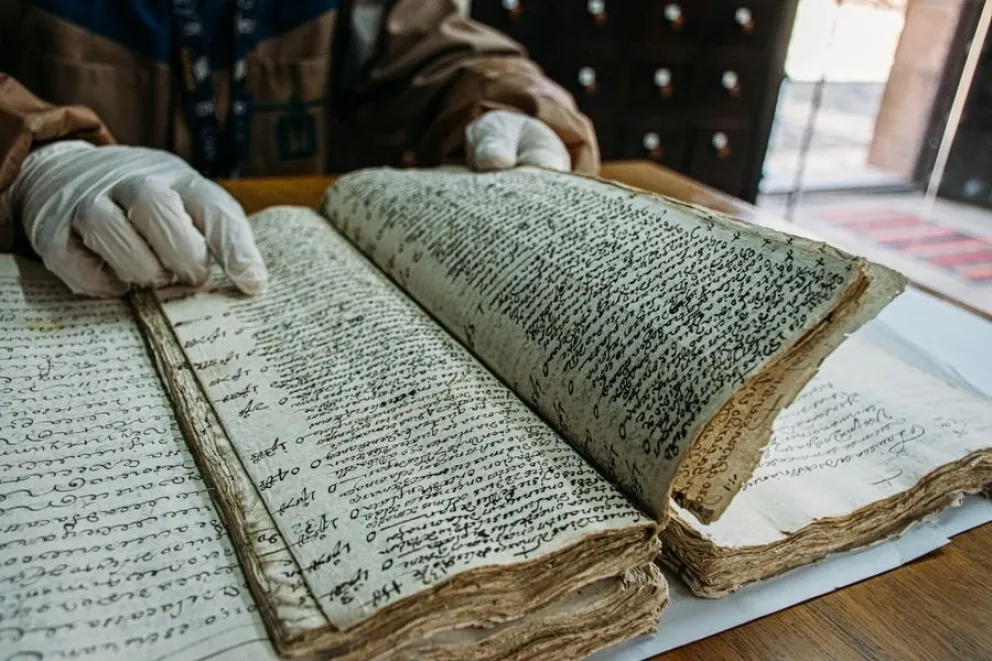
An image related to the topic, disseminated by the FC-BCB.
Bolivia broke a record in the Memory of the World Program (MoWLAC), directed by the United Nations Educational, Scientific and Cultural Organization (UNESCO), with the registration of eight documents.
“With these registrations, Bolivia is recognized as a custodian of historical documents that are part of the Memory of the World and aims to highlight the world’s documentary heritage,” states a press report from the Cultural Foundation of the Central Bank of Bolivia (FC-BCB).
Among the documents Bolivia registered is the “Census of Foreigners (1935-1959) from the La Paz Archive,” a documentary series that was part of the Ministry of the Interior, Migration, and Justice.
The National Archives and Library of Bolivia registered the “Gabriel René Moreno Collection on Mojos and Chiquitos (1758 – 1888).” The archive evidences the settlements of the Jesuit missions in the Bolivian Amazon and Chiquitos, from the late 17th century to 1767.
Also included in the Memory of the World is the document “Expedient on the Forced Relocation of Indians from Puno to the Imperial City of Potosí for Work in Mines and Mills (1745),” safeguarded by the National Mint of Bolivia, which describes the displacement of 83 people (women, men, and children) from the Puno region, now Peru, to the city of Potosí, now Bolivia, to fulfill the mita mining labor system.
Another registered document is the “Treatise on Cinchona [Quina, quinine| (1638-1792),” held by the Plurinational Culture Center. It is a fundamental work in botany and medicine that addresses the study of the cinchona tree and describes the various species discovered in the Viceroyalty of Peru in the 18th century.
Bolivia also registered the “Impartial Manifesto of the Revolution that Occurred in the City of Chuquisaca on Thursday, May 25, 1809,” nominated by Casa de la Libertad and presented as an anonymous diary. The document narrates the revolution of May 25, 1809, in La Plata (today Sucre) and mentions locations situated in what are now Bolivia, Peru, Ecuador, and Argentina.
Additionally, the “Spanish-Moseteno and Moseteno-Spanish Dictionary. Covendo 1874” was registered, nominated by the National Museum of Ethnography and Folklore. It was developed for teaching, arts, crafts, and evangelization in the indigenous Moseteno language.
Meanwhile, the National Museum of Art presented the “Political and Artistic Archive of Miguel Alandia Pantoja (1936-1979),” which demonstrates the social and ideological commitment of the Painter of the Revolution in the 20th century and is composed of 52 files.
Finally, the Universidad Mayor, Real y Pontificia de San Francisco Xavier de Chuquisaca registered the archive “Carolina Academy (1778-1941),” comprised of 541 folders of manuscripts as an academic response from the enlightened intellectuals of the time to improve the legal practice of those who studied at this university.
The members of the Regional Committee analyzed 35 eligible nominations for evaluation, submitted by Argentina, Brazil, Bolivia, Chile, Colombia, Cuba, Jamaica, Mexico, Nicaragua, Paraguay, Peru, Trinidad and Tobago, Uruguay, and Venezuela, approving 27 new registrations in the MoWLAC register.
The Memory of the World program was created by UNESCO in 1992 with the objective of promoting the conservation and access to the documentary heritage of humanity, including in digital format.
MoWLAC approved the first nominations for the regional register, and today there are 260 entries of documentary heritage safeguarded in archives, libraries, or museums recognized and selected by the program’s Regional Committee.
Por Visión 360:
Entre los documentos que inscribió Bolivia se encuentran “Censo de Extranjeros (1935-1959) del Archivo de La Paz”.
Una imagen relacionada con el tema, difundida por la FC-BCB.
Bolivia rompió un récord en el Programa Memoria del Mundo (MoWLAC), que dirige la Organización de las Naciones Unidas para la Educación la Ciencia y la Cultura (Unesco), con la inscripción de ocho documentos.
“Con estas inscripciones, Bolivia es reconocida como custodio de los documentos históricos que forman parte de la Memoria del Mundo y tiene como objetivo visibilizar el patrimonio documental mundial”, refiere un reporte de prensa de la Fundación Cultural del Banco Central de Bolivia (FC-BCB).
Entre los documentos que inscribió Bolivia se encuentran “Censo de Extranjeros (1935-1959) del Archivo de La Paz”, serie documental que formaba parte del fondo del Ministerio del Interior, Migración y Justicia.
El Archivo y Biblioteca Nacionales de Bolivia inscribió la “Colección de Gabriel René Moreno sobre Mojos y Chiquitos (1758 – 1888)”. El archivo evidencia los asentamientos de las misiones de la Compañía de Jesús en la Amazonia boliviana y Chiquitos, a finales del siglo XVII hasta 1767.
También es memoria del mundo, el documento “Expediente sobre el traslado forzado de indios de Puno a la Villa Imperial de Potosí para Trabajos en Minas e Ingenios (1745)”, custodiado por Casa Nacional de Moneda, que describe el desplazamiento de 83 personas (mujeres, hombres y niños), de la intendencia Puno, actual Perú a la ciudad de Potosí, actual Bolivia para cumplir con la mita minera.
Otro de los documentos inscritos es el “Tratado de Quinología (1638-1792)”, custodiado por el Centro de la Cultura Plurinacional. Se trata de una obra fundamental en la botánica y la medicina que aborda el estudio del árbol de la quina y describe las diversas especies descubiertas en el Virreinato del Perú en el siglo XVIII.
Bolivia también inscribió al programa el “Manifiesto imparcial de la revolución acaecida en la ciudad de Chuquisaca el día jueves 25 de mayo de 1809” postulado por Casa de la Libertad, dispuesto en forma de diario anónimo. El documento narra la revolución del 25 de mayo de 1809 en La Plata (hoy Sucre) y menciona lugares ubicados en los actuales territorios de Bolivia, Perú, Ecuador y Argentina.
Asimismo, se inscribió el “Diccionario Castellano Moseteno y Moseteno Castellano. Covendo 1874” postulado por el Museo Nacional de Etnografía y Folklore. El mismo fue elaborado para la enseñanza, artes, oficios y evangelización en la lengua indígena Moseteno.
Mientras que el Museo Nacional de Arte presentó el “Archivo Político y Artístico Particular de Miguel Alandia Pantoja (1936-1979)” que muestra el compromiso social e ideológico del Pintor de la Revolución en el siglo XX y que está compuesto por 52 expedientes.
En tanto, la Universidad Mayor, Real y Pontificia de San Francisco Xavier de Chuquisaca inscribió el archivo “Academia Carolina (1778-1941), integrado por 541 legajos de manuscritos como una respuesta académica de los intelectuales ilustrados de la época para mejorar la práctica jurídica de quienes estudiaron en dicha universidad.
Los miembros del Comité Regional analizaron 35 postulaciones elegibles para su evaluación, presentadas por Argentina, Brasil, Bolivia, Chile, Colombia, Cuba, Jamaica, México, Nicaragua, Paraguay, Perú, Trinidad y Tobago, Uruguay y Venezuela, aprobando 27 nuevas inscripciones en el Registro MoWLAC.
El programa Memoria del Mundo fue creado por la Unesco en 1992 con el objetivo de promover la conservación y el acceso al patrimonio documental de la humanidad, incluyendo en formato digital.
El MoWLAC aprobó las primeras nominaciones en el registro regional y hoy suman 260 inscripciones del patrimonio documental que permanecen custodiadas en archivos, bibliotecas o museos reconocidos y seleccionadas por el Comité Regional del programa.

 Bolivian Thoughts | Pensamientos Bolivianos (Bilingual/Bilingüe)