
By Jorge Soruco, Vision 360:
For less than a decade, all you need is a pot of boiling water to enjoy traditional dishes like lawas and chupes.
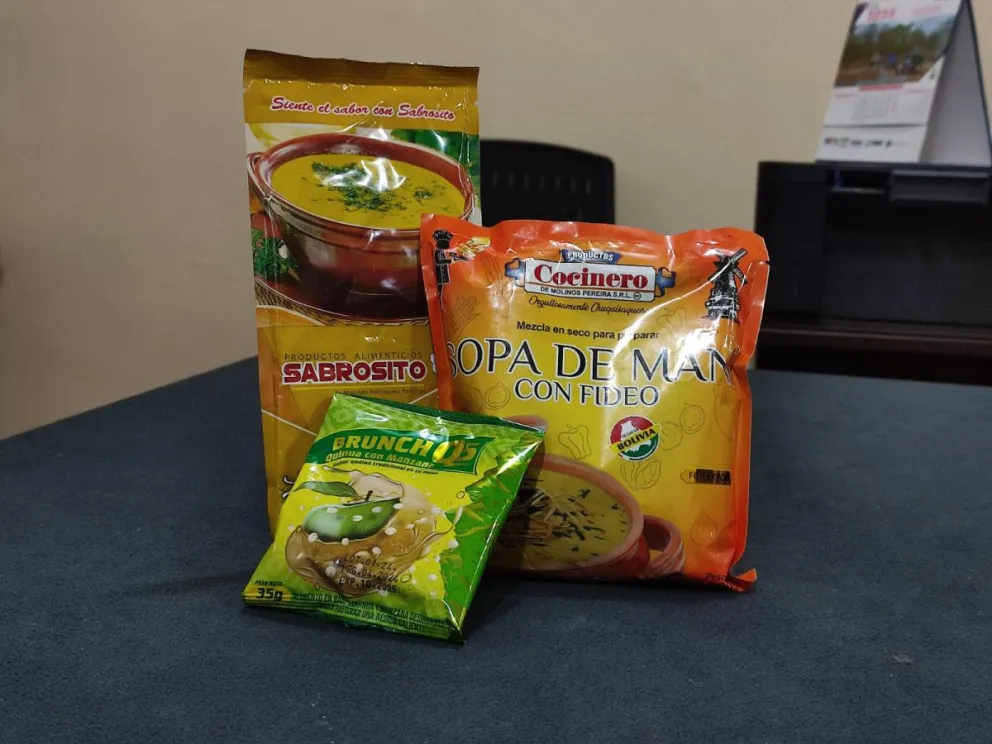
Three national dishes produced in Bolivia. Photo: Paulo Lizárraga / visión360
Chairo is one of the most representative soups of the country. Hearty and hot, it’s ideal for the winter months and to satisfy even the fiercest hunger. However, it’s also a dish that requires a lot of preparation time, making the growing market for instant Bolivian foods a great help for those with little time to cook.
While instant soup creation has a long history in Bolivia, the offering of more substantial lawas and chupes is relatively recent. Companies like Sabrosito, Cocinero, and Sabor Andino have expanded their offerings of instant beverages and creams to more complex and filling dishes in less than a decade.
“The reality of modern life is that routines don’t allow much time for cooking, especially for someone living alone or a student,” explains Rossana Huaillani, commercial manager of the Sabor Andino brand.
Convenience is key
National companies have created foods with the aim of making their customers’ lives easier. “They don’t take long to prepare. Some of the more complex soups may require soaking some of the ingredients before adding boiling water, but it doesn’t take much time,” says Milton Rodríguez, manager of Sucre-based Sabrosito.
This premise has led established and new companies to explore the potential of instant food. In some cases, they have replaced previously best-selling products.
This is what happened with Sabor Andino. The company from El Alto used to focus on instant beverages. But about four years ago, they started with quinoa soup, among other products of that type. “People liked it a lot, and sales quickly increased,” Huaillani reveals.
One of the big attractions of these foods is their ease of preparation. Unlike other products packaged in a bag, quinoa soup comes in a cup, following the successful formula of instant ramen.
“You simply boil water and pour it over the dehydrated mix in the cup. Wait five minutes, and it’s ready to eat. Other foods, like quinoa with apple, take even less time. This is ideal for those who can’t spend hours in the kitchen,” adds Huaillani.
Indeed, both Huaillani and representatives of other ventures foresee that more similar initiatives will emerge due to increasingly scarce time.
“Our foods are very tasty, nutritious, and filling… But they’re not simple or quick to prepare, even when you manage to simplify the preparation of some ingredients, like powdered chili or precooked mote. For a good chairo from La Paz, a peanut stew from Chuquisaca, corn lawa, or spicy tongue, the cook needs to spend a lot of time in the kitchen, something that is no longer feasible,” says Wálter Torrico García of Productos Cocinero from Sucre.
Thus, the option of instant foods is very attractive. “Even the busiest person can eat well, taking up to 20 minutes at most,” he added.
The benefit is reflected in the cost of the products. From five Bolivianos to a maximum of 30, these companies aim to reach as many consumers as possible.
“Our intention is not to overcharge local consumers. On the contrary, especially considering that many university students are among the most frequent buyers of dehydrated foods,” complements Rodríguez.
Long-lasting foods
Another big advantage is that these are not short-lived products. Most can last a little over a year before they need to be discarded.
“Being dehydrated food, its shelf life is longer than that of fresh products. This allows a large quantity to be kept in reserve for emergencies or to reduce the purchase of perishable products, which need to be consumed as soon as possible,” adds Torrico.
The validity of the food is defined by the National Service for Agricultural Health and Food Safety (Senasag). On average, instant foods can stay in perfect condition for a year, maybe a little longer if stored in dry environments. In warmer places, the shelf life is eight months.
Regarding the quality of the food, the companies assure that dehydrated foods do not lose much nutritional value. The ingredients are all-natural, with minimal use of artificial preservatives.
However, while they stand by the quality of their products, they acknowledge that these foods cannot be the sole source of nutrition. They are a support but do not replace traditionally prepared dishes like chairo or peanut stew.
But even in those cases, the processing they use helps, whether it’s with key powdered ingredients like peanuts, beef, and chicken broths, or seasonings like salt, herbs, and pepper, among others.
For example, Cocinero offers everything needed to add to chicken, tongue, or lamb tail for spicy dishes.
Change in focus
The three companies consulted by Visión 360 have been in the market for years, although their focus on more substantial instant dishes is more recent.
Such is the case with Productos Cocinero, a company celebrating six decades this year. When they began operations in Bolivia’s capital, they primarily focused on selling one of their department’s main products: chili powder. Be it yellow or red, the spicy powder reached kitchens across the country.
Over time, they expanded their offerings to traditional drinks like api, competing with Sabrosito and other national brands, and traditional beverages like the famous coconut horchata from Sucre.
But about four years ago, they expanded their offerings. Similarly, competitors like Sabrosito and Sabor Andino began dehydrating mote, chuño, potatoes, and charke around the same time, all with good commercial results.
Currently, each of these companies has a catalog of between 50 and more than 250 products for sale. They reach the entire country and can be found in supermarkets and neighborhood stores.
“We have the advantage that everything can be dehydrated. This way, we keep studying how to transform our recipes into new products for the country,” says Rodríguez.
“People really enjoy our national flavors. Of course, some sell more than others, and each of us has our star product, but I assure you that the future is in packets,” adds Huaillani.
Por Jorge Soruco, Vision 360:
Desde hace menos de una década solo se necesita una caldera de agua hirviendo para poder disfrutar de manjares como lawas y chupes tradicionales.
Tres comidas nacionales producidas en Bolivia. Foto: Paulo Lizárraga / visión360
El chairo es una de las sopas más representativas del país. Contundente y caliente, es ideal para los meses de invierno y calmar el hambre más feroz. Pero también es un platillo que requiere de bastante tiempo de preparación, por lo que el creciente mercado de alimentos bolivianos instantáneos es una gran ayuda para los golosos sin tiempo.
Aunque la creación de sopas instantáneas ya tiene una larga historia en Bolivia, la oferta de lawas y chupes más consistentes es relativamente reciente. Tal es el caso de las empresas Sabrosito, Cocinero y Sabor Andino, que en menos de una década expandieron su oferta de refrescos y cremas a platillos más complicados y “llenadores”.
“Lo que pasa es que en la vida moderna la rutina no permite tener mucho tiempo para preparar la comida. Especialmente si una persona vive sola y es estudiante, por ejemplo”, explica la gerente comercial de la marca Sabor Andino, Rossana Huaillani.
Comodidad, palabra clave
Los alimentos en oferta de las empresas nacionales fueron creados con el objetivo de facilitar la vida de sus clientes. “No toma mucho tiempo prepararlos. Quizá algunas de las sopas más complejas requieren el remojado de algunos de los ingredientes previo a verter el agua hirviendo, pero no toma mucho tiempo”, asegura el gerente de la empresa sucrense Sabrosito, Milton Rodríguez.
Bajo esa premisa es que empresas ya establecidas y nuevas comenzaron a explorar el potencial de la comida instantánea. En algunos casos reemplazaron a los productos que, anteriormente, eran los más vendidos.
Es lo que ocurrió con Sabor Andino. Antes, la empresa alteña tenía preferencia por los refrescos instantáneos. Pero hace unos cuatro años comenzó con la sopa de quinua, entre otros productos de ese tipo. “A la gente le gustó mucho y las ventas subieron rápidamente”, revela Huaillani.
Uno de los grandes atractivos de esta comida es que es muy fácil de preparar, ya que no viene empaquetada en un sobre, como otros de sus productos, sino que repite la fórmula ganadora del ramen instantáneo: la sopa de quinua viene en vaso.
“Simplemente se hierve el agua y se vierte sobre el preparado deshidratado que está en el vaso. Se espera cinco minutos y ya se puede comer. Otras comidas, como la quinua con manzana, tardan aún menos. Todo esto es ideal para quienes no pueden dedicarle muchas horas a la cocina”, agrega la gerente comercial de Sabor Andino.
De hecho, tanto Huaillani como los representantes de los otros emprendimientos prevén que, cada vez más, aparecerán nuevas iniciativas similares, precisamente por el cada vez más escaso tiempo.
“Nuestras comidas son muy ricas, nutritivas y consistentes… Pero no son de preparación simple o rápida, incluso cuando consigues simplificar la preparación de algunos de los ingredientes, como el ají en polvo o el mote precocido. Para un buen chairo paceño, una cazuela de maní chuquisaqueña, una lawa de choclo o un picante de lengua, la o el amo de casa debe pasar mucho tiempo en la cocina, algo que ya no es factible”, considera Wálter Torrico García, de Productos Cocinero, de Sucre.
Así, la opción de los alimentos instantáneos es muy atractiva. “Incluso la persona más atareada podrá comer bien, tardando hasta 20 minutos como máximo”, agregó.
El beneficio se presenta en el costo de los productos. Desde cinco bolivianos a un máximo de 30, las ofertas de las empresas buscan llegar a la mayor cantidad posible de bolsillos.
“Nuestra intención no es desangrar a los consumidores nacionales. Todo lo contrario, especialmente considerando que muchos universitarios están entre los que más recurren a los alimentos deshidratados”, complementa Rodríguez.
Alimentos de gran duración
Otra de las grandes ventajas es que no son productos de corta vida. La mayoría pueden durar hasta poco más de un año antes de tener que ser desechados.
“Al ser comida deshidratada su duración es mayor que la de los productos frescos. Esto permite que se pueda tener una gran cantidad en reserva para momentos de emergencia o para reducir la compra de otros productos perecederos, que tienen que ser consumidos lo antes posible”, agrega Torrico.
La validez de la comida es definida por el Servicio Nacional de Sanidad Agropecuaria e Inocuidad Alimentaria (Senasag). En promedio, los alimentos instantáneos pueden conservarse en perfecto estado por un año, quizá un poco más si se conservan en ambientes secos. En el caso de lugares de temperaturas más altas, la fecha límite es ocho meses.
Respecto a la calidad de las comidas, los responsables de las empresas aseguran que los alimentos deshidratados no pierden mucho en valor nutricional. Los ingredientes son todos naturales y se trata de usar lo mínimo en conservantes artificiales.
Eso sí, si bien no dudan en garantizar el valor de sus productos, reconocen que no pueden ser los únicos alimentos en una dieta. Son un apoyo, pero tampoco reemplazan a un chairo o una cazuela de maní preparados de forma tradicional.
Pero, incluso en esos casos el procesamiento que utilizan ayuda, ya sea con ingredientes clave en polvo como el maní, caldos de res y de pollo, y los condimentos como sal, hierbas y pimienta, entre otros.
Cocinero, por ejemplo, tiene todo lo necesario para agregar al pollo, lengua o colita de cordero para los picantes.
Cambio de enfoque
Las tres empresas consultadas por Visión 360 ya tienen años en el mercado, aunque el enfoque en los platillos más contundentes como productos instantáneos es más reciente.
Tal es el caso de Productos Cocinero, empresa que este año cumple seis décadas de existencia. Cuando comenzaron sus operaciones en la capital boliviana, se enfocaron principalmente en la venta de uno de los principales productos de su departamento: el ají. Sea amarillo o rojo, el picante en polvo llegó a las cocinas del país.
Con el tiempo ampliaron su oferta al tradicional api, compitiendo con Sabrosito, entre otras marcas nacionales, y refrescos tradicionales como la famosa horchata de coco sucrense.
Pero hace cuatro años que ampliaron su oferta. De igual manera, sus competidores como Sabrosito y Sabor Andino comenzaron a deshidratar el mote, chuño, papa y charke por las mismas fechas, todos con buenos resultados comerciales.
Actualmente, cada una de las empresas tiene un catálogo de entre 50 y más de 250 productos a la venta. Llegan a todo el país y se pueden hallar en los supermercados y tiendas de barrio.
“Tenemos la ventaja que todo puede deshidratarse. De esta forma vamos estudiando cómo transformar nuestras recetas en nuevos productos para el país”, informa Rodríguez.
“La gente gusta mucho de nuestros sabores nacionales. Claro que algunos venden más que otros y cada uno tenemos nuestro producto estrella, pero le aseguro que el futuro se viene en sobres”, agrega Huaillani.

 Bolivian Thoughts | Pensamientos Bolivianos (Bilingual/Bilingüe)