
El Diario:
More than 500 families abandon their homes due to the rise of the Acre River
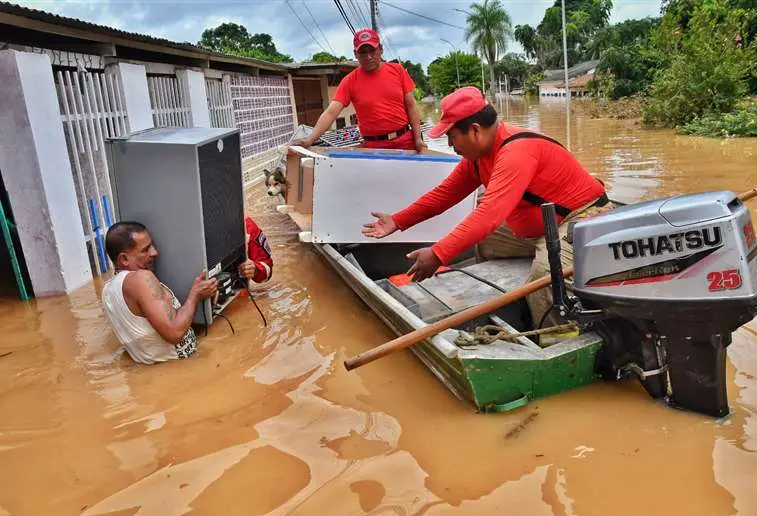
The level of the Acre River, which reached 14.50 meters on the bank and continues to rise, caused more than 100 families to stay in various shelters and another 400 families to take refuge in the homes of their relatives or friends, reported the Autonomous Municipal Government of Cobija.
In the last hours, the Acre River presented overflows in some points of its course, and the water level continues to rise, reported yesterday the mayor of Cobija, Ana Lucia Reis.
“The water level will continue to rise, the highest we had was in 2012, (when it reached) almost 15 meters and now we are practically at that level,” said the Mayor, while pointing out that so far this District is one of the most affected at the national level by the overflow of the Acre River.
RELOCATION
“At this moment, there are more than 100 families in various shelters and another 400 families are taking refuge in the homes of their relatives or friends,” said the authority.
She pointed out that there are neighborhoods like Primero de Mayo, where the task of evacuating families began, and there are also other sectors, where it was not thought that the water would reach, that are also suffering from the onslaught of the storm, and they are receiving help from the emergency units of the Bolivian Navy.
Cobija is one of the municipalities that declared a red alert due to the rise of the Acre River and the critical situation it is going through due to floods.
SUSPENDED CLASSES
The Ministry of Education reported that, to date, there are six educational units that, due to rains and for safety, decided to suspend school activities. The establishments are in the departments of Pando, La Paz, and Potosí.
“In total, we have six educational units, nationally, that would be facing this problem. In the department of Pando, in Cobija; in the Yungas region of the department of La Paz, in Chulumani; and in Potosí, in Colcha K,” detailed the Deputy Minister of Regular Education, Manuel Eudal Tejerina.
He stated that, approximately, about 1,600 students would be affected by the suspension of classes and specified that the department of Pando is the region most affected by rainfall. There, two educational units suspended their school activities and there are more than 1,000 students affected by this interruption.
“The most complex case is in Cobija, Pando, where we had a flood in the lower part of the city, where two educational units have been affected. At the moment, classes are suspended, waiting for conditions to improve. This implies that we would have more than 1,000 students without classes due to this climatological phenomenon,” he said.
Regarding the northern region of La Paz, educational activities were suspended in three establishments, and in Potosí in one. In both cases, “there was an immediate action by the municipality and the parents; but as the rain continues, the measure of suspending classes for today (yesterday) has been taken,” pointed out the deputy minister.
The education authority recommended taking the necessary precautions due to the persistent rains that, according to the National Meteorology and Hydrology Service (Senamhi), will continue in several regions of the country. He also said that the departmental and district directors are attentive to different problems that may arise.
Más de 500 familias abandonan sus hogares por ascenso del río Acre
El nivel del río Acre que alcanzó los 14,50 metros en el barranco y sigue aumentando, provocó que más de 100 familias se alojen en distintos albergues habilitados y que otras 400 familias fueron refugiadas en casas de sus familiares o amigos, informó el Gobierno Autónomo Municipal de Cobija.
En las últimas horas el río Acre, presentó desbordes en algunos puntos de su curso y el nivel de sus aguas sigue aumentando, informó ayer la alcaldesa de Cobija, Ana Lucia Reis.
«El nivel del agua seguirá creciendo, el más alto que hemos tenido fue en 2012, (cuando se alcanzó) casi 15 metros y ahora estamos prácticamente a ese nivel», dijo la Alcaldesa a tiempo de señalar que hasta el momento este Distrito es uno de los más afectados a nivel nacional por el desborde del río Acre.
TRASLADO
«En este momento suman más de 100 familias en distintos albergues habilitados y otras 400 familias se encuentran refugiadas en casas de sus familiares o amigos», precisó la autoridad.
Señaló que hay barrios como Primero de Mayo, donde se empezó la tarea de evacuación de las familias, y también hay otros sectores, donde no se pensaba que iba a llegar el agua, que también están sufriendo los embates del temporal, los mismos que están recibiendo ayuda por parte de las unidades de emergencia de la Armada Boliviana.
Cobija es uno de los municipios que se declaró en alerta roja por la crecida del río Acre y la situación crítica que atraviesa por las inundaciones.
CLASES SUSPENDIDAS
El Ministerio de Educación informó que, a la fecha, se tienen seis unidades educativas que, debido a las lluvias y por seguridad, definieron la suspensión de labores escolares. Los establecimientos están en los departamentos de Pando, La Paz y Potosí.
«En total tenemos seis unidades educativas, a nivel nacional, que estarían con este problema. En el departamento de Pando, en Cobija; en la región de los Yungas del departamento de La Paz, en Chulumani; y en Potosí, en Colcha K», detalló el viceministro de Educación Regular, Manuel Eudal Tejerina.
Sostuvo que, aproximadamente unos 1.600 estudiantes estarían afectados con la suspensión de clases y especificó que el departamento de Pando es la región más afectada por las precipitaciones pluviales. Ahí, dos unidades educativas suspendieron sus labores escolares y hay más de 1.000 estudiantes afectados con esa interrupción.
«El caso más complejo es en Cobija, Pando, donde hemos tenido una inundación en la parte baja de la ciudad, donde han sido afectadas dos unidades educativas. De momento están suspendidas las clases, esperando que mejoren las condiciones. Esto implica que estaríamos con más de 1.000 estudiantes sin pasar clases por causa de este fenómeno climatológico», manifestó.
En cuanto a la región del Norte paceño, las actividades educativas fueron suspendidas en tres establecimientos y en Potosí en uno. En ambos casos, «hubo una actuación inmediata por parte del municipio y los padres de familia; pero como continúa la lluvia, se ha tomado la medida de suspensión de clases por el día de hoy (por ayer)», apuntó el viceministro.
La autoridad educativa recomendó tomar los recaudos necesarios ante las persistentes lluvias que, según el Servicio Nacional de Meteorología e Hidrología (Senamhi), continuarán en varias regiones del país. Dijo también que los directores departamentales y distritales están atentos a diferentes problemas que pudieran presentarse.

 Bolivian Thoughts | Pensamientos Bolivianos (Bilingual/Bilingüe)