
Correo del Sur:
THE EXPEDITION OF A TEAM OF 15 PEOPLE LASTED 22 DAYS
They find traces of sauropods and a pre-Hispanic bridge used by cultures of Chuquisaca.


An expedition lasting 22 days carried out by North American explorers and a Bolivian guide along the Grande River concluded successfully with indications of two findings: one paleontological and the other archaeological. CORREO DEL SUR learned about the story of this journey that crossed four departments of Bolivia.
The expedition began in the municipality of Colquechaca, Potosí, on January 14th. The team of 15 people, consisting of firefighters, paramedics, fishing entrepreneurs, and rafting guides from the United States and Canada, departed from the Chayanta River to the Poroma River in Chuquisaca, then to the Mizque River in Cochabamba, and finally concluded in the Amazon of Santa Cruz.
During the journey, which ended on February 4th in the town of Abapó, municipality of Cabezas, Santa Cruz, the group completed one of the longest rafting trips known in Bolivia.
“We have descended, over the 22 days, along the 636-kilometer river (…), we have seen endemic species such as the red macaw and the Andean condor, which accompanied us in the different canyons and in the Amazon, as well as toucans and capybaras,” recounted César Saavedra, the only Bolivian guide part of the exploration team from the American company Sierra Ríos.
Discoveries
In Cochabamba, specifically in the community of Yuthuni Grande, near Aiquile, the explorers found the ruins of a pre-Hispanic bridge, previously spotted by Saavedra, which was possibly used by the Mojocoya and Yampara cultures of Chuquisaca to move to Omereque in Cochabamba.
This archaeological vestige would demonstrate more precisely the relationships of the pre-Hispanic cultures that inhabited that region.
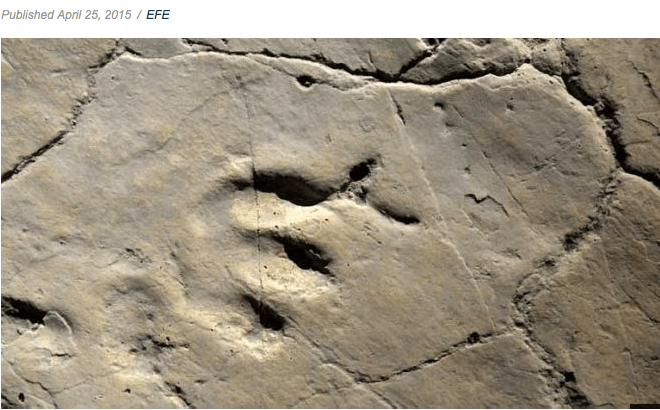
Further downstream, “we have also been able to appreciate further evidence of what is very likely to be dinosaur footprints,” Saavedra reported, specifying that this discovery occurred in the Pasorapa sector, Cochabamba, where there are traces of possible footprints.
Swiss paleontologist Christian Meyer, who studied the footprints of Cal Orck’o and will return to Bolivia in September to analyze the footprints of Toro Toro, told this newspaper that they could be footprints of sauropods (long-necked dinosaurs), although further studies are needed.
Saavedra, who promotes rafting trips with his company “Mi Río,” stated that rafting trips are safe, as long as they are led by experts who know the route and companies that offer guarantees.
POLLUTION
During the expedition, pollution of the Grande River with plastic (bottles and bags) generated in different cities was observed, so it is urged to stop using this material and use other more solid materials that can be reused.
LA EXPEDICIÓN DE UN EQUIPO DE 15 PERSONAS DURÓ 22 DÍAS
Encuentran huellas de saurópodos y un puente prehispánico usado por culturas de Chuquisaca
Una expedición de 22 días realizada por exploradores norteamericanos y un guía boliviano por el río Grande culminó de forma exitosa y con indicios de dos hallazgos: uno paleontológico y otro arqueológico. CORREO DEL SUR conoció la historia de este viaje que cruzó cuatro departamentos de Bolivia.
La expedición comenzó en el municipio de Colquechaca, Potosí, el 14 de enero pasado. El equipo de 15 personas, conformado por bomberos, paramédicos, empresarios pesqueros y guías de rafting de Estados Unidos y Canadá, partió del río Chayanta hacia el de Poroma en Chuquisaca, luego al río Mizque en Cochabamba para concluir en la Amazonía de Santa Cruz.
En el trayecto, que culminó el 4 de febrero en la localidad de Abapó, municipio de Cabezas, de Santa Cruz, el grupo concretó uno de los viajes más largos de rafting que se conocen en Bolivia.
“Hemos hecho un descenso, durante los 22 días, sobre el río de 636 kilómetros (…), hemos contemplado especies endémicas del lugar como la paraba roja y el cóndor andino, que nos acompañaba en los diferentes cañones y en la Amazonía, tucas y capibaras”, relató César Saavedra, el único guía boliviano parte del equipo de exploradores de la empresa estadounidense Sierra Ríos.
Hallazgos
En Cochabamba, específicamente en la comunidad de Yuthuni Grande, cercana a Aiquile, los exploradores encontraron las ruinas de un puente prehispánico, avistado anteriormente por Saavedra, el cual posiblemente fue usado por las culturas Mojocoya y Yampara de Chuquisaca para movilizarse a Omereque en Cochabamba.
Este vestigio arqueológico demostraría con más certeza las relaciones de las culturas prehispánicas que habitaron esa región.
Más abajo “también hemos podido apreciar una evidencia más de lo que muy probablemente sean huellas de dinosaurio”, informó Saavedra al especificar que este hallazgo se dio en el sector de Pasorapa, Cochabamba, donde hay rastros de posibles pisadas.
El paleontólogo suizo Christian Meyer, que estudió las huellas de Cal Orck’o y retornará a Bolivia en septiembre para analizar las huellas de Toro Toro, adelantó a este diario que podría tratarse de huellas de saurópodos (dinosaurios de cuello largo), aunque resta realizar estudios.
Saavedra, que promueve los viajes en balsa con su empresa “Mi Río”, manifestó que los viajes de rafting son seguros, siempre y cuando sean encabezados por expertos que conozcan la ruta y empresas que ofrezcan garantías.
CONTAMINACIÓN
En la expedición se pudo constatar la contaminación del río Grande con plástico (botellas y bolsas) generado en distintas ciudades, por lo que se exhorta a dejar de usar este material y usar otros más sólidos que se puedan reutilizar.
https://correodelsur.com/cultura/20240222_viaje-en-el-rio-grande-culmina-con-hallazgos.html

 Bolivian Thoughts | Pensamientos Bolivianos (Bilingual/Bilingüe)