
By Vision 360:
A gene linked to altitude adaptation could explain why some people suffer from sorojchi and others do not
A study by UMSA identifies the NFKB1 gene as key in altitude adaptation, which could explain why some people suffer from sorojchi while others do not, and opens new possibilities for preventing its effects.
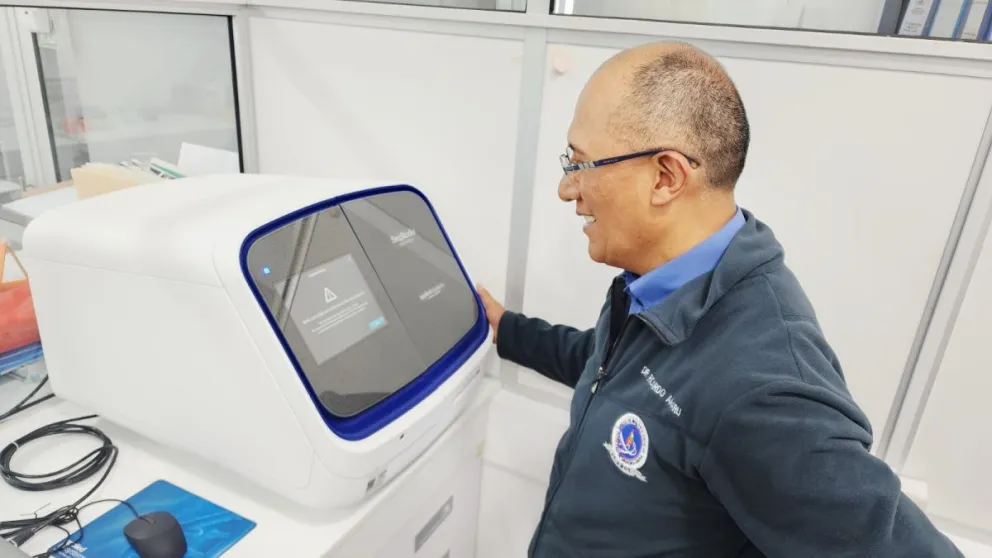
One of the researchers from UMSA’s Cellular Biology Unit. Photo: UMSA
Reaching elevations above 3,500 or 4,000 meters above sea level is not the same for everyone. While some experience headaches, nausea, and fatigue — common symptoms of sorojchi or altitude sickness — others can walk, play soccer, or work without major difficulty. Could the difference lie in DNA? Research led by the Universidad Mayor de San Andrés (UMSA) identified a gene linked to better altitude adaptation.
The study, developed over more than 16 years by UMSA’s Cellular Biology Unit and recently published in the scientific journal Acta Physiologica, analyzes genetic variants present in the Andean population. Researchers identified the NFKB1 gene, associated with the regulation of inflammatory processes.
“Sorojchi, at its core, is an inflammatory reaction of the body to the lack of oxygen. NFKB1 modulates that inflammation and prevents the body’s response from becoming excessive. We also observed that this gene is mutated in 90% of those of us who live in the Andean region, compared to 30% of those living at sea level,” explained Dr. Ricardo Amaru, head of the unit.
To verify its effect, the team worked in collaboration with the University of Utah in the United States, evaluating European volunteers exposed to conditions similar to 4,500 meters of altitude. The results showed that those carrying this genetic variant presented milder symptoms.
Health implications
The genetic variant studied is found more frequently in populations of Bolivia’s Andean region — mainly in the departments of La Paz, Oruro, and Potosí — where thousands of families have lived for generations at elevations above 3,500 meters, under hypoxic conditions, meaning lower oxygen availability.
Beyond explaining why some people suffer more than others upon reaching high altitude, the finding opens new possibilities in health. According to Amaru, understanding how this gene functions could, in the future, help prevent or reduce the effects of altitude sickness in tourists or people traveling from sea-level locations or from Bolivia’s eastern lowlands. In addition, because it is related to inflammatory processes, the study has implications for diseases in which inflammation is an aggravating factor.
From one of the highest cities in the world, UMSA contributes scientific knowledge with international impact. What began as a laboratory observation more than a decade ago now offers concrete clues about how the human body adapts to living in the Andes and how genetics can make the difference between suffering from altitude or adapting to it.
Por Vision 360:
Gen vinculado a la adaptación a la altura podría explicar por qué unos sufren el sorojchi y otros no
Un estudio de la UMSA identifica el gen NFKB1 como clave en la adaptación a la altura, lo que podría explicar por qué algunas personas sufren el sorojchi y otras no, y abre nuevas posibilidades para la prevención de sus efectos.
Uno de los investigadores de la Unidad de Biología Celular de la UMSA. Foto: UMSA
Llegar a más de 3.500 o 4.000 metros sobre el nivel del mar no es igual para todos. Mientras algunos sienten dolor de cabeza, náuseas y fatiga —síntomas habituales del sorojchi o mal de montaña—, otros pueden caminar, jugar fútbol o trabajar sin mayor dificultad. ¿La diferencia podría estar en el ADN? Una investigación liderada por la Universidad Mayor de San Andrés (UMSA) identificó un gen vinculado a una mejor adaptación a la altura.
El estudio, desarrollado durante más de 16 años por la Unidad de Biología Celular de la UMSA y publicado recientemente en la revista científica Acta Physiologica, analiza variantes genéticas presentes en la población andina. Los investigadores identificaron al gen NFKB1, relacionado con la regulación de procesos inflamatorios.
“El sorojchi, en el fondo, es una reacción inflamatoria del organismo ante la falta de oxígeno. El NFKB1 modula esa inflamación y evita que la respuesta del cuerpo sea exagerada. También vimos que este gen está mutado en el 90% de quienes vivimos en la región andina, en comparación al 30% de quienes viven a nivel del mar”, explicó el Dr. Ricardo Amaru, jefe de dicha unidad.
Para comprobar su efecto, el equipo trabajó en colaboración con la Universidad de Utah, en Estados Unidos, evaluando a voluntarios europeos expuestos a condiciones similares a 4.500 metros de altitud. Los resultados mostraron que quienes portaban esta variante genética presentaban síntomas más leves.
Implicaciones en la salud
La variante genética estudiada se encuentra con mayor frecuencia en poblaciones de la región andina de Bolivia —principalmente en los departamentos de La Paz, Oruro y Potosí—, donde miles de familias han vivido por generaciones a más de 3.500 metros de altitud, en condiciones de hipoxia, es decir, con menor disponibilidad de oxígeno.
Más allá de explicar por qué algunas personas sufren más que otras al llegar a la altura, el hallazgo abre nuevas posibilidades en salud. Según Amaru, comprender cómo actúa este gen podría ayudar, en el futuro, a prevenir o reducir los efectos del mal de montaña en turistas o personas que viajan desde lugares al nivel del mar o del oriente boliviano. Además, al estar relacionado con procesos inflamatorios, el estudio tiene implicaciones en enfermedades donde la inflamación es un agravante.
Desde una de las ciudades más altas del mundo, la UMSA aporta conocimiento científico con impacto internacional. Lo que comenzó como una observación en laboratorio hace más de una década hoy ofrece pistas concretas sobre cómo el cuerpo humano se adapta a vivir en los Andes y cómo la genética puede marcar la diferencia entre sufrir la altura o adaptarse.

 Bolivian Thoughts | Pensamientos Bolivianos (Bilingual/Bilingüe)