
By El Diario:
In a historic runoff
- The results of the general elections showed that the Bolivian people leaned toward renewal and rejected the persistent smear campaigns among political actors, which had intensified in the final days of the campaign.
- Paz’s efforts to share his proposals in rural areas and remote towns—historical strongholds of “masismo”—were highlighted.
- Doria Medina and Quiroga acknowledged and congratulated Paz’s victory without questioning the results or threatening measures to reject their defeat. After a long time, the Bolivian electorate experienced debates and an engaging competition.
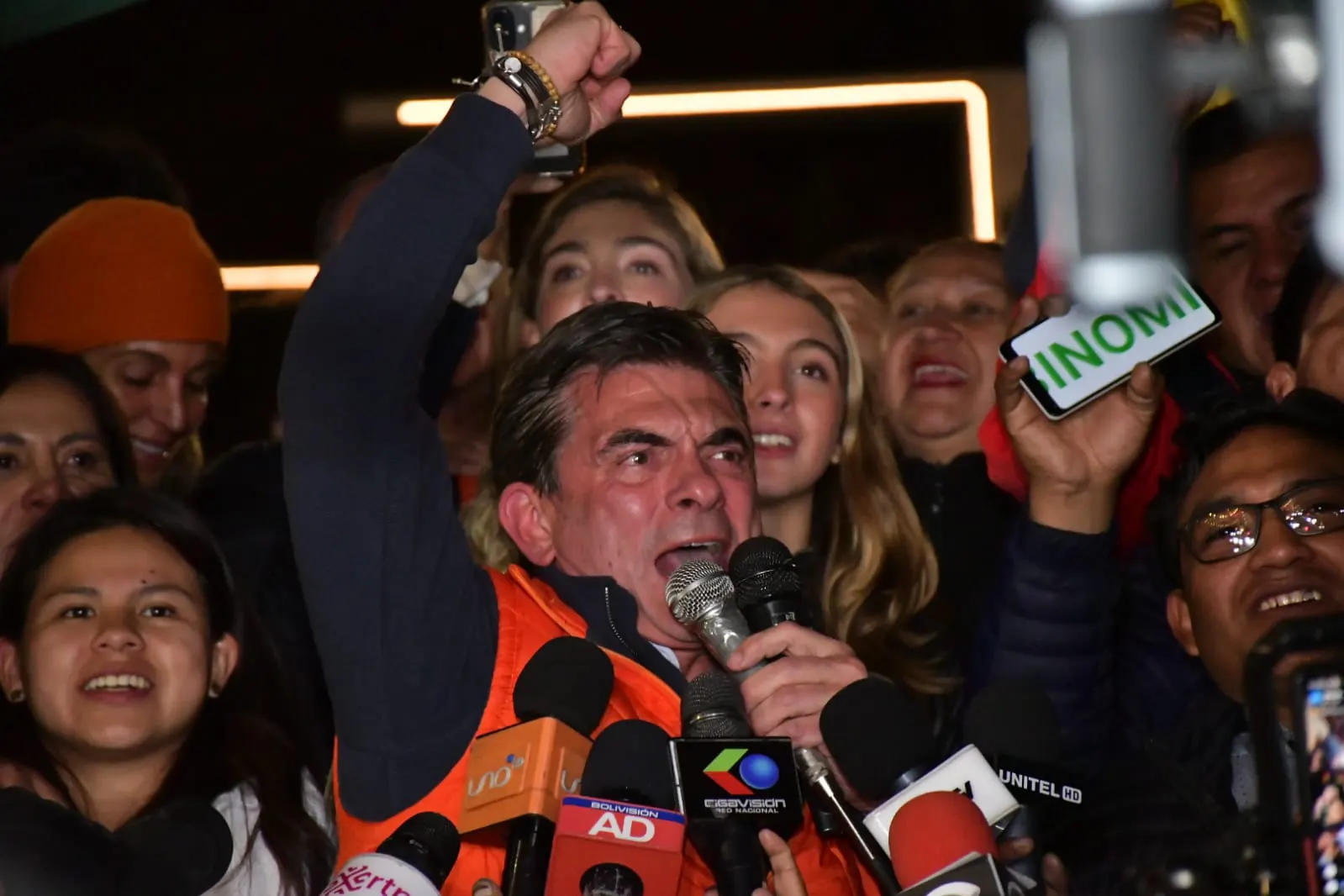
After election day and once the results of the quick count commissioned by television networks, along with the Preliminary Results Transmission System of the Supreme Electoral Tribunal (TSE), were revealed—granting a surprising victory to the candidate of the Christian Democratic Party (PDC), Rodrigo Paz, followed by Jorge Quiroga of the Libre Alliance—analysts stated that the smear campaign ultimately benefited the opposition senator and that Bolivians leaned toward renewal.
Although previous polls placed Doria Medina in first place, followed by Quiroga and leaving Paz on the sidelines, data released by Unitel and Red Uno gave the PDC candidate a surprising victory in the general elections, with more than 31% support.
Subsequently, the TSE’s Sirepre system placed Paz in first with over 32%, followed by Quiroga with 26%, a scenario that makes it necessary to define the presidency in a historic runoff scheduled for October 19.
According to political scientist Erika Brockmann, Paz’s unexpected victory was decided in the final days of the campaign, since all electoral opinion studies pointed in another direction, highlighting the large number of undecided voters and the range of possibilities surrounding them.
“It was a surprising result that was defined in the last ten days, because the polls showed there were many undecided voters,” she said.
She also noted that Sunday’s results revealed that the Bolivian people leaned toward renewal and rejected the persistent smear campaigns among political actors, which had intensified in the final days of the campaign.
“In the end, the confrontation between Doria Medina and Quiroga ended up benefiting Paz,” she argued.
Another aspect identified by the specialist had to do with Paz’s efforts to share his proposals in rural areas and remote towns, where “masismo” had historically held a strong presence.
“It is interesting to see that Paz reaped the fruits of the hard work he did in reaching out to rural municipalities that previously had a strong MAS presence—that must be the explanation,” she added.
For analyst and researcher Manuel Morales Álvarez, Paz’s electoral victory is the product of the population’s fatigue with representatives of the country’s traditional politics.
“I believe the people were looking for a candidate who wasn’t one of the traditional ones, and that’s why Paz beat Doria Medina, Quiroga, and Reyes Villa,” he said.
According to the former executive of the National Committee for the Defense of Democracy (Conade), the results reflected a “compact vote” centered in El Alto, La Paz, Oruro, Potosí, and Cochabamba—regions that, in his view, reacted against candidacies that had recently shown strong ties to agribusiness and business sectors from eastern Bolivia and abroad.
On Sunday night, before a crowd gathered in the streets of downtown La Paz, Paz expressed gratitude to the Bolivian people who supported him with their vote and emphasized that the fight for the runoff remains ahead because nothing has been won yet.
“I want to thank Bolivia and also the other candidates, because beyond the insults and attacks, which I do not share, what we achieved was a clean victory in the first round. Nothing has been won yet—now we must go to a second round and fight this next stage honestly,” he declared.
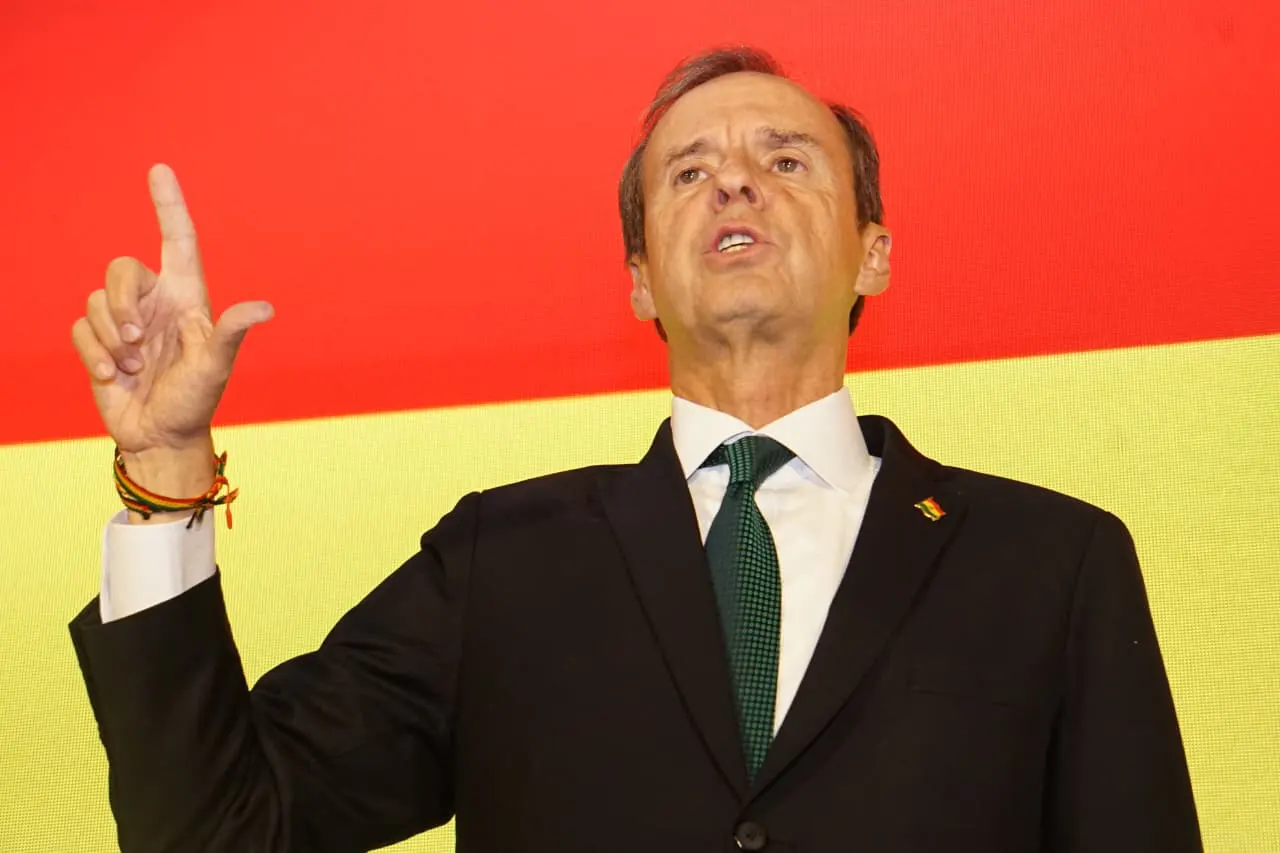
Meanwhile, from a tally center set up in a government headquarters hotel, former president and candidate of the Libre alliance, Jorge Quiroga, said that democracy had won and congratulated Paz on his victory.
“We are in a second round, and my first words are to congratulate Rodrigo Paz Pereira and the campaign he carried out—and we applaud him,” he stated.
Samuel Doria Medina, who came in third in the general election, reminded his supporters that he had pledged to back any initiative that would help the country out of the crisis. He announced his support for Paz in the runoff and asked him to commit to freeing the political prisoners that exist in the country.
“Throughout the campaign, I said that if I didn’t make it to the second round, I would support whoever came in first, as long as it wasn’t MAS. That candidate is Rodrigo Paz, and I keep my word,” said the businessman, stressing that the 2025 general election results also mark the end of the MAS cycle in power.
In Erika Brockmann’s view, it is noteworthy that both Doria Medina and Quiroga came out to acknowledge and congratulate Paz’s victory without questioning the unfavorable results or threatening other measures to deny their defeat. Moreover, for the first time in a long while, Bolivian voters witnessed debates and an engaging competition.
“There is nothing to question (…). The country and democracy have won,” she concluded.
Por El Diario:
En balotaje histórico
- Resultado de los comicios generales evidenciaron que la población boliviana terminó inclinándose por una renovación y rechazando la persistente guerra sucia entre actores políticos, agudizada en los últimos días de campaña.
- Destacan el trabajo de Paz para socializar sus propuestas en áreas rurales y poblaciones alejadas, donde históricamente el “masismo” tuvo una fuerte presencia.
- Doria Medina y Quiroga reconocieron y felicitaron victoria de Paz, sin cuestionar resultados ni amenazar con otro tipo de medidas para desconocer la derrota. Después de mucho tiempo el electorado boliviano ha tenido debates y una competencia interesante.
Tras la jornada de votación y luego de revelarse los resultados del conteo rápido encargado por cadenas televisivas, además del Sistema de Transmisión de Resultados Preliminares del Tribunal Supremo Electoral (TSE), otorgando una sorpresiva victoria al candidato del Partido Demócrata Cristiano (PDC), Rodrigo Paz, seguido de Jorge Quiroga de la Alianza Libre, analistas afirmaron que la guerra sucia terminó beneficiando al senador opositor y que los bolivianos se inclinaron por una renovación.
Pese a que encuestas previas ubicaban a Doria Medina en primer lugar, seguido de Quiroga, dejando a Paz en la periferia, datos emitidos por las cadenas Unitel y Red Uno otorgaron al candidato del PDC una sorpresiva victoria en los comicios generales, con más del 31% de preferencia.
Posteriormente, el sistema Sirepre del TSE ubicó a Paz en primer lugar con más del 32%, seguido de Quiroga con un 26%, situación que obliga de definir la presidencia en un histórico balotaje a realizarse el próximo 19 de octubre.
En criterio de la politóloga Erika Brockmann, la sorpresiva victoria de Paz se definió en los últimos días de la campaña, esto porque todos los estudios de opinión en materia electoral apuntaban por otro lado, advirtiendo sobre voto indeciso y el abanico de posibilidades alrededor de este.
“Ha sido un resultado sorprendente que, más que todo, se ha definido en los últimos diez días, porque las encuestas demostraban que había muchos indecisos”, aseguró.
Asimismo, afirmó que los resultados del domingo también evidenciaron que la población boliviana terminó inclinándose por una renovación y rechazando la persistente guerra sucia entre actores políticos, agudizada en los últimos días de campaña.
“Al final, el enfrentamiento entre Doria Medina y Quiroga terminó beneficiando a Paz”, sostuvo.
Otro aspecto identificado por la especialista tiene que ver con el trabajo de Paz para socializar sus propuestas en áreas rurales y poblaciones alejadas, donde históricamente el “masismo” tuvo una fuerte presencia.
“Es interesante ver que Paz cosechó el trabajo arduo que ha hecho acercándose a los municipios rurales, que anteriormente tenían gran presencia del MAS, esa tiene que ser la explicación”, agregó.
Para el analista e investigador Manuel Morales Álvarez, la victoria electoral de Paz es producto del cansancio de la población hacia representantes de la política tradicional en el país.
“Creo que el pueblo ha buscado un candidato que no sea de los tradicionales, y por eso Paz le gana a Doria Medina, Quiroga y Reyes Villa”, dijo.
Según el exejecutivo del Comité Nacional de Defensa de la Democracia (Conade), los resultados reflejaron un “voto compacto” focalizado en El Alto, La Paz, Oruro, Potosí y Cochabamba, regiones que, para Morales, han reaccionado contra aquellas candidaturas que recientemente demostraron estar fuertemente comprometidas con el agronegocio y sectores empresariales del oriente del país y del exterior.
La noche del domingo, ante una multitud congregada en las calles del centro paceño, Paz expresó su agradecimiento a la población boliviana que lo apoyo con su voto, además aseguró que queda pelear la segunda vuelta porque aún no se ha ganado nada.
“Quiero agradecer a Bolivia y también a las otras candidaturas porque más allá de los insultos y ataques, que yo no comparto, lo que se ha hecho es ganar de forma limpia en una primera vuelta. Aquí no se ha ganado nada, ahora hay que ir a una segunda vuelta y tendremos que pelear en esta segunda parte de forma honesta”, manifestó.
Por otro lado, desde un centro de cómputo instalado en un hotel de la Sede de Gobierno, el expresidente y candidato de la alianza Libre, Jorge Quiroga, señaló que ganó la democracia y felicitó la victoria de Paz.
“Estamos en segunda vuelta y mis primeras palabras son para felicitar a Rodrigo Paz Pereira y la campaña que ha hecho y le damos un aplauso”, expresó.
Samuel Doria Medina, tercero en la elección general, recordó a su militancia que se comprometió a apoyar toda iniciativa que ayude al país a salir de la crisis y anunció respaldar a Paz de cara a la segunda vuelta electoral, a quien además pidió comprometerse a liberar a los presos políticos que existen en el país.
“A lo largo de la campaña, dije que si yo no entraba a la segunda vuelta iba a apoyar a quien llegara primero si éste no era el MAS, ese candidato es Rodrigo Paz y mantengo mi palabra”, dijo el empresario, resaltando que los resultados de las elecciones generales 2025, también significan que el ciclo del MAS en el poder terminó.
En criterio de Erika Brockmann, es destacable que Doria Medina y Quiroga hayan salido a reconocer y felicitar la victoria de Paz, sin cuestionar resultados adversos ni amenazar con otro tipo de medidas para desconocer la derrota, asimismo, después de mucho tiempo el electorado boliviano ha tenido debates y una competencia interesante.
“No hay nada que cuestionar (…). Ha ganado el país y la democracia”, finalizó.
https://www.eldiario.net/portal/2025/08/18/paz-sorprende-y-definira-presidencia-con-quiroga/

 Bolivian Thoughts | Pensamientos Bolivianos (Bilingual/Bilingüe)