
By Jorge Soruco, Visión 360:
Electoral Vision
From “Samuelitio” to “who even knows you,” these were some of the attacks candidates hurled at each other during the first presidential debate organized by the Supreme Electoral Tribunal (TSE).
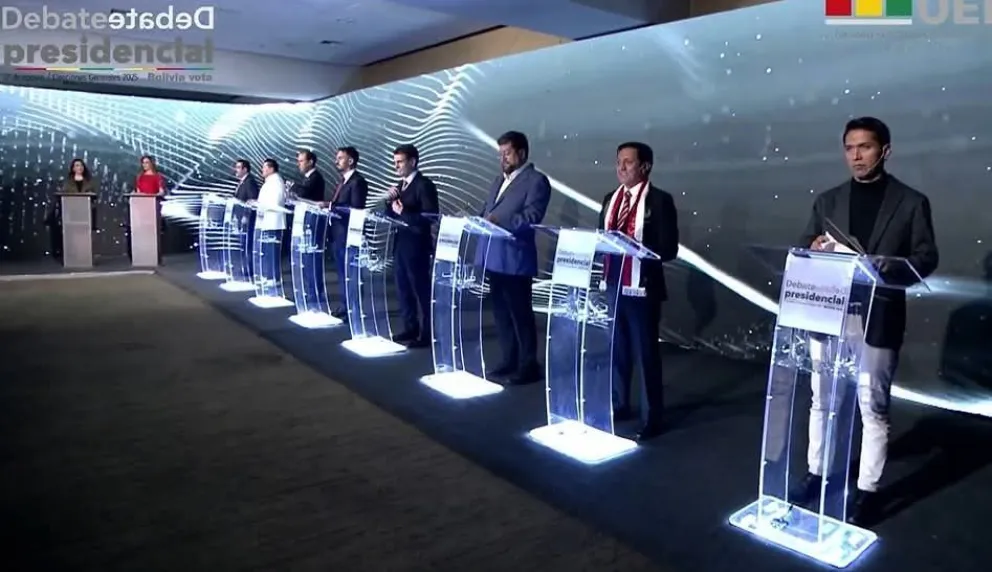
Moment of the debate. PHOTO: Screenshot
Nicknames like “Samuelitio” and “k’encha”, accusations of involvement in massacres and causing national crises—these were just some of the verbal attacks exchanged during the first presidential debate hosted by the TSE.
Tensions rose as soon as the eight candidates were allowed to question each other. One of the main targets was Andrónico Rodríguez, marking his first time participating in this type of event as the current president of the Senate.
In fact, throughout the nearly two-hour debate, Rodríguez received the most direct questions from his opponents. So much so that shortly after the questioning round began, the other candidates had to shift focus to new targets.
Rodríguez didn’t help his case with vague or evasive answers. A particularly notable moment was when he refused to give a clear response to Manfred Reyes Villa’s (Súmate) question on whether he would condemn Evo Morales over accusations of child abuse.
Every response was scrutinized on social media. Some moments were celebrated—like the nickname Eduardo del Castillo gave to Doria Medina, “Samuelitio,” or Doria Medina’s comeback when asked if he would privatize national companies: “Who would want to buy companies that don’t perform?” But the overall lack of concrete proposals drew widespread criticism.
Analysts like Gonzalo Chávez expressed concern that both Rodríguez and Del Castillo relied on outdated rhetoric—namely, the old narrative of a privatizing right-wing threatening the “process of change.” This was especially ironic given that Rodríguez’s former party ruled the country for most of the past two decades.
And he wasn’t the only one to go negative. The Q&A section quickly devolved into personal attacks, nicknames, and even accusations of massacres and privatization.
Rodríguez accused Jorge “Tuto” Quiroga of having “blood on his hands” and blamed both Quiroga and Samuel Doria Medina for growing up in poverty. Several candidates accused the Unidad alliance candidate of shady dealings with businessman Marcelo Claure, with Pavel Aracena even claiming Claure copied “foreign recipes.”
It also became common for candidates to begin their responses with “you should get better informed.” Meanwhile, the questioners often packed multiple issues into one question, forcing the respondents to focus on just one aspect.
The second debate is scheduled for August 12 in La Paz.
Por Jorge Manuel Soruco Ruiz, Visión 360:
Visión electoral
Desde Samuelitio, hasta “quién te conoce” son algunos de los ataques que los candidatos dirigieron a sus oponentes durante el primer debate presidencial del TSE
Momento del debate. FOTO: Captura de pantalla
Apodos como “Samuelitio” y “k’encha”, acusaciones de participar en masacres y causar crisis fueron algunos de los ataques entre candidatos registrados en el primer debate presidencial, organizado por el Tribunal Supremo Electoral (TSE).
Las agresiones verbales se registraron en cuanto los ocho postulantes pudieron hacre preguntas a sus contrincantes. Uno de los principales blancos fue Andrónico Rodríguez, ya que este fue el primer evento de esta naturaleza en el que participó el actual presidente del Senado.
De hecho, a lo largo de las casi dos horas, Rodríguez fue el que más preguntas directas recibió de parte de sus oponente, al punto que al poco tiempo de iniciarse la modalidad, el resto de los candidatos tuvieron que buscar otro banco.
No ayudó que las respuestas del candidato de Alianza Popular eran evasivas o muy generales. Destaca especialmente cuando se negó a responder concretamente a la pregunta de Manfred Reyes Villa (Súmate) respecto si condenaría o no a Evo Morales sobre las acusaciones de abuso de menores que pesan en su contra.
Cada una de las respuestas fue desmenuzada en las redes sociales. Desde festejar algunas ocurrencias, como el apodo que Eduardo del Castillo puso a Doria Medina, Samuelitio, o la respuesta del último a la pregunta si privatizaría las empresas nacionales: “quien quisiera comprar empresas que no rinden”, hasta criticar la falta de propuestas concretas en la mayor parte de las intervenciones.
Algunos analistas, como Gonzalo Chávez, lamentaron que tanto Rodríguez como Del Castillo mantuvieron un discurso obsoleto, el de la derecha privatizadora que irá en contra del “cambio”. Especialmente porque el senador insistió en el pasado de sus oponentes, dejando de lado que su expartido gobernó las últimas décadas.
Pero no fue el único. Rápidamente la etapa de preguntas degeneró en ataques personales, apodos e, incluso, acusaciones de masacres y privatización.
Rodríguez acusó a Jorge Tuto Quiroga de “tener las manos manchadas de sangre” y de ser, junto a Samuel Doria Medina, de ser los responsables de que “creciera en la pobreza”. La mayoría de los candidatos acusaron al candidato de la alianza Unidad de tener tratos oscuros con el empresario Marcelo Claure, con Pavel Aracena llegando, incluso, asegurar que el empresario copió “recetas” del exterior.
También fue común que el candidato interrogado iniciara su respuesta con “deberías informarte mejor”. A eso se sumó que quien preguntaba tocaba varios temas, por lo que el objetivo solo se enfocaba en uno.
El segundo debate se realizará el 12 de agosto, en La Paz.

 Bolivian Thoughts | Pensamientos Bolivianos (Bilingual/Bilingüe)