
By El Diario:
Tradition
- Despite the country’s economic crisis and social issues such as product shortages and rising costs, on November 1st, as tradition dictates, Bolivians will welcome the souls of their loved ones with prepared tables, featuring a variety of essential elements.
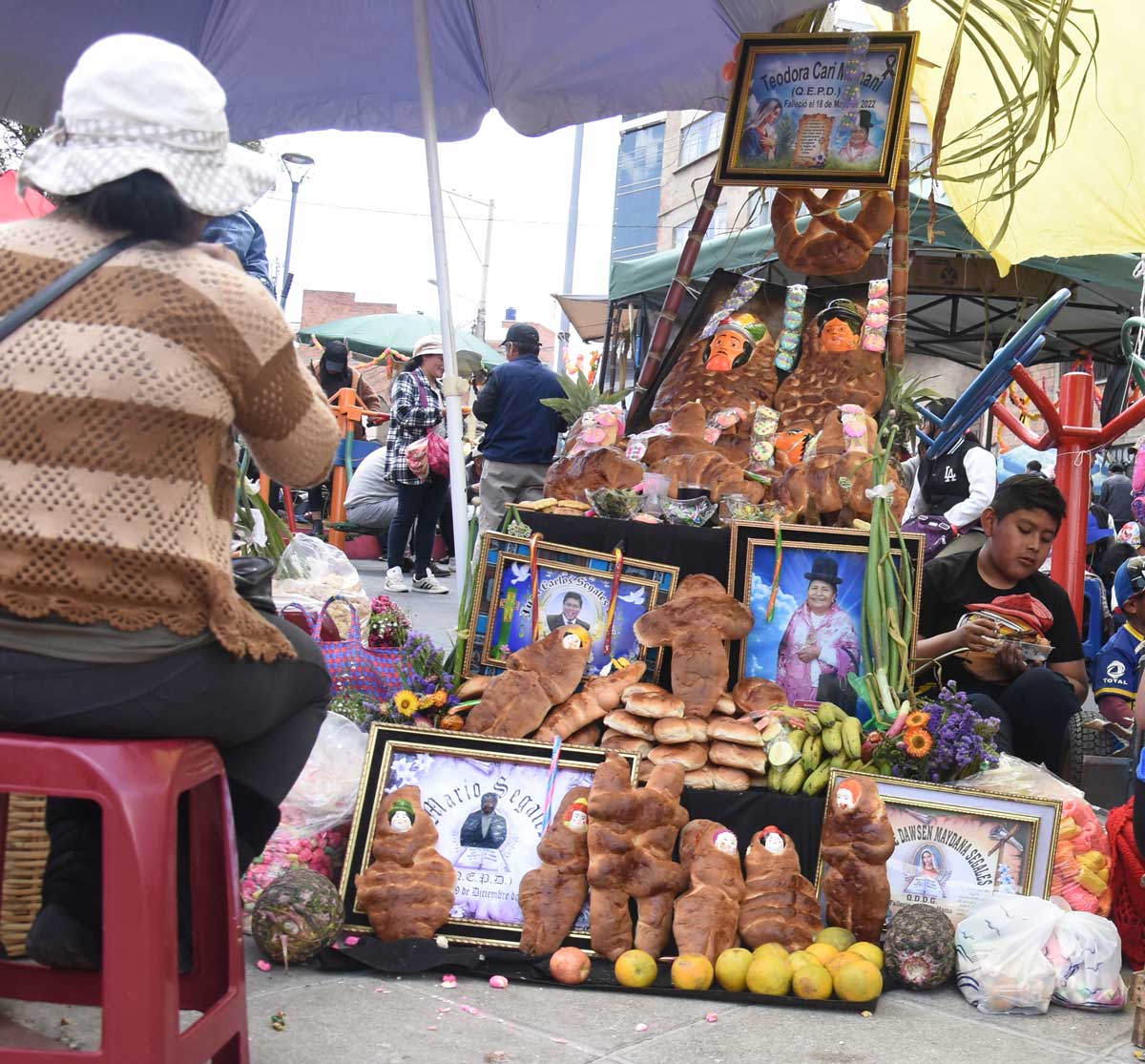
According to tradition, at noon today, souls arrive to visit their families. This is confirmed by Milton Eyzaguirre, anthropologist and head of the Extension and Cultural Diffusion Unit at the National Museum of Ethnography and Folklore (Musef).
According to the expert, for the Aymara people, death was seen as part of the life cycle, marking the start of the earth’s fertile season, coinciding with planting.
The preparation of tables or altars also represents a syncretism between religious beliefs and Andean traditions, which, over time, have evolved and taken on different meanings, though the essence remains the same.
For the expert, the arrival of a loved one’s soul is often signaled by the presence of a fly that lands on the prepared foods.
Additionally, to await the soul of the departed, family members keep vigil the night before, accompanied by coca leaves and cigarettes. By noon on November 1, prayers are offered, and visitors arrive at homes where there is a recently departed loved one.
“If it’s the first, second, or third year since the death, larger, more complete tables are set up. Relatives and friends go to that house to pray, and each time they pray, the family members share the prepared foods with them,” Eyzaguirre explained.
Then, on November 2, again at noon, a farewell for the soul is prepared. A man and woman are appointed to distribute among attendees all the items placed on the table.
ELEMENTS
The altar set up to welcome the souls includes “basic elements” such as a cloth—white if the deceased was a child and black if an adult—as well as flowers, pastries, fruits, sweets, decorations, and the favorite food of the departed.
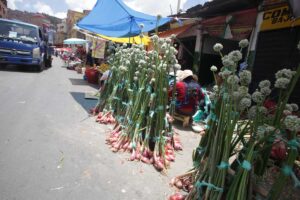
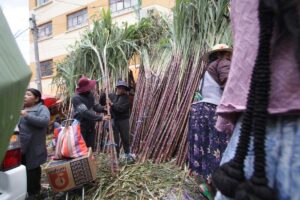
They also place a photograph of the deceased, along with a favorite item of theirs. “I always make bread, place tocoro (a flowering onion with a hollow stem) to bring water; horses, to carry everything for their long journey; ladders for descending and ascending; sugar cane as their cane, and everything they loved,” shared Porfiria Chambi while buying supplies at a La Paz market.
“A glass of water is always placed because they arrive tired, they say; candles are lit to illuminate their way, and I set out their favorite beer too,” said Señora Teresa, who will set up the altar to welcome her husband.
Por El Diario:
Tradición
- Pese a la crisis económica que se vive en el país, además de problemas sociales como la escasez de productos y el encarecimiento de varios de estos, este 1 de noviembre, como la tradición manda, la población boliviana recibirá las almas de sus seres queridos con mesas preparadas, con una variedad de elementos indispensables.
Según la tradición, al mediodía de hoy las almas llegan a visitar a sus familiares. Así lo corroboró el antropólogo y jefe de la Unidad de Extensión y Difusión Cultural del Museo Nacional de Etnografía y Folklore (Musef), Milton Eyzaguirre.
De acuerdo con el experto, para los aymaras la muerte era concebida como un ciclo de la vida, que además es inicio de la época de fertilidad de la tierra, por lo que coincide con la siembra.
El armado de las mesas o altares, también resulta ser un sincretismo entre lo religioso y las creencias andinas, que con el tiempo, se modificaron y adquirieron distintos significados, aunque la esencia siempre es la misma.
Para el experto, una forma de anunciar la llegada del ser querido es la presencia de una mosca que se posa en los alimentos preparados.
Además, para esperar el alma del difunto, sus familiares realizan vigilias una noche antes y se acompañan de coca y cigarro. Cuando es el mediodía del 1 de noviembre, las oraciones se hacen presentes y las visitas llegan a los hogares que tienen un difunto reciente.
“Si es primer, segundo o tercer año (de la muerte del ser querido), se arman mesas más grandes y completas; entonces los familiares o conocidos van a esa casa y rezan. Cada que rezan, los familiares les comparten los alimentos que prepararon”, explicó Eyzaguirre.
Después, el 2 de noviembre, también a mediodía, se prepara la despedida del alma. Para eso se nombra a una pareja, varón y mujer, que se encargará de repartir entre los asistentes todos los productos que se colocaron en la mesa.
ELEMENTOS
El altar que se prepara para recibir a las almas está compuesto por “elementos base” como un mantel, blanco si el difunto fue niño y negro, si fue un adulto; también se coloca flores, masas, frutas, dulces, adornos y la comida favorita del difunto.
También colocan la fotografía del o los difuntos, alguna prenda preferida. “Se lo hago siempre pancito, pongo tocoro (cebolla en flor que tiene cola hueca) para que se lleve agua; caballos, para que cargue todo lo que llevará, porque dicen que caminan largo; escaleras para bajar y para subir; caña, que es su bastón y todo lo que le gustaba”, indicó Porfiria Chambi, mientras adquiría los productos en un mercado paceño.
“Agua en un vaso, siempre hay que colocar, porque llegan cansados dice; se prende velas para que les ilumine su camino y le coloco su cervecita también”, manifestó la señora Teresa que colocará el altar para recibir a su esposo.
https://www.eldiario.net/portal/2024/11/01/llegan-las-almas-en-medio-de-crisis-y-problemas/

 Bolivian Thoughts | Pensamientos Bolivianos (Bilingual/Bilingüe)