
By Marco Antonio Belmonte, Vision 360:
Jaime Villalobos, geologist, explains the potential
31 of the 38 critical minerals demanded by the world are in Bolivia, but investment is lacking to take advantage of them
Bolivia has potential for most critical minerals, with notable highlights at first glance: antimony, bismuth, tin, silver, zinc, gallium, germanium, indium, lithium, magnesium, manganese, niobium, tantalum, zinc, germanium, gallium, and others.
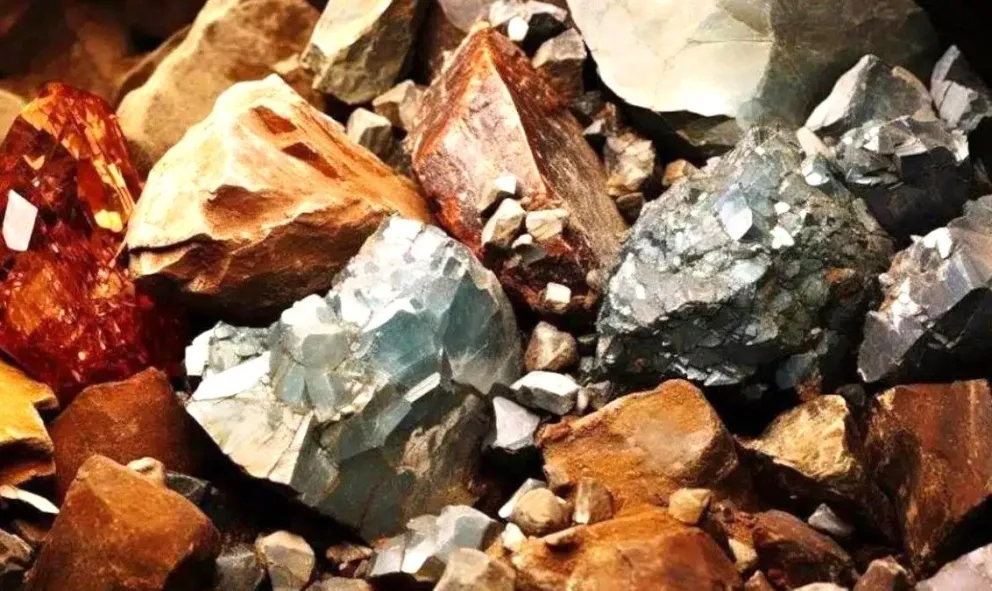
Samples of rare earths. Photo: As
Bolivia is a mining country, and historically, its revenues have depended on extractive activity. Currently, the country still has strong potential related to its mineralogical resources to be harnessed, as 31 of the 38 critical minerals that are in high demand worldwide lie beneath its territory.
Geologist and former Minister of Mining and Economic Development, Jaime Villalobos, highlighted that Bolivia has potential for most critical minerals, such as antimony, bismuth, tin, silver, zinc, gallium, germanium, indium, lithium, magnesium, manganese, niobium, tantalum, zinc, germanium, gallium, among others.
However, the exploitation and utilization of these resources require technology and the ability to attract foreign direct investment. This is the expert’s perspective on the country’s wealth and the responses he provided to a questionnaire sent by Visión 360.
What minerals, metals, or resources beyond lithium will see strong demand this year and in the coming years?
In general, throughout this century, the demand for mining products will continue to grow, subject to the growth of the economically active population and cyclical changes in the global economy. A 2% annual increase in global demand means that mineral and metal production would have to double every 38 years.
At the same time, the technological and energy revolution is creating new demand for non-traditional minerals. In this context, there is clearly a significant demand for, among others, the following metals in addition to lithium: copper, antimony, silver, gold, nickel, cobalt, indium, zinc, tin.
In this regard, the 2020 Energy Act of the United States of America defines a critical material as any mineral, material, element, substance, or non-fuel material that:
- Has a high risk of supply chain disruption
- Plays an essential role in one or more energy technologies, including technologies that produce, transmit, store, and conserve energy.
In 2023, 38 critical minerals were identified. Of those 38 “critical minerals,” the geology of our country records the existence of 31 with varying degrees of certainty.
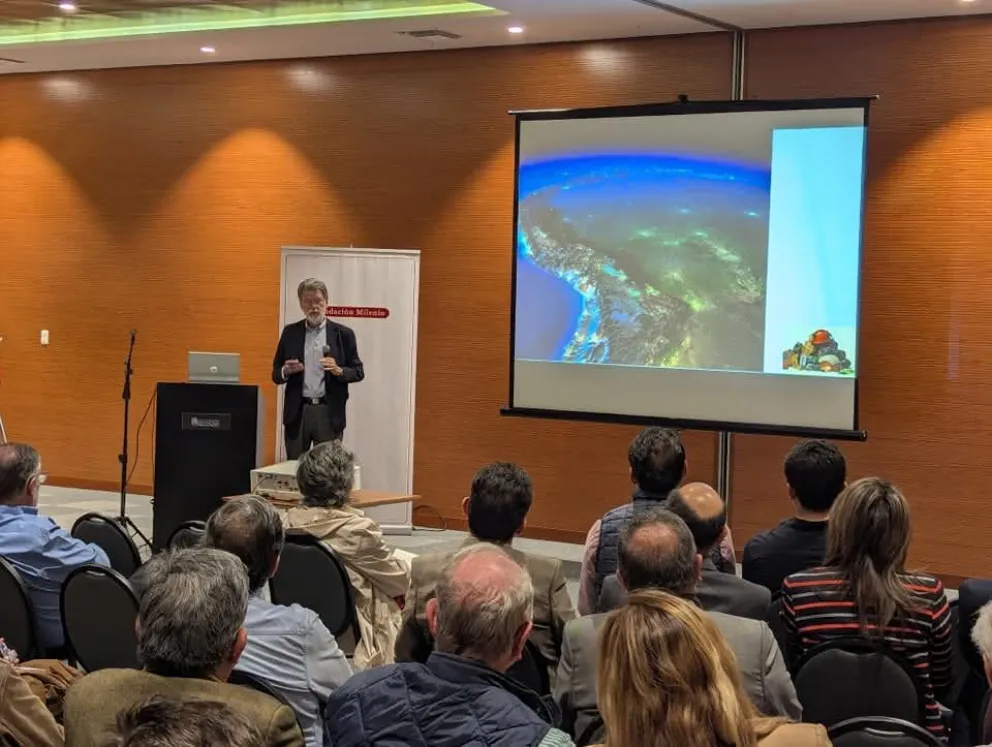
How can we exploit indium and rare earths? What is needed to produce and export them in large quantities?
Indium is produced exclusively as a byproduct during the processing of ores from other metals. In Bolivia, indium is found as a byproduct in polymetallic concentrates of silver, zinc, and lead. Extracting indium from mined ores and concentrates requires technologies that are still largely unknown in our country.
It is worth mentioning the Mallku Khota project, where the Canadian company South American Silver reported a vast deposit of approximately 381 million tons of low-grade silver and indium ores.
That company had plans to develop an open-pit mine in Mallku Khota with a production capacity of 20,000 tons per day. The project considered using an indium recovery method via leaching with a sulfuric acid-sodium chloride-chlorine solution, a non-traditional method in Bolivia.
Rare earth elements, on the other hand, are extremely difficult to prospect, explore, exploit, and, even more so, to recover. These minerals require technology and expertise that Bolivia does not yet possess.
In both cases (indium and rare earths), to take advantage of these resources, Bolivia needs substantial investments and technology that it currently lacks.
Therefore, the country must attract Foreign Direct Investment (FDI) associated with technological innovation.
To secure high-quality technology and FDI, Bolivia needs more than just a territory rich in mineral potential (which it has); it must also offer investors legal security, the rule of law, economic freedom, and a fair and competitive tax system.
Which of these metals or minerals have potential and reserves in Bolivia?
Bolivia has potential for most critical minerals, with the following standing out at first glance: antimony, bismuth, tin, silver, zinc, gallium, germanium, indium, lithium, magnesium, manganese, niobium, tantalum, zinc, germanium, gallium, and others.
Regarding reserves, Bolivia has very few economically exploitable mining reserves; what it does have are mineral resources that need to be elevated to the category of mineral reserves through investments in exploration and development.
What is needed for this potential to become a reality and a source of revenue for Bolivia?
Modern, business-driven mining is a technology- and capital-intensive activity, which Bolivia lacks. Consequently, to develop its mining potential and generate a significant revenue source, Bolivia needs to attract foreign investment in constructive capital.
In mining, constructive capital refers to investment that contributes to the sustainable development of the country and the region where it operates.
This concept is closely linked to sustainable mining, which encompasses three key attributes:
- Technological innovation, as an essential factor for optimizing the utilization of mineral resources.
- Sustainable development, which integrally combines economic growth or value generation with environmental protection and social inclusion.
- Corporate social responsibility, understood as the company’s ongoing commitment to achieving economic development and the well-being of its workers, their families, and the community.
Alongside lithium, I understand there are larger magnesium reserves. What is needed to produce and export it in large quantities?
Yes, indeed. The brines of Bolivia’s salt flats contain vast amounts of magnesium salts in solution. Additionally, in the Rincón del Tigre region, in the department of Santa Cruz, there are occurrences of magnesium-bearing minerals.
To produce and export large quantities of magnesium, as with any other mineral resource, capital and technology are needed for prospecting, exploration, exploitation, and processing.
For this, we need (and should be able) to change laws and bring order to our country to establish legal security for investments, ensure the rule of law, and build strong, transparent, and efficient institutions that uphold and enforce the law. Finally, we must create a favorable environment for mining investment, with economic freedom and a competitive, fair tax system.
We must be aware that a country’s mineral resources are a necessary but not sufficient condition for benefiting its population. The true driver of a nation’s progress is not merely its natural resources but its people—their knowledge, talents, ways of organizing and undertaking initiatives, motivations, and values.
Por Marco Antonio Belmonte, Vision 360:
Jaime Villalobos, geólogo explica el potencial
31 de los 38 minerales críticos que demanda el mundo, están en Bolivia, pero falta inversión para aprovecharlos
Bolivia tiene potencial para la mayoría de los minerales críticos, destacándose, a primera vista: antimonio, bismuto, estaño, plata, zinc, galio, germanio, indio, litio, magnesio, manganeso, niobio, tantalio, zinc, germanio, galio y otros.
Muestras de tierras raras. Foto: As
Bolivia es un país minero e, históricamente, sus ingresos han sido dependientes de la actividad extractiva. Actualmente, el país aún tiene un fuerte potencial relacionado a sus recursos mineralógicos por aprovechar, ya que en las entrañas del territorio están 31 de los 38 minerales críticos que hoy tienen una alta demanda en el mundo.
El geólogo y exministro de Minería y Desarrollo Económico, Jaime Villalobos, destacó que Bolivia tiene potencial para la mayoría de los minerales críticos como antimonio, bismuto, estaño, plata, zinc, galio, germanio, indio, litio, magnesio, manganeso, niobio, tantalio, zinc, germanio, galio, entre otros.
Sin embargo, la explotación y aprovechamiento de estos recursos requiere tecnología y que se pueda atraer inversión extranjera directa. Esta es la visión del experto sobre la riqueza que tiene el país y las respuestas que dio a un cuestionario enviado por Visión 360.
¿Qué minerales, metales o recursos fuera del litio, van a tener una fuerte demanda este y los próximos años?
En general, durante este siglo, la demanda por productos mineros seguirá creciendo, sujeta al crecimiento de la población económicamente activa y a los cambios cíclicos de la economía mundial. Un incremento del 2% anual de la demanda mundial significa que la producción de minerales y metales tendría que duplicarse cada 38 años.
Simultáneamente, la revolución tecnológica y energética está creando una nueva demanda por minerales no tradicionales. En este contexto, se avizora claramente una gran demanda para, entre otros, los siguientes metales además del litio: cobre, antimonio, plata, oro, níquel, cobalto, indio, zinc, estaño.
Al respecto, la Ley de Energía de 2020 de los Estados Unidos de América define material crítico, como cualquier mineral, material, elemento, sustancia o material no combustible que:
- Tiene un alto riesgo de interrupción en la cadena de suministro
- Cumple una función esencial en una o más tecnologías energéticas, incluidas tecnologías que producen, transmiten, almacenan y conservan energía.
En 2023 se han determinado 38 minerales críticos. De esos 38 “minerales críticos”, la geología de nuestro país registra, con diversos grados de certidumbre, la existencia de 31.
¿Cómo podemos explotar el indio y tierras raras, qué se necesita para producir y exportar esto en grandes cantidades?
El indio se produce exclusivamente como subproducto durante el procesamiento de minerales de otros metales. En Bolivia, el indio acompaña como subproducto a concentrados polimetálicos de plata, zinc y plomo. La extracción del indio, a partir de minerales de mina y de concentrados requiere de tecnologías aún poco conocidas en nuestro país.
Vale la pena mencionar al proyecto Mallku Khota, en el que la empresa Canadiense South American Silver reportó un enorme yacimiento de aproximadamente 381 millones de toneladas de minerales de baja ley de plata e indio.
Esa empresa tenía planes de desarrollar en Mallku Khota, una mina a cielo abierto de 20.000 toneladas por día. En ese proyecto se estaba considerando usar un método de recuperación del indio por lixiviación, con una solución de ácido sulfúrico-cloruro de sodio- cloro, que no es un método tradicional en Bolivia.
Las tierras raras, por su parte, son minerales muy difíciles de prospectar, explorar y explotar y, más aún, de recuperar. Esos minerales necesitan de tecnología y conocimientos que Bolivia aún no tiene.
En ambos casos (indio y tierras raras), para aprovechar esos recursos, Bolivia necesita de fuertes inversiones y tecnología que no los tiene.
Por consiguiente, necesita captar Inversión Extranjera Directa (IED) asociada a innovación tecnológica.
Para captar tecnología e IED de buena calidad, a Bolivia no le basta tener un territorio con buen potencial mineral (que lo tiene), sino que necesita ofrecer a las inversiones: seguridad jurídica, estado de derecho, libertad económica y un sistema impositivo equitativo y competitivo.
¿De estos metales o minerales, cuáles tienen potencial y reservas en Bolivia?
Bolivia tiene potencial para la mayoría de los minerales críticos, destacándose, a primera vista, los siguientes: antimonio, bismuto, estaño, plata, zinc, galio, germanio, indio, litio, magnesio, manganeso, niobio, tantalio, zinc, germanio, galio y otros.
En cuanto a reservas, Bolivia tiene muy pocas reservas mineras (económicamente explotables); lo que tiene son recursos minerales, que necesitan ser elevados a la categoría de reservas minerales, mediante inversiones en exploración y desarrollo.
¿Qué se necesita para que este potencial, sea una realidad y fuente de ingresos para Bolivia?
La minería empresarial y moderna es una actividad de uso intensivo de tecnología y capital, que nuestro país no tiene. En consecuencia, para desarrollar su potencial minero y generar una fuente importante de ingresos, Bolivia necesita captar inversión extranjera de capital constructivo.
En minería, capital constructivo en es aquel que contribuye al desarrollo sostenible del país y de la región en que se desenvuelve.
Este concepto está estrechamente relacionado con el de minería sostenible, la cual reúne tres grandes atributos:
- La innovación tecnológica, como un factor imprescindible para optimizar el aprovechamiento del recurso mineral.
- El desarrollo sostenible, que conjuga de manera integral el crecimiento económico o generación de valor, con la protección del medio ambiente y con la inclusión social.
- La responsabilidad social empresarial, entendida como el compromiso permanente de la empresa de lograr el desarrollo económico y bienestar de sus trabajadores, de sus familias y de la comunidad.
¿Junto al litio, tengo entendido que hay reservas magnesio en mayor cantidad, que se necesita para producir esto y exportar grandes cantidades?
Si, en efecto, las salmueras de los salares bolivianos contienen, en solución, ingentes cantidades de sales de magnesio. Adicionalmente, en la región de Rincón del Tigre, en el departamento de Santa Cruz, existen manifestaciones de minerales magnesíferos.
Para producir y exportar grandes cantidades de magnesio se necesita, nuevamente, como para todo otro recurso mineral, capital y tecnología para la prospección, exploración, explotación y procesamiento de este mineral.
Para ello, necesitamos (y deberíamos ser capaces de) cambiar las leyes y ordenar nuestro país, de manera que tengamos seguridad jurídica para las inversiones, logremos la vigencia de un estado de derecho e instituciones sólidas, transparentes y eficaces, que cumplan y hagan cumplir la ley; y, finalmente, ofrezcamos un ambiente favorable a la inversión empresarial en minería, con libertad económica y un sistema tributario competitivo y equitativo.
Debemos ser conscientes de que los recursos mineros que dispone un país son una condición necesaria, pero no suficiente, para aprovecharlos en beneficio de la población. Lo que marca la diferencia en progreso de los países no es su disponibilidad de recursos naturales. Son las personas, sus conocimientos y talentos, sus modos de organizarse y de emprender, sus motivaciones y valores, lo que realmente importa.

 Bolivian Thoughts | Pensamientos Bolivianos (Bilingual/Bilingüe)